Meditation and Communion with God: Contemplating Scripture in an Age of Distraction (Book Review)

meditation and communion with GodMeditation is viewed with suspicion within many wings of modern Protestantism today. Begin to mention the spiritual discipline of contemplation and immediately accusations or apprehensions that one has imported or smuggled in foreign notions from Eastern philosophies, Buddhism, or less-than-Evangelical mystical pieties start to be leveled. Indeed, at times this isn’t too far off the mark. In our pluralistic culture there is much that passes for Christian spirituality is little more than cleverly-disguised syncretism. And yet, it would be a mistake to miss the need to recover the contemplative dimension to Christian spirituality in our stressed-out, surface-level, consumeristic North American Christianity.

This is why I have been so blessed as I read John Jefferson Davis’ recent work Meditation and Communion with God: Contemplating Scripture in an Age of DistractionIn this short, but rich essay, Davis argues and provides a theological foundation for a robust practice of contemplating scripture within an orthodox Evangelical framework. Instead of the mind-emptying techniques rooted in Advaita Hinduism, or Zen Buddhism, Davis wants to present a vision of the soul-expanding practice of deeply contemplating the riches of biblical truth in such a way that actually mediates the life of God himself in union with the Son by the power of the Spirit of the Age to Come.

Six Reasons

Aside from the fact that the Reformed tradition, especially Puritanism, has long had a rich tradition of scriptural contemplation including such lights as John Owen, Thomas Watson, William G.T. Shedd, and others, Davis notes six current factors which make recovering a practice scriptural contemplation urgent and beneficial:

  1. Renewal of interest in spiritual disciplines within Evangelicalism. (pg. 10)
  2. Growing interest in Eastern practices of meditation within a pluralistic context. (pg. 13)
  3. Widespread biblical illiteracy in North American churches. (pg. 18)
  4. Our growing awareness of the effects of the digital age on attention spans and reading habits. (pg. 21)
  5. New research on the effects of meditation on the brain and personal health. (pg. 25)
  6. Trend in biblical and systematic theology which have yet to be integrated into a theology of contemplating Scripture. (pg. 28)

As I read Davis outline his case, I found myself vigorously nodding in agreement, particularly as I thought of my own ability to simply sit down and read the book without compulsively checking my social media. If there is one thing our “distracted” age needs, it is something that forces them to sit down, breath, and think. I don’t think anybody would dispute that. The question becomes then, what are these theological foundations?

Three Themes

Davis devotes most of the rest of the essay to developing a theology of contemplation in light of three key theological developments:

  1. Inaugurated Eschatology (pp. 34-41)- NT scholars for the past couple of generations have highlighted eschatology as the warp and woof of the theology of the NT. Jesus preached the inbreaking kingdom of God which was “now” here and “not yet” fully consummated. Paul taught that through the Resurrection of Jesus Christ, the powers of the New Age had broken into the Old Age of sin and darkness and were available to us in the Spirit. The Old Covenant having been fulfilled, judgment rendered, victory accomplished, the Spirit is now poured out on all flesh drawing us near into a new access to the Father by grace.
  2. Union with Christ (pp. 41-51)- Connected to this is a renewed emphasis on the reality of our union with Christ. The idea that salvation ought to be thought of in terms of our current union with Christ saves us from a purely-future notion of redemption. Even now we are united to the risen Christ and all of his saving benefits, even though we are not yet fully like him. The Holy Spirit unites us to Christ in faith and makes us present to him, even though we are separated in space and time because of the inbreaking of the New Age.
  3. Trinitarian Theology (pp. 51-55) – Finally, the 20th Century renaissance of trinitiarian theology has reminded us of a few key realities: knowing God as he truly is–Father, Son, and Holy Spirit–can only help remind us of the fact that we can have personal relations with this personal God (1); having been made in the image of the Triune God, we are inherently relational beings which has implications for our ideas of personal existence and knowing (2); salvation is inherently trinitarian in nature as we are being brought into the life of the Triune God (3).

The Results

Building on these Davis develops them into a re-hauled “inaugurated ontology” that generates insights into our theology of God, cosmos, humanity, salvation, epistemology, and scripture that sets up a new way of understanding what is going one when we read the Bible. We are actually being brought into the presence of and communion with the Triune God through the power of the Spirit who unites us to the Risen Christ. This brief theological outline forms the basis of his rehabilitation of the Medieval Church’s practice of the four-fold interpretation of Scripture, which he believes ought to play an important role in the life of the church, especially in spiritual contemplation of scripture, even while we hang on to the real insights gained by the Reformers’ renewed emphasis on the “literal” sense of the text. Finally, after all of this, he includes a section outlining an actual approach towards a scriptural meditation which includes exercises in “whole-brain” reading and prayer.

A Couple of Final Words

While I’ve enjoyed this book immensely, I’d just add a few words of caveat and warning: this isn’t the easiest book. It’s not the hardest, either. Just realize that it isn’t just a nice little handbook on contemplation. Some background in theology and biblical studies will be helpful in reading it. Also, he has some interesting little philosophical sections on the idea of the self and its location in space; they’re fine as far as they go, but don’t worry about skipping them.

I tell you this now because overall this is an excellent little book. Davis has done the church a real service in working through some of the real theological issues involved in contemplation. Davis’ work assures us that we can be confident that Christ is really present to us, by the power of the Spirit of the New Age, in the reading of Scripture. Slow, prayerful meditation on the Biblical text can be a real means of communion with the Triune God.

Soli Deo Gloria

Some Thoughts on Reformed Caricatures and Self-Criticism

Oliver Cromwell is reputed to have exclaimed during a dispute, “I beseech thee, in Christ’s bowels, think it possible you may be mistaken!” ‘Bowels’ is a great word.

Oliver Cromwell is reputed to have exclaimed during a dispute, “I beseech thee, in Christ’s bowels, think it possible you may be mistaken!” ‘Bowels’ is a great word.

I took away a lot of insights from my undergrad in philosophy, but one of the most important for the intellectual life was a distaste for caricature. Professor after professor beat into our heads that in critiquing another viewpoint, you must first present their argument fairly, and in a form they would recognize, before proceeding criticize it.

In fact, you should go about trying to find the best, strongest version of that viewpoint in order to argue against it, otherwise you run the risk of an uncharitable caricature that is unjust and only weakens your own, possibly valid criticism.

Since my time in college, caricature has become a pet peeve of mine, as well as a particular area of struggle. I hate caricatures when I see them, even to the point where I’ve been found arguing with a friend on behalf of a view I don’t hold, simply because I don’t think is being fairly represented.

While I was constantly defending my faith to my non-Christian friends in college, I’d find myself re-articulating their arguments to my Christian friends who might sneer when I was recounting the story. I might be Reformed right now simply because I attended a seminary with a Wesleyan-Holiness background and felt the need to defend the tradition.

At the same time, I must confess I have a love for strong polemics. I’ve mentioned this before. Kierkegaard, Pascal, Calvin, Athanasius, are among my favorite authors precisely because of their forthright polemical engagement. Biblical writers such as Paul himself engaged quite forthrightly in polemics, and like the prophets, he wasn’t always the most careful in his sensitivities towards hurt feelings or the niceties of academic dialogue. I struggle with this because when I’m about to engage in critique, I remember this strain of thought. The critique is just “honest.” But what about my own tradition and positions I hold dear? Do I see similar criticisms as simply “honest?” Am I quick to cry foul and “caricature?” Maybe.

I’m wrestling through this because I recently got involved in a little imbroglio over a post that I felt was linking a caricatured version of Calvinism with abuse or spiritual abuse. Now, newly-excited about the Reformed tradition as I am, I wasn’t particularly pleased with it and called it out as such. The initial post was quite forceful, and since I was sans coffee when I read it, I replied in kind. In the ensuing conversation I started to think about the way I approach criticism of my own tradition.

See, while it’s entirely right to expect a fair, charitable, nuanced criticism that cites the best sources and arguments when engaging in an academic debate about a position, real life presents us with people and situations that aren’t the ideal.

For instance, not every Calvinistic or Reformed pastor reads Kevin Vanhoozer, or preaches like Tim Keller, or articulates doctrine with the care and sensitivity of a Herman Bavinck or Francis Turretin. My own experience of the Reformed world has taken place in the context of a gently conservative Presbyterian church with caring, faithful, and sensitive pastors, but much as I hate to admit it, the reality is that some Reformed bodies are real-life, walking caricatures of the tradition I hold dear. Just as Wesleyan or Baptistic theologies can go off the rails in serious ways, so can churches and theologies with putatively Reformed roots. When that is the only expression of Reformed faith someone encounters, distaste for the whole stream is quite understandable. Sometimes the caricatures have human faces.

A few thoughts, then:

When someone within your fold goes off the rails, they need to get criticized and corrected by those within first. If not, it will probably be done by those with no sympathies for your tradition as a whole, likely imputing their failures to the broader structure of thought. It’s no harm to gently (or less-gently) call out failures or unhelpful distortions within the tradition. In fact, that’s what traditions are: ongoing conversations centered around various shared convictions as well as disagreements.

When criticizing those outside of your own tradition, especially one for which you feel less intellectual sympathy, it’s important to acknowledge distinctions and add caveats. For instance, I’m not a dispensationalist and I’ve seen the pop-dispensationalism I’ve grown up with go into some pretty unhelpful places when it comes to biases against Arabs. That said, not all dispensationalism is guilty, and the best advocates would avoid this problem.

While Paul didn’t dance around issues, and I don’t think we should either, it’s important for those of us who aren’t authors of Scripture to be careful with our words about traditions with which we disagree. I fail at this all the time, but my conversations with faithful friends, with whom I have some real disagreements, drive me to strive to temper my critical words. In which case, even when you’re going after a real problem, it’s not always simply a matter of “being honest” or “being prophetic”, but also being charitable and just.

For the Reformed, we should be particularly quick to be Reformed and always Reforming under the Word of God. We should know we’re not justified simply by being right, but by being righteous in Christ, so that should give us some space to be quick to admit our faults in the freedom of the Gospel.

I’ll admit, there is some irony in asking the Reformed to engage in self-criticism; it easily one of the most argumentative traditions in Western theology in terms of inter-tradition dispute. I’m not calling for more arguments about infralapsarianism or supralapsarianism, though. Instead, it’s the willingness to acknowledge the way certain strains and tendencies, even when not necessarily a corollary of Reformed theology, have been present and harmful in our churches at times. In other words, just as people have besetting sins, so do traditions.

This isn’t a call to stop engaging real caricatures or defending the faith, etc. By no means! Instead, it’s more of a, “Slow down. Think about it.” This side of the Second Coming it is possible for us to get things wrong or have cause for internal self-correction.

Soli Deo Gloria

10 Theses on Union With Christ

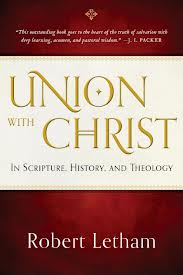
unionI finished Letham’s work on union with Christ last week, but I wanted to return to it one last time. Letham has a fascinating chapter entitled “Union with Christ and Transformation”  in which he examines the relationship between union with Christ and Eastern and Reformed conceptions of deification. At the end of the chapter, he lists and expounds 10 theses on union which summarize much of his findings with respect to the transformative aspect of union:

  1. The union we enjoy with Christ is more real and more fundamental that the union we have with members of our own body” (pg. 123) By this he means that our union with Christ is of such a nature that any analogy ultimately falls short of the reality. Legal, organic, familial, and structural metaphors all convey some of the truth, but none fully captures the fullness of the saving union with our savior.
  2. This is not a union of essence–we do not cease to be human and become God or get merged into God like ingredients in an ontological soup. This is is not apotheosis.” (pg. 123) This union is not to be taken pantheistically. Even the patristic dictum, “God became man so that we might become god” must be taken within the context of a strong acknowledgment of the Creator/creature distinction. If anything, the point is that we become more fully human than we ever were before.
  3. We do not lose our personal individual identities in some universal generic humanity.” (pg. 123) Just as the one God is distinctly three from all of eternity, and the humanity of the Son is not destroyed, but elevated in the incarnation, so in our union with Christ, our identity is not destroyed or collapsed into his. We are one by the power of the Holy Spirit, but we remain who we are.
  4. Union with Christ comes to expression in, and is cultivated by, the Word and the sacraments.” (pg. 124) Through the efficacious preaching of the Word, the Holy Spirit calls us to life and faith (1 Pet. 1:23; Jas. 1:18; Rom. 10:9-17).  Those brought to life through the Word are sustained through feeding, by the mysterious activity of the Spirit, on Christ’s flesh and blood (John 6:63).
  5. The body and blood of Christ are not materially, corporeally, or physically present in the Lord’s Supper.” (pg. 125) Unlike Roman Catholic, and to some extent Lutheran, accounts. We truly are given Christ, united with Christ, not physically but by the action of the Holy Spirit who mediates his presence truly.
  6. In the Lord’s Supper we are lifted up by the Holy Spirit to feed on Christ.” (pg. 126) Here Letham builds on Calvin’s spatial language with reference to the Ascension. The Holy Spirit joins us to Christ’s person in the Supper by way of faith receiving his promises. Horton has suggested elsewhere that the spatial language be replaced by eschatological language. In the Supper, the Spirit makes present Christ’s resurrection life of the New Age in the life of the believer.
  7. We are not hypostatically united to the Son.” (pg. 126) The incarnation is unique; the Son takes on humanity only once. The Spirit indwells many, united them to Christ and bringing them into the fullness of life in Christ. We are not to confuse the types of unions involved.
  8. We are united with Christ’s person.” (pg. 126) At the same time, union is not only indwelling, but is rooted in the incarnation of the Son who thereby makes himself one with us according to our humanity. This is a tricky that I’m not quite sure I’ve grasped (not that I have the others). but it’s not only that we are in fellowship with God, communing with him, but are actually united with him, the Godman. It’s a mystical, metaphysical, transformative reality that ought not be downplayed.
  9. It is effected and developed by the Holy Spirit through faith, in and through the means of grace…” (pg. 127) Union with Christ isn’t an individualistic thing, but “churchly.” It happens through the everyday stuff of the life of the church: the breaking of bread, the scriptures, the community, and prayer by which the Spirit has promised to meet us.
  10. “It will eventually lead to our being ‘like Christ’ (1 John 3:1-2).” (pg.128)  God wants to make us more like himself. For right now we are “partakers of the divine nature” (2 Pet. 1:4), by being set free from sin and the inevitable curse of death. When Christ returns though, we will be glorified like him. United with him, how can the body not eventually be made like the head?

Of course, each of these points could be, and are in the book, expanded upon at length. For now they chart a course through the deep theological waters we enter in when considering the riches of our union with Christ.

Soli Deo Gloria

Moses = Mini-Israel = Jesus (Or, Theological Inception)

inceptionOne principle of Christian theological interpretation of Scripture is the practice of identifying typology. To over-simplify it, in the flow of redemptive-history, the sovereign God who ordains all things, prefigures the salvation to be accomplished through Jesus Christ by way of types (events, persons, symbols) to which Jesus Christ’s person and works are the anti-type.

For instance, Adam points to Jesus as Second Adam through whom God is creating a new humanity (Romans 5; 1 Corinthians 15). Abraham’s willingness to sacrifice his only son Isaac points to the true Sacrifice of God’s only Son (John 3:16). The Tabernacle and Temple where God dwells with Israel points to the ultimate Tabernacling of God with humanity in Jesus Christ (John 1:14). Once you start to think in these terms, it’s almost impossible not to see Christ on every page of the Scriptures.

A particularly important type of Christ in the OT is Israel’s greatest prophet and deliver–Moses. In various ways, the NT reveals Jesus as the New Moses. Like Moses, Jesus escapes the death at the hands of a murdering king as an infant (Matt 2:13-18); he goes up on a Mount to give a new Law (Matt 5-7), which fulfills the old Law; he also institutes a new covenant that supersedes the old one (Lk 22); he rescues his people in a New Exodus of the Egypt of sin, death, and oppression into the Promised Land of salvation (Col 1:13-14). The list could easily be expanded.

While I’d known about these typological parallels between Moses and Jesus, I was nonetheless struck by this passage drawing out the way that Moses functions as a type and representative of Israel as well:

Moses, who narrowly escapes disaster by being placed in an ark in the River Nile (Exod. 2:1-10)…Moses’ salvation echoes backwards and forwards in the text; backwards to the salvation of humanity from the judgment of the flood by Noah (Gen. 6-8), and forwards to the Israelites’ future escape from the waters of the Reed Sea (Exod 14). Significantly…the figure of Moses, this child born as a type of saviour figure, not only saves Israel but also embodies Israel at times. His rescue from the water prefigures the nation’s salvation from the water; his escape after the death of an Egptian (Exod. 2:11-15) is a prelude to the Israelites flight after the death of many Egyptians (Exod. 12:29-39); his experience of being in the desert for forty years (Exod. 2:21-25) foreshadows the same for Israel (Num, 14:33); his divine encounters before the burning bush (Exod. 3) anticipates Israel before the fire of Sinai (Exod. 19-24).

Stephen G. Dempster, Dominion and Dynasty: A Theology of the Hebrew Bible, pg. 94

Moses is not only a type of Christ, but a type for Israel. Israel, God’s firstborn son (Exod. 4:22) is another type of Christ, who also wanders in the desert for 40 days and is tested (Matthew 4), so on and so forth. Moses is also Israel’s embodiment at times, which is a type for Christ’s representative embodiment of his newly re-formed Israel. We could chase the connections for pages, but what I’m saying is that this is like a theological version of Inception: we have found a type within a type within a type.

The intricacy, beauty, and inter-canonical-coherence of the biblical history of redemption should lead us to awe and worship. While human authors create inter-textual resonances, the sovereign Lord of time creates inter-historical ones.

Soli Deo Gloria

Karl Barth: Fashion Critic?

Sabatini (18th century) - The Music LessonKarl Barth characterizes eighteenth century man as the “absolute man” in his volume on modern Protestant theology. The absolute man’s attitude towards life, the natural order, politics, philosophy, the inner and outer self is that of autonomous master; it is the attitude of one who has come, or is coming, fully into his own such that his power and potentiality is increasingly limitless. Barth traces this “absolute” spirit throughout various spheres of cultural activity and thought to great profit. In reading it, one somewhat surprising section in particular caught my attention: his analysis of eighteenth century fashion.

Following his discussion of the way eighteenth century architecture expresses the absolute man’s will to subjection in form, he comments on the way that same spirit is at work in his treatment of the human form:

It must also be granted to eighteenth-century man that he did not, still in accordance with the same absolute will for form, spare himself his own personal outer appearance. We have only to think of the fashion of the eighteenth-century. There is no need for me here to describe the dress, the coiffure, both for men and for women, the forms of intercourse, sociability, play and dancing. One cannot look too attentively at the portraits of the time, the contemporary illustrations of historical and social life, and also at the caricatures, if one is bent upon finding out what it was exactly that these people who thus adorned and comported themselves were trying to express (unconsciously, and therefore all the more revealingly, as is always the case with fashion).

What they were certainly not trying to do say was that like the lilies of the field we should not care for our attire. And they were certainly not saying that no man can increase his height by an ell. What they were expressing the whole time, from top to toe in actual fact, was this: that man carries in his soul an image of himself which in comparison with his actual figure is still much more noble, much more graceful and much more perfect, and that he is not at a loss for means to externalize this image and render it visible. No age, perhaps, has made this confession of faith so systematically as man of the eighteenth century.

As to its results, they need not concern us here. We need only note the following: when man, as happened at that time,  proceed to take himself (that is to say, his idea of himself) seriously, in the grand manner, without humour, but with a certain logic, all the things emerged which now cause us astonishment in the matter of men’s and women’s dress and in the manners of the age. Man felt bound to weigh himself down in these respects with all the burdens and discomforts which an absolute will for form apparently demands–but at the same time he was able to achieve all the dignity and charm to which eighteenth-century man did without doubt achieve.

Protestant Thought: Rousseau to Ritschl, pg. 35

For the absolute man, there was no physical barrier that could not and should not be subjected to the will of the self. Its fashion is at once an act of pride as well as longing and misplaced hope. Pride is obvious in that its excesses and ostentation give testimony to what can be see as a Pelagian act of self-deification. We can also see a longing at work it in it, a desire to return to a pre-fall splendor–or, with an eschatological focus, an over-reach at heavenly glory. Of course, that’s symptomatic of the whole of the eighteenth century–an over-realized, secular eschatology of absolute man’s eventual apotheosis in every sphere.

While some of us, especially those of us with an exclusively theological bent, might question the theological significance of fashion, Barth avoids this gnosticizing mistake. Barth’s exposition instructs us in the way that fashion is an important part of cultural production–another window into the soul of a civilization. For those seeking to be faithful interpreters of culture, fashion ought not be ignored. Nor should it be constantly be engaged in a damning or critical way. Like every sphere of culture, because of common grace and the Image of God, there are those elements which can be celebrated, condemned, or still yet, redeemed. Fashion requires a discerning eye–a development of theological as well as aesthetic sense. Barth apparently had both.

Soli Deo Gloria

Salvation in Living Color

Rembrandt sketchHebrews 10:1 says that “the law has but a shadow of the good things to come instead of the true form of these realities, it can never, by the same sacrifices that are continually offered every year, make perfect those who draw near.”

Commenting on this truth, Calvin expands on the relation between Law and Gospel given in this verse:

He has borrowed this similitude from the pictorial art; for a shadow here is in a sense different from what it has in Colossians 2:17; where he calls the ancient rites or ceremonies shadows, because they did not possess the real substance of what they represented. But he now says that they were like rude lineaments, which shadow forth the perfect picture; for painters, before they introduce the living colors by the pencil, are wont to mark out the outlines of what they intend to represent. This indistinct representation is called by the Greeks σκιαγραφία, which you might call in Latin, “umbratilem“, shadowy. The Greeks had also the εἰκὼν, the full likeness. Hence also “eiconia” are called images (imagines) in Latin, which represent to the life the form of men or of animals or of places.

The difference then which the Apostle makes between the Law and the Gospel is this, — that under the Law was shadowed forth only in rude and imperfect lines what is under the Gospel set forth in living colors and graphically distinct. He thus confirms again what he had previously said, that the Law was not useless, nor its ceremonies unprofitable. For though there was not in them the image of heavenly things, finished, as they say, by the last touch of the artist; yet the representation, such as it was, was of no small benefit to the fathers; but still our condition is much more favorable. We must however observe, that the things which were shown to them at a distance are the same with those which are now set before our eyes. Hence to both the same Christ is exhibited, the same righteousness, sanctification, and salvation; and the difference only is in the manner of painting or setting them forth.

 –Commentary on Hebrews 10:1

rembrandt-paintingMy wife and I went to the Getty Museum a couple of years ago to see the Rembrandt exhibit. There was a room full of his marvelous sketches, each one distinct and the result of crushing brilliance. I could have studied them for hours to great profit. And yet, when we stepped into the room with his finished products, the difference was unmistakable. Where before was the outline, here was the fullness, the brilliance, the subtle extravagance of his handiwork. Both unmistakably came from the same hand, while the one clearly outshone the other.

Calvin tells us here that in the same way, the Law is good and true, pointing forward to Christ. But the Gospel sets out a salvation in “living colors” that is “graphically distinct”, where there were only “lineaments” before. As different and superior as the sketch is to the finished product, so Christ’s work is from the sacrifices that prefigured it. In fact, I would argue that that even that picture falls short of what Hebrews or Calvin are teaching us here. Instead, as far as the sketch is from the living model, so the shadow of heavenly realities found in the Law, while faithful, inevitably falls short of the beauty of our living, breathing salvation in Jesus Christ.

Soli Deo Gloria

On a Scale From Harold Camping to Augustine…(Or, Why I Don’t Like the “F”-Word)

snakes2I hate the f-word. Not the f-bomb, or even that other f-word you might be thinking of. No, instead I’m thinking of that other lovely term of abuse: ‘fundamentalist.’ Originally, the term simply referred to those on the conservative side of the Fundamentalist/Modernist controversy in Evangelical Protestantism in the 1920s-1930s. These believers were the ones who affirmed things like the Incarnation, Christ’s atonement, the inerrancy of Scripture, the Resurrection, and Virginal conception of Christ–you know, the “Fundamentals.” Since then, it has morphed into a general catch-all label applied across various religions and possibly non-religious ideologies.

The first time I ran up against this reality was during office hours my sophomore year in college with my philosophy professor. I was sitting on her couch and proudly confessed to being a fundamentalist during our conversation on religion.  She looked at me quizzically and said, “Well, you don’t look like one.” By that she meant I was wearing blue jeans not made by my mom out on our farm.

Philosopher Alvin Plantinga goes into some lexical analysis demonstrating how nearly-useless the term has become especially in discussions regarding religion (pardon the playful-profanity):

“..we must first look into the use of this term ‘fundamentalist’. On the most common contemporary academic use of the term, it is a term of abuse or disapprobation, rather like ’son of a b#tch’, more exactly ’sonovab#tch’, or perhaps still more exactly (at least according to those authorities who look to the Old West as normative on matters of pronunciation) ’sumb#tch.’ When the term is used in this way, no definition of it is ordinarily given. (If you called someone a sumb#tch, would you fell obligated first to define the term?) Still, there is a bit more to the meaning of ‘fundamentalist’ (in this widely current use); it isn’t simply a term of abuse. In addition to its emotive force, it does have some cognitive content, and ordinarily denotes relatively conservative theological views. That makes it more like ’stupid sumb#tch’ (or maybe ‘fascist sumb#tch’?) than ’sumb#tch’ simpliciter. It isn’t exactly like that term either, however, because its cognitive content can expand and contract on demand; its content seems to depend on who is using it. In the mouths of certain liberal theologians, for example, it tends to denote any who accept traditional Christianity, including Augustine, Aquinas, Luther, Calvin, and Barth; in the mouths of devout secularists like Richard Dawkins or Daniel Dennett, it tends to denote anyone who believes there is such a person as God. The explanation that the term has a certain indexical element: its cognitive content is given by the phrase ‘considerably to the right, theologically speaking, of me and my enlightened friends.’ The full meaning of the term, therefore (in this use), can be given by something like ’stupid sumb#tch whose theological opinions are considerably to the right of mine’” —Warranted Christian Belief, pp. 244-245

Though Plantinga is a scholar, this is admittedly not a scholarly, sociological analysis. For a general observation on how the term is used in everyday discourse though, I think it’s spot-on. Depending on who uses the term, ‘fundamentalist’ can mean anything from Harold Camping/compound-out-in-Montana types to someone simply holding classic, Nicene Christianity–making it functionally useless.

I’m not sure I have any good word to replace it. Aside from the particular words to describe the beliefs in question, inevitably that new word will probably stretch and contract with usage, becoming similarly problematic as are terms like “liberal” and “conservative.” Relative statements inevitably need to be made. The problem is that my “liberal” might be your “moderate” depending on the scale you’re working with. Still, whenever I see someone or some belief labeled “fundamentalist”, unless I know the person or belief A, or the person B making the accusation, I am told almost nothing the belief in question, except that person B doesn’t agree with A because they find it idiotically-conservative.

All that to say, I don’t like the word much except for its historical, academic sense.

Soli Deo Gloria

“So Why Does God Care About My Sex Life?” (CaPC)

A couple of weeks ago, I wrote a little piece for Christ and Pop Culture about a Q&A session with Tim Keller at The Gospel Coalition conference. I asked about revival, and among other things, Keller said something about sex and the complex nature of doubt. Given that what he said was fairly conservative, had to do with sex and doubt, and, in all fairness, could have been reported more clearly by me, the unsurprising result was a lot of pushback—some legitimate and some not so much. Feel free to read the article and peruse the comment section for yourself.

Why Does He Care?

Among the various criticisms lodged against the article, there was one thread in some (not all) of the responses that caught my attention: The allegedly unreasonable concern of Evangelicals or Christians in general about sex. One commenter in particular summed up:

Isn’t it possible that for many people it’s both doubt AND sex in a winning combination I like to file under, “Does the God of the Cosmos really give a **** about who I’m sleeping with and in what position?”

You can read the rest of his complaint and my response HERE at the Christ and Pop Culture site.

Soli Deo Gloria

Judge or Expert Witness? Vanhoozer and Calvin on Scripture and the Councils

gavel and bibleKevin Vanhoozer’s Drama of Doctrine: A Canonical-Linguistic Approach to Christian Theology has one of the most sophisticated and nuanced Protestant approaches to the doctrine of sola scriptura and the relationship between scripture and tradition that I’ve encountered yet. As I was perusing through it the other day, I ran across this wonderful little teaser passage on Calvin, scripture, and the councils:

The Reformation was not a matter of Scripture versus tradition but of reclaiming the ancient tradition as a correct interpretation of Scripture versus later distortions of that tradition. The Reformers regarded the early church councils by and large as true because they agreed with Scripture, not because they had authority in and of themselves.

Certain critics of sola scriptura that the Reformers demythologized tradition by chasing the Holy Spirit out of the life of the church into a book. This goes too far. It is preferable to view tradition, like the church itself, as an example of what Calvin calls “external means” of grace. Tradition does not produce its effect ex opere operato; on the contrary, tradition efficaciously hands on the gospel only when it preserves the Word in the power of the Spirit. It is an external aid to faith, but not an infallible one. To speak of the ministerial authority of tradition is not espouse not a “coincidence” but an “ancillary” view of the relationship of Scripture and tradition.

Calvin honors the early church councils precisely because, for the most part, they were governed by word and Spirit: “[W]e willingly embrace and reverence as holy the early councils, such as those of Nicaea, Constantinople, Ephesus I, Chalcedon and the like…insofar as they relate to the teachings of the faith. For they contain nothing but the pure and genuine exposition of Scripture.” (Institutes 4.9.8) However, when one council contradicts another, as Chalcedon contradicted Ephesus II, the church must return to the word as ultimate norm. Church councils have a provisional, ministerial authority. To give them absolute authority, says Calvin, is to forget biblical warnings about false prophets and false teachers (Matt. 24:11; Acts 20:21-29; 1 Tim 4:1; 2 Tim 4:3; 2 Pet. 2:1). Indeed, with regard to Ephesus II–the council that accepted Eutyches’ heresy concerning the person of Christ–Calvin offers a sobering judgment: “The church was not there.” (Ibid., 4.9.8) This haunting observation neatly reverses the medieval formula extra ecclesiam, nulla salusCalvin might well have said: Extra scriptura et pneuma, nulla ecclesiam–“Outside word and Spirit, there is no church.”

Sola Scriptura refers to the practice of attending the Spirit speaking in the Scriptures as the final appeal in doctrinal disputes. How do we recognize the Spirit’s speaking? Church tradition enjoys the authority not of the judge but of the witness. Better: tradition enjoys the authority that attaches to the testimony of many witnesses. In this light, we many view the church fathers and church councils as expert witnesses as to the sense of Scripture in the courtroom drama of doctrine. Neither the Fathers nor the councils sit on the bench; the triune God has the final say. The task of theology is to cross-examine the witnesses in order to offer proximate judgments under the ultimate authority of the presiding judge: the Spirit speaking in the Scriptures.

To practice sola scriptura  is to treat Scripture alone as the “norming norm” and tradition as the “normed norm.” A theology that practices sola scriptura recognizes the ministerial authority of tradition, namely, its ability to nurture individuals in and to hand on the apostolic faith through the church’s corporate witness. Canon may be the cradle of the Christian doctrine, but tradition is its wet nurse. —The Drama of Doctrine: A Canonical-Linguistic Approach to Christian Doctrine, pg. 233-234

Again, that’s merely a teaser–Vanhoozer expands on each of those points at length. He shows us that the practice of sola scriptura is not a necessary recipe for historical ignorance or hopeless subjectivity in interpretation. It is a call to treat expert witnesses with all the due deference they deserve, while recognizing the true judge of the church: God in his Word.

Soli Deo Gloria

Angels, Sheep, and Sauciness

While doing some sermon prep, I ran across these rich comments by Calvin in his treatment of the parable of the Lost Sheep in both Matthew and Luke:

 For the Son of man cometh. Christ now employs his own example in persuading his disciples to honor even weak and despised brethren; for he came down from heaven to save not them only, but even the dead who were lost. It is in the highest degree unreasonable that we should disdainfully reject those whom the Son of God has so highly esteemed. And even if the weak labor under imperfections which may expose them to contempt, our pride is not on that account to be excused; for we ought to esteem them not for the value of their virtues, but for the sake of Christ; and he who will not conform himself to Christ’s example is too saucy and proud.

What think you? Luke carries the occasion of this parable still farther back, as having arisen from the murmurings of the Pharisees and scribes against our Lord, whom they saw conversing daily with sinners. Christ therefore intended to show that a good teacher ought not to labor less to recover those that are lost, than to preserve those which are in his possession; though according to Matthew the comparison proceeds farther, and teaches us not only that we ought to treat with kindness the disciples of Christ, but that we ought to bear with their imperfections, and endeavor, when they wander, to bring them back to the road. For, though they happen sometimes to wander, yet as they are sheep over which God has appointed his Son to be shepherd, so far are we from having a right to chase or drive them away roughly, that we ought to gather them from their wanderings; for the object of the discourse is to lead us to beware of losing what God wishes to be saved. The narrative of Luke presents to us a somewhat different object. It is, that the whole human race belongs to God, and that therefore we ought to gather those that have gone astray, and that we ought to rejoice as much, when they that are lost return to the path of duty, as a man would do who, beyond his expectation, recovered something the loss of which had grieved him.

There will be joy in the presence of the angels. If angels mutually rejoice with each other in heaven, when they see that what had wandered is restored to the fold, we too, who have the same cause in common with them, ought to be partakers of the same joy. But how does he say that the repentance of one ungodly man yields greater joy than the perseverance of many righteous men to angels, whose highest delight is in a continued and uninterrupted course of righteousness? I reply, though it would be more agreeable to the wishes of angels (as it is also more desirable) that men should always remain in perfect integrity, yet as in the deliverance of a sinner, who had been already devoted to destruction, and had been cut off as a rotten member from the body, the mercy of God shines more brightly, he attributes to angels, after the manner of men, a greater joy arising out of an unexpected good.

Harmony of the Law, Vol. 2, Matthew 18:14; Luke 15:1-10

There is much to comment on in this passage, but I want to call our attention to only a few things:

  1. Calvin uses the term ‘saucy’. That’s brilliant.
  2. A good teacher both preserves what’s in his possession, and labors to regain what was lost. Many of us in ministry focus on one to the exclusion of the other but Calvin points to the necessity of both for the good shepherd-pastor.
  3. The “unexpected good” of repentance ought to cause us great joy. We should love to see steady faithfulness, but the deepest beauty of the Gospel is the recovery of that which was lost–this is what the angels* rejoice over.

Soli Deo Gloria

*Never google for images of angels–ever.