Giving Jesus Credit Where Credit is Due (Or, Soteriological Maximalism & Atonement Accounts)

There’s a principle in theology that some have named have the “principle of perfection”, or what we might term “theological maximalism”, that says our thinking about God should aim to do justice to God’s maximally great being.  In other words, when trying to do construct your doctrine of God, if you have an option between two ways of looking at God, unless you have some very good reason for thinking otherwise, whichever option is greater ought to be preferred. So, for instance, if choosing between the view that God’s omniscience, his all-knowingness, includes a knowledge of the future as well as the present and the past, or only the present and the past, we should probably prefer the former option. Unless we have some very good scriptural evidence to the contrary, theological maximalism will lead us to expect that God’s perfect knowledge will contain perfect knowledge of the future.

Now, to my mind that makes intuitive and even biblical sense. The Scriptures declare God’s greatness and glory is beyond human comprehension, which likely means that if we could come up with attribute that would make him better, stronger, and more glorious, then he probably has it. The big qualification that comes in, though, is that we need to make sure our reasoning and logic about what would make God “great” is itself formed and normed by what God has said about himself in Scripture. Your “great” and the Bible’s “great” might not always match up in all the details.

From Big God to Big Salvation

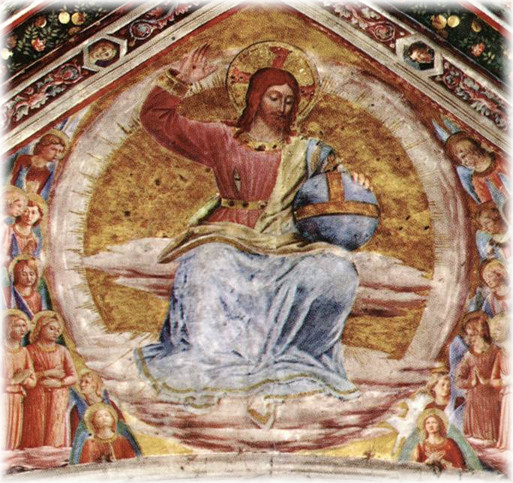
This might be the most terrible portrait of Jesus I've ever seen.

This might be the most terrible portrait of Jesus I’ve ever seen.

I go into all of this to set up what I think should be a similar principle in our theology of salvation–a “soteriological maximalism”, if you will. What do I mean? And where am I going with this? Well, essentially, whichever position presents us with a greater, more complex, and comprehensive view of salvation wrought through Christ ought to be preferred. In other words, whichever view of salvation gives Father, Son, and Spirit more credit for getting more done through Christ’s life, death, and resurrection, all other considerations being equal, we should opt for that one.

For instance, for a long time now I’ve been annoyed at what I see as reductionistic views of the atonement, (ie, how Christ’s death reconciles us to God). Ever since Gustav Aulen’s treatment of the atonement back in the 30s in Christus Victor, theologians have been talking about three different models, types, or “theories” of atonement: moral influence, penal satisfaction, and Christus Victor. J.I. Packer explains the three quite nicely in his classic essay, The Logic of Penal Substitution so I’ll let him expand at length:

1. There is first, the type of account which sees the cross as having its effect entirely on men, whether by revealing God’s love to us, or by bringing home to us how much God hates our sins, or by setting us a supreme example of godliness, or by blazing a trail to God which we may now follow, or by so involving mankind in his redemptive obedience that the life of God now flows into us, or by all these modes together. It is assumed that our basic need is lack of motivation Godward and of openness to the inflow of divine life; all that is needed to set, us in a right relationship with God is a change in us at these two points, and this Christ’s death brings about. The forgiveness of our sins is not a separate problem; as soon as we are changed we become forgivable, and are then forgiven at once. This view has little or no room for any thought of substitution, since it goes so far in equating what Christ did for us with what he does to us.

2. A second type of account sees Christ’s death as having its effect primarily on hostile spiritual forces external to us which are held to be imprisoning us in a captivity of which our inveterate moral twistedness is one sign and symptom. The cross is seen as the work of God going forth to battle as our champion, just as David went forth as Israel’s champion to fight Goliath. Through the cross these hostile forces, however conceived — whether as sin and death, Satan and his hosts, the demonic in society and its structures, the powers of God’s wrath and curse, or anything else — are overcome and nullified, so that Christians are not in bondage to them, but share Christ’s triumph over them. The assumption here is that man’s plight is created entirely by hostile cosmic forces distinct from God; yet, seeing Jesus as our champion, exponents of this view could still properly call him our substitute, just as all the Israelites who declined Goliath’s challenge in 1 Samuel 17:8-11 could properly call David their substitute. Just as a substitute who involves others in the consequences of his action as if they had done it themselves is their representative, so a representative discharging the obligations of those whom he represents is their substitute. What this type of account of the cross affirms (though it is not usually put in these terms) is that the conquering Christ, whose victory secured our release, was our representative substitute.

3. The third type of account denies nothing asserted by the other two views save their assumption that they are complete. It that there is biblical support for all they say, but it goes further. It grounds man’s plight as a victim of sin and Satan in the fact that, for all God’s daily goodness to him, as a sinner he stands under divine judgment, and his bondage to evil is the start of his sentence, and unless God’s rejection of him is turned into acceptance he is lost for ever. On this view, Christ’s death had its effect first on God, who was hereby propitiated (or, better, who hereby propitiated himself), and only because it had this effect did it become an overthrowing of the powers of darkness and a revealing of God’s seeking and saving love. The thought here is that by dying Christ offered to God what the West has called satisfaction for sins, satisfaction which God’s own character dictated as the only means whereby his ‘no’ to us could become a ‘yes’, Whether this Godward satisfaction is understood as the homage of death itself, or death as the perfecting of holy obedience, or an undergoing of the God-forsakenness of hell, which is God’s final judgment on sin, or a perfect confession of man’s sins combined with entry into their bitterness by sympathetic identification, or all these things together (and nothing stops us combining them together), the shape of this view remains the same — that by undergoing the cross Jesus expiated our sins, propitiated our Maker, turned God’s ‘no’ to us into a ‘yes’, and so saved us. All forms of this view see Jesus as our representative substitute in fact, whether or not they call him that, but only certain versions of it represent his substitution as penal.

So here you see the three types. You can probably also see where this is going with respect to “soteriological maximalism.” It has been an lamentable reality that in the West, and especially in contemporary theology, the three forms have been pitted against each other as rival models that we must choose between, because they’re apparently totally incompatible. I think this is an unfortunate, and quite unnecessary move. Indeed, Packer goes on to say as much:

…it should be noted that though the two former views regularly set themselves in antithesis to the third, the third takes up into itself all the positive assertions that they make; which raises the question whether any more is at issue here than the impropriety of treating half-truth as the whole truth, and of rejecting a more comprehensive account on the basis of speculative negations about what God’s holiness requires as a basis for forgiving sins. Were it allowed that the first two views might be misunderstanding and distorting themselves in this way, the much-disputed claim that a broadly substitutionary view of the cross has always been the mainstream Christian opinion might be seen to have substance in it after all. It is a pity that books on the atonement so often take it for granted that accounts of the cross which have appeared as rivals in historical debate must be treated as intrinsically exclusive. This is always arbitrary, and sometimes quite perverse.

In a sense, accepting some form of penal representation allows you to affirm the truth of the other two models, while accounting for more biblical material that can’t be easily folded into those accounts. Indeed, as some theologians like Hans Boersma, Graham Cole, Henri Blocher, and Robert Sherman have pointed out in their different accounts, accepting it actually gives us a coherent grounding for the other two realities. Following a principle of soteriological maximalism, then, we will strive to affirm it because allows us to give Jesus more credit for his work on the cross, not less.

This comes in handy when, for instance, coming to a text like Colossians 2:13-15:

And you, who were dead in your trespasses and the uncircumcision of your flesh, God made alive together with him, having forgiven us all our trespasses, by canceling the record of debt that stood against us with its legal demands. This he set aside, nailing it to the cross. He disarmed the rulers and authorities and put them to open shame, by triumphing over them in him.

Here we see very clearly both legal/penal concerns (v. 14), as well as the theme of victory over powers and principalities. Instead of trying to subsume or screen out either theme, instead we can clearly preach both at once, seeing the way they are seamlessly combined in Scripture, and even begin to trace the way they are organically combined together.

A Note on Girard

Incidentally, this should probably be our approach towards newer atonement accounts of a Girardian “scapegoat” type. Basically, innocent Jesus’ obviously unjust death on the cross at the hands of the powers (government, religion, the mob) exposes the violent, scapegoating mechanism at the heart of sinful society, bringing about repentance, or something like that. You can dig through these resources for more details.  I’ll be honest, on its own, it’s an abysmal account of the atonement that can’t really deal with the biblical material, and usually operates with Girard’s own neo-Marcionite reading of the Old Testament. As Scot McKnight has pointed out, it’s basically a new-style Abelarian/moral influence type, only in this set-up, we’re tempted to forget that we’re the ones who put him up on the Cross. (Also, the above works by Boersma, Sherman, and this one by Horton, all ably critique Girardian atonement types.) Still, it is possible to take some of Girard’s insights about the scapegoating process in general and fold them into Christ’s work of exposing the powers of evil on the Cross.

Also, Girardian types remind us of the boundary measure we mentioned with theological maximalism. As I said, Girardian types usually have to screen out, or hold up as false, most of the Old Testament sacrificial system, as well as reject any image of God dealing out judgment upon sin as punishment. And yet the acknowledgement that the Creator God is the just judge who punishes sin stands clearly at the center of the story of Israel’s dealings with him. In putting forward a view of the atonement that’s allegedly consistent with a glorious ‘non-violent’ God, not only do these accounts deny the accomplishments that penal accounts affirm, they have to do so contrary to the witness of Scripture as well.

Objections and Conclusions

I can, at this point, anticipate a couple of objections at this point along the lines of “Well, what about universalism? That seems to make Jesus a more able Savior, wouldn’t it? Saving all is better than saving only some?” Or again, “What about theosis, or Eastern Orthodox forms of deification? Shouldn’t we then try and figure out a way to affirm those? ‘Deifying’ people seems like an extra step up, doesn’t it?” Well, honestly, I don’t have time to address both adequately, but I’d simply say this is where we need to make sure our ideas about what is ‘maximal’ is being normed and formed by Scripture. In the case of universalism, the numeric ‘more’ that seems more maximal must be submitted to the scriptural judgments we have on the subject that apparently imply otherwise.

On deification, actually I’d say that this ought to motivate us to re-examine our hesitancy to reject any notion of deification as entirely out of bounds for a Reformed, or simply biblical, account of Christ’s work for us. J. Todd Billings has done some excellent work to make a case for a Calvinistic doctrine of ‘deification’ through union with Christ that doesn’t violate biblical teaching on the Creator/creature distinction. A number of other Reformed theologians (Michael Horton, Robert Letham) have been affirming something similar as well.

At the end of this (already too long) post, all I’ll say is that our instinct in reading Scripture and preaching Christ should be to give him as much credit as possible for “so great a salvation.”

Soli Deo Gloria


Good Friday: The Active Passion of Christ

On Good Friday, more than any other day, we are confronted with the bloody reality of the passion of our savior. As my pastor pointed out this Sunday, we’re not talking about “passion” in the typical modern sense of “driving motive” or “overwhelming emotion”, but rather his trial, torture, and death on the cross. Christ’s passion is his passio, those events of which he is the patient, the one being acted on.

Sitting in service on Sunday, I reflected on how easy it is to see Jesus in his passion as pure victim. Many of us are tempted by centuries of paintings and passion plays to see a helpless Jesus hanging on the cross, bearing the sins of the world at the hands of sinful men. Or again,  at a theological level, some of us simply see him as a passive object of the Father’s overwhelming decree and action. While I don’t want to deny either human responsibility, or Jesus’ submission to the Father, I was once again struck by the fact that Jesus’ passion was an actively chosen one.

When confronted with Pilate’s claim to ultimate human authority, the very authority and power that would be used to subject him to the cross, Jesus responds with an assertion of divine sovereignty:

christ-carrying-the-crossSo Pilate said to him, “You will not speak to me? Do you not know that I have authority to release you and authority to crucify you?” Jesus answered him, “You would have no authority over me at all unless it had been given you from above.” (John 19:10-11a)

According to Jesus, then, in submitting to the authority of Pilate and the hands of men, he is not ultimately at their disposal or mercy, but that of the One who reigns from a much higher throne.

Pushing even further back, Jesus goes on to clarify that this is not a will or authority imposed by his Father coercively, but one that the Divine Son himself actively chooses to obey:

For this reason the Father loves me, because I lay down my life that I may take it up again. No one takes it from me, but I lay it down of my own accord. I have authority to lay it down, and I have authority to take it up again. This charge I have received from my Father.” (John 10:17-18)

While the task of the cross was one given him by the Father, it nonetheless taken on by the Son in the power of the Spirit as an outflow of the perfect trinitarian unity of will to save.

Jesus’ passion, then, was an active one. Every blow received from the hands of mocking guards, he received by his own choice. Every false trial he was put through, he stood in the docket freely. Each stumbling step he took towards Golgotha, he walked willingly. Any hammer blow driving the nails deeper into the wood through his hands, was one he sovereignly allowed to pierce his flesh. And that final breath he breathed out from the Cross? He expired it at the time of his own determination.

In other words, as one of my favorite bands puts it:

…Jesus never fell in love,
With open eyes He walked directly to the cross,
He knew exactly what I cost,
and He still went.

-My Epic, “Childbodybride”

Today, then, let us praise and love the Son as the Father does, for truly, he “lays his life down of his own accord” for us and our salvation.

Soli Deo Gloria

In What Sense Was The Atonement Necessary?

redemptionThat Christ died for our sins is beyond question. (1 Cor. 15:3; Rom. 5:8-11; 2 Cor. 5:21) In what sense was Jesus’s death for sin necessary, though? The issue of the necessity of atonement is a complex one involving many layers from various angles. John Murray sheds some light on at least one area by making a very helpful distinction in his work Redemption: Accomplish and Applied between two views of the necessity of Christ’s work on the Cross that have been held throughout the history of theology.

Hypothetical Necessity – First is the view that he terms “hypothetical necessity” (pg. 11), in which Jesus’ death is held to be not strictly necessary. Theoretically it is possible that God could have saved his church through some means other that Christ’s sin-bearing death, and victorious resurrection if he so chose. He is God for whom all things are possible. Apparently in his wisdom though, he found that this was the most fitting means in that it combines the greatest amount of blessings, virtues, and so forth. Murray cites Augustine and Aquinas as historical representatives of this view. Knowing what I know of them, it sounds like the sort of conclusion they might come to.

Consequent Absolute Necessity – The second view Murray calls “consequent absolute necessity” and it is apparently the historical Protestant position (Calvin, Institutes, II.16.5). It holds that, given God’s decision to save, Christ’s death for sin was absolutely necessary. So, to be clear, first, it affirms that strictly speaking, Christ’s death is unnecessary. God did not need Christ to die. He is perfect and complete in his own life before the creation or the redemption of the world without it. And yet, consequent, or logically-following his decision to save, it is absolutely necessary given the nature of sin and the nature of God that it should happen through Christ’s vicarious sacrifice. (pg. 12) So, if moved by love, God is going to save people in a way consistent with his own holy, just, and merciful character, the atonement is necessary. It is this view that Murray judges to be the correct one and to which I myself subscribe.

Support Some might find this to be ‘vain speculation’, but Murray points various texts to the effect that such a conclusion is warranted. (See pp. 13-18) One particular argument he forwards is connected to the fact that the Scriptures point to Christ’s death as greatest proof we have of the love of God (Rom. 5:8; 1 John 4:10) That God was willing to spare his own Son testifies to the costliness of his love. (Rom 8:32) Murray asks, “would the Cross be an extreme exhibition of love if there were no necessity for such costliness?” (pg. 17) Can’t we only draw that conclusion if there were no other options? If there wasn’t some extreme sense of necessity involved? I find that conclusion hard to escape. As another has pointed out, it makes no sense for your friend to tell you, “Look how much I love you!” and then jump into a lake and drown. If he jumps in front of a bus to push you out of the way, that’s another story.

Another theological objection is that this seems to put limits on God. Isn’t it arrogant to say what God can and can’t do? At one level yes, we ought to be careful about being too eager to say what God can’t or cannot do. That’s why Murray spends several pages showing that this is a judgment made on scriptural grounds; its safest to make judgments on what God has told us about himself. It must also be pointed out that there are several things it is perfectly fine to say God’s ‘cannot’ do which do not rob him of glory. God’s inability to lie, be wicked, or deny himself is no affront to his majesty. In fact, “such ‘cannots’ are his glory and for us to refrain from reckoning with such ‘impossibles’ would be to deny his glory and perfection.” (pg. 13)

So was Jesus’ death necessary? In one sense, no. Jesus didn’t need to die–he could have left us to our peril and woe. In another sense, once God decided (in some pre-temporal sense) to save us by grace, it could come in no other way than through the death of His Own Son.

Soli Deo Gloria

Victory

christ-on-the-cross-1587This is another of my college poems. It’s one of the only ones I thought was half-way decent and meant anything:

Victory

Victory, I think, was never so bloody,

or the victor so broken—like a rag doll really.

He kind of hung there, limp.

Too much blood to look at;

I think he was more like a clump of

tenderized meat than a man.

The only thing that kept him upright

were a couple of grimy nails the size of

cigars forced through his hands.

I couldn’t bear to look at him.

(Odd, to think the man who saved my life

couldn’t stand up straight.)

Ironic, to think of His enemies’ smug smiles,

gloating over their handiwork.

The crowds mocking, laughing even, at this

Champion, even as he begged his Father

For their forgiveness.

They didn’t understand, each drop of blood,

each sigh, each groan brought Him one step

closer to His ambition, one step closer

to their lives.

They didn’t remember, no one took

His life from Him, He gave it freely.

That is why, I think, so much that day

went on unnoticed.

Nobody saw the beggar

whose sight was restored,

weeping softly.

Or the father of a girl

who was “only sleeping”, staring on

in disbelief.

The crowds weren’t listening when

Institutions fell and kingdoms were

laid low with every

lash and hammerfall.

As Laws established long before their fathers

were swept away by the blood

pouring from his torn brow.

But nobody saw it.

He killed Death before their very eyes!

And almost

no one heard

His ragged words of triumph, “It is finished”,

dragged from cracked and bloody lips,

stating his conquest.

Almost nobody saw it, besides a few friends

and a dirty thief hanging next to Him.

Still, it happened. And in the end,

Victory, poured out in blood and water that day,

like a broken fountain.

Soli Deo Gloria

Jesus Went to the Cross For Me–Now What?

crossI’ve spent a lot of time thinking about the Cross–what did it accomplish, why did it happen, was it planned, what should we think about it, etc. I don’t regret any of it. A good atonement theology is at the core of any good understanding of Jesus and the Gospel. If your understanding of the atonement is narrow and weak, so will be the salvation Jesus offers. The more efficacious, broad, bold, and beautiful you see the Cross to be is the measure of how efficacious, broad, bold, and beautiful you will find Jesus. And that, of course, will determine the character of our discipleship and our churches.

Often-times we don’t get to that second part. We stop at theory and don’t move to practice–to response. We pour over all the verses that talk about what Jesus did, and we don’t think about what the Bible says our response should be to it. So how should we react to Christ’s love-provoked, justice-satisfying, holiness-creating, devil-defeating, guilt-blotting, righteousness-fulfilling, self-giving on the Cross?

Leon Morris helpfully lays out 8 New Testament responses to the Cross:

  1. We have faith in the efficacy of his blood, Romans 3:25
  2. We are to glory alone in the Cross of Christ, Galatians 6:14
  3. We should determine to know nothing save Jesus Christ and Him crucified, 1 Corinthians 2:2
  4. We are to look upon Christ’s offering of Himself as an example, and to follow in His steps, 1 Peter 2:21
  5. We are to overcome by the blood of the Lamb, Revelation 12:11
  6. We are to reckon ourselves crucified with Christ, and continually seek to be made conformable to His death–Romans 6:3, 4, 5, 8; Galatians 2:20; Philippians 3:10; Colossians 2:12; 2 Timothy 2:11; 1 Peter 4:13
  7. We are to preach Christ crucified, 1 Corinthians 1:23
  8. We are to “proclaim the Lord’s death till He come.” in our observing the Lord’s Supper, 1 Corinthians 11:26; cf. “a communion of the blood of Christ,” 1 Corinthians 10:16

–Leon Morris, The Cross in the New Testament, pg. 426

We could easily find more, but that should be plenty to keep us, both as individuals and as churches, busy for a while.

Soli Deo Gloria

Wrath or Love? Calvin on Why Jesus Goes to the Cross

Why did Jesus die on the cross? Was it because of God’s wrath or rather because of his love? Here’s one of my favorite passages where my boy Calvin breaks it down. For those of us trained to think in caricatures of Calvin as the perpetrator of a cold, legalistic theological system, his answer might be surprising:

Although this statement is tempered to our feeble comprehension, it is not said falsely. For God, who is the highest righteousness, cannot love the unrighteousness that he sees in us all. All of us, therefore, have in ourselves something deserving of God’s hatred. With regard to our corrupt nature and the wicked life that follows it, all of us surely displease God, are guilty in his sight, and are born to the damnation of hell.  But because the Lord wills not to lose what is his in us, out of his own kindness he still finds something to love. However much we may be sinners by our own fault, we nevertheless remain his creatures. However much we have brought death upon ourselves, yet he has created us unto life. Thus he is moved by pure and freely given love of us to receive us into grace. Since there is a perpetual and irreconcilable disagreement between righteousness and unrighteousness, so long as we remain sinners he cannot receive us completely.

Therefore, to take away all cause for enmity and to reconcile us utterly to himself, he wipes out all evil in us by the expiation set forth in the death of Christ; that we, who were previously unclean and impure, may show ourselves righteous and holy in his sight. Therefore, by his love God the Father goes before and anticipates our reconciliation in Christ. Indeed, “because he first loved us” [1 John 4:19], he afterward reconciles us to himself. But until Christ succors us by his death, the unrighteousness that deserves God’s indignation remains in us, and is accursed and condemned before him. Hence, we can be fully and firmly joined with God only when Christ joins us with him. If, then, we would be assured that God is pleased with and kindly disposed toward us, we must fix our eyes and minds on Christ alone. For actually, through him alone we escape the imputation of our sins to us — an imputation bringing with it the wrath of God…

For this reason, Paul says that the love with which God embraced us “before the creation of the world” was established and grounded in Christ [Ephesians 1:4-5]. These things are plain and in agreement with Scripture, and beautifully harmonize those passages in which it is said that God declared his love toward us in giving his only-begotten Son to die [John 3:16]; and, conversely, that God was our enemy before he was again made favorable to us by Christ’s death [Romans 5:10]. But to render these things more certain among those who require the testimony of the ancient church, I shall quote a passage of Augustine where the very thing is taught:

“God’s love,” says he, “is incomprehensible and unchangeable. For it was not after we were reconciled to him through the blood of his Son that he began to love us. Rather, he has loved us before the world was created, that we also might be his sons along with his only-begotten Son — before we became anything at all. The fact that we were reconciled through Christ’s death must not be understood as if his Son reconciled us to him that he might now begin to love those whom he had hated. Rather, we have already been reconciled him who loves us, with whom we were enemies on account of sin. The apostle will testify whether I am speaking the truth: ‘God shows his love for us in that while we were yet sinners Christ died for us’ [Romans 5:8]. Therefore, he loved us even when we practiced enmity toward him and committed wickedness. Thus in a marvelous and divine way he loved us even when he hated us. For he hated us for what we were that he had not made; yet because our wickedness had not entirely consumed his handiwork, he knew how, at the same time, to hate in each one of us what we had made, and to love what he had made.”

These are Augustine’s words.

John Calvin, Institutes of the Christian Religion, ed. John T. McNeill, trans. Ford Lewis  Battles (Philadelphia: Westminster Press, 1960), 2.16.3-4

Soli Deo Gloria

Is God Allowed To Do Stuff We Can’t? Some Thoughts on Penal Substitution

Ever heard a kid ask, “Why can’t I do that when you’re always doing it?” I’m sure those of you parents have heard this refrain from your children.  Before getting hired at my church, I worked for a few years as a substitute teacher and every so often I’d get this from a kid who wanted to defend using a cell phone or eating in class.

I’d often debate with myself whether or not this was a fair argument. Is it fair for a teacher to use their cell phone in class when a student is forbidden to? What are the reasons for this? Is it fear that phones might be used for cheating? Are they a distraction in the learning process? Are they just inherently wicked? Depending on the answer, it might be an unfair double-standard; I’m pretty sure all the times I ate in front of those hungry children were.

This raises the question, though, “Are there actions that, in virtue of the different roles which students and teachers occupy, are inappropriate for students but are entirely appropriate for their teachers?” I think there are probably a few. For instance, it seems entirely appropriate for a teacher to have possession of the answers of a test out during the administration of a test while it is inappropriate for the students to have the same. Or again, it is entirely appropriate for a teacher to be talking to a student during a test, but not for another student.

Let’s broaden the principle. Is it the case that some actions are appropriate for some people given their role or job, but entirely inappropriate for others given theirs, such that the one can essentially say to the other, “Do not do what you see me doing”? I think that seems reasonable. A parent might say to a child, “Do not use the knife” without being hypocritical. A police officer might enforce restrictions on hand guns while using a gun. In virtue of their different roles, the parent is allowed to do what the child is not and the police officer is allowed to carry what the average civilian is not.

One more question: Is it possible that one person, trying to abide by the same principle as another, might have to do exactly what they have forbidden the second from doing precisely because of their different roles? Think of a chemistry professor who, in the interest of student safety, handles dangerous chemicals that he has expressly forbidden his students from handling. Think of a mother who, in the interest of fairness, forbids her older children from punishing their younger siblings for their faults because that is her job. She knows they won’t be able to do it properly, so she does it herself. In both cases, one person forbids another from taking an action that they themselves will take for exactly the same reason. The action itself is not inherently wicked or wrong–it is wrong for some given their position or abilities, while it not for others.

The Objection: Is God Unfair?

Why this digression into the fairness of in-class cell phone usage by substitute teachers? Last week I posted a little piece on penal substitutionary atonement (PSA), the teaching that part of what Jesus did on the cross was to suffer the judgment of God for sins in our place thereby saving us from having to bear the penalty ourselves. This sparked some off some friendly (and some not-so-friendly) conversation about the doctrine; apparently there are a number of people who don’t think to highly of this teaching.

Now, I have to admit, this area of Christian theology is one of those that I’ve done a fair bit of reading on, for an amateur theologian. I think I’ve heard most of the classic arguments against penal substitution that are out there (it’s unbiblical, it supports violence, it’s a hold-over of primitive deities, it’s the product of Calvin’s legalistic mind, there is no possibility of moral transfer, it’s a legal fiction, etc.). I think there are answers to all of these so I don’t plan on going into most of those today. There is one increasingly common type of argument against the doctrine that came up in the conversations that goes something like this:

God tells us to forgive one another and not to demand retribution. Jesus says to turn the other cheek, bless those who curse you, forgive those who hate you, and love those who harm you. If that’s the case, then how is it that we can conceive of God demanding retribution for sin and, specifically, imagine that this is what is happening on the cross of Jesus? Isn’t that God doing exactly what he tells us not to do? Isn’t that hypocritical and immoral? 

As one blogger recently put it, “Here’s a simple rule of thumb: if your theory of the cross completely contradicts everything Jesus stood for and taught… it’s probably wrong. It’s sad that I need to say this, but the gospel is rooted in love of enemies, not in retribution. Retribution is the opposite of forgiveness. So the idea that the entire work of Jesus was to fulfill the demands of retribution is simply absurd.” Finally, one of my recent interlocutors put it this way, “But if the cross is about retribution, punishment, then God teaches us to “do as I say, not as I do.“”

No, God is God

What can be said about this? Is penal substitution an instance of God saying “do as I say, not as I do?” Would this make God inconsistent or unfair? I won’t give an exhaustive answer to the various missteps and mistakes in this sort of thinking (particularly the false dichotomy between “retributive” and “restorative” justice, which I plan on dealing with in a future post), but I will offer up a few clarifying points on the thought that God can do things that we can’t:

Only God is God In general, there are a number of things that are appropriate for God to do given his role as God, King, Judge, Creator of all the earth, that it is not permitted for me to do in my role as human, created thing, sinner, and so forth. For instance, it is entirely appropriate for God to seek and receive worship. In virtue of his infinite perfections, his beauty, his glory, his majesty, his love, and goodness, God is absolutely worthy of worship and for him to demand or receive it is simply a right concern for truth. On the other hand, it is wicked for us to receive worship or to seek it. I am a created thing as well as a sinner, and therefore I am not worthy of worship. For anyone to worship me would be to perpetrate a lie. In fact, the reason we are not to receive worship is because it is God’s prerogative and his alone. At this point it would be the height of silliness for someone to look at God and say, “Well, you’re always seeking worship and yet you tell us not to seek worship or receive praise. What’s the deal?” The deal is that, looking at things realistically, you’re an unworthy ant, and God is God. This is at least one place, and there are a number others, where God is allowed to say, “Do as I say, not as I do…because I am God and you are not.”

Only God is Judge Turning to the subject of judgment, punishment, and retribution we find Paul writing, “Repay no one evil for evil, but give thought to do what is honorable in the sight of all. If possible, so far as it depends on you, live peaceably with all. Beloved, never avenge yourselves, but leave it to the wrath of God, for it is written, ‘Vengeance is mine, I will repay, says the Lord.’ “(Romans 12:17-19) In this particular passage Paul says not to inflict judgment on your enemies, not because God never does that sort of thing, but because he’s said that’s the sort of thing only He should do. The explicit logic of the text is, “Don’t do that. It’s my job. I don’t want you taking vengeance. Vengeance is mine.” Paul wasn’t squeamish about this sort of logic the way a number of anti-PSA advocates are because it’s all over the Old Testament. The Law (Exod. 20:5), the Psalms (Ps. 75:7), and the Prophets (Ezek. 5:8) tell us that God is the judge of the world and so it is his particular job to take care of things, vindicate whoever needs vindicating, rewarding those who should be rewarded, and punishing those who ought to be punished. He is the sovereign Lord of the world with the authority and might to execute judgments. (Ps. 94) There is no thought that judgment or punishment is inherently wicked in the Hebrew Bible, especially in the hands of the righteous Lord of all the earth. Unless we want to slide into a crypto-Marcionism that pits the God of the OT against the God of the NT, we have to factor that into our thinking. There is a difference between being Christo-centric and Christo-reductionistic in a fashion that looks at Jesus without setting his life, death, and resurrection within the context of the whole canon and God’s revelation of himself to Israel. But even just looking to Jesus, we see that indeed, his heart longs to shelter Jerusalem under his wings to save them, but this comes only in the context of his recognition and proclamation of judgment on their sins. (Matt 23:29-39)

We Can’t Handle It Why might God call us to forego retribution and not give vent to our wrath against others, when he apparently is allowed to? One reason that comes to mind is that we might not be suited to the task. Just as the mother does not allow her slightly older children to punish the younger because their own judgment is faulty, God does not allow us to exercise that kind of judgment because we are not able to do so righteously. Our judgments are flawed and provisional, while His are perfect and definitive; ours are infected by sin, while His are holy. That seems like a perfectly good reason for God to tell us not to do something that He himself does without imagining that the action is inherently wrong.

Another reason we are not suited to it is because we can’t handle it. Just as the chemistry professor forbids his students from handling the dangerous chemicals, God might forbid his children from handling vengeance. If we take vengeance upon ourselves, seeking retribution, and administering our own judgment we are liable to get sucked in. Given our sin-sick souls it is easy to see righteous anger and a passion for justice be overwhelmed by selfish pride and drawn into hate, bitterness, and malice. God is perfect love. His judgments flow from a heart free of corruption that cannot be overwhelmed by sinful passions.

How Does God Forgive? Coming to the issue of forgiveness and judgment: It is true that God tells us to forgive without seeking vengeance. Is it then wrong for him to lay the judgment for our sins on Christ in effecting our forgiveness? Two points come into consideration here:

a. Forgiveness at its most basic level is the generous release of an acknowledged debt. In commercial terms, which is where we derive the image in the NT, it is saying, “You owe me this, but I’m not going to make you repay.” Transferring it to the moral realm, “That was wrong, but I’m not going to make you suffer for it.” For us to forgive someone is for us to not make them pay or suffer for an acknowledged wrong-doing. Taking into consideration God’s role in the universe, it is entirely reasonable to think that God’s forgiveness will look slightly different from ours. As we’ve already noted, God is King and Judge of the world. Part of his faithfulness to creation is to execute justice within it, to maintain the moral order he has established–which is not some impersonal justice, but one that is reflective of his own holy nature–in essence, to make sure that payment is rendered and that wrong-doing is punished. Justice involves more than that, but certainly not less.

Given this, forgiveness cannot be a simple affair of “letting it go”, or passing it over for God. His own character, his holiness, his righteousness, his justice means that he cannot treat sin as if it did not happen. The cross is the way that God makes sure payment is rendered, that sin is punished and yet still forgive sinners by not making them pay for sins themselves. PSA is not a denial that God forgives, but an explanation of how God forgives justly. It is how He, as King of the universe, goes about lovingly forgiving His enemies who deserve judgment. He suffers the judgment in himself. Realize, this whole explanation is articulated within a Trinitarian framework in which the Father, Son, and Spirit are all cooperating to achieve atonement. The Father is not pitted against the Son because the Father sends the Son in love and the Son, out of love, voluntarily comes in the Spirit to offer up his life in our place. The Son suffering judgment on the cross is God forgiving us.

b. The second thing to recognize is that our forgiveness comes after his forgiveness, on the basis of Christ’s atoning work. We can let things go, forgive as we’ve been forgiven, forgo vengeance, and avoid retribution because we know that these things are safely in God’s loving hands. We don’t have to exact payment. Justice for the sins I suffer are handled the way my own sins are handled–either on the cross, or at the final assize.

Conclusions

These reflections are far from exhaustive or adequate to the subject matter. Much more could be and has been said on the subjects of forgiveness, substitution, justice, and the cross. In this piece I simply wanted to make one small point: sometimes it’s okay for God to tell us not to do something that he himself does. Executing judgment is one of those things.

Soli Deo Gloria

Where is True Peace Found?

I’ve begun my second attempt through John Bunyan’s spiritual classic, Pilgrim’s Progress this week in my attempt to find more theologically-rich devotional literature. (The first was an unfortunately broken off in college due to my immaturity.) I’m pleased to say that I have been thoroughly blessed by it. It’s easy to see why Charles Spurgeon confessed that, “Next to the Bible, the book I value most is John Bunyan’s The Pilgrim’s Progress.” The allegory is riddled with biblical quotations and wisdom designed to illustrate the pilgrimage of the Christina through the current world on to glory.

Bunyan does this by telling a dream-vision he has of the pilgrimage of Christian, an everyman character, who is on a journey from his home-town “the City of Destruction” to the “Celestial City.” His journey is provoked by his reading of a book that causes him great distress and anguish about his spiritual state.  On the way he is met by various characters such as Worldly-Wise Man and Evangelist who give him varied instructions as to ease his turmoil. Eventually after a foolish detour in the direction of the village of Morality on the advice of Worldly-Wise Man that lands him in great peril, he takes Evangelist’s advice and heads down the narrow road that leads to life and his true journey begins.

Burdens Released

Christian is committed and so he makes great headway for a while, but from the very start of his journey he is weighed down by a burden, a pack that hinders his progress. The pack symbolizes the spiritual weight of his sins, the anxiety and fear of judgment, the encumberance of great guilt and shame. He suffers with it despite his best efforts as well as the godly counsel of those good characters such as Evangelist and Interpreter who open the truth to him and he receives no respite until he catches a vision of something glorious:

Now I saw in my dream, that the highway up which Christian was to go, was fenced on either side with a wall, and that wall was called Salvation. Isaiah 26:1. Up this way, therefore, did burdened Christian run, but not without great difficulty, because of the load on his back. He ran thus till he came at a place somewhat ascending; and upon that place stood a cross, and a little below, in the bottom, a sepulchre. So I saw in my dream, that just as Christian came up with the cross, his burden loosed from off his shoulders, and fell from off his back, and began to tumble, and so continued to do till it came to the mouth of the sepulchre, where it fell in, and I saw it no more. 

Then was Christian glad and lightsome, and said with a merry heart, “He hath given me rest by his sorrow, and life by his death.” Then he stood still a while, to look and wonder; for it was very surprising to him that the sight of the cross should thus ease him of his burden. He looked, therefore, and looked again, even till the springs that were in his head sent the waters down his cheeks. Zech. 12:10. Now as he stood looking and weeping, behold, three Shining Ones came to him, and saluted him with, “Peace be to thee.” So the first said to him, “Thy sins be forgiven thee,” Mark 2:5; the second stripped him of his rags, and clothed him with change of raiment, Zech. 3:4; the third also set a mark on his forehead, Eph. 1:13, and gave him a roll with a seal upon it, which he bid him look on as he ran, and that he should give it in at the celestial gate: so they went their way. Then Christian gave three leaps for joy, and went on singing,

“Thus far did I come laden with my sin,
Nor could aught ease the grief that I was in,
Till I came hither. What a place is this!
Must here be the beginning of my bliss?
Must here the burden fall from off my back?
Must here the strings that bound it to me crack?
Blest cross! blest sepulchre! blest rather be
The Man that there was put to shame for me!”

So many of us suffer the burdens of guilt and shame. We walk day in and day out bearing a great burden, an inexpressible anxiety and grief that doesn’t seem to dissipate no matter how many self-help books we read, mantras we chant, or health-goals we set and meet.

Christian found the true source of peace: “Blest cross! blest sepulchre! blest rather be/The Man that there was put to shame for me!” In Christ all of our sins, our shames, our hurts are taken, destroyed on the cross with him, buried in the sepulchre with him, and in him we rise again to new life, freedom, joy and hope. In him we find true peace.

Soli Deo Gloria

N.T. Wright on Penal Substitution

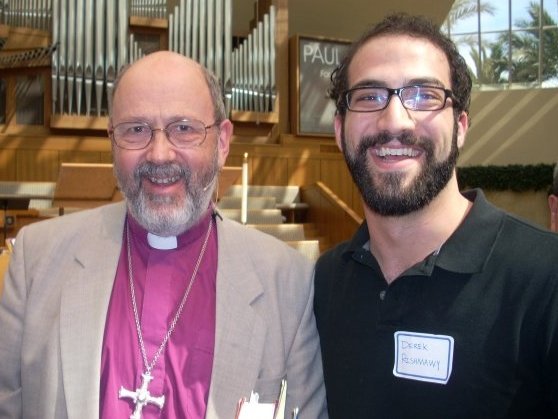
I’ll come clean and say that I’m a huge N.T. Wright fan. I have been for years.

Wright and I are BFFs.

For those of you wondering, Wright is a British New Testament scholar who ranks among the top 2 or 3 most prolific, somewhat controversial, and influential churchmen on either side of the pond in a wide variety of theological circles.  I attribute my love for Biblical studies, and the New Testament in particular, to my early encounters with his lectures, essays, and books. I generally pre-order his books, both popular and scholarly, and have read all of his big pieces with the exception of a couple of difficult-to-acquire texts.  (I knew my wife McKenna was a keeper when she bought me his tome The Resurrection of the Son of God for my first birthday when we were dating. Later she took me to go see him speak on our anniversary.) Which is to say, I think I’ve got a decent idea of what Wright teaches on various subjects in New Testament studies and theology. Which brings me to the subject at hand.

As I mentioned, Wright is a bit controversial in some circles due to some of his, admittedly unclear/difficult to understand, teaching on Paul’s doctrine of justification.  Wright’s an adherent of the New Perspective on Paul and a unique one at that. What’s more, his sentences can get really long. (For those of you interested, here’s his most recent, clearest piece on the subject delivered at the Evangelical Theological Society a couple years ago. Note: I am not endorsing it. Just sharing for clarity’s sake.) One of the things that’s consistently surprised me, however, is the way that both friends and foes have misunderstood his teaching on the atonement, particularly penal substitutionary atonement (the idea that Christ’s death is in some way a representative one in which he suffers the judgment/wrath of God on behalf of deserving sinners thereby releasing them from guilt and obtaining forgiveness for them). Interestingly enough, you can find both conservative Reformed types being joined by emergenty Anabaptist types saying he denies it, the former accusatorially, the latter joyfully.

I just want to take a moment to clarify, with Wright’s own words, that Wright does affirm penal substitutionary atonement. He has been clear on this over the years, but somehow that’s been lost on many due in some cases to their willingness to read all sorts of faults into him because of his position on justification, or because to some people, affirming Christus Victor components to Christ’s atonement, the idea that in his life, death, and resurrection Jesus defeated the principalities and powers of satan, sin, and death,  means a necessary denial of PSA. It doesn’t. The Reformers all affirmed both themes because both are in Scripture. Wright isn’t any different. So, without further ado here is Wright himself.

Wright Speaks

First, a short little video where Wright says it clear-out, 1:19 onward:

Next, here’s a big long quote from an easily-accessed online article in which he is critiquing a lecture by Dr. Jeffrey Johns as well as a recent book on the subject. He is dealing with what he calls “caricatures of the cross”, correcting so many bad arguments against penal substitutionary atonement by pointing out that they are based on misunderstandings of the doctrine as well as misreadings of certain biblical texts which point to it. Don’t be scared by the length. It is absolutely worth your time, specialist or not:

Quoting 2 Corinthians 5.21 and Galatians 3.13 (‘God made him to be sin for us who knew no sin,’ and ‘Christ became a curse for us’), he [Dr. Johns] tells us the explanation of these verses he was given as a child and declares that, because that explanation is repulsive and nonsensical, we must reject it. His summary starts quite mildly: God was very angry with us, and had to punish us, but instead he sent his Son as a substitute to die for us, so that God stopped being angry with us . . . But then, inserting into this account the things Dr John realised he disliked at the age of ten, and which he wants to attack to bring down the whole edifice, he goes on: ‘What sort of God was this, getting so angry with the world and the people he created, and then, to calm himself down, demanding the blood of this own Son? And anyway, why should God forgive us through punishing somebody else? It was worse than illogical, it was insane. It made God sound like a psychopath. If any human being behaved like this we’d say they were a monster . . . It just doesn’t make sense to talk about a nice Jesus down here, placating the wrath of a nasty, angry Father God in heaven. . . sending a substitute to vent his punishment on.’

Well, yes. We must of course grant that many Christians have spoken, in effect, of the angry God upstairs and the suffering Jesus placating him. Spoken? They’ve painted it: many a mediaeval altarpiece, many a devotional artwork, have sketched exactly that. And of course for some late mediaeval theologians this was the point of the Mass: God was angry, but by performing this propitiatory sacrifice once more, the priest could make it all right. And it was at least in part in reaction against this understanding of the Eucharist that the Reformers rightly insisted that what happened on the cross happened once for all. They did not invent, they merely adapted and relocated, the idea of the propitiation of God’s wrath through the death of Jesus. We must of course acknowledge that many, alas, have since then offered more caricatures of the biblical doctrine. It is all too possible to take elements from the biblical witness and present them within a controlling narrative gleaned from somewhere else, like a child doing a follow-the-dots puzzle without paying attention to the numbers and producing a dog instead of a rabbit.

This is what happens when people present over-simple stories with an angry God and a loving Jesus, with a God who demands blood and doesn’t much mind whose it is as long as it’s innocent. You’d have thought people would notice that this flies in the face of John’s and Paul’s deep-rooted theology of the love of the triune God: not ‘God was so angry with the world that he gave us his son’ but ‘God so loved the world that he gave us his son’. That’s why, when I sing that interesting recent song ‘In Christ alone my hope is found’, and we come to the line, ‘And on the cross, as Jesus died, the wrath of God was satisfied’, I believe it’s more deeply true to sing ‘the love of God was satisfied’. I commend that alteration to those who sing that song, which is in other respects one of the very few really solid recent additions to our repertoire. So we must readily acknowledge that of course there are caricatures of the biblical doctrine all around, within easy reach – just as there are of other doctrines, of course, such as that of God’s grace.

But how does the caricature relate to what we find in the New Testament? Actually, how does it relate to Dr John’s initial summary? There he states, as we saw, that God sent Jesus to do this: yes, and that’s what the New Testament says too, at all the key points; and if we ask why, the answer is always, in Paul, John and everywhere else, the wonderful greatness of God’s merciful love. You can’t play off the juridical account of atonement, so called, against an account which stresses God’s love. As those Doctrine Reports rightly saw, they belong together. If God is love, he must utterly reject, and ultimately deal with, all that pollutes, distorts and destroys his world and his image-bearing creatures.

So what should we make of Paul at this point? Dr John never says. Is he content simply to say that the key Pauline statements must be left out of consideration as we construct an atonement theology we can believe today? If so, how can he later quote 2 Corinthians 5.19 (‘God was in Christ reconciling the world to himself’), which, a mere two verses before the one he seems to reject, might be thought to be part of the same argument? What does he make of the explicit statement – this, I think, is as clear as it gets in Paul – in Romans 8.3, where Paul says explicitly that God condemned sin in the flesh of Jesus Christ? Paul does not say that God condemned Jesus; rather, that he condemned sin; but the place where sin was condemned was precisely in the flesh of Jesus, and of Jesus precisely as the Son sent from the Father. And this, we remind ourselves, is the heart of the reason why there is now ‘no condemnation’ for those who are in Christ Jesus (Romans 8.1).

Or what account does Dr John give of Romans 3.24-26? Here, whatever we may think about the notorious hilasterion (‘propitiation’? ‘expiation’? ‘mercy-seat’?), in the preceding section of the letter (1.18-3.20) God’s wrath is revealed against all ungodliness and wickedness, and by the end of the passage, in accordance with the ‘justice’ of God, those who were formerly sinners and under God’s wrath are now justified freely by grace through faith. To put it somewhat crudely, the logic of the whole passage makes it look as though something has happened in the death of Jesus through which the wrath of God has been turned away. It is on this passage that Charles E. B. Cranfield, one of the greatest English commentators of the last generation, wrote a memorable sentence which shows already that the caricature Dr John has offered was exactly that:

We take it that what Paul’s statement that God purposed Christ as a propitiatory victim means is that God, because in His mercy He willed to forgive sinful men and, being truly merciful, willed to forgive them righteously, that is, without in any way condoning their sin, purposed to direct against His own very Self in the person of His Son the full weight of that righteous wrath which they deserved. (A Critical and Exegetical Commentary on the Epistle to the Romans. 2 vols. Edinburgh: T & T Clark; vol. 1, 1975, p. 217.)

Now I do not ask that Dr John, or anyone else, necessarily accept this as the correct interpretation of Romans 3:24-26; nor that, whether or not they accept this exegesis, they believe that this is a true statement of God’s intention in the death of Jesus. All I ask is that Dr John admit that this very careful statement, in which the propitiatory effect of Jesus’ death is seen as the result of God’s overarching and overwhelming mercy and love, and in which the persons of the Trinity are held in extremely close union, is not subject to the critique he has levelled against what increasingly looks like a bizarre (if sadly still well known) caricature.

Not everyone likes Paul, of course – especially some Anglicans. But what about Jesus? Unless we are to go the route of the ‘Jesus Seminar’, and say that Jesus’ death was simply an accident which he never intended and for which, therefore, he offered no theological grid of interpretation, we must give some account of the self-understanding of Jesus in relation to the death which, as at least one substantial stream of scholarship has agreed, he must have known was just round the corner. There were ancient Jewish grids of interpretation available to him, and all the signs are that he made his own creative construal of them, understanding his vocation as the point of convergence of several rich strands of scriptural narrative, heavily freighted with the sense of Israel’s long destiny coming to a dark and decisive climax. In particular, the early Christians were clear that Jesus’ death was to be understood in terms of Isaiah 53, and they were equally clear that this was not a new idea they were wishing back on Jesus. ‘The Son of Man,’ he said, ‘came not to be served but to serve, and to give his life as a ransom for many’ (Mark 10:45). These words – which many have of course been unwilling to credit to Jesus precisely because of the frantic attempt to prevent him alluding to Isaiah 53 – capture the very heart of that great chapter, and as I and others have argued elsewhere it is extremely likely, historically, that he made that entire section of the book of Isaiah thematic for his self-understanding.

Ironically, Dr John himself alludes to Isaiah 53 at the end of his talk, suggesting that Jesus ‘bears our griefs and shares our sorrows’, without realising that if you get one part of Isaiah 53 you probably get the whole thing, and with it not only a substitutionary death but a penal substitutionary death, yet without any of the problems that the caricature would carry:

He was wounded for our transgressions
and bruised for our iniquities;
upon him was the punishment that brought us peace
and with his stripes we are healed.
All we like sheep have gone astray;
We have turned every one to his own way;
And YHWH has laid on him the iniquity of us all.
(Isaiah 53:5-6.)

It is with the Servant, and the theology of the whole of Isaiah 40-55, that we find the explanation for the otherwise bizarre idea of one person standing in for the many (which, as Dr John says, we might otherwise find incomprehensible and deeply offensive). The sense which penal substitution makes it does not make, in the last analysis, within the narrative of feudal systems of honour and shame. It certainly does not make the sense it makes within the world of some arbitrary lawcourt. It makes the sense it makes within the biblical world, the Old Testament world, within which the creator God, faced with a world in rebellion, chose Israel – Abraham and his family – as the means of putting everything right, and, when Israel itself had rebelled, promised to set that right as well and so to complete the purpose of putting humans right and thus setting the whole created order back the right way up. And the long-promised way by which this purpose would be achieved was, as hints and guesses in the Psalms and prophets indicate, that Israel’s representative, the anointed king, would be the one through whom this would be accomplished. Like David facing Goliath, he would stand alone to do for his people what they could not do for themselves. It is because Jesus, as Israel’s representative Messiah, was therefore the representative of the whole human race, that he could appropriately become its substitute. That is how Paul’s logic works. ‘One died for all, therefore all died,’ he wrote in 2 Corinthians 5.14; and thus, seven verses later, ‘God made him to be sin for us, who knew no sin,’ he concluded seven verses later, ‘so that in him we might become the righteousness of God’ (5.21). And it is within that argument that we find the still deeper truth, which is again rooted in the dark hints and guesses of the Old Testament: that the Messiah through whom all this would be accomplished would be the very embodiment of YHWH himself. ‘God was in Christ, reconciling the world to himself’ (2 Corinthians 5.19).

Underneath all this discussion is a deep concern which has emerged again in our own day, notably in the writings of the Yale theologian Miroslav Volf. In his magisterial Exclusion and Embrace (Nashville: Abingdon, 1994), he demonstrates, with sharp examples from his native Balkans, that it simply won’t do, when faced with radical evil, to say, ‘Oh well, don’t worry, I will love you and forgive you anyway.’ That (as the 1938 Doctrine Report already saw) is not forgiveness; it is belittling the evil that has been done. Genuine forgiveness must first ‘exclude’, argues Volf, before it can ’embrace’; it must name and shame the evil, and find an appropriate way of dealing with it, before reconciliation can happen. Otherwise we are just papering over the cracks. As I said early on, if God does not hate the wickedness that happens in his beautiful world, he is neither a good nor a just God, and chaos is come again. Somehow I sense that Dr John knows this, since he writes movingly of Jesus Christ as God coming down into the midst of the mess and the muddle to be with us and . . . to rescue us – though he never says how this rescue is effected. But again and again I sense in Dr John’s writing the problem which Anselm already identified: you have not yet considered how serious sin is. It isn’t that God happens to have a petulant thing about petty rules. He is the wise and loving creator who cannot abide his creation being despoiled. On the cross he drew the full force not only of that despoiling, but of his own proper, judicial, punitive rejection of it, on to himself. That is what the New Testament says. That is what Jesus himself, I have argued elsewhere, believed what was going on. That is what the classic Anglican formularies and liturgy say.

Recently, looking for something else, I came upon this:

God is love, say [some], and therefore he does not require a propitiation. God is love, say the Apostles, and therefore he provides a propitiation. Which of these doctrines appeals best to the conscience? Which of them gives reality, and contents, and substance, to the love of God? Is it not the apostolic doctrine? Does not the other cut out and cast away that very thing which made the soul of God’s love to Paul and John? . . . Nobody has any right to borrow the words ‘God is love’ from an apostle, and then to put them in circulation after carefully emptying them of their apostolic import. . . . But this is what they do who appeal to love against propitiation. To take the condemnation out of the Cross is to take the nerve out of the Gospel . . . Its whole virtue, its consistency with God’s character, its aptness to man’s need, its real dimensions as a revelation of love, depend ultimately on this, that mercy comes to us in it through judgment. (James Denney, The Second Epistle to the Corinthians, Expositor’s Bible, Hodder, 1894, p. 221f.)

When I read that, it sounded as though Denney were addressing Dr John directly. And I was put in mind of a characteristically gentle remark of Henry Chadwick, in his introductory lectures on doctrine which I attended my first year in Oxford. After carefully discussing all the various theories of atonement, Dr Chadwick allowed that there were of course some problems with the idea of penal substitution. But he said, ‘until something like this has been said, it is hard to escape the conclusion that the full story has not yet been told.’ For myself, I prefer to go with Henry Chadwick, and James Denney – and Wesley and Watts, and Cranmer and Hooker, and Athanasius and Augustine and Aquinas – and Paul, Peter, Mark, Luke, John – and, I believe Jesus himself. To throw away the reality because you don’t like the caricature is like cutting out the patient’s heart to stop a nosebleed. Christ died for our sins according to the scriptures, and all because of the unstoppable love of the one creator God. There is ‘no condemnation’ for those who are in Christ, because on the cross God condemned sin in the flesh of the Son who, as the expression of his own self-giving love, had been sent for that very purpose. ‘He did not spare his very own Son, but gave him up for us all.’ That’s what Good Friday was, and is, all about.

Finally, from the same article, Wright explains his confusion that someone could describe a work that had based its understanding of Jesus on Wright’s own scholarship as denying penal substitutionary atonement:

After all, the climax of my book Jesus and the Victory of God…is the longest ever demonstration, in modern times at least, that Jesus’ self-understanding as he went to the cross was rooted in, among other Old Testament passages, Isaiah 53, the clearest and most uncompromising statement of penal substitution you could find.

You can also find various statements elsewhere, including his big commentary on Romans.

The moral of the story is that N.T. Wright affirms penal substitutionary atonement. Sorry uber-conservative Reformed guys, he actually does get the Cross. Sorry, lefty, anti-PSA types, your Kingdom-minded hero says some really old-school Evangelical stuff about the atonement.

For everybody else, you’re welcome.

Soli Deo Gloria

Small Update: For more vindication of this point, John Piper has a statement in his critical book The Future of Justification (pp. 46-53) affirming the Wright, indeed, does affirm PSA.