G.K. Beale on the Presence of a Covenant in Gen. 1-3

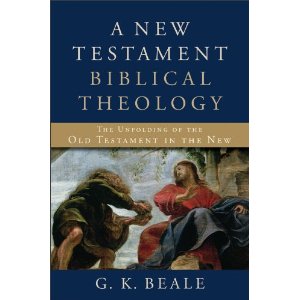
Alright, I finally cracked open G.K. Beale’s 962 page beast, A New Testament Biblical Theology: The Unfolding of the Old Testament in the New.  It’s been staring at me, tempting me with it’s theological awesomeness, so I finally gave in. At about 60 pages in I can safely say this is going to be a watershed work in New Testament studies. Describing the project in a short blog-post while doing it any sort of justice is next to impossible, especially when you consider the fact that Beale’s own description takes him about 25 pages. Still, the title alone points us to fact that one of the main thrusts of Beale’s work is to show how the New Testament can only be understood as the unfolding of the grand story-line of the Old Testament.

In order to do so, he opens with a summary and theological analysis of that story-line, beginning with a focus on the first 3 chapters of Genesis. He pays special attention to Adam, the concept of the Image of God,  and the eschatological thrust of the creational command to “conquer and subdue” the earth and “be fruitful and multiply” (Gen. 1:28), themes of crucial importance for understanding the rest of the tension and story-line of the OT.

It’s at this point that I ran across a very helpful passage discussing the presence of a “covenant” in Gen 1-3. After some careful examination of the texts Beale notes that there are a number of considerations that point us to the idea that it is possible, indeed necessary, to speak of a “covenant” relationship between God and Adam in the Garden, despite the objection that the word “covenant” is not used in the passage. The passage is worth quoting at length here:

In light of these observations, we can speak of the prefall conditions as a “beginning first creation” and the yet-to-come escalated creation conditions to be a consummate “eschatologically” enhanced stage of final blessedness. The period leading up to the reception of these escalated conditions is the time when it would be decided whether Adam would obey or disobey. These escalated conditions indicate that Adam was in a covenant relationship with God. Although the word “covenant” is not used to describe the relationship between God and Adam, the concept of covenant is there. God chooses to initiate a relationship with Adam by imposing an obligation on him (Gen. 2:16-17). This obligation was part of the larger task with which Adam had been commissioned in Gen 1.:28: to “rule” and “subdue” creation and in the process to “be fruitful and multiply and fill the earth.” Adam’s “ruling and subduing” commission included guarding the garden from any threat to its peaceful maintenance. In light of Gen. 2:16-17 and 3:22, Adam would receive irreversible blessings of eternal life on the condition of perfect faith and obedience, and he would receive the decisive curse of death if he was unfaithful and disobedient. Thus, the discernment of irreversible escalated creation conditions discussed above is the best argument for such a covenant notion.

Consequently, the argument that the word “covenant” is not used in Gen. 2-3 does not provide proof that there is not covenant relationship, just as Adam and Eve’s marriage relationship is not termed a “covenant” in Gen. 2:21-24 but expresses covenantal concepts and, in fact, is identified as a covenant elsewhere. Likewise, it is profitable that God’s covenant with Adam is referred to as a covenant elsewhere in the OT. The essential elements of a covenant are found in the Gen. 1-3 narrative: (1) two parties are named; (2) a condition of obedience is set forth; (3) a curse for transgression is threatened; (4) a clear implication of a blessing is promised for obedience. It could be objected that there is no reference to either party reaching a clear agreement or, especially, to Adam accepting the terms set forth in this so-called covenant. However, neither is this the case with Noah and Abraham, with whom God made explicit covenants. –A New Testament Biblical Theology: The Unfolding of the Old Testament in the New, pp 442-43

Again, these conclusions come after a solid examination of the texts (pp. 30-41), and is followed by reinforcing argumentation (pp. 43-46). Still, I found this passage to be helpful in showing that to speak of God’s creational covenant with Adam, or a “covenant of works”, is not an obvious imposition of foreign concepts onto the text in order to fit it into a theological grid, as is so often charged.  Rather, something like this is positively required by a close, narratively-oriented reading of the text.

As I continue to dive into this ambitious, and already thoroughly rewarding work, I’m sure more excerpts and summaries will follow this.

Soli Deo Gloria

The Complex Beauty of the Orthodox Jesus (Or, Why Heresy is too Simple)

My pastor’s sermon this week on Christ reminded me why Ross Douthat’s Bad Religion: How We Became a Nation of Heretics is easily one of the top 5 books I’ve read this year. Amidst the incisive analysis of recent American, religious history and sagacious social commentary he found and quoted one of those passages brimming with spiritual insight into the beauty of the Orthodox faith that Roman Catholics like Douthat seem particularly gifted at expressing. With great paradox and pathos, Douthat lays out the key to understanding the peculiar character of the Christian faith: the perplexing figure of Jesus Christ himself:

Christianity is a paradoxical religion because the Jew of Nazareth is a paradoxical character. No figure in history or fiction contains as many multitudes as the New Testament’s Jesus. He’s a celibate ascetic who enjoys dining with publicans and changing water into wine at weddings. He’s an apocalyptic prophet one moment, a wise ethicist the next. He’s a fierce critic of Jewish religious law who insists that he’s actually fulfilling rather than subverting it. He preaches a reversal of every social hierarchy while deliberately avoiding explicitly political claims. He promises to set parents against children and then disallows divorce; he consorts with prostitutes while denouncing even lustful thoughts. He makes wild claims about his own relationship with God, and perhaps his own divinity, without displaying any of the usual signs of megalomania or madness. He can be egalitarian and hierarchical, gentle and impatient, extraordinarily charitable and extraordinarily judgmental. He sets impossible standards and then forgives the worst of sinners. He blesses the peacemakers and then promises that he’s brought not peace but the sword. He’s superhuman one moment; the next he’s weeping. And of course the accounts of his resurrection only heighten these paradoxes, by introducing a post-crucifixion Jesus who is somehow neither a resuscitated body nor a flitting ghost but something even stranger still–a being at once fleshly and supernatural, recognizable and transfigured, bearing the wounds of the crucifixion even as he passes easily through walls.

The boast of Christian orthodoxy, as codified by the councils of the early Church and expounded in the Creeds, has always been its fidelity to the whole of Jesus. Its dogmas and definitions seek to encompass the seeming contradictions in the gospel narratives rather than evading them. Was he God or was he man? Both, says orthodoxy. Is the kingdom he preached something to be lived out in this world or something to be expected in the next? Both. Did he offer a blueprint for moral conduct or a call to spiritual enlightenment? Both. Did he mean to fulfill Judaism among the Jews, or to convert the Gentile world? Both. Was he the bloodied Man of Sorrows of Mel Gibson; the hippie, lilies of the field Jesus of Godspell; or the wise moralist beloved of Victorian liberals? All of these and more…

He goes on to explain how that paradoxicality gives rise to classic (and modern) heresies–they are sad, misbegotten attempts to handle the tension, usually by subtraction or suppression.

The goal of the great heresies, on the other hand, has often been to extract from the tensions of the gospel narratives a more consistent, stream-lined, and non-contradictory Jesus. For the Marcionites in the second century, this meant a merciful Jesus with no connection to the vengeful Hebrew God; for their rivals the Ebionites, it meant a Jesus whose Judaism required would-be followers to be come observant Jews themselves. For the various apocalyptic sects that have dotted Christian history, this has meant a Jesus whose only real concern was the imminent end-times; for modern  Christians seeking a more secular, this-worldly religion, it’s meant a Jesus who was mainly a moralist and social critic, with no real interest in eschatology.

These simplifications have usually required telling a somewhat different story about Jesus than the one told across the New Testament. Sometimes this retelling has involved thinning out the Christian canon, eliminating tensions by subtracting them. Sometimes it’s been achieved by combining the four gospels into one, smoothing out their seeming contradictions in the process. More often, though, it’s been achieved by straightforwardly rewriting or even inventing crucial portions of the New Testament account, as the Gospel of Judas’ authors did, to make them offer up a smoother, more palatable, and more straightforward theology.

Bad Religion: How We Became a Nation of Heretics, pp. 154-155

This is why, ultimately, heresies are usually too simple, or rather, simplistic, to be the truth about Jesus. They treat Jesus like a high school kid treats a Charles Dickens novel–they get an abridged version. When it comes to Jesus, though, dealing with the abridged version isn’t good enough. As soon as you start chopping off, or ignoring bits, or harmonizing the tension away, you lose the beauty of the Gospel because you lose Jesus, the complex, comprehensive savior. He is God and man; he saves body and soul; he is loving and just; he is something completely new that can only be understood as fulfillment of all that comes before. Again, as Douthat puts it, “He is all these things and more…”

Take some time this week to read the Gospels and think about the paradoxical Jew of Nazareth, the Lion who appears as the Lamb that was slain, the Jesus you love and the Jesus who makes you uncomfortable–the wisdom of creeds and councils, of the Gospels themselves, was to know that you need him in all of his complex beauty.

Soli Deo Gloria

Quick-Blog #4 – Mark Driscoll and Rob Bell…(Or, Some Learnings on Blogging)

Well, I’ve been blogging for nearly 3 months now and it’s been an interesting experience so far. Writing out some of my thoughts, re-learning how to craft a sentence for print, rather than preaching, and trying out arguments I’ve previously only sketched out in my head has given me some real joy. It’s also been a learning experience, so I thought I’d share a few of the things I’ve been finding out about myself and the craft of blogging general, in no particular order:

Finding your own style is hard. I had read this before, and I’ve thought about this issue quite a bit, but still, it’s been amazing to see how hard it really is. I still don’t know what my “voice” is. Half the time I’m just trying not to botch the English language too much, let alone find my own, unique way of expressing myself. I think a lot about C.S. Lewis’ comments in Mere Christianity about the people who struggle to be original–that the most original people were those who were simply trying to speak the truth as best they could without bothering too much about how original they are.

I’m going to start tagging all of my articles with either Rob Bell or Mark Driscoll. Seriously, names drive searches and views. I wrote one post just quoting N.T. Wright on penal substitutionary atonement and it was my most popular post to date. Seriously, just quotes and a couple of comments. It still gets hits off of random searches. On the other hand, my piece on the doctrine of Impassibility, one that I seriously put some time into…meh, not so much.  Still, I can see how easy it’d be to get sucked into the attack and critique game simply by picking big names and going after them. I’m sure I’ll end up criticizing a popular figure at some point on this blog, but I pray I never do it just to drive up views.

Be careful who you write about. I recently included my wife in a discussion of a controversial theological conversation and after the post hit, I realized that somebody could potentially read it the wrong way, comment rudely and then things would get, well–not pretty. From now on, controversy + family = no.

Writing is vulnerable. As a rule, I care way too much about what people think of me. By blogging, I’m taking my thoughts, my words, my creation and placing out there for all to see and judge. It’s hilariously easy for me to get wrapped up in whether or not people “like” my posts, write encouraging or attacking comments. If I’ve learned nothing else, it’ll be to be more sensitive to others whose blogs I’m commenting on. It’s fine to disagree, but I gotta remember that there’s someone on the other end of the article.

I have so much time to pray. Let’s be honest, if you can blog, you can pray. It’s as simple as that.

I need grace, so much grace. God has an ability to reveal my sin to me in just about any situation. Blogging is no different, apparently. My insecurities, pride, weakness, sin-driven anxieties have come out to play in some of the most surprising ways through this blog. Thankfully where sin abounds, grace abounds all the more. God has come to meet me, to comfort, correct, and work with me in this in a number of very fun and humbling ways.

There’s probably more, but this is supposed to be a quick-blog. I look forward to more blogging and more learning in the coming months.

Soli Deo Gloria

The Day Reading Your Bible Won’t Matter

I’ve realized for some time now that my MA in Biblical studies has a shelf-life. I’m not just talking about the fact that scholarship moves on and that you constantly have to keep learning if your education is going to mean anything. I’m talking about the fact that eventually, there will come a time when learning about the Bible simply won’t matter.

You heard me. There’s going to come a day when READING YOUR BIBLE WON’T MATTER.

What day am I talking about? Check out this quote by old, dead guy, theologian Abraham Kuyper:

In paradise, before the Fall, there was no Bible, and there will be no Bible in the future paradise of glory. When the transparent light, kindled by nature, addresses us directly, and the inner word of God sounds in our heart in its original clearness, and all human words are sincere, and the function of our inner ear is perfectly performed, why should we need the Bible? What mother loses herself in a treatise upon the “love of our children” the very moment that her own dear ones are playing about her knee, and God allows her to drink in their love with full draughts? –Lectures on Calvinism, pg. 45

At the end of all things we won’t need to read our Bibles because the reality they’ve been pointing us to, teaching us about, will be here, fully available. We won’t just have to read about the glory of God in Jesus Christ, but we’ll be able to see, taste, and touch–we’ll swim in it. When face to face with our beloved, there is no need to read an old letter. In the New Creation, people won’t need Bible experts, teachers, etc. Once again, I’ll be out of a job. You won’t need to read your Bible.

Still, as Kuyper goes on to point out, this is not currently the case:

But, in our present condition, the immediate communion with God by means of nature, and our own heart, is lost. Sin brought separation instead, and the opposition which is manifest nowadays against the authority of the Holy Scriptures is based on nothing else than the false supposition that, our condition being still normal, our religion need not be soteriological. For of course, in that case, the Bible is not wanted, it becomes, indeed, a hindrance, and grates upon our feelings, since it interposes a book between God and your heart. Oral communication excludes writing. When the sun shines on your house, bright and clear, you turn off the electric light, but when the sun disappears below the horizon, you feel the necessitas luminis artificiosi ie., the need of artificial light, and the artificial light kindled in every dwelling. Now this is the case in matters of religion. When there are no mists to hide the majesty of divine light from our eyes, what need is there then for a lamp unto the feet, or a light unto the path? But when history, experience, and consciousness unite in stating the fact that the pure and full light of heaven has disappeared, and that we are groping about in the dark, then, a different, or if you will, an artificial light must be kindled for us–and such a light God has kindled for us in his holy Word.

Lectures on Calvinism, pp. 45-46

One day we won’t need our Bibles, but today is not that day. We’re still in need of light. We don’t see all things clearly. Things can get a little foggy out there. Your hearts can still deceive you, so you need someone to place “a book between God and your heart.” For now we see in a mirror dimly, but then face to face. Now I know in part; then I shall know fully, even as I have been fully known. (1 Cor 13:12)

For now, keep your Bibles open and shining light into your heart and let it remind you constantly of the day, when by God’s grace, you won’t need it.

Soli Deo Gloria

Some Stuff on the Holy Spirit and Being Used by God and Stuff

“Can God ever use someone like me?” I’m sure if you’ve been in church for a long enough time, you’ve either heard or wrestled with that question. It’s almost inevitable when thinking about the majesty of God, the weightiness of his kingdom-work and then considering our own weakness and frailty that we’ll doubt that we can ever play a part in it.

The quick answer to that question though, is, yes. Why? “Jesus?” Well, close–the Holy Spirit.

See, all throughout the Scriptures we see this thing happen when God wants to use someone, he sends the Holy Spirit on them. Whether it be prophet (Num. 11), king (1 Sam. 10:6), judge (Judg 3:10), or temple craftsmen (Exod 31:3), if God was going to use you in a spectacular way, he empowered you to do so through his divine breath of life, his ruach, his Spirit. It didn’t matter who you were before the Spirit got a hold of you, if God’s Spirit was with you, his purposes were accomplished through you. Samson, “an arsonist, an informer, and a brawler” was used powerfully by the Spirit of God to liberate God’s people time and again. (Judg 15)

In order to understand and act in light of this, we need to know two things about the Holy Spirit.

Spirit of Life The first thing we need to know is that He is the Spirit of life. See, some of us doubt we can be used because of the handicaps we face. In our view, we’re simply limited. It might be a physical handicap connected to illness or one that we’ve struggled with from birth that hobbles and defeats us. Possibly we struggle financially in ways that make doing something beyond earning a paycheck seem like a nice fairy-tale. Others of us wonder if we’re smart enough, loud enough, or skilled enough. So often it seems to those of us raised in American Christianity that only those fit to be on stage leading the show are the ones doing things for the Lord and we’re just not that kind of person.

We forget that the Spirit of God is the one who was hovering over the waters at creation (Gen 1:2), bringing life and form out of the chaos. He is the Spirit that puts flesh on dry bones and makes them live again. (Ezek 37) He is the Spirit who holds even our fragile life together as we speak. (Job 34:14-15) This Spirit is the one who empowered the earliest Christians, simple fishermen and uneducated tradesmen to testify and work miracles in the name of the Lord. This is why Gideon, the cowardly member of the smallest family of the smallest tribe in Israel was able to overcome the Midianites, when “the Spirit of God clothed him.” (Judg 6:34) Whatever your weakness, whatever your handicap, when you confess Christ you can be assured that you have the Spirit and therefore have been clothed with his strength to accomplish whatever good work God calls you to. (1 Cor 12)

Spirit of Holiness The other thing we often-times forget is that this is the Spirit of holiness we’re dealing with. See, for some of us the road-block is past failures. Maybe we came to Christ later in life, or we racked up some heavy mileage getting there in a short of amount of time and we struggle with shame, wondering if we can ever really be clean enough. Others of us wonder if our current weaknesses would disqualify us. We look at our current spiritual struggles, the anger, insecurity, apathy, shame or lust that fills our hearts and wonder, “Me? Really? Do you know what’s in me?”

When we think of the ‘holy’ in Holy Spirit we usually often focus on the fact that this Spirit is holy and therefore pure; we think of it as a description of the Spirit’s own holiness. That’s mostly a good thing. The problem comes when we forget that it’s also a job description. The Spirit’s job is not only to be holy but to make holy. He is the one who sets us apart and sanctifies us. He is the one who takes what is common and unclean and makes it holy to the Lord, purifying us for use in the Temple of the Lord. (1 Cor 3, 6) He is the one that leads us in the life of righteousness. (Rom 8) The long and the short of it is that yes, despite your past, despite your present, God can use you. If he can take Paul, an ex-murdering, racist and turn him into the greatest missionary and theologian who ever lived, then the Spirit can take you, set you apart, and use you for his kingdom-work as well.

This is a pitifully tiny glimpse into the work of the Holy Spirit, but hopefully it’s enough of an encouragement to know that, yes, you can be used by God. Your weakness, your frailty, your sin are not obstacles too strong for the Spirit of Life to empower you or the Spirit of Holiness to set you apart for God’s good works.

Soli Deo Gloria

Three Solid (and Readable) Books on the Trinity

I love reading about the Trinity. Between the Trinity and the Cross, you have the core of my theological interests. I’ve been reading about the Trinity on and off since the end of college. While I can’t say I’m an expert or that I’ve read everything out there, or even all of the essential works, I can say I’ve read a few. Ironically though, up until a year or two ago, I didn’t know of any that I could recommend to somebody looking to get started on the subject. Now, I have three. They’re listed in order of ease and immediate accessibility, but all of them are in the novice-intermediate category. I commend them to any who are interested.

Our Triune God: Living in the Love of the Three-in-One (2011) — Philip Graham Ryken and Michael Lefevre provide a wonderful little work chock-full of insights into the workings and ways of our gloriously Triune God. Unlike a lot of other works on the Trinity, instead of going through a long digression into the historical development of the doctrine, or the various key figures and disputes by which we arrived at Nicene Orthodoxy, it cuts to the chase, going straight to the Biblical material, showing that very warp and woof of the Bible is Trinitarian through and through. After a quick little introduction, Ryken and Lefevre immediately plunge into a very readable-yet-penetrating exposition of Ephesians 1, laying out the Trinitarian shape of salvation, making it quite clear that the Christian Gospel is unintelligible apart from the workings of the Father, Son and Holy Spirit. From there, we enter a number of illuminating discussion on the Trinity and the practical life, apologetic sections dealing with the consistency of Trinitarian doctrine with Old Testament revelation, and a delightful chapter on the impact this has for the way we think about life in community.  It is a short work, less than 130 pages, but out-sized in terms of actual content. I highly recommend this for readers with any level of theological education.

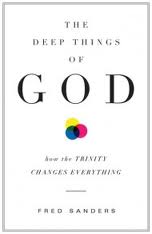
The Deep Things of God: How the Trinity Changes Everything (2010— Fred Sanders just nails it with this book. I read it a couple of years ago with great appreciation and was surprised once again at it’s richness this summer while working through it with a few of my college students. Sanders is an Evangelical who wants the rest of his brethren to understand that when we’re talking about the Trinity, we’re not wandering into enemy-occupied territory–Evangelicals are Trinitarians because Evangelicals are Gospel-people. These “Deep Things of God” are not a subject foreign to the practical, Gospel Christianity preached from the pulpit every Sunday, but absolutely central to it. In order to make his case, Sanders takes us through some very helpful discussions of theological method and doctrine of God proper. He then sets about connecting the dots between the central Gospel message and the eternal, Trinitarian reality underlying great Gospel truths such as the Incarnation, Atonement, Union with Christ, and the Grace of Adoption.  He also has excellent chapters on the way Evangelical approaches to the Bible and practices of prayer simply don’t make sense outside of a properly-Trinitarian framework. Really, the chapter on prayer, “Praying with the Grain”, is quite eye-opening. Again, as with Ryken and Lefevre, Sanders takes us into to Scripture in order to make his case. While not quite as easy for the absolute novice, I strongly commend this work to anybody interested not only in the Trinity, but how to think theologically. Sanders is an excellent guide.

The Triune God; An Essay in Post-Liberal Theology (2007) — William C. Placher has quickly become one of my favorite theologians to engage with. As a student of Hans Frei, he does Trinitarian theology from a post-liberal perspective, with an emphasis on narrative theology, as well as a keen appreciation for insights of philosophers such as Kierkegaard, Wittgenstein, and Levinas, especially when it comes to the problem of too-quickly speaking about God. At the same time, he exhibits that wonderful Reformed Catholic sensibility by doing theology in conversation with Calvin, Edwards, Barth, Aquinas, the Cappodocians, and Balthasar in a way that is intellectually-sophisticated, yet remarkably readable. Placher constructs a contemporary, orthodox, Trinitarian theology, rooted in Scripture while organically incorporating the best of the tradition. He does so with a special eye on the epistemological issues involved with speaking fittingly of the transcendent and holy God, who nonetheless draws near to us in Jesus Christ, and blesses us with understanding through the agency of the Holy Spirit. While I don’t embrace all of his assumptions about scripture, not being a post-liberal myself, I find Placher to be a first-rate chaperon into the company of serious theologians, navigating the reader through various theological mine-fields in such a way that those uninitiated aren’t even aware of the skill with which they are being guided. Again, this is a slight step up from Sanders’ work in terms of rigor, still, I would say that it is not beyond the serious newcomer to Trinitarian theology.

Soli Deo Gloria

Quick-Blog #3: How Do We Come to Know About God?

If God exists, then coming to know what he’s like is surely the most important task we could set ourselves. Not only would we be studying the deepest reality of the universe, but the source of all other reality–in which case, learning about him would seem crucial for knowing the deepest truth about everything else. How then do we come to know about God? William Placher helpfully points us to the simple but profound answer that Christians have been giving for centuries:

In sum, Christians say, if you want to know about God, you need to know about Jesus, and if you want to know about Jesus, you need to read some Bible stories: first stories about Jesus himself, then stories about God’s covenant history with Israel and about the early church. The stories about Jesus provide a kind of center around which we can interpret the other stories we find in the Bible, and the whole collection of biblical stories helps us understand all the other stories in the world.

-William C. Placher, The Triune God, pg. 46

It really doesn’t get more simple than that. God has come to his world in the Word, Jesus Christ. (John 1:9, 14) The word of God, the testimony of the Holy Spirit in the scriptures is where we read about him, especially in the Gospels. To understand those properly, you have to read those as the fulfillment of the long history of God’s dealings in the world with his chosen people, Israel. When you begin to immerse yourself in those stories, understand yourself in light of that grand drama, the sweep of history, the deep moments in every other story, every movie, every fable, every play that rings true, every episode in your life freighted with meaning, begins to take on its proper sense in light of the wonder of God come among us.

So, how do you come to know about God? Go read your Bible. Look for Jesus.

Soli Deo Gloria

Is Jesus Actually Smart?

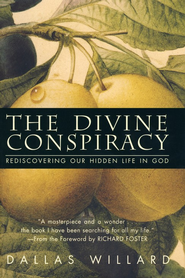
It’s really a good question and one that I hadn’t considered until encountering Dallas Willard’s masterpiece The Divine Conspiracy in college. I had not thought about it in a while until Dr. Todd Hunter came to guest-teach at our church this Sunday. He was making the basic point that unless we actually consider Jesus to be a competent instructor about life and reality, we will never actually listen to him and follow him. This called to mind one of my favorite passages in The Divine Conspiracy where Willard calls our attention to the simple fact that Jesus is really smart:

Our commitment to Jesus can stand on no other foundation than a recognition that he is the one  who knows the truth about our lives and our universe. It is not possible to trust Jesus, or anyone else, in matters where we do not believe him to be competent. We cannot pray for this help and rely on his collaboration in dealing with real-life matter we suspect might defeat his knowledge or abilities.

And can we seriously imagine that Jesus could be Lord if he were not smart? If he were divine, would he be dumb? Or uninformed? Once you stop to think about it, how could he be what we take him to be in all other respects and not be the best-informed and most intelligent person of all, the smartest person who ever lived?

That is exactly how his earliest apprentices in kingdom living thought of him. He was not regarded as, perhaps, a magician, who only knew “the right words” to get results without understanding or who could effectively manipulate appearances. Rather, he was accepted as the ultimate scientist, craftsman and artist.

The biblical and continuing vision of Jesus was of one who made all of reality and kept it working, literally, “holding together” (Col 1:17). And today we think people are smart who make light bulbs and computer chips and rockets out of “stuff” already provided! He made “the stuff”!

Small wonder, then, that the first Christians thought he held within himself, “all of the treasure of wisdom and knowledge” (Col. 2:3). This confidence in his intellectual greatness is the basis of the radicalism of Christ-following in relation to the human order. It sees Jesus now living beyond death as “the faithful witness, the first-born of the dead, the ruler of the kings of the earth…the first and the last, the living One, ” the one who can say “I was dead, and behold, I am alive forever more, the master of death and the world of the dead” (Rev. 1:5, 18)…

He is not just nice, he is brilliant. He is the smartest man who ever lived. He is now supervising the entire course of world history (Rev 1:5) while simultaneously preparing the rest of the universe for our future role in it (John 14:2). He always has the best information on everything and certainly also on the things that matter most in human life.

The Divine Conspiracy: Rediscovering our Hidden Life in God, pp. 94-95

When considering this reality, the fact that Jesus is the all-competent Lord of the universe who holds all things together, it has to strikes us that he must be absolutely, colossally wise, and an excellent guide into the reality of all things. In which case, we have to ask ourselves, why don’t we listen to him more often? Why is it that of all the places to go for an opinion, a point of view, sound advice on any and all questions concerning my relationships, my family, my work-stresses, my finances, I always seem to come to Jesus last? What are the areas that I seem to act like I know more than he does? “Well, Jesus, that’s a nice thought, but you see, my situation is a little different than what you were talking about in your sermons…” Really? Honestly? Jesus is God, but he doesn’t really know what he’s talking about when it’s your life, because you’re so special? Hmm….

This is where the rubber hits the road. Do I really trust Jesus as Lord or don’t I? If I trust him with my death, I ought to be able to trust him with my life. Even more to the point, if I don’t trust him with my life, am I really trusting him with my death?

Friends, we can trust Jesus. He won’t let us don’t or lead us astray. He knows what he’s talking about–he’s really smart.

Soli Deo Gloria

Quick-Blog #2- B.B. Warfield on the “un-Biblical” but Scriptural Doctrine of the Trinity

What does it mean for a doctrine to be ‘biblical’? Does there have to be a verse expressly stating it? Can we use only biblical words to express it? Is any teaching that departs from the explicit language of the Old and New Testaments thereby suspect? The Old Princeton giant B.B. Warfield helpfully shows us how a doctrine can (and sometimes must) be expressed in un-biblical language and yet be thoroughly scripturally-rooted.

The term “Trinity” is not a Biblical term, and we are not using Biblical language when we define what is expressed by it as the doctrine that there is one only and true God, but in the unity of the Godhead there are three coeternal and coequal Persons, the same in substance but distinct in subsistence. A doctrine so defined can be spoken of as a Biblical doctrine only on the principle that the sense of Scripture is Scripture. And the definition of a Biblical doctrine in such un-Biblical language can be justified only on the principle that it is better to preserve the truth of Scripture than the words of Scripture. The doctrine of the Trinity lies in Scripture in solution; when it is crystallized from its solvent it does not cease to be Scriptural, but only comes into clearer view. Or, to speak without figure, the doctrine of the Trinity is given to us in Scripture, not in formulated definition, but in fragmentary allusions; when we assembled the disjecta membra into their organic unity, we are not passing from Scripture, but entering more thoroughly into the meaning of Scripture. We may state the doctrine in technical terms, supplied by philosophical reflection; but the doctrine stated is a genuinely Scriptural doctrine.

-The Biblical Doctrine of the Trinity, B.B. Warfield

You can read the whole article here. It’s dense at some points and the language is a little dated, but this gem is entirely worth your time.

The Most Important Thing You Can Ask for in Ministry

Ever since I was a kid, the story of Solomon’s prayer for wisdom has been a favorite of mine. My mom would read it often to me and recall it to mind when we were talking about pretty much any subject, so that I should always seek wisdom from God before anything else. I think she knew I was going to need it.

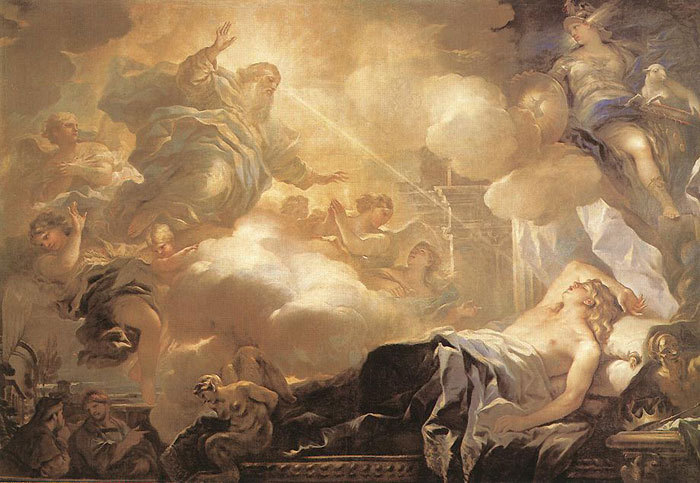
For those of you who don’t know the story, the first half of 1 Kings 3 recounts the story of God appearing to the young Solomon in a dream after the death of his father King David. God grants him one request at the beginning of his reign. To God’s great delight, Solomon replies:

And now, O LORD my God, you have made your servant king in place of David my father, although I am but a little child. I do not know how to go out or come in. And your servant is in the midst of your people whom you have chosen, a great people, too many to be numbered or counted for multitude. Give your servant therefore an understanding mind to govern your people, that I may discern between good and evil, for who is able to govern this your great people?
(1 Kings 3:7-9)

Understanding, wisdom is Solomon’s request. God has put him in charge of a great people and he knows that he needs wisdom in order to administer justice among them for he is only a young man. God hears this and is greatly pleased and tells him that because he did not ask for money, power, the defeat of enemies, or anything of the like, but rather wisdom to administer justice, he will have all of these things and in spades. Not only will he be wise, but he will be wiser than any that have come before and any that follows. Beyond that, God will bless him with peace, wealth, and general prosperity in a way that Israel will not experience under any other king.

Ruling a Great and Mighty People I come back to that story now as a young guy starting out in ministry and I read it with new eyes. As a minister of the Gospel, I’ve been called to “rule”, administer, and care for the people of God. Call it what you want, there is an authority and a responsibility to shepherd God’s flock given to those of us who work in the church, paid or not. This is a scary task. Many of us don’t stop to think about it, but we are taking care of GOD’s people. They’re his. He cares about them. They are his blood-bought  people, so for him to place them in our hands is a weighty thing. It’s the kind of thing that we probably need a lot of understanding to accomplish.

When I read this story it is humbling and kind of convicting to think about my prayer life (and, at times, lack thereof.) What am I praying for as a minister? Working at an North American church it’s really easy to get caught up in asking for all sorts of things besides wisdom. We can get caught up asking for numbers so the attendance sheets look full and your ministry seems effective. Or how about funding? It’s easy to think that if I just had a bigger budget, I’d be able to buy the right tools to make my ministry cutting-edge, or position us to host the right events, etc. Or maybe we pray for more leaders? If I just had a little more help this thing would come together, more people would be ministered to, and the Gospel would go forward.

Now, all of these things would be nice. They’d be great. It’s no shame to ask for them. In fact, you probably should be praying for these things. Funds do help. The harvest is plentiful and we need more workers in the field. Numbers are not a bad thing. A lot of really “spiritual” Christians think that it’s a virtue to not care if your church is empty. It can be when that means fidelity despite unpopularity, but otherwise we should want people to be joining the family of God in our congregations. Still, none of these things means anything if you don’t have the wisdom to know what to do with them. Without wisdom you will spend your cash foolishly, your leaders will fail, and people will walk in and then walk out the doors–or worse still, remain in your church unchanged.

We need to be praying for wisdom. Much of Solomon’s wealth, success, and the peace of his kingdom came as a result of his wisdom. Wisdom helps you find good leaders, work with the funding you have, and know what to do with your people when you get them.  Thankfully, God is rich in wisdom and generous with it. He gives it to any who asks in faith. (James 1:5) So, just ask.

(What are some things that you pray for your ministry about? What do you usually feel is the most pressing need? Why? How good would it be without wisdom?)

Wisdom is Needed Even for Two  Something else to realize is that this goes for you–whoever you are. Everybody needs to be asking for wisdom to care for the people of God, even if you only have a congregation of two.

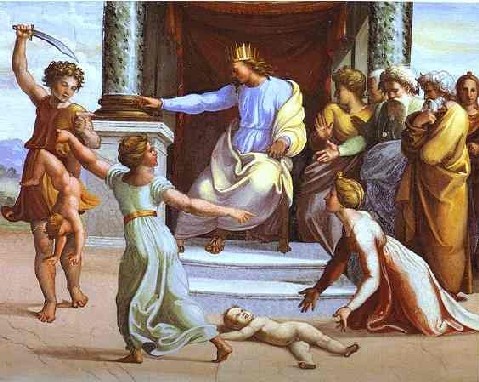
That’s one of the things we see in the final story of the chapter, with Solomon’s famous decision about the two women and the child. (1 Kings 3:16-28) Two prostitutes who were room-mates bore children within days of each other. One woman’s child died in the night and so she switched the two babies, claiming the live one was hers. They came before Solomon with a plea for justice. Solomon came up with a way of determining who was the true mother by offering to chop the baby in half and give each a piece. The true mother said to give the child to the other mother in order that it might be spared; the other one didn’t care. Solomon then gave the child to the one with compassion. Scary, kinda gruesome, but wise.

In context, the story shows Solomon’s wisdom was sufficient for administering justice within the whole of the nation. But here’s the thing, essentially the problem occurs between two women. That’s all it takes. Small-group leaders and one-on-one disciplers need wisdom just as much as mega-church pastors running congregations of thousands, because people are people no matter the size of the group.

Really Ask for Wisdom A final point when considering this story: we really need to be asking for wisdom. No, this is not just pointless repetition. One bad way of reading this story is to think that if we ask for wisdom, God will automatically give us all these other things. No, that’s not how it works. You can’t trick God into giving you a bigger budget or a bigger congregation. If your real desire is these things, wisdom will not come because you’ll fall into the foolishness that comes with obsessing over these things. Worry about getting wisdom first, seeking righteousness in the way that you care for the flock of God, and all these things shall be added unto you. (Matt 6:33)

Soli Deo Gloria