The Love Song of Immanuel Kant

The man, the myth, the father of needlessly obscure German philosophers.

The man, the myth, the father of needlessly obscure German philosophers.

So one day when I was really bored in my modern philosophy class, a not infrequent occurrence, I wrote a poem using only Kantian terminology which I found, and still find, ridiculous. I presented it as a token of my appreciation to my TA at the time. She said I used all the terms properly, which I took as a victory. I present it to you now because it’s my blog and why not?

Depending on the response, more ridiculous poetry might follow. I have a classic one about neutering a dog and another about ties. My college years were fecund with creative rapture. Also, I had an intro to poetry writing class.

The Love Song of Immanuel Kant

The a priori concepts

which allow

Intuitions of your

Beauty

to be given to me

through sensibility

are more precious to me

than all

Other conceptions

of Metaphysical Reality.

I (taken as the thinking self)

would give up all other

a posteriori intuitions

for the possibility

of

a mere empirical

apperception of

You.

Short, Admittedly Snarky Follow-Up on Process, Relational theologies and Evil

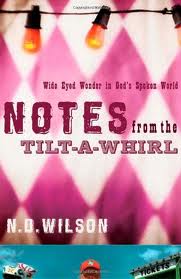
notesHere’s a little, admittedly snarky, follow-up summary point coming off of my last piece on the problem with process and ‘relational/open’ theologies and the problem of evil. It comes from one of my favorite books, a non-technical, non-specialist, super-brilliant, quirky piece of pop theology:

But if God is the creator God and He was somehow unaware of what He was starting, unaware that the Holocaust was going to happen, shocked when He first heard of Hitler’s plans, and embarrassed that He couldn’t stop him, then He still remains the first cause of all evil. He began a chain of events beyond His control.

“But it wasn’t on purpose (wring hands here). How was He supposed to know how fast everything would go to hell? He expected people to act more like Strawberry Shortcake.”

Don’t think this would get Him an acquittal. He might not like the world-accident He began, but He should have known better. If anyone could be expected to know better it’s God. Had He been drinking? I’d go with an insanity plea.

God was the first to cry. Is this comforting? He’s the first to get bad news. If only He were just a little quicker. Or maybe, “You know, He’s really sorry. When He invented fire He didn’t realize that it could burn skin. I hope you remember everything He’s said about being forgiving. Apply it now.”

-N.D. Wilson, Notes from the Tilt-A-Whirl, pg. 71-72

The point is that even the God who doesn’t know stuff and can’t do much about it, either voluntarily or due to some incapacity, is still responsible. Sacrificing God’s power and sovereignty doesn’t get him off the hook–it just tells us there was no point and weakens our hope for redemption.

Soli Deo Gloria

A Couple Notes on Process and Relational Theologies and the Problem of Evil

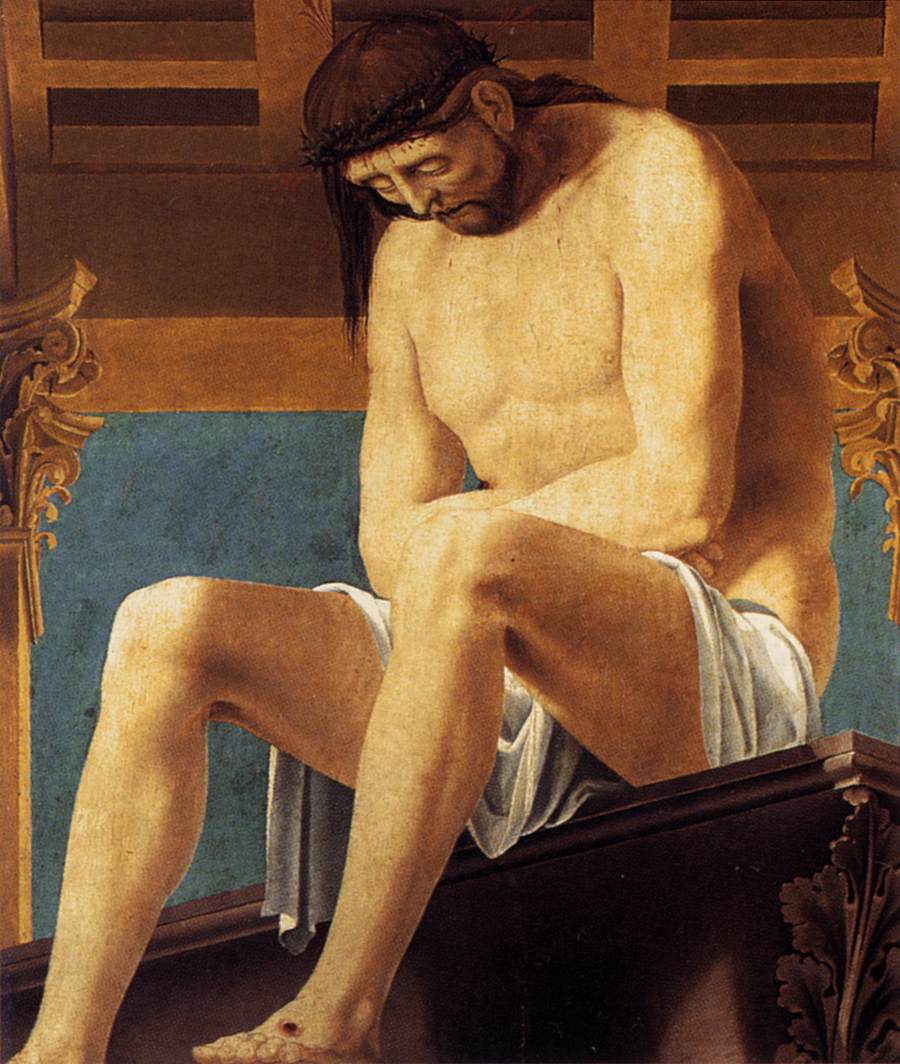
Pedro_Fernández_-_Christ_Suffering_-_WGA07807Over 20 years ago Ronald Goetz noted the “Rise of a New Orthodoxy” when it came to the doctrine of God being taught in academic theology. God’s immutability, (changelessness), and impassibility (inability to suffer or be acted upon from without), was axiomatic in patristic, medieval, reformational, and even early modern theology, but over the last 100 years a sea-change occurred and an acceptance, even a championing, of God’s passibility or mutability has largely been accepted. Goetz points to four causes, one of which is the problem of evil and suffering in light of the horrors of the 20th Century. (If God is all-powerful then he can stop evil. If all-good then he wants to. Evil. Therefore, no God.) After surveying them, he comes back around to the problem of evil in order to point out the weakness of two sorts of passibilist responses.

One comes from the limited God of Whitehead’s very influential process theology:

If God is conceived as being limited in power, though perhaps unlimited in love, then the defense of God in the light of evil and suffering boils down to the contention that God has created the greatest amount of good that he can, and the evil that remains is beyond his capacity to eliminate. A limited deity of this kind is portrayed in contemporary Whiteheadian-process theology, but the doctrine has a distinguished pedigree going back at least as far as Stoicism. A fundamental assumption in this approach is that an imperfect world is better than no world at all. What is unique to the Whiteheadian version of the limited deity is its departure from the classical Western view that God cannot be affected by the pain of an imperfect world. Indeed, as a seal of God’s goodness and love, God is, in Whitehead’s lovely phrase, “the fellow-sufferer who understands.”

The problem of evil has traditionally been formulated this way: How can it be that God is all powerful and all good and yet there still is evil? The doctrine that God is limited in power solves the problem by sacrificing God’s omnipotence. However, to my mind, any concept of a limited deity finally entails a denial of the capacity of God to redeem the world and thus, ironically, raises the question of whether God is in the last analysis even love, at least love in the Christian sense of the term.

All assertions of a limited deity must confront the fact that, if the world’s imperfections are the inevitable consequences of the limited capacity of God to create a world that is both perfect and free, then inescapably any other realm of being, any eschatological reality, would be similarly flawed. The blessing of eternal life would thus be impossible, for an eternal life flawed by imperfection and suffering would not be redemption, it would be hell. Hell is the prospect of wallowing forever in one’s weakness and finitude.

In Whitehead’s philosophy, the creation of the world is the result of God’s primordial yearning for a concretization of merely abstract possibilities (reminiscent of Plato’s “Ideas”) , which Whitehead calls “eternal objects.” Until they are arranged and concretized in the world, these eternal objects are merely abstractions. God’s primordial nature is governed by a “yearning after concrete fact — no particular facts, but after some actuality.”

The other pole of God’s bipolar being, his “consequent nature, “is characterized by a dependence on the continual emergence of concrete reality or “actual entities” in the world. Actual entities are perpetually perishing and arising. Each successive actual entity is capable of using in its own development the entities that have preceded it. God alone is everlasting. And his being is constituted in the process of his taking into himself all that he is able to save of all actual entities. They thus have a kind of immortality in the memory and in the ongoing self-enrichment of God. But the personal existence of all actual entities perishes. God wills the best for us and is a sympathetic sufferer with us when, in the course of the enrichment of his being, we suffer tragedy; but God alone is the everlasting beneficiary of the creative process.

To modern “protest atheism,” the fact that God, though sympathetic with the suffering of humanity, is nonetheless enriched by it, would seem little more impassive than the bathos of the sentimental butcher who weeps after each slaughter. If the purpose of our life and death is finally that we contribute to “the self-creation of God,” how, an outraged critic of God might demand, does God’s love differ from the love of a famished diner for his meat course?

Whitehead’s process God is, if anything, even more implicated in the evil of evil. Goetz moves on then to insist that if the incapable God doesn’t help, then the kenotic God–“kenotic” being used in a very specific, not-quite-NT-sense–doesn’t help much either:

To my mind, the insistence on the almightiness of God and creation ex nihilo are indispensable for an adequate understanding of the Bible’s witness, both to God’s lordship and to his capacity to save what he has created. Without the Bible’s eschatology, the God of the Bible cannot be understood in terms of agape, the radical self-giving love of one who holds nothing back — not the life of his son, not the sharing of his own being.

But this understanding puts us back on the horns of the dilemma: If God is so powerful in creation and so willing ultimately to deify the creation, why is there now evil?

Two lines of defense have become popular among theologians who find themselves, for whatever reasons, unable to speak of God as ontologically limited and yet unable to affirm the predestinarian highhandedness of an impassible, immutable God.

The first is the so-called Irenaeian theodicy (after the second-century theologian Irenaeus) : God permits suffering and evil in order that by them we might come to sufficient maturity so as to be able to inherit eternal life. The problem with such an argument is that while it offers a very helpful insight into the question of why we suffer and endure hardship, it says nothing about real evil. For real evil, as we experience it, does not build up and develop its victims; it corrupts, corrodes and destroys them.

The other line of defense can easily incorporate the Irenaeian theodicy, and indeed, might even seem to strengthen it. In this view, the statement “God is love” is virtually synonymous with a kenotic (self-emptying) (Phil. 2:7) view of the incarnation. God’s love is supremely revealed in his self-humbling. God is a fellow sufferer who understands not because God cannot be otherwise, but because God wills to share our lot.

Here, as in the case of a limited doctrine of God’s being there is a certain immediate psychological comfort in the notion that God does not require of us a suffering that he himself will not endure. However, if this comfort is to be any more than a psychological prop, it must show how God’s suffering mitigates evil. This explanation has been, to date, curiously lacking in the theodicy of divine self-limitation.

To anyone who feels compelled to affirm divine suffering, the fact that God is deeply involved in the anguish and the blood of humanity forces a drastic theological crisis of thought vis-à-vis the question of evil. The mere fact of God’s suffering doesn’t solve the question; it exacerbates it. For there can no longer be a retreat into the hidden decrees of the eternal, all-wise, changeless and unaffected God. The suffering God is with us in the here and now. God must answer in the here and now before one can make any sense of the by and by. God, the fellow sufferer, is inexcusable if all that he can do is suffer. But if God is ultimately redeemer, how dare he hold out on redemption here and now in the face of real evil?

-Ronald Goetz, “The Suffering God–The Rise of a New Orthodoxy”, This article appeared in the Christian Century, April 16,1986, p. 385

In other words, a suffering God of the sort implied by the passibilists is the God whose redeeming power is in serious doubt and the fact that he feels my pain just isn’t enough sometimes. I want to know that there is a reason for it. I want to know that there is a secure end to it. I want to know that it’s redeemable.

Soli Deo Gloria

PS. If you want my explanation impassibility and how that relates to Christ’s suffering on the cross you can go read it here.

Ben Affleck is Human! And Married! (CaPC Piece)

affleckLike a lot of Americans, I sat down the other night to watch the Oscars for the first time in years with some friends. When I witnessed Seth MacFarlane’s talented-but-crude, sexist, I-love-myself-so-much performance, I was reminded why. At the end of the night though, when my hope for humanity was at its lowest, Ben Affleck injected this wonderful, impromptu moment of redemptive decency. In the middle of his breathless acceptance speech he thanked his wife, Jennifer Garner, but it wasn’t the typical air-brushed gratitude we’re used to:

I want to thank you for working on our marriage for 10 Christmases. It’s good, it is work, but it’s the best kind of work, and there’s no one I’d rather work with.

You can go read the rest of my piece over at Christ and Pop Culture. Thanks.

Soli Deo Gloria

5 Ingredients to Being A Good Theologian

StAugustine

St. Augustine — patron saint of theologians, sore eyes, and brewers. No wonder the Reformed love him.

As a part of my reading during this Lenten season I’ve chosen to finally hunker down with Thomas Weinandy’s Does God Suffer?–a theological defense of the doctrine of God’s impassibility. God’s wired me to worship through my engagement with systematic theology, so I figure deep meditation on the issue of God’s immutable nature in light of the reality of sin, suffering, and the cross are just the ticket. Only two chapters in I can see why Kevin Vanhoozer listed it as one of 5 of the best books on the doctrine of God for theological students to engage with. He is nothing if not a model for Christian scholarly engagement.

Using primarily the words of its best advocates, Weinandy first reconstructs one of the strongest presentations in favor of passibility I’ve read yet. I even started to doubt my own newfound impassibilism (which is saying something after the amount Moltmann that I’ve read.) Thankfully he moves on to make a stunning case for the traditional doctrine. Still, I can’t tell you how much I appreciate this level of fairness, honestly, and intellectual integrity in a theological teacher.

Weinandy then moves in the next chapter to sketch his own understanding of the theological enterprise. In it he lays out 5 “ingredients that help foster and encourage the theological enterprise, and so help define the task of the theologian.” (pg. 27)

So according to Weinandy, what makes for a good theologian?:

  1. Theologians Reason About Faith – “First within the very nature of Christian revelation is the principle that faith seeks understanding…Christian theologians, their reason guided by faith and the light of the Holy Spirit, clarify, and advance what has been revealed by God, written in the scriptures, and believed by their fellow Christians.” (pg. 28) The theologian is to use the reason he’s been given, in submission to the Holy Spirit in order to elucidate what has already been revealed in such a way that it can edify and bless the community.  It is both an exercise of faith and reason, in precisely that order. It is reasoning about what we have accepted by way of God’s revelation–thinking more deeply about what we have believed in God’s testimony about himself. 
  2. Theologians Calm Down and Make a Case – “Second, Christian theology also wishes to defend, by reasoned argument, what has been revealed against those who question, distort, or attack it.” (pg. 28) There is a real place for reasoned ‘polemics’, or persuasive argument. Weinandy goes on to say that this shouldn’t be done with an attitude that assumes any and all questioning is made in bad faith or with hostility, or that doesn’t recognize the benefits of theological controversy. We would not have the Nicene Creed or the Chalcedonian definitions if the theologians of the Church were not forced to think more deeply on the mystery of Christ because of the doctrinal controversies in those early centuries. The point is, theologians make a case.
  3. Theologians Connect the Dots – “Third, Christian theology also wishes to demonstrate the inter-relationship between the various truths of faith.” (pg. 29) Weindandy gives the example of the relationship between the Father and the Son. In thinking through what it means for Jesus to be the eternal Son of the Father, the Church had to think through a bit more clearly what it meant to be a “Son” and what it meant to be a “Father.” Or, for that matter, what we mean by the idea of a person at all. No doctrine can be examined abstracted from the whole, but must be set within the full body of Christian doctrine otherwise it loses its proper shape. In other words, it’s not a bad thing for theologians to be “systematic” about things.
  4. Theologians Don’t Fly Solo – “Fourth, the work of individual theologians is not done in isolation. Theologians work within an historical context and within the Christian community.” (pg. 29) All good theologians stand on the shoulders of those who have come before them. Wanna make sure you’re a crappy theologian who runs into heresy? Do whatever it takes to remain ignorant of Christian history and the history of doctrine; never read or consider the teachers of the church in other times or places who have wrestled with the subject matter you’re studying. For the rest of us, we need to understand that neglecting the studies and advances in understanding that the Church has made over the centuries in our theological reflection is like trying to reinvent the wheel instead of trying to make it smoother. That is not to say that in certain times and places, the church can’t make advances in our understanding of doctrine (for instance the 4th century on the Trinity, or the 5th on the person of Christ, or the 16th on justification, or even now on the doctrine of impassibility) it is to say that it’s unwise to try and fly solo theologically.
  5. Theologians Worship – “Fifth, personal prayer and communal worship likewise foster theological understanding. Liturgy is a living expression of what is believed and so through participation in it one grows in an understanding of the faith.” (pp. 29-30) As the old expression goes, lex orandi, lex credendi, (the law of prayer is the law of belief). Weinandy points to the fact that in the past liturgical practices, the concrete worship of the church, shaped and gave the raw material of theological explanation. This was certainly the case in Basil the Great’s arguments about the full divinity of the Holy Spirit in the 5th century. Beyond this, we can’t begin to think we’re truly speaking of God, reasoning about the faith, if our own faith isn’t growing through a worshipful encounter with the Triune God. If theologians are not worshippers, not personally involved with the God they’re speaking of, then they’re trying to approach the task from some sort of neutral, 3rd-person perspective, describing the faith in the way a sociologist or ethnographer would. That might make for some interesting texts in religious studies, but not good theology.

There’s more to be said about the task of the theologians. I’m sure many of you have your own suggestions (feel free to suggest some in the comments.) Still, for those aspiring theologians among us, these are a good place to start.

Soli Deo Gloria

I Am Not Abraham’s Mistake (My Christ and Pop Culture Feature)

Illustration by the amazing Seth T. Hahn. Pretty stoked.

Illustration by the amazing Seth T. Hahne Pretty stoked.

9/11 was a weird day for me. I was a sophomore in high school at the time and I distinctly remember thinking to myself, “Oh God, I hope it wasn’t Arabs”, as soon as I heard that a plane had been crashed into the first tower. I’m 3/4 Palestinian and at times have a distinctly Arab cast to me. My last name is Rishmawy. Admittedly it was a selfish thought, but I just didn’t see that going well for me in high school. And I was right.

That afternoon in football practice, upon discovering that I was of Arab descent, a “Palestilian” according to one educated linguist on the team, a team-mate of mine took it upon himself to spear me in the back–twice. For those of you who’ve never played, that sort of thing hurts. Thankfully my coach caught on quickly and put an end to that. Still, for the next few years I was lovingly called “dune-coon”, “sand-nigger”, “Taliban”, “Osama”, etc. by a good chunk of my team-mates and friends. And yes, I do mean lovingly. It was wrong, and I don’t really get it, but for some reason racial slurs were a way of bonding in the locker-room. Still, it grated on me at times.

As frustrating and awkward as being an Arab high-schooler in post-9/11 America could be at times, given garden-variety prejudices, fears, and ignorance–none of those slurs frustrated me as much as what some of my well-meaning, Evangelical brothers and sisters ignorantly implied: that I and my entire ethnic heritage were an unfortunate mistake–Abraham’s mistake to be exact.

Please go read the rest of this piece at the Christ and Pop Culture blog at patheos.com.


Turning the King Into a Fox (Or, Irenaeus on the Silliness of Heresy)

fox

I love foxes, but still, not as good as Jesus.

Among other things I’ve been reading Irenaeus’ classic Against Heresies and loving it. His goal in the work is to describe and debunk the heretical teaching of the Valentinian gnostics who were perverting Christian teaching into their bizarre, absurd system. The most frustrating part was the way these gnostic teachers, in their attempt to fool the faithful, were twisting scriptures in order to support their teaching:

Such, then, is their system, which neither the prophets announced, nor the Lord taught, nor the apostles delivered, but of which they boast that beyond all others they have a perfect knowledge. They gather their views from other sources than the Scriptures; and, to use a common proverb, they strive to weave ropes of sand, while they endeavour to adapt with an air of probability to their own peculiar assertions the parables of the Lord, the sayings of the prophets, and the words of the apostles, in order that their scheme may not seem altogether without support. In doing so, however, they disregard the order and the connection of the Scriptures, and so far as in them lies, dismember and destroy the truth. By transferring passages, and dressing them up anew, and making one thing out of another, they succeed in deluding many through their wicked art in adapting the oracles of the Lord to their opinions. –Against Heresies, 1.7.1

Explaining the way the gnostic use of the Bible was unbiblical, he came up with a brilliant analogy for their method of scriptural interpretation:

Their manner of acting is just as if one, when a beautiful image of a king has been constructed by some skilful artist out of precious jewels, should then take this likeness of the man all to pieces, should rearrange the gems, and so fit them together as to make them into the form of a dog or of a fox, and even that but poorly executed; and should then maintain and declare that this was the beautiful image of the king which the skilful artist constructed, pointing to the jewels which had been admirably fitted together by the first artist to form the image of the king, but have been with bad effect transferred by the latter one to the shape of a dog, and by thus exhibiting the jewels, should deceive the ignorant who had no conception what a king’s form was like, and persuade them that that miserable likeness of the fox was, in fact, the beautiful image of the king. In like manner do these persons patch together old wives’ fables, and then endeavour, by violently drawing away from their proper connection, words, expressions, and parables whenever found, to adapt the oracles of God to their baseless fictions. We have already stated how far they proceed in this way with respect to the interior of the Pleroma. -ibid, 1.7.1

Basically it’s like they’ve taken the Mona Lisa, cut it up, and re-pasted it together in the shape of a toilet and called it Leonardo’s masterpiece–or rather an improvement on it. Now, the fact that this can happen with the scriptures, that people can take them, quote them, and use them to justify all sorts of doctrines is troubling to some. Many, in seeing the way scripture is used in the mouths of false teachers and heretics, might despair of them, or doubt their beauty and efficacy. Not Irenaeus. He says that for the faithful, this shouldn’t invalidate the scriptures or make them any less true and precious:

In like manner he also who retains unchangeable in his heart the rule of the truth which he received by means of baptism, will doubtless recognise the names, the expressions, and the parables taken from the Scriptures, but will by no means acknowledge the blasphemous use which these men make of them. For, though he will acknowledge the gems, he will certainly not receive the fox instead of the likeness of the king. But when he has restored every one of the expressions quoted to its proper position, and has fitted it to the body of the truth, he will lay bare, and prove to be without any foundation, the figment of these heretics. -ibid, 1.9.1

The key is taking the precious stones and restoring them to their “proper position”; contextual reading of the scriptures according to basic principles of exegesis matters. Verses need to be taken within chapters, chapters within book, books within the canon, and, yes, for those of us at the end of the 20th century, canon within the broader churchly tradition of interpretation. (Not that the tradition stands over the scriptures, but at the very least it doesn’t hurt to listen to what wise biblical teachers of other generations past have found in them.) When we do these things, instead of the fox, the beautiful picture of King Jesus emerges once more, ready for the adoration and worship God intended to lead us into through his Spirit-inspired scriptures.

Soli Deo Gloria

Some Unoriginal Notes on the Importance of Story for the Moral Life (With Help from MacIntyre, O’Donovan, and Machen)

aftervirtueAlasdair MacIntyre is widely credited with restoring the category of ‘story’ or ‘narrative’ to the forefront of the discussion in meta-ethics. In his influential work After Virtue (1981) he set out his argument for the bankruptcy of most modern ethical theories such as utilarianism and Rawlsian contractarianism and the necessity of recovering an Aristotelian-Thomistic virtue-ethics set within a narrative framework. Among other things, MacIntyre argues that the virtues, those moral practices and habits that characterize the just person, only make sense within a narrative framework because all human action is essentially historical in character–it is historically-enacted and historically-motivated. That is an inescapable feature of human life–whether pagan, post-Enlightenment liberal, or orthodox Christian, we live out of the stories and narratives we tell ourselves. Even the most postmodern among us, suspicious of the various master narratives told to us by modernity, are still living in the sort of story that includes moderns trying to control us through master narratives. Indeed, it is commonly suggested that instead of the idea of the “worldview”, a narrative-identity is a more useful conception for understanding the comprehensive perspective through which we approach moral action in the world.

Now, none of this is all that new. Why bring it up? Simply to introduce a few loosely connected quotes and notes on the importance of narrative for Christian reflection on the moral life that ought to be kept in mind. One is cautionary, the other couple are complementary and, after thinking on them, can be classified under the rubric of Creation, Sin, and Redemption.

1. The Story is About Something (Creation) – First the caution. Oliver O’Donovan in his Resurrection and the Moral Order alerts us against the sort of historicisms which take this emphasis on narrative and history to the point of forgetting that the story is about something. In essence, the denial of the category of ‘nature’ or creation as a relevant one for moral reflection:

We cannot object to the idea that history should be taken seriously. A Christian response to historicism will wish to make precisely the opposite point: when history is made the categorical matrix for all meaning and value, it cannot be then taken seriously as history. A story has to be a story about something; but when everything is a story there is nothing for the story to be about. The subject of a story must be something or someone of intrinsic value and worth; if it is not, the story loses all its interest and importance as a story. The story of what has happened in God’s good providence to the good world which God made is ‘history’ in the fullest sense. But when that world is itself dissolved into history…then history is left without a subject, so that we have no history any more, but only…’process’. And then again, the story of the world as Christians have told it has its turning-point in the saving act of God in Jesus Christ. Through that crisis it is uniquely determined towards its end. But when every determination to every end is understood equally as a determination to the end of history, the critical moment of the story is lost, the turning-point forgotten.

-Oliver O’Donovan, Resurrection and the Moral Order: An Outline for Evangelical Ethics, pg. 60

O’Donovan is getting at the point that creation, as a whole and in human natures as created, is the necessary pre-requisite for history as the stage of moral action–it is the set-up. Unless the human being is a certain sort of thing before the action, and the world is a certain kind of place, the things that happen within it lose their meaning. Without creation as the “theater of God’s glory”, to use Calvin’s phrase, there can be no drama of redemption.

2. You Are Not the Only, or Main, Author/Character (Sin) – Although it wasn’t likely his intention, a quote from MacIntyre himself sheds some light on the nature of sin:

I spoke earlier of the agent as not only an actor, but an author. Now I must emphasize that what the agent is able to do and say intelligibly as an actor is deeply affected by the fact that we are never more (and sometimes less) that the co-authors of our own narratives. Only in fantasy do we live what story we please. In life, as both Aristotle and Engels noted, we are always under certain constraints. We enter upon a stage which we did not design and we find ourselves as part of an action that was not of our making. Each of us being a main character in his own drama plays subordinate parts in the dramas of others and each drama constrains the others. In my drama, perhaps, I am Hamlet or Iago or at least the swineherd who may yet become a prince, but to you I am only A Gentleman or at best Second Murderer, while you are my Polonius or my Gravedigger, but your own hero. Each of our dramas exerts constraints on each others’s making the whole different from the parts, but still dramatic.

Alasdair MacIntyre, After Virtue 2nd Ed.,  pg. 213

In drawing attention to the narrative shape of our lives, there comes the realization that, in some sense, we are not just agents but authors. In a theological context this comes with a serious qualification, though–given the doctrine of creatio ex nihilo and God’s sustaining providence we are sub-authors at best. MacIntyre reinforces the point by calling our attention to the fact that at the merely human level my authorship is not total or complete. I am a sort of Mad-libber who inserts my responses at key points in the story that already has particular parameters beyond my control. This begins to expose the narcissistic madness we engage in when we claim credit for the blessings in our lives. Most of the good that comes our way is not in any way attributable to our own wonderful moral character, at least not by comparison to others. The fact that you’re reading this blog on a computer right now has more to do with the fact that you were born into a society in which computers are easily-accessed and not in the 5th Century China, than your own stellar work ethic. The resulting story of my life is, yes, something I’m responsible for, but at the same time, not something I can claim credit for. Paul asks, “What do you have which you did not receive?” (1 Cor 4:7) And yet, that’s precisely what sin is: claiming credit for someone else’s work. It is our willfully blind, ungrateful denial of the Author of our existence, who determines the times and the places in which we will play our parts in his story. (Acts 17:26)

MacIntyre also begins to show us the way this false sense of authorship leads to conflict with our neighbors. At the end of the day, in our arrogance and pride we are convinced that we are both the author and the main character in the epic which everybody else plays a bit part or supporting role. Most conflict comes when you find out that the story doesn’t revolve around you, or when you clash with your neighbor because he’s trying to accomplish his own heroic ends at your expense, and not playing the bit role you’ve assigned him. What else should we expect when two sinners, who’ve rejected any acknowledgment of the true Author or story-line, begin to encounter the “constraints” imposed by the dramas of others?

3. The Power is in the Story (Redemption) – This one is for preachers and pastors. Nearly 60 years before MacIntyre wrote After Virtue, J. Gresham Machen was criticizing the Liberals of his day, among other things, for misunderstanding the nature of Christian moral exhortation. In denying or radically reducing the basic outlines of the gospel narrative into generalized moral principles, “a life”, they robbed it of its power to result in real moral change:

From the beginning Christianity was certainly a life. But how was the life produced? It might conceivably have been produced by exhortation. That method had often been tried in the ancient world; in the Hellenistic age there were many wandering preachers who told men how they ought to live. But such exhortation proved to be powerless. Although the ideals of the Cynic and Stoic preachers were high, these preachers never succeeded in transforming society. The strange thing about Christianity was that it adopted an entirely different method. It transformed the lives of men not by appealing to the human will, but by telling a story; not by exhortation, but by the narration of an event. It is no wonder that such a method seemed strange. Could anything be more impractical than the attempt to influence conduct by rehearsing events concerning the death of a religious teacher? That is what Paul called “the foolishness of the message.” It seemed foolish to the ancient world, and it seems foolish to liberal preachers today. But the strange thing is that it works. The effects of it appear even in this world. Where the most eloquent exhortation fails, the simple story of an event succeeds; the lives of men are transformed by a piece of news.

– J. Gresham Machen, Christianity and Liberalism, pg 42

The Christian call to repentance is not simply a challenge to live differently or adopt some new moral principles. It is fundamentally a call to embrace the drama of redemption that God has authored in Christ as a new story to live by–and that only happens as the Holy Spirit enlightens our hearts through the preaching of the Gospel. Preaching aimed at real transformation can never degenerate into mere moral exhortation because at the end of the day, the power is in the story.

Soli Deo Gloria

Some Perspective on God’s Gifts and God’s Call to Hospitality (Guest Post)

This is not Caroline's house. Do not try and come visit her here.

This is not Caroline’s house. Do not try and come visit her here.

Today I had a great talk with my friend Caroline, the Director of Children’s Ministries at my church. A couple of her kids are students of mine and so we were talking about the funny things that happen when they bring their friends over to hang out. In the middle of it she shared what I thought was an important realization about God’s gifts and the nature of hospitality. I’ve asked her if I could share it with my blog readers and so she kindly wrote it up for me.

I had a revelation a few weeks back.  You see my family and I live in a small (under 1400 square feet) home in Santa Ana.  I have loved and been thankful for our house of 3 years since day one–but I have not been proud of it–apologetic may have been a better word for how I felt when friends (who literally live in the pages of a Pottery Barn catalog) would stop by.  And if I were to be totally honest, I avoided anyone coming to my house and have even been known for waiting at the gate when expecting someone to stop by to pick me up.

Then a few weeks ago my daughter invited several of her friends over for dinner and an evening of games and movies.  Each of these amazing young adults has quite a story of redemption–coming out of many unhealthy and ungodly situations and clearly and dramatically saved for God’s purpose and God’s glory.  They grew up in houses that included drugs, gangs, and a lot of darkness.  That evening each one blessed me by complementing our home–my favorite was when one young woman exclaimed, “it’s just like a page from a Target catalog!”  Laughing I looked at her and then around at my miss-matched furniture (everything bought second-hand or given to us by friends), the tiny kitchen, dusty shelves, stacks of papers and said “thank you.”  I truly appreciated that she was speaking from her heart–I wondered what her home growing up had been like, and I recognized all that God had blessed our family with.  My sense of pride grew in what God had given us–in a house and the atmosphere inside it.

-Caroline Elias, Director of Children’s Ministries at Trinity United Presbyterian

Caroline’s basically said it all, but I just want to make a couple of points clear:

  1. Hospitality can happen anywhere–even your home. You don’t need to have a massive, showroom style house to have people over and bless them. That can happen anywhere. In fact, two of the most hospitable people I know are a couple of newly-weds who live in a back-house the size of an apartment who have over 10-15 young adults for dinner every week.
  2. As a rule we tend to compare ourselves to those with more, rather than to those with less.  This doesn’t necessarily make us ungrateful or resentful. Sometimes it just robs of the joy of realizing how truly blessed and fortunate we really are. Having a Target house is a joy from the Lord, just as much as a Pottery Barn house. 

Soli Deo Gloria

P.S. Bonus point because I’m a college pastor: there is a blessing that comes with college ministry. Sure there’s a blessing with every ministry, but honestly, sometimes it’s as easy as having a couple of students from your church over for dinner and listening to their stories. 

Just Because You Can’t See It, Doesn’t Mean It’s Not There – O’Donovan on Ethics

moral orderA great joy of mine is finding out that I’m not dumb. By that I mean, I love running across sections in works by legitimately brilliant people articulating something that I’ve been thinking for a while, but haven’t taken the time to write out anywhere, or I haven’t seen laid out clearly before. Reading Oliver O’Donovan’s brilliant piece of Christian moral theory Resurrection and the Moral Order has afforded me a number of those experiences. (Note: that wasn’t an intentional humble-brag, just an accidental one.) For instance, in one exceptionally helpful passage, he highlights the importance in separating out the epistemological questions involved in knowledge of the moral order and the ontological question of its existence.

What am I talking about? Well, in a nutshell, some moral thinkers, particularly in the Natural Law tradition, have made the point that if a rational God has created the world, he must have done so with a certain order to it, particularly a moral one consistent with his own nature, that ought to be intelligible (readable) to human agents within it. Indeed, there seem to be some self-evident truths about morality and life that transcend culture which give testimony to this indelibly-written law on the heart of humanity.

Others have pointed out that moving from culture to culture, and even within the same culture, there are large areas of dispute as to the moral character of the universe. Much of the content of our moral judgments that are “self-evident” to us in the West are largely rejected throughout the world and therefore seem merely cultural values, or perhaps, adaptively-advantageous norms, such that a real skepticism about framing any sort of moral judgments based on the natural order is a chimera. Indeed, on this basis many of them doubt that there even exists some order of this sort.

Into the confusion steps O’Donovan. While he argues quite forcibly for the necessity of grounding any ethical system in the created order, he acknowledges and explains the theological root of the non-obviousness of that moral order:

There is, however, another side to the matter which has to be asserted equally strongly. In speaking of man’s fallenness we point not only to his persistent rejection of the created order, but also to an inescapable confusion in his perceptions of it. This does not permit us to follow the Stoic recipe for ‘life in accord with nature’ without a measure of epistemological guardedness. The very societies which impress us by their reverence for some important moral principle will appal us by their neglect of some other. Together with man’s essential involvement in created order and his rebellious discontent with it, we must reckon also upon the opacity and obscurity of that order to the human mind which has rejected the knowledge of its Creator. We say that man’s rebellion has not succeeded in destroying the natural order to which he belongs; but that is something which we could not say with theological authority except on the basis of God’s revelation in the resurrection of Jesus Christ. We say that this, that or the other cultural demand or prohibition (the prohibition of incest, for example, or of racial discrimination) reflects the created order of God faithfully, but that too is something which we can know only by taking our place within the revelation of that order afforded us in Christ. It is not, as the sceptics and relativists correctly reminds us, self-evident what is nature and what is convection. How can we be sure that the prohibition of incest is not yet another primitive superstition? How can we assert confidently that Bantu and Caucasian races belong equally to one human kind that renders cultural and biological differentiation between them morally irrelevant? The epistemological programme for an ethic that is ‘natural’, in the sense that its contents are simply known to all, has to face dauntingly high barriers. But we are not to conclude from this that there is no ontological ground for an ‘ethic of nature’, no objective order to which the moral life can respond. We may only conclude that any certainty we may have about the order which God has made depends on God’s own disclosure of himself and of his works.

Oliver O’Donovan, Resurrection and the Moral Order: An Outline for Evangelical Ethics, pg 19

O’Donovan insists that keeping our epistemological judgments and our ontological judgments straight is imperative if we’re going to understand the nature of our moral situation. Admitting that the moral order isn’t obvious should not betray us into concluding it isn’t there. To do so would constitute a gross denial of the doctrine of creation and the moral character of God.

Instead, an acknowledgement of the Fall’s distorting effect upon our moral knowledge leads us to be humble in our judgments, and seek the truth of the universe as it is revealed in Jesus Christ. Not because Jesus points us to a moral order that was never there prior to his advent, although his coming does bring about a new moral situation, but because he points us to and renews the one that has been there since the beginning. Also because repentance (metanoia) must form part of our quest for moral truth. In repentance we reconsider our relationship to God’s created order which, in sin, we have rejected and misunderstood. Jesus Christ is the one who grants repentance by the power of the Holy Spirit to confused sinners whose moral judgments stand condemned alongside of them. Once again, even our knowledge of the moral reality we have violated comes down to the grace of the one who instituted it and redeemed it.

Soli Deo Gloria