Constantine and the Gladiators: Politics or Culture? (Mere-Orthodoxy Piece)

I don't care how obvious or cliche this is--this is Gladiator.

I don’t care how obvious or cliche this is–this is Gladiator.

Is the legal and political downstream from culture, or vice versa? That’s the debate going on in religious conservative circles today. A rising number of voices, mostly in reaction to the excesses and missteps of the Religious Right, have been arguing that religious conservatives have been largely blind to the way that culture is upstream from law. In an effort to secure legal ground against progressive advances, the Right was ceding the deeper war for the imagination and affections of the populace. Gay marriage is an obvious example of this. As social conservatives secured dozens of temporary political victories, the vision of the general population was being captured through media narratives that were laying the groundwork for the generation-shaping, sea-change in popular opinion we’ve witnessed in the last few years.

While many of us might have been nodding our heads in agreement with this line of critique over the last couple of years, a jaunt into early church history might complicate the picture a bit. Peter Leithart’s fascinating cultural analysis of the Roman spectacles and their proscription by Constantine in Defending Constantine: The Twilight of An Empire and the Dawn of Christendom suggests a more intricate relationship between the two spheres than any strict dichotomy can capture.

You can read the rest of the piece here at Mere Orthodoxy

4 Reasons We Tend to Ignore the Past

creedalCarl Trueman notes 3 main assumptions that underlie confessional Protestantism in his incisive, recent work The Creedal Imperative:

  1. The past is important, and has things of positive relevance to teach us.” (pg. 22)
  2. Language must be an appropriate vehicle for the stable transmission of truth across time and geographical space.” (pg. 22)
  3. There must be a body or an institution that can authoritiatively compose and enforce creeds and confessions.” (pg. 23)

Unfortunately, all three are increasingly problematic.

In a chapter outlining the cultural case against creeds, Trueman notes various trends that make them untenable to an expanding number of postmoderns and Evangelicals. I’d like to focus on the 4 that he identifies as weakening our appreciation for the past:

  1. “Science” – First, we must be clear that Trueman isn’t attacking science per se but rather the cultural mindset that science inculcates. The essential point is that for “science”, used in this sense, the “present is better than the past” (pg. 24). Our bias is tilted towards the present in such a way that we are increasingly skeptical that the past has anything to teach us. For instance, nobody wants to consult a 16th century medical text-book to learn how to heal a cold, so why should the Christians in that same century have anything to say about religion and spirituality?
  2. Technology – Technology has reversed the typical flow of information. In the past, elders taught children the various skills they need to live and work in the world. Youths were apprenticed to masters who were experienced experts in their trades. Nowadays technology has reversed the knowledge flow. If they’re over the age of 5, unless you’re a tech expert, your kids know more about technology than you do. Grandparents are particularly hopeless, needing tutorials in basic social requirements, like how to use a smart-phone. The general environment created is one where the old are dependent on the young, and, in a tech-dominated age, no longer relevant to the creation of culture or knowledge. If old people don’t know much, then dead people definitely can’t help us.
  3. Consumerism -Consumerism is problematic in the first place, simply as a species of materialism. Still, one might wonder what this has to do with an antipathy for creeds. Trueman points out that that central to modern consumerism is not just simply materialism, but the process of buying and consuming these new goods. Marketing strategies are aimed at creating a sense of the inadequacy of what is presently possessed for happiness: last year’s clothes, cars, and tech just isn’t good enough now. All of this feeds into the creation and funding of a culture in which the young and the new has status, while the old does not. 18-year olds rarely want to dress like 40-year olds, but the opposite is assumed in almost all modern marketing strategies. This is part of why young pop stars are interviewed on subjects like politics, religion, and morality. “Apparently, the lack of ‘baggage’ (to uses the standard pejorative) is an advantage to being able to speak with authority on complex subjects. In other professions, of course–‘baggage’ is generally referred to as ‘appropriate training.‘” (pg. 29) In which case, who cares what a bunch of old, dead religious “experts” thought about the matter? What’s Lady Gaga think instead? Or for Evangelicals, who cares what a Ph.D. in historical theology thinks about this? I wanna hear what the hip kid with the skinny jeans, candles, and an iPad says.
  4. The Disappearance of “Human Nature” – Without getting too technical about it, we are painfully aware of our social location in a way that no other society has been before us. You are a Hispanic, middle-class, single female navigating life primarily in your minority-culture community in the 21st Century, while the Westminster written by well-educated, upper-class, married, English, white men in the 17th. What could the latter possibly  have to say to the former? We have little sense that there is some stable “essence” we can call human nature that is constant enough, in history and space, that binds us all together, how could anybody speak across history and space to another. The framers of the Nicene Creed had no idea what the internet is,  who was Osama Bin Laden, or current geopolitical realities, so how could their thoughts on “spirituality” impact me today?

Again, none of this is meant to imply that science or technology are bad, just that some of the philosophical baggage and attitudes that comes with them, when paired with consumerism and the disappearance of human nature lead to some heavy currents leading us away from trusting or valuing the past as a source of knowledge of any kind. The idea that an ancient document might actually be binding on us is an even bigger pill to swallow.

All of these cultural trends are at work, not only against creeds, but against trust in the Scriptures and the Gospel itself. Christianity proclaims a truth tied to history, a salvation accomplished once and for all by a Jewish prophet 2,000 years ago on bloody Golgotha, and testified to by his disciples writing in the contest of Roman Imperial authority. To be a Christian is to stake one’s life on the importance of the past. Pastors and preachers need to be aware of the currents they’re navigating and trying to guide their congregants and hearers through. Wise as serpents they must learn to enter the world of their hearers, in order to present the truth from inside in a way that gently unravels (or explodes) their bias against the past.

Speaking practically, they might begin unraveling their own bias first.  American Evangelical pastors especially, swimming against/in a tide of anti-intellectualism and a strong cultural history of mantras like “no Creed but the Bible”,  are often-times just as jaded against the past as their congregations. Ask yourself this question: When was the last time I read a book that wasn’t published in the last 5 years? How about 50? How about 500? You  don’t need to become an expert in patristics, but it makes sense to become familiar with some Athanasius yourself, if you’re going to tell people that holding to the doctrine of the Trinity as taught in the Nicene Creed is important. Maybe lay your hands on some Calvin (not just Calvin as mediated by your favorite current author) before you go into the importance of the doctrines of grace.

Pastors, we have our work cut out for us.

Thankfully, deeper than even our own studies, stronger than any cultural force, we can to rely on the power of the Holy Spirit who makes present the historically-completed work of the Risen and Ascended Christ in the preaching of the Word and the sacraments.

Soli Deo Gloria

Top 8 Personal Highlights from #TGC13

TGC13This last week I had the privilege of going to the 2013 Gospel Coalition National Conference. While there is a grip of things I could say about the spiritual blessing it was to attend, I thought I’d limit it to 8 personal highlights:

1. Good times with friends. – First off, I was blessed to be able to go with a couple of ministry buddies of mine, Sean McLeish, and Jon Nitta. They’re excellent men to drive around in a rented car, eat too much BBQ, and talk about the Gospel with.

2. Finally getting to hear Tim Keller preach live. -I’ve listened to hundreds of Tim Keller sermons over the last few years. I honestly was kind of worried that it wasn’t going to live up to my expectations. Yeah, he pretty much killed it. I think I he made 4 points within his four points, each of which could have been a sermon on its own, and yet it didn’t feel forced or crowded. And I loved Jesus more at the end of it.

3. Getting a physical copy of Michael Horton’s lecture notes. -Yup. I got to listen in a Michael Horton’s lecture of feasting and hospitality in the Gospel of Luke, which was expectedy brilliant. Afterwards I caught him in the hall and asked him for his lecture notes which he kindly obliged me with. Turns out he is a splendidly humble man in person, beyond being an exemplary irenic theologian in print.

4. Finding out People are Actually Nice. – Following off of that point, it was nice getting to know that people are actually nice. I’ve managed to “meet” some bloggers online before, but at this conference I was able to face-to-face connect with them. The lovely thing was finding out that they’re actually as nice as their Twitter handle pictures. I would go into names, but I hate the idea of name-dropping. The only one I’ll mention is Greg Thornbury: hands-down the most surprising and interesting guy I met at the conference. Brilliant, delightfully humble, and a fabulous appreciation for the proper use of the bow-tie.

5. Books – I bought books for cheap. I think we all knew that was going to happen.

6. Getting Faked Out by Voddie Bauckham – All I’m going to say is, if anybody who knows him is reading this, call him “Joe Nitkowski” next time you see him.

7. The Holy Land Experience – We were too close not to go, so we visited. We didn’t go inside or anything, but experiencing the cheap animatronic animals outside, well–as Jon Nitta put it, “I’ve been born-again again.”

8. Gospel Everything – Seriously, no joke, it was all about the Gospel. The preaching and teaching, break-out sessions, and workshops were all about understanding and seeing the Gospel go forward in our the lives of our congregations, cities, and world. After a bit of a season of discouragement, and honestly, just exhaustion, I was convicted, blessed, and encouraged through the preaching and teaching, the conversations, and the worship to be humbly confident about the Gospel in my ministry. It really is that good of news.

Well, as always, there’s more to say, but all in all, I was truly blessed to by God through TGC13. God willing, TGC15 will be even better.

Soli Deo Gloria

PS. When the sermons start getting posted, I recommend going and downloading or listening to them. I’d particularly direct you to the sermons by Kevin DeYoung on Luke 15 that was convicting and quite humorous, Gary Millar on Luke 22 who killed it, and, of course, Tim Keller’s on Luke 24 and the resurrection.

Angels, Sheep, and Sauciness

While doing some sermon prep, I ran across these rich comments by Calvin in his treatment of the parable of the Lost Sheep in both Matthew and Luke:

 For the Son of man cometh. Christ now employs his own example in persuading his disciples to honor even weak and despised brethren; for he came down from heaven to save not them only, but even the dead who were lost. It is in the highest degree unreasonable that we should disdainfully reject those whom the Son of God has so highly esteemed. And even if the weak labor under imperfections which may expose them to contempt, our pride is not on that account to be excused; for we ought to esteem them not for the value of their virtues, but for the sake of Christ; and he who will not conform himself to Christ’s example is too saucy and proud.

What think you? Luke carries the occasion of this parable still farther back, as having arisen from the murmurings of the Pharisees and scribes against our Lord, whom they saw conversing daily with sinners. Christ therefore intended to show that a good teacher ought not to labor less to recover those that are lost, than to preserve those which are in his possession; though according to Matthew the comparison proceeds farther, and teaches us not only that we ought to treat with kindness the disciples of Christ, but that we ought to bear with their imperfections, and endeavor, when they wander, to bring them back to the road. For, though they happen sometimes to wander, yet as they are sheep over which God has appointed his Son to be shepherd, so far are we from having a right to chase or drive them away roughly, that we ought to gather them from their wanderings; for the object of the discourse is to lead us to beware of losing what God wishes to be saved. The narrative of Luke presents to us a somewhat different object. It is, that the whole human race belongs to God, and that therefore we ought to gather those that have gone astray, and that we ought to rejoice as much, when they that are lost return to the path of duty, as a man would do who, beyond his expectation, recovered something the loss of which had grieved him.

There will be joy in the presence of the angels. If angels mutually rejoice with each other in heaven, when they see that what had wandered is restored to the fold, we too, who have the same cause in common with them, ought to be partakers of the same joy. But how does he say that the repentance of one ungodly man yields greater joy than the perseverance of many righteous men to angels, whose highest delight is in a continued and uninterrupted course of righteousness? I reply, though it would be more agreeable to the wishes of angels (as it is also more desirable) that men should always remain in perfect integrity, yet as in the deliverance of a sinner, who had been already devoted to destruction, and had been cut off as a rotten member from the body, the mercy of God shines more brightly, he attributes to angels, after the manner of men, a greater joy arising out of an unexpected good.

Harmony of the Law, Vol. 2, Matthew 18:14; Luke 15:1-10

There is much to comment on in this passage, but I want to call our attention to only a few things:

  1. Calvin uses the term ‘saucy’. That’s brilliant.
  2. A good teacher both preserves what’s in his possession, and labors to regain what was lost. Many of us in ministry focus on one to the exclusion of the other but Calvin points to the necessity of both for the good shepherd-pastor.
  3. The “unexpected good” of repentance ought to cause us great joy. We should love to see steady faithfulness, but the deepest beauty of the Gospel is the recovery of that which was lost–this is what the angels* rejoice over.

Soli Deo Gloria

*Never google for images of angels–ever.

The Three-fold Work of the Spirit

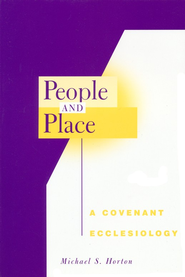
people and placeWarning: This is a nerdy one.

I’ve long found the three-fold office of Christ as Prophet, Priest, and King to be an extremely helpful and biblical way of organizing the complex fullness of his once-for-all reconciling work in his life, death, resurrection, ascension, and session at the right hand of the Father. What I’ve not found is a succinct piece linking the accomplishment of Christ’s final mediatorial with the present work of the Spirit in the community and the life of the believer–that is until I ran across this passage by Michael Horton:

From John 14-16 we also see that the Spirit brings about the…effect of the threefold office of Christ in these last days. As prophet, the Spirit bears the covenant word of judgment and justification, conviction of sin and faith-creating promise. This is what it means for the Spirit to be poured out on all flesh (Joel 2). As Barth famously put it, “The Lord of speech is also the Lord of our hearing.”

Furthermore, the Spirit is not merely a bonding agent between the Father and the Son, but an equal actor in the economy of grace. Although the external works of God are undivided, the agency of each person is distinct. The one Word is spoken by the Father and reaches its creaturely goal through the perfecting power of the Spirit. As the Spirit is different from the Son (“another Paraclete”), Pentecost is a genuinely new episode in the economy of grace. The Spirit “translates” for us and within us the intra-Trinitarian discourse concerning us (election, redemption, and renewal in Christ). The content of the Spirit’s teaching ministry is Christ (John 15:26b)–not another Word, but its inward effect in our hearts, provoking an “Amen!” AS one sent by the Father in the name of Christ, the Spirit preaches Christ, gives faith to hearers, and thereby unites them to Christ as members of his mystical body.

As “another Advocate,” the Spirit also ministers within us as that priestly office that Christ holds objectively outside of us. The Spirit is not our high priest, but applies the benefits of Christ’s completed work to us and unites us to Christ himself. Apart from the Spirit’s agency, we would remain “dead in trespasses and sins,” refusing the Gift, without any vital connection to Christ’s person and work (Eph. 2:1-5) We have already been reconciled to God in Christ “while we were still enemies” (Rom. 5:10), but the Spirit comes to make us friends and children of God (Rom. 8:1-27). As a covenant attorney, the Spirit makes more than a truce–a mere cessation of hostilities–and brings about a state of union.

Mediating Christ’s royal ministry, the Spirit subdues unbelief and the tyranny of sin in the lives of believers, creating a communion of saints as body ruled by its living head through prophets and apostles, evangelists, pastors, and teachers that Christ has poured out as the spoils of his victory (Eph. 4:11-16). The Spirit makes Christ’s rule effective in us and mong us by inspiring the scriptural canon and by creating a people who will be constituted by it. Jesus Christ had already appointed apostles as Spirit-inbreathed witnesses, but now at last through the ordinary ministry of pastors, teachers, and other officers in the church, Moses’ request in Numbers 11:29 (“Would that all the LORD’s people were prophets, and that the LORD would put his Spirit on them!”) will be fulfilled beyond his wildest dreams. Not only the seventy elder, but also the whole camp of Israel is made a Spirit-filled community of witnesses. The charismata bestowed on the whole body are orchestrated by the Spirit through the ordained office-bearers, who differ only in the graces (vocation), but in the grace (ontic status) of the Spirit. Thus, the mission of the Twelve in Luke 9:1-6 widens to the seventy in chpater 10. Yet this was but a prelude to the commissioning ceremony of Pentecost.

People and Place: A Covenant Ecclesiology, pp 24-25

Soli Deo Gloria

Justin Bieber: On the Dangers of Being Famous Too Early (CaPC)

That happened.

That happened.

Back when my wife and I used to watch American Idol with her family every week, I had a staunch policy of not supporting any contestants under the age of 18, regardless of talent or the competition.  My gut feeling was that 16 is just too young for most people to have that much attention focused on them.  If they were good, take a shot at it in another couple of years.

A few years on, a couple of years of college ministry later, my gut hasn’t changed. (Well, my inner gut. We’ll pass over my waist size in silence.) I still think being too famous too early is an unfortunate turn of events.

My evidence? Justin Bieber and Anne Frank.

You can go read the rest of the article over at Christ and Pop Culture HERE.

A Political Non-Pacifist Reading of The Sermon on the Mount

constantineIt’s often alleged that any reading of Jesus’ teaching in the Sermon on the Mount that doesn’t result in a pacifist ethic is a depoliticized and de-historicized one. Jesus’ commands against retaliation and of neighbor-love, (Matthew 5:38-48) set in a context of Roman oppression and violence must lead obviously one of non-violence lest the politics of Jesus be lost. Leithart notes that for John Howard Yoder without pacifism Jesus’ ethic loses its political force because Yoder believes that Jesus’ teaching offered no instruction for his disciples in political power because his followers were never to have that sort of power.

In a striking passage Leithart moves to counter that contention by offering a brief, non-pacifist, “political” reading of the Sermon on the Mount in which Jesus’ words for his disciples can shape the governance of those disciples who happen to hold political authority; for a way in which the “Eucharistic city” of the Church can offer guidance to the City of Man based on the teachings of her King:

  1. “Turn the other cheek” gives instruction not about self-defence but about honor and shame. To slap someone on the right cheek, you have to slap back-handed, and back-handed slap expresses contempt, not threat. Is this relevant to political ethics? Of course. The Roman Empire was built on a system of honor, insult and retaliation. Before Rome, Thycidides knew that wars arose from “fear, honor, and interest.” Remove retaliation and defense of honor from international politics, and a fair number of the world’s wars would have been prevented. There would have been a lot of slapping but not nearly so much shooting.
  2. The Eucharistic city would teach rulers to agree with their adversaries quickly, to defuse domestic and international disputes before they explode.
  3. What if rulers were instructed not to look at a woman lustfully? That would also prevent some wars, keep presidents busy with papers and things at their desks, protect state secrets, save money and divisive scandals. The church would insist that rulers be faithful to their wives and not put them away for expediency or a page girl (or boy.)
  4. The church would insist on honesty and truth telling, urging rulers to speak the truth even when it is painful.
  5. The church would insist that a ruler not do alms or pray or fast or do any other good things to be seen by others, especially by others with cameras—a rule that would revolutionize modern politics.
  6. Rulers would be instructed to love enemies and do good to all. Obama would be seeking the best for the Republican Party, Ms. Anonymous Republican would be doing her best to serve the president. A ruler would have to stand firm against the antics of tyrants, not out of hatred but out of love, to prevent the tyrant from doing great evil to himself and others. If the tyrant attacked, the rule would have to defend his people out of love for them and out of love for his enemy. Punishments would be acts of love for the victims, the public and the punished, just as a father disciplines his son in love. The church would insist that the ruler not use his legitimate powers of force for unjust ends, on pain of excommunication.
  7. The church would urge rulers to beware their own blind spots and remove logs from their eyes so they can see rightly in order to judge.
  8. The church would remind a ruler that she will face a Judge who will inquire what she had done for the homeless, the weak, the sick, the imprisoned, the hungry.
  9. At the extreme, a ruler might place himself on a cross, sacrifice his political future and his reputation, for the sake of righteousness. In certain kinds of polities, he would be the first soldier, the first to fly against the enemy, because being the leader means you get to die first. In great extremity, he might follow Jeremiah’s example and submit to conquest, defeat, deportation—endure a national crucifixion to preserve people for future rebirth.

Defending Constantine, pp. 338-339

Whether you’re in full agreement with this list or not, Leithart demonstrates that one doesn’t have to be a pacifist in order to give “an earful of the politics of Jesus” to any ruler.

Soli Deo Gloria

5 Tips on How To Read Stuff on the Internet

computerThe internet is a funny place–particularly the blogosphere. Recently, I’ve been forced to reflect on the way that people read things the internet–about the way I read things on the internet–and I thought it worthwhile to share a few of the tips I’ve been learning to work on.

  1. The words “A” and “The” are different words. – Seriously, read carefully. Pay attention to whether an author is making broad or specific claims. Is it an absolute or conditional statement? It’s good to be careful about those sorts of things.
  2. Don’t always assume the author knows you personally and is obviously writing about your experience. There have been a number of instances where I have misread an author’s intent by immediately connecting whatever they’re writing about with my personal history. In other words, don’t be narcissistic in your reading. Obviously, you will always come to the text with your own personal history. It’s important to stop and realize that your life does not and can not encompass the sum total of human wisdom and experience. The author might have a whole different set of experiences that they’re drawing on and addressing that have nothing to do with you.*
  3. Read the whole article, not just particular paragraphs. This point should be obvious as well. Still, I can’t tell you how many times I have had to come back to an article and realize that the author wasn’t saying what I thought they were saying because I, with my myopic tendencies, had fixated on some particular phrase instead of catching the whole shape of the argument. Instead, it’s good to make sure and read the whole thing before coming to a firm judgement. You don’t know the way that the author might balance or correct for your concerns later on.
  4. Calm down and read it again. This one is implied in the last one, but sometimes it pays to read an article more than once. I know for myself, I’ve approached certain authors or articles with controversial titles with a grid in place that skewed even a thorough first reading. It pays to read it again and again to make sure you’re hearing properly.
  5. Read as you’d like to be read. This is simply the golden rule in practice. If you’d like others to pay attention to what you say, give grace for your linguistic infelicities, and ask for clarifications before making final judgments about your pieces, then go ahead and do the same for others.

*If you’re offended right now because you think I’m writing this post about you, please refer back to #2.

The Strong Voice of the Lord

 Ascribe to the Lord, O heavenly beings,

ascribe to the Lord glory and strength.

 Ascribe to the Lord the glory due his name;

worship the Lord in the splendor of holiness.

 The voice of the Lord is over the waters;

the God of glory thunders,

the Lord, over many waters.

 The voice of the Lord is powerful;

the voice of the Lord is full of majesty.

 The voice of the Lord breaks the cedars;

the Lord breaks the cedars of Lebanon.

 He makes Lebanon to skip like a calf,

and Sirion like a young wild ox.

The voice of the Lord flashes forth flames of fire.

The voice of the Lord shakes the wilderness;

the Lord shakes the wilderness of Kadesh.

The voice of the Lord makes the deer give birth

and strips the forests bare,

and in his temple all cry, “Glory!”

 The Lord sits enthroned over the flood;

the Lord sits enthroned as king forever.

 May the Lord give strength to his people!

May the Lord bless his people with peace!

Psalm 29

Kind of a fake-out blog–it’s just the Bible this time. I’m intentionally not going to comment on it except to say:

  • Read it a few times through and note which phrases or thoughts are repeated or highlighted.
  • Read it again and note the differences between the lines.
  • Ask questions like, “What is the prayer to the Lord?” or “What is the command to the people?” and “On what basis does the Psalmist tell the people to do these things?”
  • Before all of these things, though, pray that the Spirit would illumine the text for you.

I pray the Lord’s strong voice speaks to you in this morning through his Word.

Soli Deo Gloria

The Morality of the Story (Mere-Orthodoxy Guest Piece)

So, I wrote a piece a while back on the way looking at our lives in the narrative key shapes the way we understand our moral situation. After some tuning up and heavy editing, Matthew Lee Anderson was kind enough to give me the honor of publishing it over at Mere Orthodoxy. You can read it HERE.

Soli Deo Gloria