Proverbs for Facebook, Twitter, and Blogs

bloggingIronically enough, the week I taught my students about the importance of wise words, I witnessed a number of online brouhahas caused/exacerbated mostly by a foolish use of words. Of course, I could write that about any week as the internet is frequently a horrible place, filled with foolishness, rash language, and “cursing” of all sorts, including the ‘Christian’ wings of it.

As one who’s played the part of the fool far too often in these fracases, I thought it might be helpful apply a few, fairly obvious, but frequently forgotten, proverbs on the wise use of speech for those of us inhabiting Facebook, the blogosophere, and yes, the Twittersphere. Who knows what a little ancient wisdom can do for our modern communication techniques?:

You can watch me break down these proverbs HERE at Christ and Pop Culture.

Sin: Self or Circumstances?

Society-of-the-spectacleChristianity has a simple message: Jesus saves from sin. When you start asking questions about what that means, you realize that simple message can generate, and indeed, necessitates some very complicated explanations. A simple question like “Who is Jesus?” can call forth debates that span centuries, councils, and countless learned treatises that, even when they establish a solid baseline, never fully come to the end of the issue.

So what of the other part of the equation? What are we talking about when it comes to the ‘sin’ that Jesus saves us from? While we could tackle this from a number of angles, one question that has been a rather thorny one in the modern period is whether sin is more of a personal or a social reality. Painting with a ridiculously broad brush, one could say that contemporary pop-Evangelicalism and mainline liberalism have typically taken opposing approaches to sin and sanctification.

Evangelicalism has typically focused on sin as a problem with individuals. I choose to sin, personally disobeying God, loving things other than the Lord my God with heart, soul, mind, and strength first. If society as a whole is debauched or unjust, it is because of the collective individuals of which it consists. Liberalism has typically given priority to society and structural issues. Sin is less about personal acts of unrighteousness, but rather unjust systems of oppression that trap people in harmful, destructive behavioral cycles. If holiness is to be achieved, we must change the social structures first and the individual issues will be mended from there.

So which is it? The sinful self or the circumstances that lead to sin? Jurgen Moltmann weighs in:

‘Change yourself’ some say, ‘and then your circumstances will also change.’ The kingdom of God and of freedom is supposed to have to do only with persons. Unfortunately the circumstances will not oblige. Capitalism, racism, and inhuman technocracy quietly develop in their own way. The causes of misery are no longer to be found in the inner attitudes of men, but have long been institutionalized.

‘Change the circumstances’ others say, ‘and men will change with them.’ The kingdom of God and of freedom is supposed to be a matter only of circumstances and structures. Unfortunately, however, men will not oblige. Breakdowns in marriage, drug addiction, suicide and alcoholism continue undisturbed. Structures which make people unhappy can be broken down, but no guarantee is attached that men will be happy.

Thus both must be done at the same time. Personal, inner change without a change in circumstances and structures is an idealist illusion, as though man were only a soul and not a body as well.  But a change in external circumstances without inner renewal is a materialist illusion, as though man were only a product of his social circumstances and nothing else.

The Crucified God, pg. 23

Once again, the Gospel is a simple message but it is not simplistic. We need salvation both from our own personal sin and rebellion, as well as the redemption of broken social structures that are generated by and aggravate that rebellion. Evangelical that I am, I think the latter is rooted in the former; in the narrative of Scripture, sin moves progresses from the personal (the garden, Gen. 3) to the social (Babel, Gen. 11). Still, it does not help to ignore either as we think through reality of redemption.

Now, as always, its beyond me to suggest how that all plays out. I work in the local church, primarily at the level of the individual, and am only now framing my theology of how the Church, either as an organism or an institution, should be engaged in social change. I do know that as I continue to pursue these questions, I don’t have to panic as the world is firmly in Jesus’ saving hands.

Soli Deo Gloria

A Few Good Links and a Hymn on the Fourth

Stare into the face of America.

Stare into the face of America.

I was going to write something this 4th of July, but I decided not to. It’s been a busy week already. Maybe next year. Still, as our nation celebrates Independence, I figured I’d offer up a few helpful links for your consideration:

First, Ryan Hoselton over at Christ and Pop Culture gives us a quick history lesson and reminds us:

On July 4th, Americans will wave our flags proudly, belt out our national songs triumphantly, and consume our barbecue and lemonade a little too freely. Why? Because we live in America, the best nation this planet has had the privilege to host. I’m grateful to be an American, and I enjoy the many freedoms and benefits that come with my citizenship. Nonetheless, our nation’s history has a track record for taking patriotism beyond gratitude and into nationalist idolatry. Many Americans through the years have harvested a superiority complex—a mentality and posture that has been harmful to our country and others. Patting our backs for our supreme eminence is not how we should be celebrating this holiday.

Brett McCracken offers up a defense of patriotism as nostalgia for home:

Patriotism is more existential than ideological, I think. It’s less about propagandistic justification for “exceptionalism-oriented” foreign policy (though it can be this) than it is a natural feeling of admiration and nostalgia for the place we call home.

My buddy Carson T. Clark offers up his annual downer of a post exposing 10 Myths about Independence Day (read at risk to your good mood):

This week a lot of American Christians are experiencing a patriotic fervor that’s premised upon historical falsehoods concerning our country’s origin. Let’s correct some of those misconceptions, shedding light on the Top 10 most unsightly facts that most of these folks haven’t heard, or refuse to acknowledge, about our country’s war for independence.

To lift your spirits, the best version of “Battle Hymn of the Republic” by Page CXVI. This one has been stripped of some the more nationally-idolatrous verses and is simply beautiful:

Finally, an apostolic injunction for Christians looking be faithful to King Jesus in the way they relate to their nation:

First of all, then, I urge that supplications, prayers, intercessions, and thanksgivings be made for all people, for kings and all who are in high positions, that we may lead a peaceful and quiet life, godly and dignified in every way. (1 Timothy 2:1-2, ESV)

Soli Deo Gloria

The Order Doesn’t Matter Because a Painting is All We Need

Why?  Why not?

Why?
Why not?

Anybody who’s given the Gospel accounts more than a cursory reading knows that there are apparent inconsistencies between them. Were there one or two angels at the tomb when Jesus arose? Did the Transfiguration happen 6 or 8 days after his teaching on  the cost of discipleship? Issues like these have motivated theologians and biblical scholars to write works of apologetics and “harmonies” of the Gospels reconciling these issues. Sometimes the answers work quite well and other times you end up with “solutions” that are worse than the problem they’re trying to explain.

Now, most of us might suspect that the older an author, the more conservative and likely to try and come up with an answer, no matter how odd, in order to “cover” for the Gospel-writers. That’s why it was funny to run across this little tidbit in Calvin’s Harmony of the Law on the temptation accounts. When you read the accounts in Matthew and Luke, you see that the order of the temptations is switched up. How does Calvin account for this?:

It is not of great importance, that Luke’s narrative makes that temptation to be the second, which Matthew places as the third: for it was not the intention of the Evangelists to arrange the history in such a manner, as to preserve on all occasions, the exact order of time, but to draw up an abridged narrative of the events, so as to present, as in a mirror or picture, those things which are most necessary to be known concerning Christ. Let it suffice for us to know that Christ was tempted in three ways. The question, which of these contests was the second, and which was the third, need not give us much trouble or uneasiness. In the exposition, I shall follow the text of Matthew.

Harmony of the Law, Matthew 4:5-11; Mark 1:13; Luke 4:5-13

Long before modern historical and literary critics came on the scene, Calvin knew that we must not impose modern standards of historiography on the Gospel writers. Their intent was not to give us a perfect blow-by-blow, video-camera-replacing description, but to give us those things “most necessary” for us to know about Jesus’ saving ministry. This isn’t imputing error or falsehood to them, but recognizing the nature the of the account they’re trying to provide. It’s no insult to recognize a wonderful painting for what it is; the problem comes when you’re expecting an HD photograph. God has given us what he knows we need in his Word, not what we think we need.

Soli Deo Gloria

Beliefs Are Not Set In Stone, Except When They’re On Tablets (Mere-O Piece)

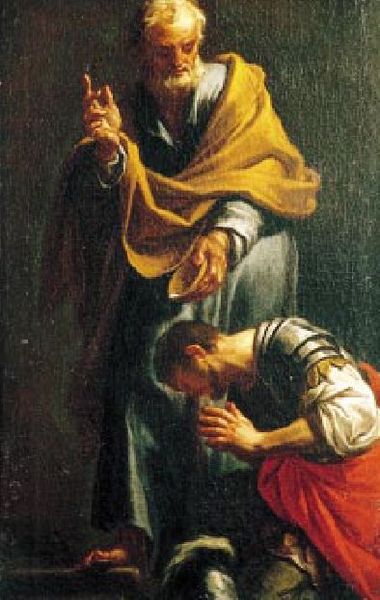
Baptism_of_corneliusRachel Held Evans believes we shouldn’t be too scared about changing our minds on religious questions, as these things aren’t always “set in stone.” Addressing religious believers in light of the SCOTUS decisions on gay marriage, she encourages us to realize it’s possible to shift your beliefs without being a culturally-accommodating, flip-flopper. Her biblical paradigm for this? Peter and Cornelius.

Breaking through years of religious training regarding Gentiles, the Apostle Peter included the Roman centurion Cornelius when he encountered his sincere faith, learning to not call impure what God names as clean. Just as the theological conversions of Paul, Augustine, and Luther have been a blessing to church history, Evans encourages us to model Peter’s example of open-mindedness and inclusion–especially as we think about same-sex attraction.  “A person of conviction is not one who is unyielding to change, but one whose beliefs evolve based on new information, new movements of the Spirit, new biblical insights and, yes, new friends.”

You can read my reasons for thinking Peter’s situation is not a good model for our thinking about same-sex attraction HERE over at Mere Orthodoxy.

Soli Deo Gloria

Why Christians are Concerned About DOMA: Two Valid Reasons, Two Not-So-Much

scotusA great many Christians are dismayed with the recent SCOTUS decisions regarding gay marriage.  Their dismay is no surprise to anyone. What doesn’t seem as clearly understood is exactly why. While same-sex marriage advocates might like to chalk it up to simple intolerance, and opponents, to a pure concern for moral righteousness, the situation seems a bit more complex.

Scrolling through my Facebook feed,  Twitter threads, reading various pieces on the subject, and processing the reactions of friends and family, I’ve noticed four main recurring themes, although there are surely more, in Christian concern about the decisions. Two are legitimate and two ought to be repented of. It seems constructive, both for understanding dialogue and Christian growth, to briefly review them.

You can read the 4 reasons HERE at Christ and Pop Culture.

The Theological Importance of Knowing What ‘Time’ It Is

old-clockMost of us don’t think of knowing what time it is as a significant theological issue. Beyond showing up promptly out of respect for an acquaintance, or knowing when to get to church on Sunday, how could it be? According to Athanasius it could mean difference between heresy and orthodoxy. In his First Discourse Against the Arians he sets about answering objections to the Son’s deity from Scripture, showing that the Arians’ hermeneutics were hopelessly misguided and indeed, characterized by interpretive folly.

Bringing forward texts like Hebrews 1:4 “being made so much better to angels as the name he has inherited is more excellent than theirs”, they argued from this that it is clear that the Son is made ‘better’ in which case he could not be eternal, uncreated, admitting of improvement. Athanasius says that this exegetical failure is rooted in their ignorance of time.

Appealing to the Eunuch’s question to the apostle Philip, “of whom does the Prophet speak, of himself, or of some other man?” (Acts 7:34), he expounds the very important interpretive rule that:

…it is right and necessary, as in all divine Scripture, so here, faithfully to expound the time of which the Apostle wrote, and the person, and the point; lest the reader, from ignorance missing either these or any similar particular, may be wide of the true sense… (7.54)

Athanasius notes how persistent the disciples were about understanding these particulars, especially the time, so that they would not fall into error:

…And the disciples, wishing to learn the time of what was foretold, besought the Lord, ‘Tell us,’ said they, ‘when shall these things be? and what is the sign of Thy coming?’ And again, hearing from the Saviour the events of the end, they desired to learn the time of it, that they might be kept from error themselves, and might be able to teach others; as, for instance, when they had learned, they set right the Thessalonians. who were going wrong. When then one knows properly these points, his understanding of the faith is right and healthy; but if he mistakes any such points, forthwith he falls into heresy… (ibid.)

Scripture also gives us the negative example of what happens when one is temporally disoriented:

…Thus Hymenæus and Alexander and their fellows were beside the time, when they said that the resurrection had already been; and the Galatians were after the time, in making much of circumcision now. And to miss the person was the lot of the Jews, and is still, who think that of one of themselves is said, ‘Behold, the Virgin shall conceive, and bear a Son, and they shall call his Name Emmanuel, which is being interpreted, God with us;’ and that, ‘A prophet shall the Lord your God raise up to you,’ is spoken of one of the Prophets; and who, as to the words, ‘He was led as a sheep to the slaughter,’… (ibid)

Arius and his followers were making Hymenaeus and Alexander’s mistake, not noting the time with respect to the texts in dispute. If they had, they would have observed that the apostle is not referring to the Lord with respect to his pre-incarnate state, but within the economy of salvation with respect to his humanity. That is the time when God “spoke to us by His Son” (Heb. 1:2), and the Son obtained a more excellent name than the angels (Heb. 1:3, 4).  In other words, they didn’t understand the hermeneutical difference it makes that the story’s main character has a “history” that begins in eternity.

Christianity is a historical faith about things that took place in particular locations at precise times. Salvation is a dramatic reality which means that knowing which act we’re in can drastically impact the way we read the lines. While modern biblical studies have directed us to pay closer attention to the concrete socio-historical circumstances surrounding the texts, and recent narratival/canonical approaches have re-emphasized the redemptive-historical location of the text, Athanasius reminds us to keep an eye on the distinction between history and eternity.

Soli Deo Gloria

What is the Day of the Lord?

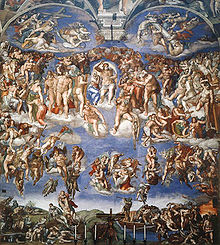
last judgmentWarning: Happy Post Ahead!

Although mention is made quite frequently of the “Day” or the “Day of the LORD” in OT prophetic literature many of us would be at a loss to explain what it was. For anybody interested in understanding the latter prophets, and really, having a well-rounded picture of God, it’s an important concept to get a handle on. Thankfully, while studying for my young adult group, I ran across a helpful digression on the subject (pp. 66-67) in Elizabeth Achtemeier’s commentary on Zephaniah in the Interpretation series.

Origins 
Achtemeier tells us that the theology of “Day” of the LORD originated within the context of Israel’s holy wars of conquest, in which the LORD was pictured as a Divine Warrior, leading the hosts of Israel against her enemies. His weapons were “thunder (1 Sam. 7:10), falling stones (Josh. 10:11), darkness (Exod. 14:20; Josh 24:7),” and especially the terror of the LORD with which he cast Israel’s enemies into confusion (Exod. 15:14-15; 23:27; Josh 2:9, 24; 5:1; 7:5). Israel was reassured that she was safe because the LORD was a mighty warrior on her behalf. When we hear the word “Day” we think about a specific amount of time, but Achtemeier says, it’s more of a specific moment, or event in time, which is left somewhat unspecified, but is known to the Lord. In much of Israel’s theology then, the Day was an event of salvation and rescue from her enemies to be looked to eagerly.

Later on though, the prophets ended up flipping the “Day” on it’s head. When Israel grew sinful, idolatrous, and complacent in her rebellion against God, Amos and others proclaimed a “Day” of the Lord that would include God’s warfare and divine judgment, not only on Israel’s enemies, but on Israel herself for violating the covenant with him (Deuteronomy 29). As Achtemeier points out, the picture is developed explicitly in places like Amos 5:18-20, Zephaniah 1, Isaiah 2:6-22, Ezekiel 7:5-27, and host of other texts.

Getting Specific
What specifically does this new “Day” of judgment look like then? From Achtemeier:

  1. It is near (Zeph. 1:7. 14; Amos 6:3; Ezek. 7:7; Joel 1:15; 2:1; cf. Isa. 13:6; Ezek. 30:3; Obad. 15; Joel 3:14)
  2. It is a day of God’s wrath and anger against the wicked (Zeph. 1:5; 18; 2:2, 3; Jer. 4:8; 12:13; Ezek. 7:3, 8, 12f, 14, 19; Lam. 2:1, 21-22; cf. Isa. 13:9, 13)
  3. It is a day of darkness and gloom (Zeph. 1:15; Amos 5:18; 8:9; Joel 2:2) or of clouds and thick darkness (Zeph. 1:15; Ezek. 34:12; Joel 2:2; cf. Ezek. 30:3)
  4. The heavenly bodies are darkened (Amos 8:9; Joel 2:10; cf. 2:31; 3:15; Isa. 13:10)
  5. God is picture as a warrior (Zeph. 1:14…3:17; Jer. 20:11; Isa. 59:15-18; 63:1-6; 66:15-16; Zech. 14:3; Joel 2:11)
  6. It is a day of  battle, of trumpet blast and battle cry (Zeph. 1:16; cf. Ezek. 7:14; Jer. 4:5, 19, 21; 6:1; Isa. 13:2-22; 22:5-8; Ezek. 30:4-5; Obad. 8-9; Zech 14:2-3). Of sword (Zeph. 2:12; cf. Zek. 7:15; Jer. 4:10; 12″12; 46:10; Isa. 13:15)
  7. The enemies are dismayed and rendered impotent (Ezek. 7:17, 27; cf. Jer. 4:9; 6:24; Isa. 13:7-8; Ezek. 30:9; Zech. 14:13)/
  8.  God searches out his enemies to destroy them (Zeph. 1:12; Amos 9:2-4; cf. Isa. 13:14-15)
  9. The wealth of the enemies cannot save them and becomes useless (Zeph. 1:18; Isa. 2:20; Ezek. 7:11; 19, cf. Isa. 13:17)
  10. Human pride is destroyed (Zeph. 3:11-12; Isa. 2:11-17; cf. Ezek. 7:10, 24; Isa. 13:11: Obad. 3-4)
  11. It may be that some are hidden in the Day of saved as a remnant (Zeph. 2:3, 7, 9; Amos 5:14-15; cff. Joel 2:18-32; Jer. 4:14; Obad. 17)

-Elizabeth Achtemeier, Nahum–Malachi, Intepretation, pp. 66-67

A Reminder
The Day of the Lord stands as a reminder that the God of the prophets–Isaiah, Jeremiah, Ezekiel, Amos, and so forth–is a Warrior. He is the mighty King, the Lord of Hosts who executes judgments on wickedness and cannot be reduced to some postmodern, ethereal, all-spirit of affirmation and cupcakes. Lest we be tempted to think he is a mere tribal god whose judgments can be directed at our enemies, these texts show us a judgment coming on all people, even, and especially, his own covenant people.

Of course Paul dashes our Marcionite hopes that this is merely some Old Testament ickiness we can be quit of now that we’re in the New Testament by linking it with the coming of Christ. Indeed, the phrase is often transformed into the “day of the Lord Jesus Christ”, the “day of Jesus Christ”, “the Day of Christ”, or simply as “The Day.” (1 Cor. 1:8; 2 Cor. 1:14; Phil. 1:6; 1 Thess. 5:4) Paul adopts the terminology with all of its apocalyptic background and range of meaning and identifies the promised “Day of the Lord” with the coming of the Lord Jesus. It will be the day of judgment and salvation spoken of by the prophet, only we now see that the agent of its administration is the Christ himself.

Real difference exists for the NT believer, though–in Christ they have assurance that they have found that hiding place from the “wrath that is to come” (1 Thes. 1:10), not because of their own righteousness, but by the same grace offered freely to all.

Soli Deo Gloria

I’m Taking a Sabbath (And So Should You)

This is the first thing that came up when I Googled 'Sabbath.' That's culturally-telling.

This is the first thing that came up when I Googled ‘Sabbath.’ That’s culturally-telling.

I’m taking off this week on a little road-trip up to Santa Barbara. We’re packing up 20+ college students to go beach camping for our summer retreat and plan on having a blast. After a couple of days there, my wife and I are taking a mini-vacation for our 2-year anniversary, by sticking around the area in a hotel while the students head back down to Orange County. Needless to say, I am very excited.

This means two things for me: First, I won’t be on the blog much this week. Don’t worry though, I’ve prepped a few posts that are scheduled to go up, so there will be plenty of Reformedish content to read. That said I won’t be sharing them around much (so feel free to share them for me!), nor will I be commenting in response much either. You’ll have to amuse yourselves otherwise.

Second, in light of my own mini-Sabbath, I’ve been thinking about the issue of Sabbath. In fact, that’s the subject of our meditations this week with the students. Americans in general, for all of our leisure, don’t really know how to Sabbath. Surprisingly enough to some, college students are some of the worst offenders I know. They do plenty of random, “non-work” activities, but the actual practice of Sabbath is something that escapes them–so we’re going to talk about it.

Calvin on Sabbath: Too Much to Talk About
Given all these things, I was curious to go back and read what Calvin had to say on the subject. It turns out there was a lot–far too much to review here. Unbeknownst to many, Calvin’s commentary on the Torah is a lengthy Harmony of the Law comprising 4 volumes in which he comments on the narratives in Exodus-Deuteronomy (he has a separate commentary on Genesis) and, well, “harmonizes” the Law by treating the various laws according to groupings and subject matter, while still dealing with specific texts. I don’t have time to go through it all, but you can go read what he does with the Sabbath command at length here.

Thankfully Calvin summarizes a great deal of that in a shorter but still lengthy section in the Institutes as well, which contains a brief commentary on the 10 commandments in Book 2. But, of course, he outlines those comments briefly at the beginning too. That’s what I want to look at. Yes, it’s a summary of a summary, but even that is plenty of Calvin to work with.

Three Reasons
Following the Fathers he thinks that this commandment is “a foreshadowing because it contains the outward keeping of a day which, upon Christ’s coming, was abolished with the other figures” (2.12.28) Now, this is true as far as it goes, but he thinks that when we limit it to this, “they touch upon only half the matter.”

Calvin sees at least three reasons for the Lord’s Sabbath command:

  1. First, under the repose of the seventh day the heavenly Lawgiver meant to represent to the people of Israel spiritual rest, in which believers ought to lay aside their own works to allow God to work in them.” (ibid.) First and foremost the Sabbath is not a work to be achieved on our part, but a promise, a foreshadowing, of God’s Gospel accomplishment on our behalf. God was pointing his people ahead to the day when their own ceaseless and ineffective spiritual labors would cease because Christ the Redeemer had done the great work on our behalf. Of course, for us, this serves as a reminder that the great work has already been done; we rest in Christ. At the same time, there is still an eschatological element to the Christian keeping of the Sabbath as it points to that final rest that we still await. (Heb. 4) Our current Sabbath is a down-payment on eschatological Sabbath to come.
  2. Secondly, he meant that there was to be a stated day for them to assemble to hear the law and perform the rites, or at least to devote it particularly to meditation upon his works, and thus through this remembrance to be trained in piety.” (ibid.) God knows we regularly need to gather, hear the word of the Lord, and meditate on all of his goodness. Sabbath is not mere leisure time, but a specific rhythm by which we set aside time to recall the promises of God, his commandments, and worship Him as he deserves and our hearts were designed to do. The key to remember here is that God does not need this, but we do. He demands it as his due lawful due, but the benefit is ours.
  3. Thirdly, he resolved to give a day of rest to servants and those who are under the authority of others, in order that they should have some respite from toil.” (ibid.) Finally, Calvin notes the very practical nature of the command: physical rest. Even before the Gospel of Resurrection taught us that the Lord is redeeming the body as well as the soul (1 Cor. 6), we see in God’s commands his care for our physical being as well as our spiritual–indeed, the two are indissolubly connected. God knows that we simply need rest from our labors, a time when we simply are still and know that the world will keep turning as we recuperate our strength for the tasks that God has set us to do in this world.

As with all of God’s good commands, there is far more to say, but in obedience to the command, I will cease from my labors and trust that God himself will teach you all that you need to know in this regard. Consider this an invitation to rest in the Lord.

Soli Deo Gloria

Director, Soul, and King: The Word

directorReading the early Fathers gives you a sense that they were smitten by the wonder of God’s creative glory. Ireneaus was one of the first and greatest theologians of the significance and grandeur of God’s works. Following on his heels comes Athanasius’, waxing eloquent on the subject in his work Contra Gentes. In his argument against the pagan gods, he points to the magnificent order of the universe as evidence that they could only be the result of a single, purposive God according to Wisdom–the Word Himself.

Master teacher that he is, Athanasius gives us three similes to explain how the Word gives order to the Universe:

  1. Director – “And for so great a matter to be understood by an example, let what we are describing be compared to a great chorus. As then the chorus is composed of different people, children, women again, and old men, and those who are still young, and, when one, namely the conductor, gives the sign, each utters sound according to his nature and power, the man as a man, the child as a child, the old man as an old man, and the young man as a young man, while all make up a single harmony…”
  2. Soul – “or as our soul at one time moves our several senses according to the proper function of each, so that when some one object is present all alike are put in motion, and the eye sees, the ear hears, the hand touches, the smell takes in odour, and the palate tastes,—and often the other parts of the body act too, as for instance if the feet walk..”
  3. King – “or, to make our meaning plain by yet a third example, it is as though a very great city were built, and administered under the presence of the ruler and king who has built it; for when he is present and gives orders, and has his eye upon everything, all obey; some busy themselves with agriculture, others hasten for water to the aqueducts, another goes forth to procure provisions,—one goes to senate, another enters the assembly, the judge goes to the bench, and the magistrate to his court. The workman likewise settles to his craft, the sailor goes down to the sea, the carpenter to his workshop, the physician to his treatment, the architect to his building; and while one is going to the country, another is returning from the country, and while some walk about the town others are going out of the town and returning to it again: but all this is going on and is organised by the presence of the one Ruler, and by his management…”

Against the Heathen, -§43

Of course Athanasius notes that these pictures are “inadequate”, and “yet with an enlarged idea” they serve to illumine the way God sustains the creative rhythm of reality through his Word–“For with the single impulse of a nod as it were of the Word of God, all things simultaneously fall into order, and each discharge their proper functions, and a single order is made up by them all together.”

In all this he is a student of  the Psalmist who proclaims to us:

1The heavens declare the glory of God,
and the sky above proclaims his handiwork.
2 Day to day pours out speech,
and night to night reveals knowledge.
3 There is no speech, nor are there words,
whose voice is not heard.
4 Their voice goes out through all the earth,
and their words to the end of the world.

Psalm 19:1-4

Let us never cease to marvel at the works of the Word.

Soli Deo Gloria