There’s More To The Church Than Meets The Eye

church southRecently, I found myself greatly encouraged as I read about some classic distinctions made in the doctrine of the church. While many of us are familiar with biblical images of the church (‘the body of Christ’, ‘the people of God’, ‘the Temple’, etc.) as well as the four marks of the church (unity, holiness, catholicity, apostolicity), Edmund Clowney briefly reminds us of three key contrasts to keep in mind:

The heavenly definition of the church explains the contrasts of its existence in time (militant/triumphant) and space (local/universal), as well as the perspectives of heaven and earth (visible/invisible.)

The Church, Edmund P. Clowney, pg. 73

Rarely do we see theological refinement as a potentially encouraging exercise. Instead we view theological distinctions in terms of pointless, or necessary but dreary, exercises in logic-chopping to be endured, but never dwelt on with an aim towards spiritual blessing. Of course, that’s completely wrong-headed. If I never considered the classic distinction between justification and sanctification, and was constantly judging my assurance in Christ on the basis of latter, I’d be a miserable wreck.

What’s more, we North American Evangelicals hardly ever look to the doctrine of the Church as a source of consolation or joy. Thinking of the cross, the resurrection, the mystery of the Trinity, eschatology–these things can be a blessing for meditation. The Church? Eh…we having trouble seeing it. Even more difficult for many of us then, is the idea of finding encouragement in historic distinctions made in the doctrine of the church. Logic-chopping about an already uninspiring subject is a doubly-uninspiring prospect.

Properly considered though, these three distinctions in our theology of the church ought to be extremely encouraging to believers, as they teach us about our walk with Christ, the God who saves us, and our hope in God’s promises.

Militant/Triumphant – The distinction between the church triumphant and the church militant reminds us, both of the hope of glory, and the life of struggle to be endured this side of Jesus’ return. On earth, between the times, the Church is still embattled, hard-pressed on all sides, engaged in a battle, not against flesh and blood, but against the principalities and powers of the world.

We should not be dismayed, therefore, when we face opposition here on earth, but ought to be prepared for this sort of thing. And yet, the hope of glory awaits us, In Christ who has already conquered, as the church triumphant is at rest with Christ, enjoying a foretaste awaiting the consummation yet to come.

Local/Universal – The distinction between the local and the universal, encourages to remember that our God is a global one, whose purposes expand beyond the little corner of sky that we can see. In the age to come, we will see people from every tribe, tongue, and nation, seated at the wedding supper of the Lamb, feasting with God, and praising the Son. For those of us discouraged by the state of the church in our country, state, or neighborhood, remember that God is always up to something and that our horizons are much smaller than those of our Lord.

This can also help keep us from the pride that believes our church’s particular, culturally-specific ways of preaching the Gospel and administering the sacraments are the be-all and end-all of God’s works through his people. Realize that the hour and five minute worship service of the community, Bible mega-church you grew up at doesn’t have the corner on Gospel-ministry; there are probably some house-churches in China that could probably teach our pastors a little something about Gospel-community, the ministry of prayer, and preaching with unction. Again, the universal church is far broader that the local congregation we’ve been blessed with.

Visible/Invisible – The distinction between the visible church with its institutions, sacraments, offices, and ordinary congregations and the invisible church comprised of the elect, known only to God is also, when properly-construed, can give us hope in difficult times. This distinction is a helpful eschatological buffer (already/not-yet) that keeps us from too quickly identifying the all-too-human actions of the present-before-us group of sinful, broken, institutional realities we participate as a failure of God’s promises.

While the visible church truly is the body of Christ, it is still a mixed company to some degree, both in terms of individual, as well as corporate holiness. The point is, yes, your local church and the global church, are in many ways, visible failures, and yet, the visible is not all there is to the church. Heaven sees and knows more than our limited vision can capture. God’s faithfulness goes deeper still than all of our faithlessness.

Take comfort and encouragement, then, in remembering that the church we see is not all that there is to the Church.

Soli Deo Gloria

Holy Hilarity (Or, Don’t Forget Jesus in Your Jokes)

jokeCalvin’s not usually known for his sense of humor, nor should he be. I mean, he’s funny in print sometimes, but the general consensus is that he was a pretty serious fellow. Actually, Luther was the riot among the Magisterial Reformers. I mean, the man named a treatise “TO THE SUPERCHRISTIAN, SUPERSPIRITUAL, AND SUPERLEARNED BOOK OF GOAT EMSER OF LEIPZIG WITH A GLANCE AT HIS COMRADE MURNER: GOAT, BUTT ME NOT.” To my knowledge, aside from an early treatise satirizing the use of spiritual trinkets and other ‘holy’ objects, Calvin didn’t produce anything so…pugnaciously humorous. He did use the word “stupid” on numerous occasions to great effect, though.

In any case, he makes an important exhortation on the subject of humor in his comments in Colossians. When explaining what it means to “sing Psalms, hymns, and spiritual songs” to one another (3:16), Calvin would have us expand Paul’s encouragement to all aspects of our speech:

Psalms, hymns. He does not restrict the word of Christ to these particular departments,but rather intimates that all our communications should be adapted to edification, that even those which tend to hilarity may have no empty savor. “Leave to unbelievers that foolish delight which they take from ludicrous and frivolous jests and witticisms; and let your communications, not merely those that are grave, but those also that are joyful and exhilarating, contain something profitable. In place of their obscene, or at least barely modest and decent, songs, it becomes you to make use of hymns and songs that sound forth God’s praise.”

Commentary on Colossians 3:16

Now, we might find Calvin a bit dour here. Surely there’s a time and a place for nearly pointless jokes. I enjoy a funny cat-falling-off-of-a-fan video as the next guy. I also love the back and forth of a good-natured battle of witty replies and roasts. Still, I find myself challenged a bit here when it comes to the way I use my humor. We live in snarky, sarcastic, and downright mean culture. And, let’s be honest, it’s hilarious sometimes. Okay, I’ll be really honest and say that a good chunk of my own humor is mockery-related. I mean, I work with college students–things get ridiculous at times.

Still, for those of us called by the God who speaks life and redemption through his words, all of our words should somehow bear testimony to that grace. I’m not saying we should all start making Bible jokes, (which are incredibly hard to do well unless you: a. know a good bit of the Bible; b, have an audience who does as well; and c. have a good sense of timing). And yet, I am saying that we still have something to hear in Calvin’s comments here.

Too often our speech-patterns, including our humor, is too conformed to the patterns of the world. Calvin spoke more directly to obscene and frivolous speech, but it might equally apply to uncharitable utterances. I had a mentor who would constantly call out his boys in Sunday School for putting each other down and then trying to cover it with “Just Kidding.” He’d look at us and say, “Here’s the thing, most of the time it still hurts anyways and you don’t want to tear down your brother, so just find something else to say.” Or something like that. I was in the 5th grade. In any case, while I think some playful ribbing is fine among brothers and sisters, he had a point. How often are our words aimed at building up our brothers and sisters? Can we think of the last time we used our humor positively? To build someone up instead of chipping away at them?

Calvin seems to think there’s a way for all of our speech to be ‘profitable’, even our hilarity.

To some this might seem like a recipe for a stiff, humorless life. Of course, the challenge is to get more creative with your humor. If you can’t think of a joke that doesn’t somehow trade on negativity, attack, or a put-down, you might not just be lacking in charity, but in imagination.

Take it as a challenge then: it’s not that you’re going to entirely eliminate the occasional joke at another’s expense, but rather, try to see your humor as one more area where you can obediently submit yourself to Christ/  Strive to creatively build up the body in all that you do–even in your jests.

Soli Deo Gloria

Dangerous Seminary

dangerousIn a recent series over at the Gospel Coalition, a buddy of mine wrote about how he wouldn’t trade his seminary experience for anything. It was a deeply formative experience of learning, joy, life, pain, and spiritual growth. I found myself nodding my head in agreement. I loved my years in seminary, not because they were perfect, but because in God’s purposes they were key for forming my character and ministry instincts.

That said, seminary can be a dangerous place if you don’t know what you’re getting into.

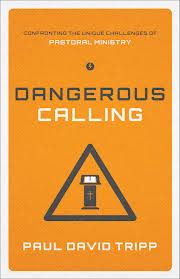
Addressing himself to pastors, seminarians, and professors within the seminary culture at large, Paul David Tripp writes of the attendant dangers when it comes to the way pastoral training is undertaken nowadays. He tells the story of a friend whose passion for gardening his roses led him to become an expert in all things concerning roses. He was technically proficient and knew all kinds of arcana when it came to the care and growth of roses. One day though, as he was working on his garden, he realized that it had been years since he’d actually taken the time to enjoy his roses without working on them. Tripp then asks:

Could it be that this is very close to what a seminary education might do to its students? Is it not possible for seminary students to become experts in a gospel that they are not being exposed and changed by? Is it not dangerous to teach students to be comfortable with the radical content of Scripture while holding it separate from their hearts and lives? Is it not dangerous for students to become comfortable with the message of the Bible while not being broken, grieved, and convicted by it? Is it not important for seminary students to be faced daily with the personal implications of the message that they’re learning to unpack and deliver to others? Is it not vital to hold before students who are investigating the theology of Christ the frequent and consistent call to life-shaping love for Christ? Could it be that many students in seminary are too academically busy to sit before the Rose of Sharon in awe, love, and worship? Could it be that in academizing the faith, we have unwittingly made the means to an end the end? Shouldn’t every Christian institution of higher learning be a warm, nurturing, Christ-centered, gospel-driven community of faith? Could it be that rather than having as our mission students who have mastered the Book, our goal should be graduating students who have been mastered by the God of the Book?

Dangerous Calling: Confronting the Unique Challenges of Pastoral Ministry (Kindle Locations 631-640). Crossway. Kindle Edition.

I can attest that in my own years in seminary, one of the greatest challenges was to see the text as something more than a puzzle to be solved, but rather a Word to obeyed. I’d be lying if I didn’t still struggle with having a devotional life that doesn’t immediately slide into some kind of study session. Resist this at all costs.

I don’t for a minute want to discourage an future pastors or current seminarians from digging in to their time at school. What I would urge you is the heed the warning in these questions. Fight to keep a real devotional life. Do not ever see the text simply as a task to be conquered, but strive to be conquered by the text. Open your study sessions with prayer and stop in the middle to pray regularly. Do not leave seminary with a shriveled devotional life.

Pastors, do the same as you prepare for your sermons. If this didn’t happen to you in seminary, it might happen as you enter the professional life. One simple but key question to always ask yourself after all the exegetical research is done is: “How am I putting this into practice?” Not, “how can my people put this into practice?”, but “how can be engaged with it?” Your studies of the text are not done if you have not gotten to the personal level, and eventually your preaching and pastoring, if not simply your personal holiness, will show the signs of this neglect.

If you’re a seminary prof reading this (which I’d be surprised at because there are much smarter things for you to be reading than this blog), please pastor your students. I loved that a number of my brilliant professors at seminary had also cut their teeth in the pastorate, and that even the ones who hadn’t, still encouraged us to deeper levels of discipleship, not just technical proficiency. Even if they resist you, don’t listen to them. They are the students, you are the professors: assert yourselves here. They need this and so do the congregations they will eventually pastor.

Finally, I’d encourage anybody in formal ministry, connected to it, elders, pastors, or involved parishioners to read this book. If you’re in seminary, it might help you cut off some signs of spiritual disease early. If you’re a pastor, it might save your ministry. If you’re on a search committee, it might help you know how to look for a pastor, not merely a professional. If you’re an elder, it’ll help your congregation care for the pastor you already have.

Soli Deo Gloria

One Year of Writing: A Few Reflections

yearAbout a year ago, I returned home from summer retreat with my students to find out that my wife had started a blog. “Hmm” thought I. Coming after a few months of mulling over whether to start one myself, I took it as the sign I was looking for. And so my little Reformedish blog started. Roughly 220 posts later, I’ve realized I don’t quite think I knew what I was getting myself into. I could not have predicted the joy, the stress, surprises, and blessings that have come with setting my hand back to the plough. When my little WordPress anniversary notification popped up, I figured it’s as good a time as any to review and reflect on some things I’m grateful for and lessons I’ve begun to learn through the writing experience.

Writing Can Be Addictive – Early on I had difficulty thinking of things to write. I would sit, ponder, mull over the various ideas I’d had bouncing around in my head during all of the silent years leading up to the blog, but it was still a struggle to crank out a post. Over time, though, the more I wrote, the more I realized I wanted to write about everything. Nowadays I find myself writing maybe a third of the ideas that come into my head, or commenting on a fraction of the passages I find worth interacting with. I’ll tell myself I’ll take it easy one week, only to find myself writing a couple of extra surprise articles I didn’t think I had in me. I don’t know that this is always a positive thing, but still, it’s something I’m learning.

Editors Are Great –  One of the great blessings of the last year has been coming on staff over at Christ and Pop Culture. They introduced me to the world of writing with an editor. A good editor will save you from yourself at your worst moments as a writer and encourage your best. I’ve been sharpened by their input, corrections, and averted a couple of train-wrecks. Actually, it’s not just editors, but a writing community in general helps if you can get it. That’s one of the reasons I’ve loved writing with the crew over at CaPC–it’s really a collaborative effort. Also, the two or three guest pieces I’ve had over at Mere Orthodoxy have been some of the most helpful I’ve had as a writer. Matthew Lee Anderson is a brutal, savage man who will rip apart your work in the best way possible.

Projects Are Good – I started my Calvin Comments project a couple of months ago and it’s been a beneficial discipline for me. Setting a long-term writing project helps you develop your attention-span as a writer, strengthening your ability to focus in a a subject or thinker in order to penetrate deeper than the easy, initial observations.

Popularity Is Unpredictable – There are occasionally times when I’ve had a sense that a piece would do well and I’ve been right. For the most part, I’ve been totally surprised by the reactions/non-reactions I’ve seen to various pieces. The ones I work hardest on, love dearest, and pour the most of myself into, might get a yawn, while the quickie-post is my biggest day of the week. Go figure.

Write Clearly and Expect to Be Misread – I’ve had a few experiences online that have taught me you need to write clearly on the internet. You should write clearly in general, but people’s reading habits online can be kind of sloppy. We skim, read bold sections, italics, and the title and cobble together a general idea of the argument. Because of that, it’s best to set out your arguments, if you’re making an argument, as cleanly and unmistakably as possible. You also should expect some people to still not understand what you’re saying. It’s just a thing. I’m realizing that if you can’t take that, you’ll never survive.

This Too Shall Pass – In a few days, everything will be forgotten. This applies both to the praise and the controversy. By the grace of God, I’ve had a few pieces do surprisingly well. That’s cool for a day or two. Don’t get too elated, though. It’ll be forgotten quickly, as the internet rolls on. On the other hand, I’ve managed to get plunged into a couple of full-blown, this-is-a-real-thing, interwebs brouhahas. These were fairly unpleasant. One in particular landed me at the center of some uncomfortable attention, misunderstandings, and a whole lot of stress. But, as I found out, this too passed and was forgotten in short order. It’s very important to mind every word you write, for you will give an account one day to the Lord, but still, if you don’t make it a habit of being dip, it’ll be okay. Hopefully.

Idolatry Is Still Stupid – Getting your sense of identity and self from writing is, like every other form of idolatry, very stupid. It’s also very easy to fall into. Time and time again I’ve had to remind myself that good page-views or bad page-views do not determine my worth or standing as a child of God. If I live for the affirmation of good comments and shares, it inevitably won’t be enough, or the negative criticisms I receive will be devastating. No, before I’m a writer, I must reckon myself a child of God. Any other approach is spiritual folly.

God is Unpredictably Kind (Again) – I’ve always known God is unreasonably kind, but in the last year, he has surprised me with a number blessings I don’t deserve through the writing process. In the last few months he gave me the opportunity to: go to a couple of conferences I never would have gone to; meet some very kind people I never would have met otherwise; have the privilege of writing for websites I never would have imagined ever being noticed by; and rediscover a passion I’d let lie dormant for a number of years. I don’t know what the next year of writing holds, but I am so grateful for the year he’s given me so far. Here’s hoping the next one’s just as fun.

Finally, not that I’ve accomplished some big thing, but to all those who’ve played a part in this, whether reading, praying, commenting, or just generally supporting me: Thank you. For what it’s worth, It’s been big for me, so thanks for being a part of it.

Of course, as always, any and all glory ultimately is God’s alone.

Soli Deo Gloria

Work the Pictures

rootsOne thing I appreciate about Calvin the Exegete is his ability to work a metaphor. As good as he was at tracing a logical argument, drawing together variegated texts into a unified whole, he also had a deep appreciation for the pictures that Scripture uses to teach us. Not only does he understand and note them, he expands them and fills them out to great pastoral effect.

We can see him at work in his commentary on the Colossians. Paul is exhorting the Colossians early in chapter two to remain grounded firmly in the tradition that they were taught by Epaphras. False teachers were aiming to steal Christ from them, so Paul mixes three metaphors to paint a portrait of what faithful holding the true doctrine of Christ. Calvin draws them out for us:

  1. The first is in the word walk. For he compares the pure doctrine of the gospel, as they had learned it, to a way that is sure, so that if any one will but keep it he will be beyond all danger of mistake. He exhorts them, accordingly, if they would not go astray, not to turn aside from the course on which they have entered.
  2. The second is taken from trees. For as a tree that has struck its roots deep has a sufficiency of support for withstanding all the assaults of winds and storms, so, if any one is deeply and thoroughly fixed in Christ, as in a firm root, it will not be possible for him to be thrown down from his proper position by any machinations of Satan. On the other hand, if any one has not fixed his roots in Christ, he will easily be “carried about with every wind of doctrine”, (Ephesians 4:14,) just as a tree that is not supported by any root.
  3. The third metaphor is that of a foundation, for a house that is not supported by a foundation quickly falls to ruins. The case is the same with those who lean on any other foundation than Christ, or at least are not securely founded on him, but have the building of their faith suspended, as it were, in the air, in consequence of their weakness and levity.

Commentary on Colossians 2:6-7

So, we are to be keep to the path, in order to stay rooted, so we can be built up into Christ. Calvin takes each of those metaphors here and lets them have their full force, not letting the reader simply skim on by as we’re wont to do. No, instead, we are shown a safe path, a solidly-rooted tree, and a building which nothing can shake. Scripture’s metaphors are now engraved on our minds–or at least held more concretely than before.

Preachers of God’s word should take note here: work the pictures. Don’t rush past them to make some logical, structural point, but play with the images that the Word gives us–then make the point.

I’m not simply saying we should be like Calvin.  Calvin knew what the authors of scripture knew: that God uses these metaphors, these pictures, to capture our imagination in a way that, by the Spirit, our faith is actually increased and maintained. We are affective-imaginative-rational beings who can’t simply hear a logical point, we need to be immersed in it. Our minds and hearts need to have Scripture painted on their walls and windows, so that looking out at the world is like starting through a stained-glass window.

Scripture wouldn’t be so jam-packed with living, breathing images, like bees in a hive, if there weren’t some purpose to them. For preachers, they’re there to be used, to stir up the faith of our hearers to trust more deeply in the Christ whom they heard preach. That’s what Paul did, Calvin after him, and, if we’re smart, we will do too.

Soli Deo Gloria

The God of Theology or Reality? (Or, The Value of Spiritual Cartography)

desertTowards the end of Mere Christianity C.S. Lewis tackles the doctrine of the Trinity as well as salvation. Before he does so, he gives a bit of an apologetic for the task of teaching and studying theology to those who would say its unnecessary or dry in light of the reality of God that they’ve experienced in nature, watching a sunset, hiking in the woods, or in those dark moments where we’ve “felt” him.  This is easily among my top 5 favorite passages in Lewis’ works. And really, it’s so good, I don’t think it even needs more comment than to say that it’s as relevant today as it was 60 years ago. Take this passage to heart and meditate on it:

Everyone has warned me not to tell you what I am going to tell you in this last book. They all say “the ordinary reader does not want Theology; give him plain practical religion.” I have rejected their advice. I do not think the ordinary reader is such a fool. Theology means “the science of God,” and I think any man who wants to think about God at all would like to have the clearest and most accurate ideas about Him which are available. You are not children: why should you be treated like children?

In a way I quite understand why some people are put off by Theology. I remember once when I had been giving a talk to the RA.F., an old, hard-bitten officer got up and said, “I’ve no use for all that stuff. But, mind you, I’m a religious man too. I know there’s a God. I’ve felt Him: out alone in the desert at night: the tremendous mystery. And that’s just why I don’t believe all your neat little dogmas and formulas about Him. To anyone who’s met the real thing they all seem so petty and pedantic and unreal!”

Now in a sense I quite agreed with that man. I think he had probably had a real experience of God in the desert. And when he turned from that experience to the Christian creeds, I think he really was turning from something real to something less real.

In the same way, if a man has once looked at the Atlantic from the beach, and then goes and looks at a map of the Atlantic, he also will be turning from something real to something less real: turning from real waves to a bit of coloured paper. But here comes the point. The map is admittedly only coloured paper, but there are two things you have to remember about it. In the first place, it is based on what hundreds and thousands of people have found out by sailing the real Atlantic. In that way it has behind it masses of experience just as real as the one you could have from the beach; only, while yours would be a single isolated glimpse, the map fits all those different experiences together.

In the second place, if you want to go anywhere, the map is absolutely necessary. As long as you are content with walks on the beach, your own glimpses are far more fun than looking at a map. But the map is going to be more use than walks on the beach if you want to get to America.

Now, Theology is like the map. Merely learning and thinking about the Christian doctrines, if you stop there, is less real and less exciting than the sort of thing my friend got in the desert. Doctrines are not God: they are only a kind of map. But that map is based on the experience of hundreds of people who really were in touch with God—experiences compared with which any thrills or pious feelings you and I are likely to get on our own are very elementary and very confused. And secondly, if you want to get any further, you must use the map.

You see, what happened to that man in the desert may have been real, and was certainly exciting, but nothing comes of it. It leads nowhere. There is nothing to do about it. In fact, that is just why a vague religion—all about feeling God in nature, and so on—is so attractive. It is all thrills and no work; like watching the waves from the beach. But you will not get to Newfoundland by studying the Atlantic that way, and you will not get eternal life by simply feeling the presence of God in flowers or music. Neither will you get anywhere by looking at maps without going to sea. Nor will you be very safe if you go to sea without a map.

In other words, Theology is practical: especially now. In old days, when there was less education and discussion, perhaps it was possible to get on with a very few simple ideas about God. But it is not so now. Everyone reads, everyone hears things discussed. Consequently, if you do not listen to Theology, that will not mean that you have no ideas about God. It will mean that you have a lot of wrong ones—bad, muddled, out-of-date ideas. For a great many of the ideas about God which are trotted out as novelties today, are simply the ones which real Theologians tried centuries ago and rejected. To believe in the popular religion of modern England is retrogression—like believing the earth is flat.
Mere Christianity, Bk. 4.1 (Making and Begetting)

While I might like to say a little bit more about the role the Bible plays as the authorized set of interpreted experiences of God, this passage gives the lie to the idea that studying theology is of no practical value, or a discipline divorced from reality. If your goal is to actually know God, love God, worship God, as he is and not merely feel some vague fluff of a religious sense, then theology, or spiritual cartography, is necessary and vital.

Soli Deo Gloria

The Church Failed Millennials, Just Not in the Way You Think (CaPC)

churchIf you hadn’t already heard, millennials are leaving the church in droves leaving many church leaders scratching their heads as to what to do about it. Rachel Held Evans came out with a piece on CNN.com stepping into the gap to explain why they are leaving Apparently it struck a nerve; it was shared over 170,000 times. Speaking as the voice of a generation, she raised issues like our exhaustion with the culture wars, poor handling of teaching on sexuality, gay marriage, science and religion, and putative weakness on social justice. Instead, millennials want, and need, a deeper encounter with Jesus.

Of course, as the college and young adult guy at my church, as well as a millennial myself (freshly 27), I read her piece and the follow-up with great interest. I saw a number of those 170,000 shares in my Facebook feed, with loud cries of “Amen!” and some disgruntled nay-saying. I probably uttered both as I read it. While there were a number of insightfulreassuringly critical, and helpful interactions with her piece, addressed to the churches and readers in general, I wanted to briefly address myself more directly to my fellow millennials here.

You can read the rest of my piece at Christ and Pop Culture.

5 Tips for Finding Your Theological Balance

TightropeIf I had to name my theological pet peeves, right near the top would be what I’ve called pendulum-swing theology. You grow up hearing one particular view of something, you get sick of it, and you swing to the opposite extreme. Grow up a hyper-Calvinist, something happens and you swing to Open Theism. This happens a lot in atonement theology too. Sometimes when Evangelicals who’ve grow up on a steady diet of penal substitutionary preaching find out that Jesus did some other things, like defeat the powers, demonstrate God’s love, and so forth, instead of integrating them all into a holistic doctrine of reconciliation, they end up chucking PSA altogether.  Luther described the history of theology as a drunk man getting on his horse only to fall off the other side, only to repeat the process. This irks me.

Of course this means that finding even-handed treatments of just about any subject is one of my greatest delights. A sense for balance is one of the highest virtues a theologian can possess, while a lack of balance is a serious vice. In trinitarian theology, focusing on God’s oneness over his threeness, or vice versa, leads to either modalism or tritheism, neither of which really works well with the Gospel. Actually, they both destroy it. In Christology, the Chalcedonian definition is bedrock because it keeps us from tipping into an overemphasis of the Son’s divinity or his humanity to the exclusion or distortion of the other. Again, lose your balance, you lose the Gospel. God is both immanent and transcendent–tip one way or the other and you end up either in a soggy pantheism or a cold deism, neither of which leads to Gospel. You see how that works?

Now, that said, it’s important that we be balanced even our love of balance in theology. Bruce Ware explains this for us in his foreword to Rob Lister’s excellent, balanced book on the doctrine of impassibility:

Theological balance, like physical balance, is normally a sign of health and well-being. The reason such balance is “normally” but not exclusively best is simply that, in some situations, imbalance is clearly required. So physically, balancing equally on both legs with sustained upright posture is normally best, yet if one wishes to dive into a swimming pool, one must embrace the imbalance of leaning altogether forward–a position that if done “normally” would result in endless bloody noses and skull fractures. –God is Impassible and Impassioned: Toward a Theology of Divine Emotion, pg 16

In all sorts of areas then, balance is good. Sometimes, though, there is no balance to be had. Ware reminds us specifically of the Reformation solas. Christ is not one among many mediators, or else he is not Savior. We aren’t saved by by divine grace and our own human merit and if faith is supplemented by works, the Gospel is confused with Law. It can’t be God’s glory and ours. And, of course, as soon as we elevate other authorities alongside of Scripture, we begin to lose sight of this.

No, there are times when balance is no virtue, but a Gospel-destroying vice. The Gospel requires a few head-long plunges. In other words, a true sense of balance will recognize that there are times for both/ands and times for either/ors. Knowing the difference between the two is crucial to avoiding heresy and preserving the Gospel. Finding your theological balance can be difficult, so here are five tips for those still in process:

  1. Read your Bible like crazy. I mean, really, you can’t know the Scriptures too well. And by “knowing the Scriptures” I don’t just mean the canon within a canon you’ve chosen for yourself out of 3 of Paul’s epistles and a Gospel, or the book of James and Matthew. Get a few prophets, OT narratives, and maybe some Torah in there. God gave us 66 books to reveal himself, so ignoring bits will inevitably leave you off-balance. Get this one wrong and the rest won’t matter.
  2. Read more than one theologian. Focusing on that one pastor or thinker you found that you connect to, to the exclusion of all others is a recipe for imbalance. As a limited, fallible human, they’re going to be myopic somewhere. Expand your horizons a bit. Read outside your tradition a bit. Maybe even wander outside your century. Who knows what gems you’ll find.
  3. Read the key irenic, broad-focused theologians. Every theologian has their hobby-horses and pet issues, but some are well-known for their controversies and some for their broad, even-keeled treatments of issues. Look for those theologians who are widely consulted even across traditional boundaries. If there’s a Methodist or Catholic being quoted by a Reformed theologian, like a Thomas Oden, go ahead and pick him up.
  4. Read the key polemical theologians. I’ve recently set myself the task of reading some of the key theologians in the early church controversies. Ireneaus against the Gnostics, Athanasius against the Arians, Cyril against the Nestorians, Augustine against the Pelagians, and so forth. These teachers demonstrated an ability to defend or preserve some necessary tension, or holy imbalance, in the faith. The ability to defend one issue clearly is often-times a sign of having a good grasp of the whole.
  5. Read about more than one subject. This one should be obvious, but if you fixate on one issue, no matter how central it is, you’ll have balance issues. It’s okay to give sustained attention to key or interesting subjects, but if I’ve only ever read about the cross and never a treatment of the resurrection or the ascension, I’ll have a skewed view of Christ’s person and work. What’s more, usually you won’t have as good of an understanding of the couple of subjects you do study since every doctrine takes it’s meaning within the framework of the whole.

I could easily list more (and if you have any ideas, feel free comment), but the point is, don’t be that drunk guy falling off of his horse. Study widely, read deeply, and constantly check yourself against the whole of Scripture. Do that, and you may just begin to find your balance.

Soli Deo Gloria

“No One Knows the Day or Hour”–Why Keep it a Secret?

secretIn the Gospels Jesus tells us that no one knows the day or the hour of his coming, not even the Son himself (Matthew 24:36), and a good many of us have often wondered why. Why would Jesus keep us in the dark about that sort of thing? It seems awfully important and helpful information to know. In fact, some of us are so curious we try to figure it out anyway, despite Jesus’ warning.

It turns out that people in the early church were curious about those verses as well, but for different reasons. The Arians were in the habit of pointing to it as evidence that Jesus wasn’t divine and coeternal with the Father. How could he be if he didn’t know at what time these things had been ordained to pass? Athanasius has no patience for this and points out, again, that we need to think more deeply about what it means for the Son to take on flesh. He not only assume a human body, but human weakness, hunger, exhaustion, and yes, even ignorance at times. While he knows these things according to his divinity, in the economy he accepted a properly human ignorance for our sakes.

As it happens, though, in answering a Christological challenge, Athanasius sheds some light on another question, like, for instance, why God doesn’t tell us the final day and hour. He gives us two good reasons:

  1. “For it is profitable to you to hear so much [that the Son doesn’t even know] both of the Angels and of the Son, because of the deceivers which shall be afterwards; that though demons should be transfigured as Angels, and should attempt to speak concerning the end, you should not believe, since they are ignorant; and that, if Antichrist too, disguising himself, should say, ‘I am Christ,’ and should try in his turn to speak of that day and end, to deceive the hearers, ye, having these words from Me, ‘No, not the Son,’ may disbelieve him also.
  2. And further, not to know when the end is, or when the day of the end, is expedient for man, lest knowing, they might become negligent of the time between, awaiting the days near the end; for they will argue that then only must they attend to themselves. Therefore also has He been silent of the time when each shall die, lest men, being elated on the ground of knowledge, should forthwith neglect themselves for the greater part of their time…For who, knowing the day of the end, would not be dilatory with the interval? but, if ignorant, would not be ready day by day? It was on this account that the Saviour added, ‘Watch therefore, for ye know not what hour your Lord doth come;’ and, ‘In such an hour as ye think not, the Son of man cometh.’ For the advantage then which comes of ignorance has He said this; for in saying it, He wishes that we should always be prepared;”

Four Discourses Against the Arians, 3.49

Jesus wants us to be able to tell false prophets from the true Word of God, and he wants us to be prepared. He knows the schemes of the enemy as well as our weakness, so he gives us protection and encouragement.

These might not be the only reasons God holds back a knowledge of the day and hour of his return, but it’s a good place to start. Quit trying to peer into the day or hour God has appointed by his secret plan, but rather prepare yourself to live at all times in light of his coming, whether it is 2 days or 200 years away.

Soli Deo Gloria

Wait, I Thought N.T. Wright Said That First?

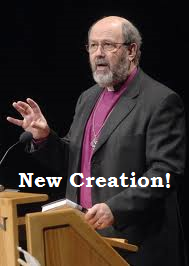
New Creation WrightOne of my favorite things about reading the Reformers, or the Fathers for that matter, is finding that the best insights I’ve loved in modern scholars aren’t really that new at all. Take the concept of ‘new creation.’ For many of us, N.T. Wright is probably the modern scholar who brought our attention to the theology of new creation. At least for me he did. In his many works on Paul, the Resurrection, and Christian Origins, again and again, he calls us to hear the proclamation that in Christ’s life, death, and resurrection all things, the cosmos as a whole, have been renewed. God wasn’t simply concerned with saving souls off to an ethereal heaven, but rather faithfully rescuing the world from the decay into which it had fallen. Resurrection isn’t just for people, but the universe as a whole. This is bracing and beautifully good news.

As great as learning all of that is, however, one of the unfortunate side effects of reading Wright, and other modern scholars, is that we’re tempted to think that cosmic element to the Gospel had been entirely screened out and forgotten until about 20 years ago. And yet, here I ran across it in Calvin’s comments on the Christ-hymn in Colossians:

He is the beginning. As ἀρχὴ is sometimes made use of among the Greeks to denote the end, to which all things bear a relation, we might understand it as meaning, that Christ is in this sense (ἀρχὴ) the end. I prefer, however, to explain Paul’s words thus — that he is the beginning, because he is the first-born from the dead; for in the resurrection there is a restoration of all things, and in this manner the commencement of the second and new creation, for the former had fallen to pieces in the ruin of the first man. As, then, Christ in rising again had made a commencement of the kingdom of God, he is on good grounds called the beginning; for then do we truly begin to have a being in the sight of God, when we are renewed, so as to be new creatures. He is called the first-begotten from the dead, not merely because he was the first that rose again, but because he has also restored life to others, as he is elsewhere called the first-fruits of those that rise again. (1 Corinthians 15:20.)

Comment on Colossians 1:18

Calvin Said it FirstOf course, the concept was biblical first–he is commenting on Paul. In that sense it’s always been silly to think this was a new idea. Still, here we see Calvin, 500-something years ago, teaching us that Christ’s resurrection is the beginning of a ‘new creation.’ Way back when, in the hey-day of the Reformation, back when everybody was allegedly too pre-occupied with debates about justification and the salvation of the soul, one of its chief architects was preaching redemption as the act of the God who made all things and is now restoring them, indeed, bringing them to the completion he had always intended. Go figure.

As grateful as I am for scholars like Wright who highlight these themes, giving them new life, deeper connections to their 2nd Temple historical settings–I’m all for development and additional heft–it’s good to know that you can still go back to the greats of theological history and find most of the framework’s been in place for a long time. Indeed, the Reformers would probably say they’re only repeating what the Fathers taught us. And, of course, the Fathers would probably say they’re only repeating what the Apostles said, pointing us faithfully back to the Scriptures.

All that to say, don’t be scared to pick up a commentary published earlier than 1950, or even 1550 for that matter.

Soli Deo Gloria