The God of James

It’s amazing how much theology the NT writers get done in a short space. And not just “theology” in general, but theology proper–teaching on the nature, existence, and character of God. James is an excellent example of this that I only noticed recently. Consider how much we learn of God in the first chapter alone.

First, we are told that, “If any of you lacks wisdom, you should ask God, who gives generously to all without finding fault, and it will be given to you” (1:5). We very quickly learn, then, that God is generous and the source of wisdom. Indeed, he is not just the source of wisdom alone, but the benevolent One, the heavenly Father, who bestows every good gift upon the world from his bounteous plenty (1:17). To be the source of wisdom and all good things, one must have them and, indeed, be their all-powerful, all-wise source. Indeed, you must transcend them in order to give them.

What’s more, this is who he constantly is, because he is one “who does not change like shifting shadows” (1:17). In other words, God is unchangingly and immutably this all-generous source of all that is. But this divine stability is not just metaphysical, but moral as well. God is also beyond temptation, nor is he a tempter (1:13). It is not only that he is pure from evil, but impervious to evil. His is a moral perfection.

This perfection is executed, not only in his good gifts of wisdom and “every perfect gift”, but in the ultimate gift: salvation. “He chose to give us birth through the word of truth, that we might be a kind of firstfruits of all he created” (1:19). God is the author of salvation, the one who sovereignly elects to bring forth fruit through the truth of the gospel in the lives of those who had none. God is, therefore, merciful. 

But why does God show this mercy? To bring forth holiness and righteousness, though this righteousness is a particular sort–not the kind that can be produced by man’s anger (1:20). Instead, what God desires, the kind of religion that is pleasing to God the Father, is this: “to look after orphans and widows in their distress and to keep oneself from being polluted by the world” (1:27). In other words, he aims to produce in creatures an analogical extension of the generosity and purity that marks his own life.

There is more to be said of God, of course–and James does so. But it is remarkable how much he does say in such a short space. It’s always a good reminder as a theology student, just how much you can get from applying yourself directly to the text of Scripture, and not simply mediating theological texts.

Soli Deo Gloria


Incomparability and Analogy in Isaiah

isaiah

The doctrine of analogy aims to answer the question of how we can speak of an infinite God who transcends creaturely reality, thought, and language. Instead of saying words apply in exactly the same way to God and creatures (univocity), or that words apply in completely different ways to God and creatures (equivocity), we say they apply analogically in order to capture the reality of similarity and distinction.

Now, there are a number of charges to be made against analogy, but one that occurs with some frequency is that it is an unbiblical doctrine that theologians have come up with under the pressure of an all-too-philosophical theism and not the revelation of Scripture.

And yet, it seems that something like analogy is precisely what the revelation of Isaiah, especially the Lord’s speeches in 40-55, presses us towards. Consider the Lord’s extreme declarations of incomparability:

To whom then will you compare me ?” (40:25):
“Is there any god besides me? There is no rock; I know not one.” (44:8)
“I am the Lord, and there is no other.” (45:18)
“I am God, and there is no other; I am God, and there is no one like me.” (46:9)
“I am He; I am the first, and I am the last.” (48:12)

The Lord declares himself to be without peer, utterly unique, compared to whom the agency of kings, nations, and other so-called gods is nothing at all (41:24). Who else creates light or darkness, weal or woe? (45:6-7) No one and nothing.

And yet, and yet, as Frederick Gaiser points out in his article, “To Whom Then Will You Compare Me? Agency in Second Isaiah,” (Word & World Volume XIX, Number 2 Spring 1999), God is not strictly or absolutely incomparable if that means we can’t use human language and experience to refer to him at all. In fact, “The prophet will require a wealth of images to justice to the wonder of the God he proclaims.”

In his prophecy, God deploys a “variety of images to bear witness to his person and work” drawn “from the realm of creation and human life.” And this is fitting “because the prophet’s question about a “likeness” for Yahweh uses the same term used for the human in Genesis, created in the “likeness of God” (Gen. 1:26).”

Among other things, God is portrayed as redeemer (41:14), savior (43:3), maker or potter (45:9-10), rock (44:8), warrior (42:13), woman in labor (42:14), shepherd (40:11), friend (41:8), helper (41:10), lover (43:4; cf. 49:169), rear guard (52:12), mother (45:10), father (45:10),10 nurse (49:15), husband, hawker (55:l).

Gaiser adds, “not only do these images work, they are apparently necessary–and precisely in their abundance.” The paradox seems to be that without these images and comparisons drawn from creation, we would not be able to express the incomparability of the Lord.

He calls attention to a key description of the Lord after the acclamation, “Here is your God!” (40:9):

See, the Lord God comes with might,
and his arm rules for him;
his reward is with him,
and his recompense before him.
He will feed his flock like a shepherd;
he will gather the lambs in his arms,
and carry them in his bosom,
and gently lead the mother sheep. (40:10-11)

The Lord is described as a warrior (10) and a shepherd (11). With the same arm he strikes down the foe and “gather the lambs” (11). “Despite the differing pictures, they portray one God. It is not that sometimes God is strong and sometimes God is tender: God’s strength is God’s tenderness, God’s tenderness is also God’s strength. In bringing these images together, the warrior image especially is sharply redefined.” (Simplicity alert!) Gaiser continues to note comparison after comparison, juxtapositions, and surprising redefinitions, which keep us from understanding these comparisons as operating in a simply univocal fashion.

We could keep going, but important point I think we ought to see here is that against a radical skepticism, God is able to take up language from the created realm as a vehicle of revelation. They point us to the truth of God. And, at the same time, their bewildering and overpowering variety attests to their insufficiency and inadequacy at capturing his infinitely more glorious essence.

All of which is to say, while the formal fine-tuning of the doctrine of analogy may be influenced and guided by philosophical considerations, its instinct is a thoroughly biblical one.

Soli Deo Gloria

The Spirit of this Letter

And we have such trust through Christ toward God. Not that we are sufficient of ourselves to think of anything as being from ourselves, but our sufficiency is from God, who also made us sufficient as ministers of the new covenant, not of the letter but of the Spirit; for the letter kills, but the Spirit gives life. (2 Cor. 3:4-6)

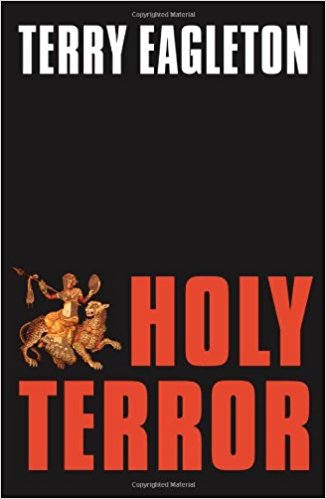
holy terrorPaul’s contrast here between the Spirit and the letter which kills has given rise to a host of curious interpretations throughout Christian history.  It has become a favorite of antinomians and enthusiasts old and new, it has often been used as a justification for a spiritualizing interpretation of given text, beyond the mere “letter of the Law” to the spirit of the Law. Or, rather, to pit one’s own leading by the Holy Spirit against the mere letters of inspired Scripture. From properly theological discussions, the phrase then passes into idiomatic usages and comes up in debates about hermeneutics in general, the spirit v. the letter of Constitutional law, and so forth. And that’s how most of us hear it today.

Of course, in its own context of the discussion in 2 Corinthians, the contrast is primarily one of covenants not hermeneutics. The Law, the Torah, the letter and the ministry associated with it is one of death because, even though it is good and glorious, by it there is only condemnation. Paul is a minister of the new covenant, though, which is that of the Spirit who gives life in Christ. As a secondary issue, hermeneutics does come up towards the end of the passage. There we read that the Israelites of the day cannot properly read the Law, they have a veil over their eyes to shield them from the glory. But it is only when one turns to the Lord, in the Spirit, that the veil is removed from our eyes when we read the old covenant to see it for what it truly is.

With that I clear, I wanted to briefly turn attention to an intriguing comment by Terry Eagleton on the spirit v. letter dichotomy in his work Holy Terror. He has been expositing the purpose of the Law as educational, good, “holy”, and yet limited. It is a work of love to “train us up in its habits and protocols”, and yet it generates unintended consequences such as guilt, provocation to sin, and so forth.

The law’s education in the ways of love is bound to backfire, which is why the law is a curse. This is partly because to encode the law in writing opens up the possibility of turning it into a fetish, as Shylock makes a fetish of his bond [Merchant of Venice]. He does so because as an oppressed Jew he needs his scrupulously worded contract for his protection, and would be foolish to rely on the hermeneutical vagaries of the Venetian Christian Establishment.

It may be the spirit of the law which counts, but there is no spirit without a letter, no signified without a material signifier. The spirit of the law is an effect of the signifier, not a substitute for it. It is a matter of the creative interpretation of letters, not the spontaneous diving of something lurking bodiless behind them. Otherwise the spirit of the law could included pretty well any arbitrary implication which sprang to mind, which would be to make a mockery of the law. This ‘spirit’ of the law must be the spirit of this letter. It is not a question of ditching the letter for the spirit, but of grasping the letter of the law as spirit and meaning, rather than, say, as some numinous icon in its own right–some totem or mantra which has merely to be magically chanted or brandished to have its effect. (37-38)

Now, as a straightforward interpretation of that particular verse in Paul, it tends to be working with the problem posed in popular idiomatic sense. But even there, Eagleton is instructive. Yes, there can be fetishistic, legalistic ways of interpreting and applying the letter. Jesus makes this critique of the Pharisees often and we’ve all seen it in the worst sort of fundamentalistic interpretation. (Think Jehovah’s Witnesses forgoing all celebrations of holidays and birthdays because Ecclesiastes says, “the day of death than the day of birth”).

All the same, his critique of the enthusiast interpretation is worth repeating, “This ‘spirit’ of the law must be the spirit of this letter.” The spirit must not be used as an excuse for turning the letter into a wax nose. Indeed, we can only try to discern that spirit from those particular letters: “the spirit of the law is an effect of the signifier, not a substitute for it.” Discerning the spirit of Hamlet can only happen when we attend to the text of Hamlet.

Of course, Eagleton is speaking of the “spirit” in the non-theological sense of the term when he says this, but I think it also points us in the direction of a Reformation hermeneutic of “Word and Spirit,” where the one is never separated from the other, nor should they be pitted against each other. For with Scripture, we see that the letter, the signifier of the Law is actually an effect of the Spirit of Christ. But we can only know the Spirit of Christ truly if we attend to the letters which are his revelatory work.

In other words, there can ultimately be no appeal to the Spirit beyond or against this letter of Scripture precisely because he is the Spirit of this letter.

Soli Deo Gloria

Michal, the Worship Cynic

a son to meThe story of the return of the Ark to Jerusalem is fascinating and multi-layered (2 Samuel 6). The theology surrounding the punishment of Uzzah’s transgression against the ark. The blessing of the house of Obed-Edom, a Gentile. And, of course, the sight of the King of Israel dancing in the street with a linen ephod, before the whole of the nation. And of course, there is the negative reaction of his wife Michal to the whole display.

Seeing the whole thing go down, instead of seeing the glory of Israel returning, she only saw a shameful performance by David and she despised him. When David returns, she reproaches him to his face, telling him he had disgraced himself by dancing half-naked in front of slave-girls just like any common fool on the street (v. 20).

David’s response is classic. He tells her, first off, he was dancing before the Lord (“you know, the one who picked me over your dad to be king of Israel”) and before him, he’ll be even more undignified (21-22). Second, anybody with spiritual eyes–even servant girls–will recognize his humility and righteousness in doing so (22).

Now, when I was a kid, I remember learning the story and not understanding the hardness in Michal’s heart. Why did she not rejoice as David rejoiced? Why could she not see the blessing of the Ark? How could she not understand the lesson I was learning in Sunday School that day? Surely the Lord is worthy of our most ecstatic worship, and our own dignity isn’t anything to be concerned with.

But then you start to reflect on the story of Michal and the thing becomes more complex. Yes, there was a worldly judgment in her heart about what was appropriate for the king. Yes, she sinned in scorning the return of the Ark. Still, Peter Leithart makes a perceptive qualifying comment worth considering:

Yet, it is difficult not to feel some sympathy for here. She had been taken from a loving husband and brought into a house full of wives and concubines. Her bitterness was understandable. And, while David was sincere in dancing before the Lord, Michal’s charge that he was more interested in the young women was prescient. (A Son to Me, 196)

Michal was in this case sinfully cynical. But understandably so. She had been hurt when David took her back into his household, away from a husband who seemed to love and care for her. He was not a full-blown Solomon, but he had been multiplying wives contrary to the command for kings (Deut. 17:17). It did not all seem political.

Where am I going with this?

Well, I don’t know about you, but having grown up the church, I am often tempted to cynicism much spirituality and piety. I am especially prone to doubt it when I have something against someone.

Maybe it’s someone who has wronged me, or someone I know. Maybe I’ve seen them be vindictive, spiteful, crass, or manipulative. Maybe it’s someone whose online persona (and theological positions) I find troubling  and frustrating. In those moments, I just think it’s wise to have a care with my cynical judgments on their spiritual life and their praise of God. The Lord has only ever had sinners as his true worshipers. Including me.

Obviously, this is not an absolute. Yes, we are called to exercise discernment. Yes, the prophets called out false worship. Yes, Jesus went after the Pharisees for their pious displays. And nevertheless, we can sin if our cynical eye leads us to despise or call false the true worship of the Lord. We can get this really wrong.

Second, have mercy on the cynical Michal’s. You don’t have to go along with their cynicism, but it is always wise to consider what has led them to this point. Especially if you are ever called to engage, to love, or pastor them.

Soli Deo Gloria

Perhaps Just One More Thesis on Church Discipline?

Wes Hill has written a provocative reflection on the matter of church discipline (or seeming lack thereof) in the Episcopal and Anglican communions. Framed around the challenge of his Reformed friends about why these churches seem never to ask people committing flagrant, public sin to refrain from communion, he forwards five theses on Church discipline. Now, as with just about anything Wes writes, it’s all very thoughtful and worthwhile to engage with.

To summarize, as one of those Reformed folks with questions about Anglicanism, I’ll say that I sympathize broadly with the piece. I think thesis #1 is very over-stated, but much of the problem with disciplining individual members for sexual failures does ignore the broad context of pastoral and disciplinary failure in the church as a whole. I see this with badly catechized college kids all the time. In that sense, yes, we’re all complicit here. What’s more, in the wake of the Sexual Revolution, conversion on these culturally-disputed matters takes time. Finally, we need to exercise patience in our recovery or rediscovery of the practice of discipline, especially when we consider that discipline is aimed at forgiveness.

All of this reminds me of Lewis’s words about the way God may judge different generations by different standards with respect to different sins. Cultural forces, church failures, etc. can indeed shape the moral subject and make obedience on certain issues harder or more confusing than at other times in church history. I do think this is one area where that is true for our age (though not absolutely), in the way that other issues were in others.

That said, it’s precisely for that reason my mind returns to the earlier conversations around “orthodoxy” language being used for matters of sexuality, or on the sort of labels we affix to pastors, theologians, and priests who teach contrary to Scripture on these matters. Should we call them, the pastors in charge of God’s flock, false teachers or no? Is this an orthodoxy or catholicity issue, or not? And should we say so?

Which is to say, my biggest question with Wes’s piece is that I don’t see a clear answer on what seems to be the deepest issue of discipline within the Anglican or Episcopal church, which is not the sinful laity, but the fact that the clergy are not held to account for explicitly teaching that things that ought not be done can be done. As with Israel, It is the theological laxity and moral corruption of the priests who do not guide or guard the sheep which is the prior issue (Ezek 34). If discipline is to be recovered, it seems wise to start at the top. Otherwise we will never start.

Or again, if the matter is the lack of catechesis and moral instruction of the church, then it seems all the more important we use strong language to communicate just how wide a departure these teachers have taken from Scripture and the catholic tradition. We may exercise patience with individuals, yes. But such patience paired with a broader unwillingness to use the clearest possible language about about the issue is exactly the sort of thing which yields the situation Wes is lamenting.

It is that language, and that clarity, I’m not at all sure I find in Wes’s proposal. Perhaps, then, one more thesis is needed?

Soli Deo Gloria


How Does a Neo-Apollinarian Christology Even Work?

chalcedonian

So, brief preface: I have been, and in many respects always will be, a fan and student of William Lane Craig. Any kid who was into apologetics and contemporary philosophy of religion had to be.

That said, like others, I’ve recently had to come to grips with some of the odder aspects of his theology proper and Christology, which appear to be less than orthodox. Nick Batzig calls attention one element which has been raising eyebrows in some circles, of late: his “Neo-Apollinarian” Christology.

Now, I’d heard something about it before, but never looked deeply into the matter until now. He goes into it and clarifies his position in this podcast transcript. In a nutshell:

1. We agree with the Council of Chalcedon that in Christ we have one person with two natures – human and divine.

2. The soul of the human nature of Christ is the second person of the Trinity, the Logos. The human nature of Christ is composed of the Logos and a human body.

3. The divine aspects of the Logos are largely concealed in Christ’s subconsciousness so that he had a waking conscious life that would be typical of any human being and that like the mass of an iceberg submerged beneath the surface so in his divine subconsciousness there lay the fullness of divinity. The waking consciousness was typically human.

The aim is to affirm the two natures of Christ, but avoid the possible Nestorianism (in his view) of the Chalcedonian definition. So he takes the heretic Apollinaris and gives him a tune-up:

Apollinarius’ original view was that Christ didn’t have a complete human nature. He had a human body but he didn’t have a human soul. He didn’t have a human nature. As a result he wasn’t really truly human. That calls into question the reality of the incarnation and also the effectiveness of Christ’s death on our behalf since he did not share our nature.

What I argue in my Neo-Apollinarian proposal is that the Logos brought to the human body just those properties which would make it a complete human nature – things like rationality, self-consciousness, freedom of the will, and so forth. Christ already possessed those in his divine nature, and it is in virtue of those that we are created in the image of God. So when he brought those properties to the animal body – the human body – it completes it and makes it a human nature. Against Apollinarius, I want to say that Christ did have a complete human nature. He was truly God and truly man. Therefore his death on our behalf as our representative before God was efficacious.

So what you end up having, as I understand it, is a sort of overlapping Venn diagram of two sets of properties. The first circle represents the divine nature and its properties, and the second the human nature. Though, here, instead of merging two complete circles so that you get a doubling up on the overlap on those components that make up the human soul (two wills, two minds, etc.), you instead add a circle with a chunk shaved off (the human nature) that happens to fit the outline of the divine nature, sort of like a perfectly-fitted puzzle piece. Put them together and both natures have all the sets of properties they need.

Now, it seems there are several problems with this, but the first one that struck me is the issue of Jesus’s consciousness. He says, “The divine aspects of the Logos are largely concealed in Christ’s subconsciousness so that he had a waking conscious life that would be typical of any human being and that like the mass of an iceberg submerged beneath the surface so in his divine subconsciousness there lay the fullness of divinity.”

What I want to know is how is that supposed to work? Absent a distinct human soul, a human mind that interacts/supervenes on a human brain, etc. how are we arriving at this split-level consciousness? If all we have is a divine Person with an infinite, divine mind and a divine will, rationality, freedom, etc. plus a human body, are we saying that the Son’s divine consciousness takes on dimensions and levels it did not have before in its interaction with a human body? Does that represent change in the divine nature, then? Or are these levels of consciousness now possible because of the interaction between the Logos and the “meat” of the human brain, so to speak?

I looked up the discussion of the problem in Craig and Moreland’s Philosophical Foundations of a Christian Worldview (1st Ed.) and I have to say, that while expanded, the discussion wasn’t much clearer at this point. Pardon the large block-quote:

We postulate that the divine aspects of Jesus’ personality were largely subliminal during his state of humiliation. We suggest that what William James called the “subliminal self” is the primary locus of the superhuman elements in the consciousness of the incarnate Logos. Thus Jesus possessed a normal human conscious experience. But the human consciousness of Jesus was underlain, as it were, by a divine subconsciousness. This understanding of Christ’s personal experience draws on the insight of depth psychology that there is vastly more to a person than waking consciousness. The whole project of psychoanalysis is based on the conviction that some of our behaviors have deep springs of action of which we are only dimly, if at all, aware. Multiple personality disorders furnish a particularly striking example of the eruption of subliminal facets of a single person’s mind into distinct conscious personalities. In some cases there is even a dominant personality who is aware of all the others and who knows what each of them knows but who remains unknown by them. Hypnotism also furnishes a vivid demonstration of the reality of the subliminal. As Charles Harris explains,

a person under hypnosis may be informed of certain facts and then instructed to forget them when he “awakens,” but the knowledge is truly in his mind, and shows itself in unmistakable ways, especially by causing him to perform . . . certain actions, which, but for the possession of this knowledge, he would not have performed. . . . What is still more extraordinary, a sensitive hypnotic subject may be made both to see and not to see the same object at the same moment. For example, he may be told not to see a lamp-post, whereupon he becomes (in the ordinary sense) quite unable to see it. Nevertheless, he does see it, because he avoids it and cannot be induced to precipitate himself against it.

Similarly, in the Incarnation—at least during his state of humiliation—the
Logos allowed only those facets of his person to be part of Christ’s waking consciousness which were compatible with typical human experience, while the bulk of his knowledge and other cognitive perfections, like an iceberg beneath the water’s surface, lay submerged in his subconscious. On the model we propose, Christ is thus one person, but in that person conscious and subconscious elements are differentiated in a theologically significant way. Unlike Nestorianism our view does not imply that there are two persons, anymore than the conscious aspects of one’s life and the subconscious aspects of one’s life constitute two persons. (610-611)

Leave aside the propriety of appealing to split personalities as a suitable analogy for the mental life of our Lord, depth psychology could really be helpful in considering these issues in Christology more generally. But what I’m failing to see is the way this works out in Craig’s formulation.

Because on Craig’s view, it seems there is only the one, divine mind which is now, somehow, also the site of the distinctions and levels and subliminal layers which form Christ’s human, conscious life. Now, I know they reject, or at least propose to modify divine simplicity (Craig and Moreland, 526), but even in that discussion, they seem sympathetic to William Alston’s view that at least the divine knowledge is simple.

So has there been a change to the divine nature such that what was once simple, now becomes complex in the act of the incarnation? Craig describes the incarnation as a matter of addition, rather than subtraction–which is right:

Rather it is a matter of addition – taking on in addition to the divine nature he already had a human nature with all of its essential properties. So we should think of the incarnation not as a matter of subtraction but of addition.

But the addition of layers of consciousness to the divine mind is not the logic of addition which the Fathers at Chalcedon had in mind. They saw the Logos assuming humanity to himself leaving the divine nature unchanged. But it is hard to see the Logos remaining unchanged in his becoming the soul of the body of Christ, if this is now adding layers of self-consciousness to the single mind he has/is.

If so, then along with the rejection of the assumption of a human soul, this would be to contradict Chalcedon at another point. For it would seem to be a denial of divine immutability. But I don’t see them wanting to do that.

Now, for myself, I don’t think the Chalcedonian definition and classical Christology of the Church is Nestorian. But even if I did, contrary to solving any questions, Craig’s un-Orthodox Christology just seems to leave us with more.

Soli Deo Gloria

Why We Should Have Utter Confidence in Prayer

compendiumAt the tail-end of his uncompleted Compendium of Theology Aquinas treats the question of why we must pray to God for what we hope. First, he notes that we belong to him as an effect does to a cause. He has made us with a purpose in mind which it is his aim to see fulfilled. If a pot were rational and could hope, it should hope in the potter who shaped him. “Thus we are told in Jeremiah 18:6: ‘As clay is in the hand of the potter, so are you in My hand, O house of Israel.'”

But Aquinas does not simply want us to know that we should pray to God our Maker, but how we should pray to God: with complete and utter confidence.

The confidence which man has in God ought to be most certain. As we just intimated, a cause does not refrain from rightly controlling its product unless it labors under some defect. But no defect or ignorance can occur in God, because “all things are naked and open to His eyes,” as is said in Hebrews 4:13. Nor does He lack power, for “the hand of the Lord is not shortened that it cannot save,” as we read in Isaiah 59:1. Nor is He wanting in good will, for “the Lord is good to those who hope in Him, to the soul that seeks Him,” as we are reminded in Lamentations 3:25. Therefore the hope with which a person trusts in God does not confound him that hopes, as is said in Romans 5:5. (Compendium 2.4)

Why should we have utter confidence in prayer? As it always seems to be with Aquinas, because God, that’s why.

Soli Deo Gloria

An Obedience More Pleasing Than Punishment

the cross owenIt is Holy Week and therefore right meditate on the sufferings and passion of Christ in the flesh on our behalf. One thing we ought to do, though, is consider them in their fullness.

John Owen helps us do that in his work Pneumatologia, wherein he considers the person and work of the Holy Spirit. At one point he specifically considers the work of the Holy Spirit in Christ’s mediating work. He comments on the verse, “he offered himself up through the eternal Spirit” (Heb. 9:14), arguing that “in all that ensued, all that followed hereon, unto his giving up the ghost, he offered himself to God in and by those actings of the grace of the Holy Spirit in him, which accompanied him to the last.”

Owen lists four graces of the Spirit which enable and render Jesus’ obedient self-sacrifice excellent, worthy, and efficacious on our behalf: first, the great love and compassion he had for the Church and for sinners; second, his “unspeakable” zeal for the glory of God—to manifest both his righteousness as well as his grace and love towards sinners; third, “his holy submission and obedience to the will of God.” Though fully divine, Jesus still works in the power of the Holy Spirit to work the will of the Father in his atonement.

This brings us to an important section of the work I want to quote at length. Here he notes three important points about the way these gracious actings of the Spirit in Christ’s soul actually rendered his work an atoning sacrifice:

(1.) These and the like gracious actings of the soul of Christ were the ways and means whereby, in his death and blood-shedding, — which was violent and by force inflicted on him as to the outward instruments, and was penal as to the sentence of the law, — he voluntarily and freely offered up himself a sacrifice unto God for to make atonement; and these were the things which, from the dignity of his person, became efficacious and victorious. Without these his death and blood-shedding had been no oblation.

First, though the death was “violent and by force inflicted on him” at the human level, Owen is clear that Jesus voluntarily submits to the passion. That is why it is a sacrifice of oblation, freely-given by the glorious Godman. If the Son had not freely given himself it would have been a simple act of meaningless violence, instead of an epoch-shattering act of salvation.

(2.) These were the things which rendered his offering of himself a “sacrifice to God of a sweet-smelling savour,” Eph. v. 2. God was so absolutely delighted and pleased with these high and glorious acts of grace and obedience in Jesus Christ that he smelled, as it were, a “savour of rest” towards mankind, or those for whom he offered himself, so that he would be angry with them no more, curse them no more, as it is said of the type of it in the sacrifice of Noah, Gen. viii. 20, 21. God was more pleased with the obedience of Christ than he was displeased with the sin and disobedience of Adam, Rom. v. 17–21. It was not, then, [by] the outward suffering of a violent and bloody death, which was inflicted on him by the most horrible wickedness that ever human nature brake forth into, that God was atoned, Acts ii.23; nor yet was it merely his enduring the penalty of the law that was the means of our deliverance; but the voluntary giving up of himself to be a sacrifice in these holy acts of obedience was that upon which, in an especial manner, God was reconciled unto us.

Here is the key part that many of us often lose in our rush to defend penal substitution: “God was more pleased with the obedience of Christ than he was displeased with the sin and disobedience of Adam.”

Owen does think that Christ suffering the penalty matters for removing our guilt and sin. But he places a special accent on the beautiful obedience of Christ, the self-surrender, the self-giving love of Christ for the Church, and his glorious submission to God as a sweet-smelling savor. God is greatly pleased with the Son precisely in the moment when he offers himself up on behalf of his people. And without that positive obedience underlying the negative suffering of death, there is no effective atonement.

Reflect, then, and let the Son’s obedient sacrifice become a sweet-smelling savor to you this Good Friday.

Soli Deo Gloria


the call to sexual holiness is unavoidable

Recently at London Review of Books, Amia Srinivasan published a very interesting and very profane (reader warning) article entitled, “Does Anyone Have the Right to Sex?

She begins by examining the case of Elliot Rodger, the disturbed young man who went on a rampage in Isla Vista in protest of his status as an incel (an involutary celibate, ie. someone who can’t get sex), and killed roommates, sorority girls, and caused general mayhem as part of his perverted quest for ‘justice.’ With this story as our departure, it becomes fairly obvious that the answer to the titular question is, “No, nobody has the right to have sex” and none of the young women who had refused Rodgers had wronged him.

But then Srinivasan goes on to complicate the matter through a long, extensive, instructive dive through the history of feminist and queer reflection on “the political critique of desire,” which interrogates the shape of our sexual desires. For those unfamiliar with it (as I myself largely am, getting most of my knowledge second-hand from long articles such as this), she charts the stages of conversation from Catherine Mackinnon’s critique Freud’s portrait of sexual desire as pre-political, to seeing it as inherently corrupted and shaped by patriarchal ideological structures of dominance, etc. and correspondingly calling for political lesbianism and so forth.

Now, in the 80s and 90s came the backlash of the pro-sex feminists. They championed the importance of allowing women to pursue what they genuinely felt was pleasurable in the manner and means they wanted, without some neo-Victorian schema to foist guilt upon them once more. To this were added concerns from intersectional analysis which made theorists even more wary about universal moral prescriptions that really only fit the situations of white feminists. Furthermore, there was an increasingly discomfort with the concept of false consciousness, which the political critique assumes, and so you have to start taking women at their word when they say whatever sexual activity (be it sex-work, porn, nudity, etc.) is sexually liberating.

From there we get further development and refinement to the point where now the main concern and boundary line of OK sex is “consent”, and the free exchange of sexual goods. Of course, that may provoke the worry and critique that this plays right into the hands of capitalist neo-liberal conceptions of the self that ought to be questioned. But this shouldn’t be raised in such a way that we fall back into guilt and authoritarianism, which would fetter and bind the right of consenting agents to their preferred sexual acts. Remember, talking about what people ought to want and desire is a quick road to political oppression.

But then we come back around to questioning, “but why do we desire what we desire?” Especially when we still can’t shake the feeling that under the constraints and pressures of a patriarchal culture, our desires are not fully free or unproblematic. And this is where it gets interesting (and for context, she has been engaging with Ellen Willis’ essay “Lust horizons” up at this point):

When we see consent as the sole constraint on OK sex, we are pushed towards a naturalisation of sexual preference in which the rape fantasy becomes a primordial rather than a political fact. But not only the rape fantasy. Consider the supreme f#$%ability of ‘hot blonde sluts’ and East Asian women, the comparative unf#$%ability of black women and Asian men, the fetishisation and fear of black male sexuality, the sexual disgust expressed towards disabled, trans and fat bodies. These too are political facts, which a truly intersectional feminism should demand that we take seriously. But the sex-positive gaze, unmoored from Willis’s call to ambivalence, threatens to neutralise these facts, treating them as pre-political givens. In other words, the sex-positive gaze risks covering not only for misogyny, but for racism, ableism, transphobia, and every other oppressive system that makes its way into the bedroom through the seemingly innocuous mechanism of ‘personal preference’.

This is the wrench that contemporary intersectional concerns throw into a purely consent-based, desire-driven account of sexuality. It can easily function as a cover for all sorts of sexual discrimination and exclusion under the guise of just affirming whatever sexual desires someone finds within themselves. But what if those desires are racist, transphobic, fat-shaming, and so forth? Shouldn’t those desires be different? Shouldn’t we discourage them? But how, without falling back into authoritarianism?

The argument cuts both ways. If all desire must be immune from political critique, then so must the desires that exclude and marginalise trans women: not just erotic desires for certain kinds of body, but the desire not to share womanhood itself with the ‘wrong’ kinds of woman. The dichotomy between identity and desire, as Chu suggests, is surely a false one; and in any case the rights of trans people should not rest on it, any more than the rights of gay people should rest on the idea that homosexuality is innate rather than chosen (a matter of who gay people are rather than what they want). But a feminism that totally abjures the political critique of desire is a feminism with little to say about the injustices of exclusion and misrecognition suffered by the women who arguably need feminism the most.

Srinivasan continues her analysis along these lines for some time, tracing the problematic bind these tensions generate. She concludes with this humdinger of a paragraph:

To take this question seriously requires that we recognise that the very idea of fixed sexual preference is political, not metaphysical. As a matter of good politics, we treat the preferences of others as sacred: we are rightly wary of speaking of what people really want, or what some idealised version of them would want. That way, we know, authoritarianism lies. This is true, most of all, in sex, where invocations of real or ideal desires have long been used as a cover for the rape of women and gay men. But the fact is that our sexual preferences can and do alter, sometimes under the operation of our own wills – not automatically, but not impossibly either. What’s more, sexual desire doesn’t always neatly conform to our own sense of it, as generations of gay men and women can attest. Desire can take us by surprise, leading us somewhere we hadn’t imagined we would ever go, or towards someone we never thought we would lust after, or love. In the very best cases, the cases that perhaps ground our best hope, desire can cut against what politics has chosen for us, and choose for itself.

This is an astonishing ending that posits placing hope in the ability of our sexual desire itself to surprise us and set us free from the shackle politics. Perhaps Aphrodite truly does hold the key to liberation?

Now, I don’t have a really substantial critique of Srinivasan’s piece–for that, see Carl Trueman’s incisive piece–except to make two quick comments.

First, that last line just cries out for an Augustinian analysis of both the problem of the bound will and the way idols somehow manage to keep tricking us into believing that trusting one idol will set you free from another. We really do need a City of God for a new age.

Second, and this is the more striking (if a bit obvious) point to me: the call to sexual holiness is unavoidable. Srinivasan is not a Christian, nor does she espouse anything close to a Christian sexual ethic, but as her reflections make clear, leaving behind a Christian normative frame does not solve the problematic, obviously disordered nature of our sexual desires. As Alastair Roberts has noted, the contemporary choice is not one of simply abandoning sexual morality, but of trading it in for another.

And so while you may not have a problem with pre-marital sex, pornography, same-sex desires, or consenting polyamorous adults doing their thing, but the reality is that on just about any moral framework, you’re eventually going to be asked to consider that your desires are in some way distorted, deformed, and whether “there is a duty to transfigure, as best we can, our desires” so they are not conformed to the (patriarchal, capitalist, etc.) pattern of this world.

There is no question, then, about the call to sexual holiness in the world. We all know deep down we need it and we ought to strive for it. The question is who sets the terms: Jesus, or someone else.

Soli Deo Gloria

The Simplicity of God and the Diversity of Creation

compendium

I’ve been working my way through Aquinas’s late, brief summary of his system, Compendium Theologiae, and it’s been a dense, instructive dive so far.

Early in his series of questions on creation, he treats the matter of why there is plurality, or a diversity of things in creation. Why are there trees and monkeys and mountains and starfish, instead of only, say perfectly spiritual beings like angels? Why stars of various shapes, colors, and sizes, instead of one, perfect, massive orb? Why diversity instead of simple, orderly, uniformity?

Well, as with most things in Aquinas, he finds the answer in God who is their creating and sustaining cause. Even more than that, he roots this diversity in the simplicity of God.

How so?

Any active cause must produce its like, so far as this is possible. The things produced by God could not be endowed with a likeness of the divine goodness in the simplicity in which that goodness is found in God. Hence what is one and simple in God had to be represented in the produced things in a variety of dissimilar ways. There had to be diversity in the things produced by God, in order that the divine perfection might in some fashion be imitated in the variety found in things.

Furthermore, whatever is caused is finite, since only God’s essence is infinite, as was demonstrated above. The finite is rendered more perfect by the addition of other elements. Hence it was better to have diversity in created things, and thus to have good objects in greater number, than to have but a single kind of beings produced by God. For the best cause appropriately produces the best effects. Therefore it was fitting for God to produce variety in things. (1:72)

One might think that the indivisible, simple being of God would stifle diversity. Thomas reminds us, though, that the simple being of God is infinite. A mere repetition of the same finite effects will not do. In order to begin to communicate the fullness of his refulgent glory by way of finite creaturely reality will require a diversity of finite causes!

Despite it’s philosophical garb, I think this really functions as a metaphysical gloss on Scriptural teaching. Consider what the Psalmist tells us:

The heavens declare the glory of God;
the skies proclaim the work of his hands.
Day after day they pour forth speech;
night after night they reveal knowledge.
They have no speech, they use no words;
no sound is heard from them.
Yet their voice goes out into all the earth,
their words to the ends of the world. (Ps. 19:1-4)

Or again:

How many are your works, LORD! In wisdom you made them all;
the earth is full of your creatures.
There is the sea, vast and spacious, teeming with creatures beyond number— living things both large and small. (Ps. 104:24-25)

Thomas tells us that all this marvelous diversity is a reflection, a testimony to the wisdom, glory. and beauty of the simple God. In the creation of diverse effects, it is as if the pure, undivided brightness of the infinite divine light is refracted before our eyes as through a prism as broad and as wide as the universe itself.

Soli Deo Gloria