‘Plain Readings’ of Scripture, Job, and Other Assorted Thoughts on the #CalvinismDebate

debateLast week Zondervan hosted a live-stream debate between some Calvinists (Daniel Montgomery and Timothy Jones) and some Non-Calvinists (Austin Fischer and Brian Zahnd). Now, while I was excited to watch, it just so happened that my internet was slow that day, so I only caught snippets and twitter commentary while it happened. Immediately afterwards I had a trip to get prepped on, so I didn’t get to watch it until this week.

Still, because a few people in different theological wings have asked me to comment on the debate, I figured I’d give it a shot. I tried to keep this brief and failed, but even with its length, I’ve limited it to some focused observations and reflections on a few issues with the first section of the debate. This is by no means exhaustive and I won’t even try to comment on all of the issues. Indeed, I’m sure many will find this utterly dissatisfying.  And that’s okay.

To begin, a word about the players.

The Players And Confirmation Bias

I’ll be honest, going into this I already had some ideas about it. For one thing, I knew very little about Austin Fischer. I knew he wrote a book about no longer being Young, Restless, and Reformed, but not much else. I thought Kevin DeYoung had a pretty incisive review of it, but honestly, I haven’t had time to read it. As for Brian Zahnd, while I was blessed and challenged by his book on beauty (which I still highly recommend), I’ve criticized him heavily before on other issues. Based on his online writing, his rhetoric towards positions with which he disagrees, especially the Reformed, is [retty belligerent and prone to violent caricature. He’s a powerful preacher who’s got a way with words and a heart for Jesus, but I wasn’t expecting much of a fair shake there.

With Montgomery and Jones, I was predisposed to root for them. Not only do I find myself in their Reformedish camp in general, I’ve favorably reviewed their book PROOF, and have been impressed with them even in their handling of serious brotherly criticism. Though I’ve never met them, I consider them friends.

I go into all of this simply to make one point: I definitely had a side going in and that affected the way I watched the debate. Indeed, I think that’s likely the case with anyone who was interested in the event, even if you didn’t know any of them. With the subject of Calvinism, like the subject of God, you’re never neutral about the arguments. One of the most perceptive comments on the whole thing came from Mike Cosper: “If you want to see some wonderful examples of confirmation bias, check out the hashtag.” A lot (most?) of us went in pumped to see Montgomery school Fischer, or Zahnd lay down his linguistic hammer on Jones.  We already knew the right answer, we just wanted to be publicly vindicated.

Debates

Which leads me to the format of debate. In my view, public debates are pretty limited. Not enough space or time can be devoted to the various pertinent issues involved, so most of the time both sides come away thinking of the other side, “Is this the best you’ve got?” To which I’d respond, “No, of course it’s not.” I know for sure that’s not the best Montgomery and Jones have. I’ve read their book. What’s more, I’m sure it’s not the best that Zahnd or Fischer have. They hinted in the direction of some more serious arguments beyond the rhetorically-freighted, one-liners they were throwing out there. Indeed, Fischer actually did some serious, responsible, exegetical work in his response to Jones on Romans 9, which made me suspect there’s more where that came from.

Calvin and Calvinism

Next, I’m going to say something that may shock most non-Calvinists, and indeed, many Calvinists as well: Calvin did not invent ‘Calvinism’.

Whether you’re speaking solely of the doctrines concerning election and salvation as they were defended and codified at Dordt (which Calvin was already dead for), or the broader complex of thought with respect to covenant theology, ecclesiology, etc, referred to as the broader Reformed tradition, you have to know that it goes beyond him. There are many other stars in the Reformed sky such as Bucer, Vermigli, Ursinus, Knox, and a host of scholastics who delved into these issues at length. I love Calvin, but as Kenneth Stewart has demonstrated in his 10 Myths About Calvinism, his exposition of election is not the only standard or normative one for the confessionally Reformed. Indeed, most of these theologians could point back to a number of top medieval theologians, including Thomas and Augustine as representatives or precursors to their own expositions.

In other words, it’s okay to be Reformed and then think you may have to adjust your exposition of election according to Scripture with respect to double, or single predestination. Many have done so even while remaining non-Remonstrant (Arminian), and so forth. So trotting out a Calvin quote doesn’t mean that Montgomery isn’t really being a good Calvinist, even if he’s cutting things in a way that Calvin wouldn’t have agreed with. Quite frankly, I don’t think anyone’s going to say Herman Bavinck isn’t a good Calvinist because he humbly pushes back on the fairly common claim that the decrees of election are definitely about the revelation of God’s glory.

As a side-note, speaking of “Calvin’s system” as “beginning with philosophical theism” is, to be blunt, a blatant absurdity to anyone who’s read the current secondary literature, and knows about Calvin’s humanistic and vocally anti-speculative approach to the doctrine of God. One of Calvin’s most common targets were the theologians of the Sorbonne who engage in abstractions instead of the God revealed in Christ. Indeed, unlike most modern systematic theologies, the Institutes almost doesn’t have a doctrine of God philosophically considered, but instead treats the Trinity, and the nature of God as revealed in his works as Creator and Redeemer. To assert otherwise is only possible through gross ignorance of the subject, or in the face of the evidence.

Which brings me to the next point.

Jesus Rules and Philosophical Systems

Most Reformed are not intentionally twisting texts to get to a conclusion we’ve already decided on when it comes to the doctrines of grace. I certainly wasn’t. I still feel the weight of the arguments against it. I’ve said it before, but over the years I have only slowly inched closer to the Reformed side on this issue, quite reluctantly and usually through the side door of some alteration in my view of regeneration, providence, or something else that has a role to play here. Why? Because of a struggle to affirm all that Scripture affirms about God’s sovereignty, our choices, his decrees, our responsibility, his grace, and so forth.

See, despite ‘pervasive interpretive pluralism’, most Calvinists don’t give ourselves the option of affirming an “internal conflict” within Scripture, as Zahnd talks about, and then using a very specific Jesus Hermenuetic to pick which parts of the Scriptures got it right. Because of the way we see Jesus approaching and affirming all of the Scriptures, we believe Jesus as the Word of God Incarnate affirmed and inspired the Scriptures as the Word of God written. All of it. So we’re trying to get it all in at once. I’ve made this point against Zahnd before, but if your so-called “Jesus-theology” causes you to shunt to the side texts that Jesus affirmed, or dismiss as ‘biblicistic’ efforts to incorporate all the texts to which Jesus constantly appealed, you might be doing it wrong. (Now, this isn’t to say that most Arminians do this, or even that Fischer would have done it, but still, coming back to my earlier point, this is the kind of important methodological dispute that a debate like this doesn’t give space to address.)

Plain Readings and Finding the Wright Escape Hatch

Easily the most commented on line of the night was Daniel Montgomery’s about a “plain reading” of Ephesians 1.  It was provoked by Zahnd’s earlier invitation to make sure we’re paying attention the “best” scholars, such as N.T. Wright, Scot McKnight, Karl Barth, and so forth when we make these theological judgments. Montgomery later basically said, “Yes, I understand we need to read Wright, Barth, and characters like that” but really, it’s hard to understand Ephesians 1 as speaking of anything else but unconditional election on a ‘plain reading’ of Paul, which is what we ought to get around to doing more often. To which Zahnd’s retort was, “Sure, it’s plain in your theologically-rigged ESV, with your horn-rimmed Calvinist lens, translation isn’t it?” At which point, I have to admit, I laughed. Touché, Zahnd.

Now, all of the twitter commentary about this was explosive and apoplectic. And to some degree I get it. Even though Zahnd came in kind of waving his hands about “scholarship” and so forth, seemingly writing off scholarship like that and referring to Wright & Co. as a bunch of ‘characters’ rubs me the wrong way. Still, I suppose I heard it differently because I’ve read their book. Of its 200 pages there were nearly 40 pages of endnotes showing their work in the Greek, the commentaries, and so forth (including a number of citations of Barth! in the German!). They did their exegetical and theological homework. Certainly Jones is no academic slouch. So maybe we should think Montgomery’s advocacy of a ‘plain reading’ isn’t quite what it initially sounded like. If it was, though, his practice is certainly a lot better than that.

Here’s the thing that struck me, though, with Zahnd’s earlier call for attending scholarship: Wright, McKnight, Hart, and Barth won’t necessarily save you from a Calvinist reading of Romans 9 or Ephesians 1 (or indeed, the rest of the Biblical witness to God’s sovereignty.) I mean, take myself. I’ve read D.B. Hart, and you know what? He’s mostly great, but I’ll be blunt and say he also seems to never know what he’s talking about when it comes to what Calvin or Reformed types actually say about things. When it comes to Barth, I’ll be upfront and say that I haven’t read his full doctrine of election in the Dogmatics.  Still, I’ve read the Epistle to the Romans, as well as competent, sympathetic distillations of the Dogmatics, and so forth and, you know, I’m not convinced Paul is teaching us Christ is the only Elect or Reprobate one ruling out individual election. 

Beyond that, I’ve actually read McKnight on the warning passages in Hebrews, as well as pretty much everything what N.T. Wright has to say on the subject (including his big Paul book). I’m a huge Wright fan, in fact, and back when I was very hostile to Calvinism, I dug into Wright’s big Romans commentary (especially his stuff on Romans 9-11) hoping to find an escape hatch from election. I even dug into James Dunn’s commentaries, just about everything he’s written on the New Perspective, and waded through the readings like those offered by Walls and Dongell in Why I Am Not a Calvinist looking for a way out of my Reformed friends’ arguments.

In the process I found a lot of good stuff. After that, I was much better able to set the passage in the broader framework of God’s purposes for Israel, Paul’s vindication of God’s name when it seemed that his promise to Israel had failed through their unbelief, and so forth. That said, none of these things rule out, or necessitate a non-predestinarian reading. In fact, I think they largely fit well with the older insights. And that’s a conviction I came to hold when I was fighting tooth and nail in my soul to write off more classically Reformed readings.

Finally, more positively, I’ll just say there’s a lot of good, top scholarship out there that disagrees with Zahnd’s top scholarship on the issue. For every N.T. Wright and Scot McKnight, you’ve got a G.K. Beale, or a Michael Bird. For every Barth, you’ve got a Bavinck. For every D.B Hart, there’s a Kevin Vanhoozer whose trinitarian theology in Remythologizing Theology is just as philosophically-sophisticated, aesthetically-appealing, and, I think, more biblical than Hart’s The Beauty of the Infinite (although there’s much overlap). So inviting us to consider the great, “the best” scholars of our day, and then ripping off the names of top scholars who you think agree with you, doesn’t really get you places. Calvinists have plenty of names too.

Job, Lewis, and the Creator/Creature Distinction

Finally, one of the big issues of the night was the challenge by Fischer and Zahnd to explain why God would intentionally pass over, or create someone in order to be passed over, for salvation. Now, leaving aside the problem that unless you’re a Universalist or an Open Theist you still face a similar situation, I was fascinated by the response on Twitter, as well as by Fischer to the appeal to Job and mystery.

Faced with that challenge, Montgomery recalled what happened when Job challenged the justice of God’s judgments, or his wisdom in allowing Satan to torment him. What is God’s answer there? Well, read Job 38-42 and you’ll see it’s basically a long way of saying, “I’m the infinite God. You are a very finite, sinful human. You don’t have a scale for the difference between us. I was fine-tuning the galaxies, hanging up the Milky Way in the vast reaches of space, before you were even a twinkle in your father’s eye. Why would you ever think yourself competent to understand my secret judgments?”

Ironically enough, Lewis makes a helpful point in this direction arguing for God’s rationality in the risk of gifting humans with free will:

Perhaps we feel inclined to disagree with Him. But there is a difficulty about disagreeing with God. He is the source from which all your reasoning power comes: you could not be right and He wrong any more than a stream can rise higher than its own source. When you are arguing against Him you are arguing against the very power that makes you able to argue at all: it is like cutting off the branch you are sitting on.

Mere Christianity, The Shocking Alternative

To some this sounds like a cop-out and I can get that. Still, I do find it interesting that Reformed theology gets dinged for being a too rationalist system, with a cold logic that leaves no room for mystery, and yet, when the Reformed do argue from Scripture that God himself says we ought not to expect to understand the mystery of his judgments, they’re charged with obscurantist irrationality.

This is why I’ve almost come to see this as sort of theological-aesthetic judgment. You either think it’s plausible God might have some reasons for doing things you couldn’t possibly fathom, or you don’t. Or rather, you may believe that he does, but you either see it covering election, or you don’t.

Now, to this, Fischer may reply, “I still can’t see how anyone could argue it’s beautiful.” Sure. But most of us don’t initially see the Cross as beautiful, or wise either, until our hearts have been shaped and conformed to the paradoxical logic of the gospel. I’m not saying you have to buy election to see the beauty of the Cross. I am saying it’s not surprising that things which initially seem puzzling, weird, or terrifying to us, could eventually become beautiful to a mind submitted to the logic of Scripture.

Which is why I’d have to say I found Zahnd’s little line about rebelling against a Calvinist God a la Ivan Karamazov–returning God’s ticket, so to speak–so unhelpful. Back when I was an anti-Calvinist, and even now when I shudder to live in an Open Theist’s world, I have this thought: “Well, either God is that way or he isn’t. If he is, then that’s God and God is the standard of goodness.  In which case I’m wrong about the nature of reality, and for me to refuse to worship, love, and acknowledge his goodness–to call him a devil, and so forth–is frightfully close to explicit blasphemy light of my own fallibility and sin.”

Best to articulate the God of Scripture as faithfully as I can and leave hypothetical moral stands against the Creator to those atheists who have the time to fantasize about such things. My heart is rebellious enough without such a morally tempting exercise, despite its rhetorical force. (For more on the same topic, I’d suggest Wesleyan theologian Fred Sanders piece here.)

At this point I’ve said far too much and yet not much at all. I hope I’ve not been too persnickety. I really do understand the trouble people have with these issues. What’s more, I have a terribly high amount of respect for the many thoughtful Christians who see this another way. At the end of the day, though, let me just say this: our basic posture here must be humility–to God and before the Scriptures which he has inspired by the Holy Spirit to testify to the saving Son who reveals the love the Father has decided to lavish on his children since before the world began.

Soli Deo Gloria

Christians Can Be Terrible–You Should Know This Going In

Head in HandsChristians can be terrible. As a reader of the New Testament, this doesn’t surprise me. One of the major premises of the Christian faith is that humans are so flawed, so broken, so rebellious, and so unable to redeem themselves that the eternal Son had to incarnate himself, live, die, and rise again in order to fix them (Romans 1-8). I suppose what does shock me is that Christians are still surprised when other Christians are terrible.

For instance, every time some news report comes out about a pastoral failure, or a fiasco in Evangelical culture, or abuse in the Church, it’s common to see Christians of various stripes updating and bewailing said fiasco. While that’s fine, and probably necessary to some degree, the one attitude I find myself chafing at rather regularly is the “I don’t know if I can call myself a Christian” anymore impulse.

It’s as if this person were introduced to Christianity by having them read bits of Acts, without reading Paul, the Gospels, or heck, even the rest of Acts. As if they were promised a Christianity with nice, cleaned up people, with perfectly cleaned up story arcs where all the sin is “back there” in the past, never to rear its ugly head, so that you don’t have the bear the ignominy of being associated with such foul stupidity and wickedness. Then when they meet real Christians–you know, the sinning kind–they suffer a sort of whiplash on contact.

Well, in order to prevent the kind of whiplash I’m talking about, I’d like to present an incomplete list of sins, wicked behaviors, or assorted troubling phenomena that the New Testament notes happening in the early years–in just 1 Corinthians alone:

  • Arguments about personality cults (ch. 1-4)
  • Lawsuits between believers (ch. 5)
  • Incest, or sexual immorality so gross that even the pagans are shocked (ch. 5-6)
  • Visiting prostitutes, or sexuality that’s basically just pagan (ch. 6)
  • Bizarre confusion about the church’s teaching on marriage and sexuality (ch. 7)
  • Confusion on gender issues in relation to culture (ch. 11)
  • Inequality and pride based on social and economic distinction (ch. 11)
  • People getting drunk at church before communion (ch. 11)
  • Gross spiritual pride related to the gifts (ch. 12-14)
  • Confusion on eschatology and core theological issues like the resurrection of Christ (ch. 15)

How about some other Pauline epistles?

  • Syncretism and mix and match spirituality (Col 1)
  • Legalism and false ascetic restrictions (Col 2; Rom 14)
  • Ethnic particularism and pride (Galatians)
  • Arguments between solid, believing Christians (Phil 4)
  • False teachers perverting doctrine and lying about godly pastors (2 Cor 10)
  • Free-loaders who won’t work, but leach off the community (1-2 Thes)

Honestly, we could just keep going for a while here. These are the kinds of things that the authors of the New Testament, the Apostles who regularly performed miracles and such, had to warn their congregations about.

Now, there is a real sense in which these things “don’t happen” among Christians. D.A. Carson, when talking about the statement in 1 John 3:9 “no one who is born of God will continue to sin”, told a story about an old teacher he had. The teacher would say in class, “We do not chew gum here.” Now, the force of the statement is such to say that, “as a rule, gum-chewing is forbidden and we take it seriously.” Still, he wouldn’t have said it if it weren’t for the fact that people regularly tried, and occasionally did, end up chewing gum in class.  In the same way, Christians do not, and should not sin in the various ways I listed above. At the same time, though, if Paul, or John, or Jesus, are warning about them, clearly they have happened in church. What’s more, apparently these are the kinds of warnings they expected might come in handy for future believers as well, otherwise they wouldn’t be in Scripture (1 Cor 10).

All that said, I suppose I want to say a few things.

First, yes, sin in the life of the believer is many senses shocking. It’s shocking in its flagrance. It’s shocking in its ingratitude towards the Savior. It’s shocking in its resistance to the Holy Spirit who now empowers the believer to a life of obedience. It’s shocking because sin, at core, makes no sense. Yet should it be surprising? Not to anyone who has taken the time to read the New Testament it shouldn’t be.

Second, keep in mind Jesus tends to save all sorts. He saves people from healthy family situations that predisposes them towards basic, moral, sociability that we enjoy. He also saves people out of broken social situations, drugs, prostitution. He saves them out of hyper-religious legalism. He saves them out of sexual addiction and rage. Given all the different pits Jesus manages to drag people out of, don’t be surprised to see varieties of dirt and muck still clinging to them as he sets himself to the slow task of cleaning them up again.

Finally, have a care for your own pride. As Paul says,

For consider your calling, brothers: not many of you were wise according to worldly standards, not many were powerful, not many were of noble birth. But God chose what is foolish in the world to shame the wise; God chose what is weak in the world to shame the strong; God chose what is low and despised in the world, even things that are not, to bring to nothing things that are, so that no human being might boast in the presence of God. And because of him you are in Christ Jesus, who became to us wisdom from God, righteousness and sanctification and redemption, so that, as it is written, “Let the one who boasts, boast in the Lord.” (1 Corinthians 1:26-31)

Remember where you came from. You weren’t on the spiritual a-team either. You’re still not. And yet you don’t want to be ‘associated’ with those people because you’re name is such a big deal? Paul says to us here, “if your name is anything, it’s only because “in Christ” you have gained wisdom, righteousness, and so forth. It is because holy Jesus was willing to identify himself with what is low, foolish, sinful and broken”–you know, you and I. If you have any great shame, any great disgust at the sin of your fellow believer, make sure it is because you care about his name not yours.

And then praise his Name when you remember he’s willing to share it with all sorts.

Soli Deo Gloria

Mere Fidelity: Made for More (w/) Hannah Anderson

Mere FidelityIn my writing career i have only endorsed or ‘blurbed’ one book and that was Hannah Strickler Anderson’s Made for More: An Invitation to Live in God’s Image. This week Andrew, Alastair, and I got to sit down and chat with her about the doctrine of the Image of God, how that plays into how women ought to understand themselves, and the way our churches can cultivate the women in our congregations well.

Give it a listen, and I highly encourage you to go pick up her book.

 Soli Deo Gloria

Keller on “Conservative Christianity After the Christian Right”

KellerTim Keller gave a lecture at the Faith Angle Forum on “Conservative Christianity After the Christian Right” last year that I only just managed to get a transcript of recently (HT: Andrew Fulford). While I’d encourage you to go read the whole thing, I thought I’d just pull some clutch observations on various subjects to whet your appetite. Just a note, when Keller speaks, he admits it’s all tentative and that he’s mostly talking about white Protestants, except when he explicitly addresses other demographics. So, take that into account.

3 Trends in the Future of American Protestantism:

One is that conservative Protestant Christianity is going to be growing moderately in numbers and greatly in cultural diversity and racial diversity in a fragmented culture. Secondly, conservative Protestant Christianity is going to become consciously outside the box politically, but not consciously outside the box theologically. And, thirdly, it is going to get both more and less culturally influential simultaneously, with the end result in doubt.

On the loss of the Religious Umbrella:

It used to be that the devout and the mushy middle — nominal Christians, people that would identify as Christians, people who would come to church sporadically, people who certainly respect the Bible and Christianity — the devout and the mushy middle together was a super majority of people who just created a kind of “Christian-y” sort of culture.

Luis is right in saying lots and lots of unaffiliated people are not atheists or agnostics. But what has happened is that the mushy middle used to be more identified with the devout. Now it’s more identified with the secular. That’s all.

So what’s happening is the roof has come off for the devout. The devout had a kind of a shelter, an umbrella. You couldn’t be all that caustic toward traditional classic Christian teaching and truth…What is changing is for the first time in history a growing group of people who think the Bible is bad, it’s dangerous, it’s regressive, it’s a bad cultural force, that was just never there. It was very tiny. And that’s because the middle ground has shifted, so it is more identified with the more secular, the less religious, and it’s less identified now with the more devout.

On White Religion v. Global Growth:

First of all, as we have already seen, it is mainly white people who are getting more secular in the world. White people. Just keep that in mind, since most of you are. And there is a tendency…for us to think it is just impossible to overcome this practically. That we are reality, and because so many of our people are getting more and more secular and unaffiliated, and so forth; this is the way the world is going. It’s just not true. I understand that by 2050 maybe only 30 percent of the world will be white, something like that. So white people are definitely getting more secular, but they are not the majority of the world.

…There has been an enormous influx, and now almost certainly out of the eight million New Yorkers, 10 percent are Pentecostal Christians. My son is an urban planner, works for the city of New York. He says when you go to Manhattan community boards, they are very secular. But if you go out into the Bronx and Queens and Brooklyn, places like that, he says community boards…he says, “They are opened and closed in prayer,” especially in the Bronx, because it is all led by black and Latino Pentecostal ministers. They are the community leaders.

On seeking the Good Without Assimilating:

There is a huge movement inside conservative Protestantism right now to say, “The best thing you can possibly do with your faith is just go get a job and be a thoughtful, non-triumphalistic, but also non-assimilated Christian in the major cultural industries.”

Did you hear that? It’s a very powerful movement that says the best thing you can do is not try to take over the country. After all, we’re not supposed to be a Christian nation. All right? “Render to Caesar the things that are Caesar’s.” We don’t do that. We’re a pluralistic nation.

On the other hand, we don’t want to just assimilate. The Bible gives us views of human nature and human thriving and human good and the purpose of life that are very different than the secular. So go out there and get involved and be very thoughtful Christians in your job. Serve other people, but do it on the basis of what your own understandings are, your own moral intuitions are, and integrate your faith with your work, and in a non-triumphalistic way, but a non-assimilations way, get out there.

On Preaching to Connect with Cultural Narratives:

As I have already said, you have to connect to baseline cultural narratives. You have to say that Christianity is better than secularism at dealing with cultural difference. I’ll give you an example of that. It is better at making sense out of suffering. It is better at actually giving you a basis for human rights and justice.

You have to learn to go inside and say these are things you want. Charles Taylor’s great book Secular Age says secularism actually doesn’t have the intellectual resources to support many of its own commitments.

You’ve got to learn how to say that in more accessible language. And if you learn how to reason and not just say, “Jesus will make you happy,” but, on the other hand, not just beat on people from the outside but come inside their own beliefs, find their own cultural narratives and say, “Look, Christianity can…” — your life narrative will only have a happy ending in Jesus. And whatever your narrative is, there is no happy ending except in Jesus.

There is a way of doing that, and a lot of churches don’t know how to do it. I think if they do do that they are going to get a lot of traction. Secondly, you’ve got to pull off creating real communities that at least take seriously the fact that people are individualists.

Part of Answer on Louie Giglio and Bigotry (find it to see the full context):

DR. KELLER: To the Louie Giglio thing. I don’t know, other than to say one of the dictionary definitions of bigotry, one of them, is lack of respect for or an effort to silence contrary opinion.

Now, I know that the comeback is that, “We don’t let white supremacists have equal say in the public square. We won’t put you in prison for believing in white supremacy, but you are not going to have a license for your radio station, you’re not going to get an accreditation for your school. And we need to treat the view that homosexuality is a sin exactly the same way. It doesn’t deserve respect. It should be silenced.” That’s one view.

And that is the view I think that was represented by the people that said you can’t have anybody in the public square representing God and representing the faithful at a situation like this if you have a view that there is something wrong with homosexuality.

The only comeback would be Jonathan Rauch’s approach, which is to say if it’s really true — I doubt it, I personally don’t believe it at all — but if it’s really true that orthodox religion –…He says if orthodox faith does morph to the place where people still have that high view of the text, they are still people “of the Book”, and we have completely embraced the idea of homosexuality as one way of loving and marriage, if that does happen, it will take a long time, a very long time. Not the sort of thing that could happen in 20 years or 50 years, in which case we need to learn to live together. We really have got to be civil to each other on the way.

We can’t do what we did in the civil rights movement, which is basically shame the one group out of the public sphere. Don’t do that or you are going to find it is not going to work. It is going to create terrific civil strife because that 30 percent of devout people is a big number of people. Not enough to win an election, but you certainly can’t just marginalize them and say you are beyond the pale. You’ve got to show respect. They have to show respect, too.

So I would just plead for civility and say to Christians, because of what Miroslav Volf says about Christian identity — it is not based on difference, at least it shouldn’t be, it doesn’t have to be — therefore, in some ways, we should be the peacemakers. We should be the people who are the least threatened. We should be the people who are most willing to say, “Let’s talk” and be civil and the most gracious. And we should at least try to take the lead in that. We may not be listened to. So there are some ideas.

On the Decline of the Mainline:

By the way, mainline churches, for example, just don’t start new churches. And part of the problem — Lyle Schaller, who was kind of a church consultant pundit, said years ago because mainline churches flooded the country, so that almost every square inch was part of some parish, it made it almost impossible to start a new church, even when there were all sorts of populations in a community that couldn’t be reached by the older Episcopal church, but you couldn’t start a new Episcopal church because we’re the Episcopal church of this area.

But Lyle Schaller said that evangelicals like to say mainline churches declined because of their liberal theology. But, actually, he says they declined because they stop starting churches, whereas evangelicals have always started new churches.

There’s far more to it, especially in the Q & A sections.

Soli Deo Gloria

Different Dimensions, Not ‘Theories’ of Christ’s Death

Truly dominant-looking theological man. It's a win for Reformed beardliness everywhere.

Truly dominant-looking theological man. It’s a win for Reformed beardliness everywhere.

It is very common in modern theology to talk about different ‘theories’ of what Christ’s death on the Cross accomplished. Indeed, a couple of weeks ago I talked about the way this was really a mistake that leads us to miss the various angles or aspects of the one, grand work of atonement Christ accomplished on the Cross. Just as there are various, equally important dimensions to God’s character, so there are to Christ’s salvation.

Back in the day, Herman Bavinck was also dealing with a context where a proliferation of atonement ‘theories’ were being offered up to replace older conceptions. This often provoked a sort of agnostic response that the New Testament only provided some facts about the death of Christ upon which various conflicting interpretations could be easily offered and chosen. Bavinck, instead, responded that, “Holy Scripture does not relate to us the bare fact of the death of Christ in order then to base the interpretation and appraisal of it to everyone’s own taste but from all angles puts that fact in the light of the Word.” Essentially, all of the different theories of Christ’s death find their basis in the New Testament alongside each other and ought to be maintained side by side, mutually determining each other, not ruling the others out in our theology as well.

Bavinck then goes on to show us what he means but that, and what solid, biblical atonement theology ought to look like. (Yes, this is a longish quote, but worth every minute):

The first thing this study teaches, we may say, is that the Scriptures continually view the suffering and death of Christ from a different perspective and in each case illumine another aspect of it. Like the person, the work of Christ is so multifaceted that it cannot be captured in a single word nor summarized in a single formula. In the different books of the New Testament, therefore, different meanings of the death of Christ are highlighted, and all of them together help to give us a deep impression and a clear sense of the riches and many-sidedness of the mediator’s work. In the Synoptics, Christ appears on the scene as a preacher and founder of the kingdom of God. That kingdom includes within itself the love of the Father, the forgiveness of sins, righteousness, and eternal life; and Jesus, in his capacity as Messiah, ascribes to himself the power to grant all these benefits to his disciples. Just as he has power to heal the sick, so he also has the authority to forgive sins. By this combination of powers, he proves that he is the complete Savior of his people. For that reason, too, there is no way of gaining admission into that kingdom and no participation in those benefits except by faith in his name. For it is he himself who gives his life as a ransom for many and who, in his death, breaks his body and sheds his blood to inaugurate and confirm the new covenant with all its blessings (Matt. 20:28; 26:28). In the Acts of the Apostles, the death of Christ is especially presented as an appalling crime that was inflicted on Christ by the hands of lawless men but was nevertheless from eternity included in the counsel of God (Acts 2:23; 4:28; 5:30). Therefore, God also raised him from the dead and exalted him as Lord and Christ, Ruler and Savior, in order, in his name, to give repentance to Israel and forgiveness of sins (Acts 2:36; 4:12; 5:31).

For Paul, Christ’s death on the cross was originally the great offense, but when it pleased God to reveal his Son in it, that cross became for him the crown of Jesus’ messiahship and the only means of salvation. For on that cross God made him to be sin and a curse for us in order that in him we would have wisdom and righteousness, sanctification and redemption, salvation and eternal life (Rom. 3:24; 1 Cor. 1:30; 2 Cor. 5:21; Gal. 3:13). The Letter to the Hebrews describes Christ especially as the perfect and eternal high priest who was not only himself sanctified (perfected) through suffering (2:10; 5:9) but by his one perfect sacrifice put away the sins of his people (7:27; 9:26; 10:12) and is still continually at work as high priest in heaven, continuing and completing the purification, sanctification, and perfecting of his own (7:3, 25; 8:1; 9:14; 10:12ff.). Peter pictures Christ’s suffering as that of a lamb without blemish or spot; and in that suffering he not only bore our sins and redeemed us from our futile way of life but left us an example that we might follow in his steps (1 Pet. 1:18f.; 2:21f.). And John makes Christ known to us both as the lamb and the lion, as the life and the light, as the bread and the water of life, as the grain of wheat that, dying, bears fruit, and as the good Shepherd who gives his life for the sheep, as the Savior who gives life to the world, and as the alpha and the omega, the beginning and the end, the first and the last, and so on.

So, indeed, one can find in the New Testament different appraisals of the person and work of Christ, which, however, do not exclude but rather supplement one another and enrich our knowledge. Just as in the old covenant there were diverse sacrifices and the promised Messiah was repeatedly presented under different names, so this many-sidedness in the description carries over into the New Testament and even markedly increases. The death of Christ is a paschal offering, a covenant offering, a praise offering as well as a sacrifice; a ransom and an example; suffering and action; a work and a ministry; a means of justification and sanctification, atonement and consecration, redemption and glorification; in a word, the cause of our whole redemption. Similarly, in theology various “theories” occur side by side, and in the preaching of the church, now one and now another aspect of the work of Christ is in the limelight. None of the above-mentioned mystical and ethical views, accordingly, are untrue as such; on the contrary, they are all based on data contained in Holy Scripture.

Christ, by his incarnation, in his person indeed brought about the union of God and humanity and is, as such, God’s representative to us and our representative to God: the Immanuel who as prophet makes God known to us and as priest consecrates himself on our behalf to the Father. He is the Son, the Word, the Image of God who shares with the Father in the same essence and attributes, and at the same time the Son of Man, the true human, the head of humankind, the second Adam who became like us in all respects, entered into our community of sin and death and bore our sorrows and diseases. He came on earth to fulfill a vocation, to found the kingdom of heaven, to confirm the new covenant in his blood; and in order to do that, he submitted to the will of the Father, became obedient unto death, and pronounced the “Amen” on the righteous judgment that God executed upon death in his suffering and dying. He became the faithful witness (Rev. 1:5), made the good confession before Pilate (1 Tim. 6:13), and became the high priest of our confession (Heb. 3:1). His suffering, therefore, was not only an atonement for our sins and a ransom for our redemption, but in his death the believing community was crucified with him, and in his resurrection this community itself arose from the grave. Christ was never alone; always he stood in fellowship with the humanity whose nature he had assumed. Just as all die in Adam, so they are again made alive in Christ and called to follow in his footsteps. All these elements, which come one-sidedly to the fore in the above-mentioned conceptions of Christ’s death, can be found in Scripture. What matters above all, now, is not to neglect any of them but to unite them into a single whole and to trace the unity that underlies them in Scripture. We can even say they are all inspired by the commendable ambition to link the suffering and death of Christ as closely as possible with his person. For this suffering and death were in fact not “something objective” that can be separated from his person and life and put in a category by itself. Christ’s suffering and death were not his “lot” but his deed. He had power to lay down his life as he did to take it up again (John 10:18). His death was the consummation of his obedience (Phil. 2:8).

Reformed Dogmatics Volume 3: Sin and Salvation in Christ, pp. 383-384

Of course, for those who know the atonement theology, even this still doesn’t exhaust what Scripture (or Bavinck himself) says about the death of Christ in terms of the defeat of Satan, the powers of sin, and so much more. All the same, you can see Bavinck drawing out dimension after dimension of Christ’s accomplishment on the cross on our behalf, laying them side-by-side in a beautiful, seamless whole.

After reading something like this, I wonder at our tendency to want to single out, separate, or deny part of Christ’s great work on our behalf. No, instead, we must strive in our preaching and teaching to maintain every thread of the marvelous tapestry given us in the New Testament so that the glory of Christ Crucified and Risen may be gloried in, experienced, and wondered at all the more.

Soli Deo Gloria

Love, Hate, and A Counter-Intuitive God

love one anotherThe Bible’s a funny thing sometimes. It doesn’t always say what I expect it to. I mean, for instance, we all know that the Bible teaches us to love and not hate, right?

“Beloved, let us love one another, for love is from God; and everyone who loves is born of God and knows God. The one who does not love does not know God, for God is love. By this the love of God was manifested in us, that God has sent His only begotten Son into the world so that we might live through Him.”  (1 John 4:7-9)

“You have heard that it was said, ‘You shall love your neighbor and hate your enemy.’ But I say to you, Love your enemies and pray for those who persecute you.” -(Matthew 5:43-44)

Texts like this could be multiplied a dozen times over. It’s pretty basic. God is love, so Christians love and don’t hate, right? Except for there are these other types  of verses I run across in the Bible (that could be multiplied) too:

The boastful shall not stand before your eyes;

you hate all evildoers. (Psalm 5:5)

Do I not hate those who hate you, O Lord?

    And do I not loathe those who rise up against you?

 I hate them with complete hatred;

    I count them my enemies. (Ps. 139:21-22)

Let love be genuine. Hate what is evil; hold fast to what is good. (Romans 12:9)

Yet this you have: you hate the works of the Nicolaitans, which I also hate. (Revelation 2:6)

Welp. I guess it’s not that simple now is it?

I mean, with Psalm 139 you could point out that they have to do with Old covenant expressions of loyalty to a covenant Lord. He ‘loves’ his Lord, therefore he ‘hates’ his opponents in the sense that he will  oppose them insofar as they oppose God. Also, this could be the kind of thing that Jesus overturns in the Sermon on the Mount quoted above. That’s harder to do with Psalm 5 talking about God’s ‘hate’ for evil-doers, but you could write it off as hyperbole, or again, OT stuff. I’d be careful about that, but I can see the move being made with some plausibility.

But what about those next two? I mean, in Romans Paul explicitly tells us to let our love be sincere. Later in the very same passage he tells us to forgo vengeance and retaliation against our enemies, even quoting Jesus about ‘blessing those who curse you’ (12:14-21). So he clearly knows Jesus’ teaching. But here, in the same earlier verse, he tells us to ‘hate what is evil’ as a way of describing how we ought to love. Apparently the inspired witness to the Risen Christ saw no contradiction there.

And what about Jesus? Because you know that’s who is talking in Revelation chapter 2. Jesus is giving a message to the Church in Ephesus (the same church that is receiving the letter of 1 John, by the way), and the one thing that he commends them for is ‘hating’ the works of the Nicolaitan, “which I also hate.’ Evidently hating the right things was the only way they were properly imitating Jesus.

So what gives? Which is it? Love or hate? Because it’s not just Old Testament versus New Testament. The question is sharper. Is it Paul or Paul? Is Jesus wrong or is Jesus right?

Dead-End Distinctions?

The issue came up for me as I read an interchange of articles between Jonathan Parnell over at Desiring God and Micah Murray over at Redemption Pictures. Parnell made the argument that our love for sinners and enemies must, paradoxically must include a hate for sinners. It’s not so simple to separate out sinner from sin and so precisely because their sin contributes to their own destruction and self-damnation we must lovingly, in some sense, hate them. Murray then pointed to the clear testimony of God’s love and lovingness in Scripture and said that this is basically the kind of logic only a Calvinist who’d put system ahead of Jesus’ could embrace. The idea that love could include hate is such an obvious dead-end that should tip us off we took a wrong turn somewhere.

Now, initially I get Murray’s apprehension. Aside from the fact that he’s definitely not a Calvinist and predisposed to disagree with anything coming out of Desiring God, it’s initially an off-putting thought. For the most part, it seems like people don’t need to be taught to hate their enemies. That sort of comes naturally to sinners. Also, Parnell’s piece was rather a short, undeveloped article liable to confusion. Lord knows I’ve written a couple of those. I’m unsurprised there’s maybe some cross-talk going on. Still, both are good men trying to love Jesus, honor the Scriptures, and live the Christian life well. So what are we to think?

Given the biblical evidence I surveyed above, it seems worth analyzing the dispute at a few levels. One is how we understand the different senses of the term ‘hate’, how we understand God, and how we understand the nature of love itself.

‘Hate’ and Hate 

Jesus talkingOn the first point, it should be unproblematic to say that that the term ‘hate’ is used in different ways at different times for different situations. I mean, one of the most troubling texts in the Gospels has Jesus saying:

“If anyone comes to me and does not hate his own father and mother and wife and children and brothers and sisters, yes, and even his own life, he cannot be my disciple.” (Luke 14:26)

Most commentaries will point out that Jesus is using a hyperbolic idiom here that means something along the lines of “if you don’t love these things less than you do me.” It’s forceful, and shouldn’t be minimized, but Jesus isn’t straightforwardly commanding hate of our parents.

Still, much of the time when God’s hatred is mentioned in Scripture it is a much stronger understanding than merely “like less.” It is his strenuous, moral disapproval or opposition to. It is his righteous, judicial displeasure at evil, often involving his desire to remove the object of his displeasure. Louw-Nida describes the word for ‘hate’ that Jesus uses in Revelation, this way:

μισέω: to dislike strongly, with the implication of aversion and hostility—‘to hate, to detest.’ οἱ δὲ πολῖται αὐτοῦ ἐμίσουν αὐτόν ‘and his fellow countrymen hated him’ Lk 19:14. [1]

The implication is the whatever the Nicolaitans are teaching, it’s detestable and the only appropriate response is the same extreme displeasure that Jesus has with it. James Dunn notes that Paul similarly uses a very forceful word in Romans 12:9, implying a clear, forceful rejection of evil in our use of the gifts in the community.

While we need to be careful about taking sinful, human ideas and experiences of hate into things, it appears that the Bible gives a place for it. Even Jesus does. So, I guess an appeal to language doesn’t quite get us off the hook.

God and ‘God’ 

One other part of the problem is that we have trouble thinking about God having anything more than a strict, black or white, love or hate relationship with creation. We have trouble thinking of him in more than one role at a time. We are people with flat imaginations and so we try to come up with a flat God that suits us.

Thing is, the Scriptures give us a multi-dimensional God, with multi-dimensional relationships to the world and his creatures. I mean, we see this right we when open up the first few pages of the Bible. We find out right off the bat that God is a Creator, one who speaks all things into existence out of love and delight (Gen 1-2). We also learn in very short order that God is also a Judge, discerning right and wrong, condemning and cursing rebellion and sin, while at the same time proving to be a merciful Redeemer (Gen 3). Creator. Judge. Redeemer. Three dimensions to his relationship to his Image-bearers right there in three short chapters.

I hold to at least some form of the doctrine of God’s simplicity. God isn’t something we can chop up in parts and say, “this is his love, and that part over there to the left is his holiness” or something. God’s love is holy; God’s righteousness is merciful; God’s power wise. Is it really that hard then to think describing the infinite God’s attitude towards us might require a more than one or two words, some of which might seem initially contradictory? As I noted the other day, God used more than one name to describe himself and we need all of them.

The other factor at work is that we must remember that God’s emotions are not strictly like our emotions. God is impassible, which means that his emotions are more appropriately thought of analogically as expressing his judgments about certain states of affairs, rather than adrenaline-laced flare-ups of the divine blood-stream.

Love and ‘Love’

Typically modern culture thinks of love in terms of total acceptance and affirmation. To love is to accept and affirm the beloved totally and without reservation. Following off of what we’ve seen above, the more we think about it, the more plausible it is that God’s love includes his intense displeasure towards some things in the world he loves. As I’ve noted before, Miroslav Volf  (not a Calvinist, btw) writes about the appropriateness of God’s wrath because of his love:

Or think of Rwanda in the last decade of the past century, where 800,000 people were hacked to death in one hundred days! How did God react to the carnage? By doting on the perpetrators in a grandparently fashion? By refusing to condemn the bloodbath but instead affirming the perpetrators basic goodness? Wasn’t God fiercely angry with them? Though I used to complain about the indecency of the idea of God’s wrath, I came to think that I would have to rebel against a God who wasn’t wrathful at the sight of the world’s evil. God isn’t wrathful in spite of being love. God is wrathful because God is love.

-Miroslav Volf, Free of Charge: Giving and Forgiving in a Culture Stripped of Grace pg. 139

Christina Cleveland made much the same point in talking about the rage of some in the black community over the recent injustices in Ferguson, MO: “the rage they feel is the rage that God feels towards injustice. In a sense, they are imaging forth God’s justice to an unjust world.” It’s entirely appropriate to feel that same intense displeasure towards systemic racism that God does–to hate what God hates precisely because God is love.

Let’s push further, though, because the reality is that this injustice isn’t some abstraction floating off in the ether; it makes its dark home in our hearts.

God made us in his Image and so he does love us. And yet, there’s a point where it makes sense to say he hates what we’ve made of ourselves. It’s as if you knew a young man with scads of artistic potential, training, and a natural eye for beauty, who could reach the heights of a Rembrandt or a Picasso, and yet, because he took up with drugs, addiction followed and he’d be reduced to ravaged shell of his former self, barely able to scrawl out a stick figure. You still love him. You’d pity him as well. But there’s a very real, honest sense in which you could say that because you love him, you hate what he’s made of himself.

Or again, it’s like a master painter who works tirelessly on on a work of art, leaves it on a trip, and upon coming home he finds that it’s been smeared and torn up. He loves what he made, but he hates the smears and the tears that now form a part of it. Augustine says something similar here:

‘God shows his love for us in that while we were yet sinners Christ died for us’ [Romans 5:8]. Therefore, he loved us even when we practiced enmity toward him and committed wickedness. Thus in a marvelous and divine way he loved us even when he hated us. For he hated us for what we were that he had not made; yet because our wickedness had not entirely consumed his handiwork, he knew how, at the same time, to hate in each one of us what we had made, and to love what he had made.

God loves us as his Image-bearers, and yet God is right to hate the way we’ve destroyed the Image. Think of it this way. Imagine God speaking to a young man in this fashion:

“You know little Johnny, that part of you that lies, is racist, and leads you to abuse women? You know what I’m talking about? Well, I want you to know it’s precious to me. I love it because I love you–all of you, just the way you are.”

Wouldn’t that be terrible? Does anybody imagine that a good, kind, gracious, just God would ever love the part of me that leads me to self-destruction? Can he? Can we? No. It’s precisely because he loves little Johnny that he is completely and bitterly opposed to that part of his character that is abusive to women, lies, and loves violence. He loves Johnny though he is racist, though he deplores the reality of his racism. Precisely because he’s good and loving he has to deplore that part of his current character. Most moral education presupposes this. I may love my little son, but I hate that he lies and will lovingly discipline that lying streak out of him if I can so that he doesn’t ruin his own life.

C.S. LewisC.S. Lewis (also not a Calvinist) says something similar in The Problem of Pain about what we know to be true in our own experience of guilt:

Now at the moment when a man feels real guilt – moments too rare in our lives – all these blasphemies vanish away. Much, we may feel, can be excused to human infirmities: but not this – this incredibly mean and ugly action which none of our friends would have done, which even such a thorough-going little rotter as X would have been ashamed of, which we would not for the world allow to be published. At such a moment we really do know that our character, as revealed in this action, is, and ought to be, hateful to all good men, and, if there are powers above man, to them. A God who did not regard this with unappeasable distaste would not be a good being. We cannot even wish for such a God – it is like wishing that every nose in the universe were abolished, that smell of hay or roses or the sea should never again delight any creature, because our own breath happens to stink. (pg. 51)

Or again, I love my wife soul and body and because of that, I would hate any cancer cells that were a part of her threatening to destroy her. In that sense I could say that I hate her body that was destroying her. But I only do so because I love her and her body. Actually, my wife has said that during the years when my body had been breaking down and was causing me a good deal of pain, stress, and was a continual burden, she hated my body as it currently was precisely because of her love for me.

Take Care

We need to take real care about these things and a blog post, even a long one, can’t treat the subject with the patience it deserves. A full discussion would need to address ideas like the jealousy of God as well as the very prominent theme of God’s particular love for his people Israel.

That said, language about hate and God are both dangerous when taken out of their proper biblical context. Whatever Paul means by ‘hate’, he is very clear in the passage that he doesn’t mean it to lead to retaliation or violence, but rather prayer and good in response to evil.  What’s more, I don’t really see much in the way of Scripture commanding Christians cultivating hate in their heart for persons. In fact, most of it, quite intuitively, runs the other way. The real danger of distortion and abuse means we need to tread lightly here.

At the same time, we need to take care that we don’t dispense with proper biblical teaching because of over-quick reactions to counter-intuitive truths. Some might be sniffing saying, “Really? This sounds like a roundabout defense of the despicable old ‘hate the sin, love the sinner’ canard.” And you may be right to a degree. Separating sin from sinner is a difficult business. But are our other options much better? “Hate the sinner and the sin”, full stop? No, that’s not right. Or, even more foreign to biblical thought, “Love the sinner and love the sin?” You can hear Paul crying from heaven “May it never be!”

I suppose I’ll end where I started: the Bible doesn’t always say what I expect it to, even when it comes to love. Then again, I’d be suspicious if it did. My love is so weak and so paltry at times. It’s really a tired, half-hearted thing if I’m honest. When I come to the love of God, the surprising, counter-intuitive love of Jesus displayed on the cross, the cross which exposes all my darknesses and shames, should I not expect to find some edges I’d never imagined?

[1] Louw, J. P., & Nida, E. A. (1996). Vol. 1: Greek-English lexicon of the New Testament: Based on semantic domains (electronic ed. of the 2nd edition.) (762–763). New York: United Bible Societies.

Huckabee and the Heresy of Americanism (CaPC)

Cross Spangled Banner Wallpaper“America is a unique nation.”

“America is exceptional.”

“America is specially blessed by God.”

“America has a particular purpose in God’s plan.”

If you’ve grown up in the US, especially her American churches, all of these are pretty common refrains you hear bandied about. They usually come up around election time, the Fourth of July, or on the National Day of Prayer, when we’re urged to pray for our nation’s “return” back to her God and her former holiness. Mike Huckabee recently released a free video entitled “One Nation Under God” in the “Learn our History” video series, promoting it on Facebook: “Sadly, not enough of our kids appreciate God’s love for America.”

Now, there are two different ways of taking these statements.

Over at Christ and Pop Culture (<—-link) I talk about how one of those two is basically a heresy.

Soli Deo Gloria

Mere Fidelity Podcast: What is a Person?

Mere FidelityMatt, Alastair, and I discuss Oliver O’Donovan’s   once more. We kick it off with this quote and keep chatting from there:

“The embryo is of interest to us because it is human; it is ‘ourselves’. On the other hand, it is considered a suitable object of experiment because it is not like us in every important way. It has no ‘personality’. It is us and not us. In those two assertions we see the movement of self-transcendence taking shape. The embryo is humanity in a form that is especially open to our pinning it down as scientific object and distancing ourselves from it in transcendent knowledge…

It is enough to point out that the ambiguity of the status of the embryo research subject is precisely what is intended. It is what the task of self-transcendence needs, that it should be ourselves and yet not ourselves. If we should wish to charge our own generation with crimes against humanity because of the practice of this experimental research, I would suggest that the crime should not be the old-fashioned crime of killing babies, but the new and subtle crime of making babies to be ambiguously human, of presenting to us members of our own species who are doubtfully proper objects of compassion and love.”

The iTunes feed is here, if you’d like to subscribe (thanks to everyone who has reviewed us so kindly) and an RSS feed for the show lives here.


Prodigal Father or Avenging Vineyard Owner? Two Parables, Same Jesus, Same God

Jesus and the crowdsIf you’ve been reading this blog for more than a short amount of time you’ll know one of my consistent themes is the importance of a multi-layered, non-reductionistic view of the God of Israel. Indeed, I just wrote about that yesterday. The Scriptures don’t present a flat portrait of Father, Son, and Holy Spirit, so neither should we.

One of the most popular ways of flattening and distorting our picture of God is through the violent/peaceful, or loving/wrathful dichotomy. While in the past this was done in a more straight Old Testament v. New Testament split, contemporary proponents focus more on what Andrew Wilson has called the Jesus Tea Strainer hermeneutic. In a nutshell, you take the person of Jesus, or the peaceful teachings of Jesus as you understand them, and then propose to strain out whatever bits of the OT, or even the NT, contradict the loving portrait of God that Jesus reveals to us. Jesus’ picture of a Fatherly, non-violent, ‘Abba’-God who loves his enemies to the death ought to be normative, relativizing all other portrayals (even those in Scripture) in light of its purity and ultimacy.

Let me be clear here: I’m all for Jesus being the ultimate revelation of God. I’m also all for reading the OT and the NT through the person and work of Christ. But we must pay attention to all of Jesus’ teachings, because more often than not they cut across our too-simple dichotomies and boxes. Take for instance his presentation of God in the parables.

Prodigal Father or Avenging Vineyard Owner?

Most of us are familiar with his teaching on the parable of the prodigal son, or rather, the two lost sons (Luke 15:11-32). Jesus here teaches us about the astounding, category-shattering grace of the Father for his lost sons. Both prodigals and Pharisaic humbuggers are invited to experience the humbling, forgiving, and astonishing love of God.

God truly is an ‘Abba’, a Father we can run to despite our worst sins, fears, failures, and shames, who take us up and embrace, covering us in the finest robes of his righteousness and restoring us to full rights as sons and daughters. God here holds no grudges, suffers shame in our place, and reveals his welcoming and inclusive heart. We need this parable. need this parable. It’s one that I cling to and teach joyfully to my students on a regular basis.

Now, if we’re going to understand the God of Jesus Christ through the parables he told, I think it’s worth examining another from the same Gospel, which doesn’t get quite the same airplay.

I’ll quote it in full here:

And he began to tell the people this parable: “A man planted a vineyard and let it out to tenants and went into another country for a long while. When the time came, he sent a servant to the tenants, so that they would give him some of the fruit of the vineyard. But the tenants beat him and sent him away empty-handed. And he sent another servant. But they also beat and treated him shamefully, and sent him away empty-handed. And he sent yet a third. This one also they wounded and cast out. Then the owner of the vineyard said, ‘What shall I do? I will send my beloved son; perhaps they will respect him.’ But when the tenants saw him, they said to themselves, ‘This is the heir. Let us kill him, so that the inheritance may be ours.’ And they threw him out of the vineyard and killed him. What then will the owner of the vineyard do to them? He will come and destroy those tenants and give the vineyard to others.” When they heard this, they said, “Surely not!” But he looked directly at them and said,

“What then is this that is written:

“‘The stone that the builders rejected has become the cornerstone’?
Everyone who falls on that stone will be broken to pieces,
and when it falls on anyone, it will crush him.”
(Luke 20:9-18)

Here Jesus tells a parable against the religious leaders of his day and in this too he speaks of God the Father. He teaches first of mercy and grace of God in the person of the vineyard owner who continually sent messenger after messenger, prophet after prophet, to warn wayward Israel and especially the tenants who were supposed to be keeping watch over, but instead wickedly spurn his cautions and entreaties. Finally, as a great act of mercy and peacemaking, he sends his own Son, the heir to all that he has to plead with them and turn from their ways. But what do they do? They kill him in hopes of holding on to power.

What then does Jesus say the vineyard owner will do in response?

“He will come and destroy those tenants and give the vineyard to others.”

God the great Vineyard Owner is also He whom Jesus came to reveal. God is merciful, long-suffering even to the point of self-sacrifice for the sake of his enemies. And yet, he will not suffer them forever. If they will not repent, or seek the pardon made available in the Son, he will put a just end to their violence and injustice.

This is Regular Thing

What’s more, this angle on God isn’t a bizarre aberration in his teaching in the parables. Unlike the parable of the Prodigal sons, that of the Wicked Tenants is recounted in both Matthew (21:33-46) and Mark (12:1-12). We find Jesus’ parable of the Great Wedding Feast where those who don’t come, or come without the proper dress, are cast out into the darkness (Matthew 22:1-14). Or again, the parable where the King ends up throwing the unmerciful servant in jail to be tormented for his lack of mercy; Jesus ends that one saying, “So also my heavenly Father will do to every one of you, if you do not forgive your brother from your heart” (Matthew 18:21-35). Or the parable of the faithless servant who abuses the other servants in his master’s absence. This one is actually pretty extreme, with Jesus declaring that upon his return, “The master will cut him in pieces and make him share the fate of the disobedient” (Luke 12:46).

I remember being shocked the summer I taught through them with my students as story after story he gives us both the grace, mercy, and a significant dose of the judgment of God. I guess I shouldn’t have, since that sounds just like the God of the Old Testament and the rest of the New.

Returning again to the parable of the Wicked Tenants, in itself it forms an argument against narrowly restricting our Jesus hermeneutic solely to the time of his first coming. There’s Dominical warrant for the idea that we must read his peaceful first coming alongside his more forceful Second Coming where he will, as the creed puts it, ‘judge the quick and the dead.’

From angle after angle, then, these overly-restrictive ‘Jesus’ hermeneutics end up falling against the stone of the Son and dashing themselves to pieces.

Soli Deo Gloria

What Does It Mean to Follow ‘The Way’?

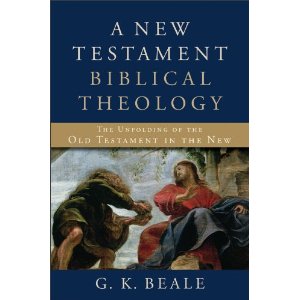
New Testament Biblical TheologyIt’s often noted that before they were called Christians, followers of Jesus in the book of Acts were referred to as ‘The Way” (Acts 9:2; 19:9, 23; 22:4; 24:14). Many preachers then go on to make the point that before Christianity was a religion, or a system of thought, it was instead known as a distinctive way of life. It’s not so much that Christians are people who believe certain things, but that they are people who live a certain way. While that can be appealing to many, left on its own, it sets up something of a false dichotomy between living and believing that is entirely foreign to the Scriptures. Right belief and right living are a seamless whole in Biblical spirituality.

Others, taking a slightly different (and better) angle, remind us that Jesus called himself  “the way, the truth, and the life” (John 14:6). Early Christians were called followers of “the Way”, not simply because of the way they lived, but precisely because of who they followed. The Way is not simply a set of behaviors, but a person. It is only by trusting in and following the one who is the Way that we enter into the life that is truly life and come to know the Father.

As promising as that view is, G.K. Beale proposes another, still more promising read and suggests that we pay attention to clues that Luke presents us with in the Gospel of Luke:

The significance of the citation from Isa. 40:3–5 in Luke 3:3–6 appears at the commencement of Jesus’s public ministry:

And [John] came into all the district around the Jordan, preaching a baptism of
repentance for the forgiveness of sins; as it is written in the book of the words
of Isaiah the prophet,
“The voice of one crying in the wilderness,
Make ready the way of the Lord,
make His paths straight.
Every ravine will be filled,
and every mountain and hill will be brought low;
the crooked will become straight,
and the rough roads smooth;
and all flesh will see the salvation of God.”

David Pao has rightly argued that this quotation provides the key interpretative framework within which the remainder of Luke-Acts is to be understood. The Isaiah quotation is the beginning of an extended section in Isaiah that prophesies the coming of a new exodus whereby Israel will be delivered from bondage in Babylon. The various motifs found in the prologue (Isa. 40:1–11) to Isa. 41–55 are developed extensively throughout the following chapters of Isaiah and in Acts. The best expression of this new-exodus paradigm is the “way” terminology (derived primarily from Isa. 40:3) in Acts as a name for the nascent Christian movement, polemically identifying the church as God’s true people in the midst of his rejection of Israel. Notice the repeated reference to the Christian movement as “the Way” in Acts, which most of the time occurs in contexts of persecution or opposition:

Acts 9:2 “And [Paul] asked for letters from him [the high priest] to the synagogues
at Damascus, so that if he found any belonging to the Way, both
men and women, he might bring them bound to Jerusalem.”

Acts 19:9 “But when some were becoming hardened and disobedient, speaking
evil of the Way before the people, [Paul] withdrew from them and
took away the disciples, reasoning daily in the school of Tyrannus.”

Acts 19:23 “About that time there occurred no small disturbance concerning
the Way.”

Acts 22:4 “I [Paul] persecuted this Way to the death, binding and putting
both men and women into prisons.”

Acts 24:14 “But this I [Paul] admit to you, that according to the Way which
they call a sect I do serve the God of our fathers, believing everything
that is in accordance with the Law and that is written in the Prophets.”

Acts 24:22 “But Felix, having a more exact knowledge about the Way, put
them off, saying, ‘When Lysias the commander comes down, I will decide
your case.’”

This name for the Christian movement, “the Way,” thus designates that the Christians were the true end-time Israel beginning to fulfill the prophecies of Israel’s return from exile. They were on “the Way” out of exile to returning to God. The name “the Way” indicates that one could begin to participate in this restoration journey by believing in Christ and joining others who already believed and were walking on “the Way,” progressing in their new-exodus journey. Consequently, “the Way” described both those first joining it and those who had belonged to it for some time, so that the name included reference to a manner of ongoing Christian living as part of a restoration journey.

–G.K. Beale, New Testament Biblical Theology: The Unfolding of the Old Testament in the New, pp. 856-858

To be a follower of “the Way”, then, meant understanding yourself to be the beneficiary of God’s great new act of redemption through His Anointed One. Just as God had led Israel out of Egypt into freedom God had promised to lead Israel out of Exile, both physical and spiritual. John prepared the way for YHWH’s coming and the Lord Jesus walked it bringing salvation in his wake.

This approach has the benefit of being thickly rooted in a long-range approach to Scripture, makes sense of the exegetical data in Acts, as well as incorporating some of the better insights of the simpler views listed above. We see clearly here that to be a follower of the Way was a matter of both belief and of practice. It was precisely because they believed God was fulfilling his promise of a New Exodus through the person and work of Jesus that they lived this new journey life-style.

Two thousand years later that New Exodus is still going–people are being brought out of the Exile of sin and death into the new in covenant with God. We are still on walking the “The Way” with Jesus.

Soli Deo Gloria