How Do We Stop Weaponizing Our Victims?

The victims most interesting to us are always those who allow us to condemn our neighbors. And our neighbors do the same. They always think first about the victims for whom they hold us responsible.

-Rene Girard, I See Satan Fall Like Lightning (pg. 164)
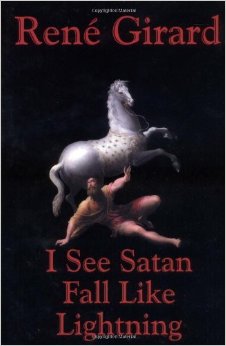
girardAccording to Rene Girard, our society, more than any before it, is obsessed with “the victims”–especially those of exclusion, violence, and social scapegoating. And he would know. The French literary critic and anthropologist is something of an expert on the idea of the victim. His works on the ideas of mimetic desire, scapegoating, violence, and their role in literature and culture as a whole are groundbreaking and influential (The Scapegoat, Violence and the Sacred, etc). In any case, according to Girard, you can scan the ancient literature down the generations, across societies, and you find nothing like the widespread concern for the victims in the modern and contemporary period.

You can chalk this up to any number of sources: the effect of the Gospel on cultures through history, the spread and transformation during the Enlightenment of the Christian concept of charity into one of universal benevolence (per Charles Taylor), our post-Holocaust sensibilities, or any number of other social movements. What you can’t do is deny its pervasiveness. As Girard notes, even if we’re hypocritical about it, we at least know we’re supposed to be concerned for the victims: whether oppressed social groups, races, sexes, orientations, or classes.

We are keenly aware now of the way that individuals and groups can be marginalized and kept down by the cruel, powerful, or simply dominant, yet apathetic social majority. What’s more, we know we’re supposed to do something about it in word or deed (or, more cynically, at the very least through a token acknowledgment of complicity via Facebook update).

Now, don’t get me wrong. I don’t think this is a bad thing. In fact, insofar as it’s connected with and led to great movements of social justice (Civil Rights movements, advances in gender equality, the rights of the unborn, etc), I think it’s a good thing. Whatever the social roots, I think there are deep, biblical justifications for something like our modern concern for the victim.

Christ himself (among many other things) was a victim of violence and oppression at the hands of religious, social, and political powers. He not only atoned for our sins on the Cross but, among his many works, he exposed in concrete form the oppression and violence against the weak at the heart of a world in rebellion to its Loving Redeemer.

Weaponizing the Victim

All that said, as with any religious insight, sin’s pernicious power can twist and pervert it for its own uses. And, as the opening quote suggests, the modern concern for the victim is no different. In a phrase: we’ve learned to weaponize our victims.

Girard elaborates:

We could use our insight discreetly with our neighbors, not humiliating those we catch in the very act of expelling a scapegoat. But more frequently we turn our knowledge into a weapon, a means not only of perpetuating old conflicts, but raisng them to a new level of cunning, which the very existence of this knowledge and its propagation in the whole society demand. In short, we integrate the central concern of Judaism and Christianity into our systems of self-defense. Instead of criticizing ourselves, we use our knowledge in bad faith, turning it against others. Indeed, we practice a hunt for scapegoats to a second degree, a hunt for hunters of scapegoats. Our society’s obligatory compassion authorizes new forms of cruelty.  (pg. 158)

I suppose I could just remind you of your Twitter or your Facebook feed on Tuesday and you’ll see where he’s going. Think of the vitriolic discussions and finger-pointing around abortion, #BlackLivesMatter, the Syrian Crisis, bullying against LGBT kids, religious liberty infringements, and any number of other important instances of victimization and the importance of Girard’s comments should become apparent. Still, I think it’s worth commenting on in this passage and a number of points to add beyond it.

Secret Substitutions and Weighing the Victims

First, there is the danger of second-order scapegoating brought on by our awareness of our tendency to scapegoat others. As soon as we identify a victim and their corresponding oppressor, we are liable to turn the tables, engaging in “secret substitutions”, and vindictively turn the initial oppressor into a victim of even worse violence (physical, social, economic) than the original victims suffered. We see an instance of online cruelty and become a Twitter mob that doxxes and shames a person out of work and society as a whole, all the while convinced of the rightness of our cause. We’re not oppressors, we’re “allies”, or “voices for the voiceless.”

Then there’s the self-righteous posturing element. Girard points out the way we use the victims to prop up our own self-defense against shame and guilt, our own sense of righteousness. Or maybe it’s not self-justification, but a secularized attempt at penance or atonement that drives us to perform our righteousness before men. We prove and perform our righteousness in a couple of ways, at least.

First, we do so simply by publicly supporting the right sort of victims. Girard speaks earlier about the “weighing of victims” that goes on in society. And we’ve all seen that, right? The comparative element in our online conversations: “How can you care about X, when Y is happening?”

Comparative judgments do have an appropriate place, at times. There are some issues that simply are bigger, more important, or more pressing at a given moment. Of course, the problem is that knowing how to rank them can be a difficult judgment call to make and it’s not always obvious. What’s more, my concern isn’t always a zero-sum game. I can care about more than one victim at a time, or acknowledge the importance of one justice issue while realizing that my voice is needed on this other issue over here.

The devious, second dimension to the comparative judgments, though, is the self-justification that comes with knowing my victim matters more. It’s not just that we want to be righteous by caring about victims, it’s that I care about the right victim, while you care about the wrong one. We want to appear righteous, but we also want to be more righteous than she is.

Which brings us to weaponizing the victim. That opening quote is so devastating because once you open your eyes to it, you see it everywhere–especially your own soul. It’s a mirror that exposes to light some of the ugliest impurities in our righteous crusades. Because haven’t you seen that in yourself? No? Well, I mean, I’m sure you’ve seen it in your enemies, right?

Haven’t you been agitated by that progressive who is always taking every chance they get to share a devastating story about some victim and immediately tacking the moral on that “this is what Republicans/Evangelicals/Fundamentalists views lead to” or some such statement? Or on the flipside, the way that some legal absurdity just shows the moral bankruptcy of the progressive/Democrat/Post-Evangelical capitulation? Doesn’t this latest tragedy (beautifully) highlight their horrid lack of concern? (A concern which, quite admirably, you have). Don’t these tear-stained faces cry out for the merciless prosecution of our enemies? (Oh, and yes, maybe some aid as well, of course.)

I Am A Danger To Myself

Here’s the thing, I don’t for a minute claim that I escape this, nor, again, that there aren’t situations where that kind of stock-taking and comparison needs to take place. I’ll come clean and say that I have been there in this last month. I mean, with all the Planned Parenthood videos coming out, I’ve sat there appalled at the perceived inconsistency of some of my progressive friends who will trumpet every (in my view) piddling social faux pas, yet remained quiet about it, or whose knee-jerk reaction is to defend the abortion giant. Or be more incensed about Cecile the Lion than tens of thousands of infants butchered. And I honestly think my opposition to abortion and prioritization of it is justified.

But has that been my only concern? Haven’t there been moments where I’ve prided myself on having that sense of proportion? Have there been times when my legitimate concern for these helpless victims hasn’t been edged out my desire to score righteousness points and use that evaluation as part of a broader argument against “deluded” progressives? Am I quieter about other moral issues because they’re not an opportunity to score points against them? Am I more concerned with victims I can hold my neighbors responsible for?

I have to ask myself these questions if I’m going to be honest and avoid running the risk of hunting the hunters, or crassly weaponizing the already-victimized, turning them into objects for my own self-justification. And here’s one of the most pernicious elements of the whole thing: I used myself as an example here, simply to avoid using this post as a third-order exercise in weaponizing the victim against those who weaponize the victims! But I know I’m not the only one here.

Think through the issues, the victims that burden you, and the opponents who anger you. I don’t know what it is for you or who it is for you. Maybe it’s abortion. Maybe it’s racial injustice. Maybe it’s gender or sexuality. Maybe they are friends who’ve gone progressive. Maybe they are Sunday School teachers who stayed Evangelical. Maybe they’re Anabaptists, Calvinists, Roman Catholics, or whoever. And maybe you’re really actually right and they’re really actually wrong. My point here isn’t to say that there aren’t priorities, or a proper place for righteous anger against others on behalf of the victims. Clearly these things actually matter.

My question is this: is your first instinct for the victim or against your enemy? Is it to seek justice or secure righteousness? To bless the hurting or curse the proud? I honestly don’t know sometimes. And that scares me. I remember Paul’s words:

“Therefore you have no excuse, O man, every one of you who judges. For in passing judgment on another you condemn yourself, because you, the judge, practice the very same things.” (Rom. 2:1)

We pass judgment on others in this fashion, only at a danger to ourselves.

Our Hope–the Victim is the Judge

It’s at that moment, though, when I remember my only hope is that one day the secrets of men “will be judged by Jesus Christ” according to the gospel (Rom. 2:16). That Christ Jesus–the One who was the Victim at our hand and on our behalf–is the Judge is my only hope to stand on that final day.

Christ’s gospel is also my only hope to escape this cycle. Only as I continue to recognize my own sin–my violence against God and my neighbor–that put him there is my pride humbled before others. I know that I myself “practice those same things”, in a million different quiet ways. What’s more, it’s only as I continue to trust that his atoning death for sin and resurrecting justification is mine through faith, can I move beyond the self-justifying desire to performatively prove my righteousness against my ideological opponents. My identity isn’t at stake, nor is my need to cover my own guilt and unrighteousness.

Neither of these movements should undercut the motive to seek justice for the victim.

Instead, we are set free to care for the victims as people, for their own sake and the sake of the One whose Image they bear, instead of as pawns in our schemes. Indeed, it opens us up care for more than we had before, since we’re no longer caught up in weighing the victims, making sure we’re working for the “right sort”, the respectable victims who pull up their pants and have don’t have the wrong kind of past. We don’t have to be moralistic advocates. We don’t have to worry about whether or not admitting the evil they’ve suffered plays into our opponents’ hands because, in light of Jesus’ death and resurrection, it’s not about winning anymore.

It even serves as a curb against our worst, vindictive excesses. Since we know that beyond the temporal justice we rightly seek in this world–stopping bullying, ending police brutality, saving the unborn–ultimate, divine judgement will either be served at the last day, or has already been handled at the Cross, we are less likely to vindictively fall into victimizing the oppressor and continuing the cycle of violence.

Everything changes in light of the Victim who is the Judge.

Soli Deo Gloria

When the Accuser Stood Face to Face With the Atoner

Jesus on trialThere are multiple levels of irony in the Gospel narratives, especially surrounding Jesus’ arrest, trial, crucifixion, and resurrection. One that’s commonly pointed out is that of Jesus’ confrontation with Pilate on the gospel of John. As A.T. Lincoln has shown in his Truth on Trial, we are given a narrative portrayal of Karl Barth’s theme that Christ is the Judge judged in our place.

As Jesus, the Truth, the Judge over all the earth, stands face to face with his would-be earthly judges, they end up on trial, rendering judgment upon themselves as they pass judgment on him. In doing so, they send the Judge to the cross to be judged in our place, suffering the judgment of God for their own sins.

One other irony struck me the other day, though this one comes, not in the trial with Pilate, but in Jesus encounter with the Temple leadership. Matthew recounts the first trial following Jesus’ arrest in the garden:

Then those who had seized Jesus led him to Caiaphas the high priest, where the scribes and the elders had gathered. And Peter was following him at a distance, as far as the courtyard of the high priest, and going inside he sat with the guards to see the end. Now the chief priests and the whole council were seeking false testimony against Jesus that they might put him to death, but they found none, though many false witnesses came forward. At last two came forward and said, “This man said, ‘I am able to destroy the temple of God, and to rebuild it in three days.’” And the high priest stood up and said, “Have you no answer to make? What is it that these men testify against you?” But Jesus remained silent. And the high priest said to him, “I adjure you by the living God, tell us if you are the Christ, the Son of God.” Jesus said to him, “You have said so. But I tell you, from now on you will see the Son of Man seated at the right hand of Power and coming on the clouds of heaven.” Then the high priest tore his robes and said, “He has uttered blasphemy. What further witnesses do we need? You have now heard his blasphemy. What is your judgment?” They answered, “He deserves death.” Then they spit in his face and struck him. And some slapped him, saying, “Prophesy to us, you Christ! Who is it that struck you?” (Matthew 26:57-68)

Again, the dynamic of the Judge judged in our place is plainly here, especially in the reference to the Son of Man drawn from Daniel 7–a scene of judgment and vindication. All the same, the point that struck me was the fact the main prosecutor in the trial was none other than Caiaphas, the High Priest himself.

The irony, of course, is that, as the High Priest, his chief job was to serve as a Mediator–the Mediator–for the people of Israel. His chief task was to bringing the sacrifices for the sins of the people before the LORD in the Temple once a year on the Day of Atonement (Lev. 16). His job, you might say, was to be chief intercessor and defense for the people of God, seeking mercy for their sins.

Instead, we find him in another role: the accuser, (ha satan). That’s right, for those unaware, Satan’s name comes from the role he plays in the biblical drama–the accuser, the prosecutor of the people of God. And this is the role we find Caiaphas playing on the day of Jesus’ trial, relying on false testimony and trumped up charges in order to convict the Holy One.

Now, as a friend of mine pointed out the other day, this calls to mind another passage from the prophets, Zechariah 3:

Then he showed me Joshua the high priest standing before the angel of the LORD, and Satan standing at his right hand to accuse him. And the LORD said to Satan, “The LORD rebuke you, O Satan! The LORD who has chosen Jerusalem rebuke you! Is not this a brand plucked from the fire?” Now Joshua was standing before the angel, clothed with filthy garments. And the angel said to those who were standing before him, “Remove the filthy garments from him.” And to him he said, “Behold, I have taken your iniquity away from you, and I will clothe you with pure vestments.” And I said, “Let them put a clean turban on his head.” So they put a clean turban on his head and clothed him with garments. And the angel of the LORD was standing by. And the angel of the LORD solemnly assured Joshua, “Thus says the LORD of hosts: If you will walk in my ways and keep my charge, then you shall rule my house and have charge of my courts, and I will give you the right of access among those who are standing here. Hear now, O Joshua the high priest, you and your friends who sit before you, for they are men who are a sign: behold, I will bring my servant the Branch. For behold, on the stone that I have set before Joshua, on a single stone with seven eyes, I will engrave its inscription, declares the LORD of hosts, and I will remove the iniquity of this land in a single day. In that day, declares the LORD of hosts, every one of you will invite his neighbor to come under his vine and under his fig tree.” (Zechariah 3)

(This, by the way, is where I clearly get out of my depth as a systematic theology guy.) Still, after the Exile and the return to Israel and the Land, Zechariah receives a vision of the current high priest Joshua in the heavenly council of the LORD, being accused by none other than the Satan. And yet, the LORD rebukes him. He changes Joshua’s filthy garments for new ones, cleansing him of sin, qualifying him to represent the people, and removing the basis of Satan’s accusations. Of course, besides the clear linguistic link (Joshua = Jesus in Hebrew), this screams “type of Christ”, the coming priest who has no filthy garments of his own, being perfectly sinless.

On top of this, Joshua is then given a promise of a coming “Branch”, the servant of the LORD, whom some commentators think is a blend of Isaiah’s Servant visions (40-55, cf. esp 53) with Ezekiel, Isaiah, and Jeremiah’s idea of a David-like King to come. So you end up with a vision of a coming priest-king along the lines of Melchizedek. Melchizedek, the priest-king who is the type of Christ to come (Hebrews 7).

So right after this scene of the accusation of Joshua comes a dense cluster of images pointing to a coming day when God will remove all the sins of Israel in a single day, through this Branch. Of course, with Christian eyes there a million red lights flashing, begging you to draw connections between it all. Not that I’m suggesting that Matthew intended a clear literary connection, but the theological connections seem like they’re not much of a stretch.

Coming back to the trial of Jesus before Caiaphas, the long and the short of it is that, in the irony of God’s providence, like Satan in the vision of Zechariah, this false High Priest Caiaphas ends up playing the Accuser of Jesus the True High Priest, who is on the dark path he must tread to become the Atoner who goes to remove the sins of the people of God.

Soli Deo Gloria

I, Tertius

papyrusFor my money, the Epistle to the church in Rome–the book of Romans more commonly–is the finest, most important letter in church history. Certainly in the canon. So who wrote this tremendous piece of work? The apostle Paul, right? Actually, no. That’s a bit of a trick question. Paul is the author–it is full of his words and thoughts–but the writer is another chap we only find out about towards the end of the letter:

I Tertius, who wrote this letter, greet you in the Lord. (Romans 16:22)

Tertius was apparently Paul’s writer–his amanuensis— as he dictated the letter to the Romans. Now, there might be any number of reasons for having a writer take down the letter for you. Some speculate that Paul had vision or health issues. Others point out that writing, in those days, was a much more difficult skill than reading. The materials required sharp, deft strokes that required training to develop. Tertius was a believer who was one such scribe.

I don’t know why, but this guy fascinates me. This is a verse in the Bible. This chap whom we don’t know anything about, really, was a part of this massively crucial piece of Christian history. And that largely because he knew how to write. He wasn’t an apostle. We don’t know that he was a teacher or preacher, a deacon, or particularly skilled in any area. All we know is that the brother had a technical skill and made himself available to Paul as a scribe.

There’s no big lesson I have beyond saying this: there are millions of Tertiuses sitting in the pews. Millions of ordinary Christians, with ordinary skills, doing ordinary things. And who knows what God will do with theses gifts? What ordinary skill is God currently using to get his extraordinary work done?

Soli Deo Gloria

The Jerusalem Council: More Law, Random Rules, or Something Else?

acts of JesusOne of the key interpretive puzzles in the book of Acts comes towards the end of chapter 15 with the famous decision of the Jerusalem Council on the inclusion of the Gentiles. Jesus’ commission to the disciples to be his witnesses to the gospel in the power of the Spirit in Jerusalem, Judea and Samaria, and all the ends of the earth (Acts 1:8), meant that eventually some Gentiles were going to hear the gospel. And, as we might expect given the power of God, many responded positively in faith and confessed Christ as Lord. This raised a number of questions: on what basis are they to be admitted into God’s people? Is the Mosaic law still binding on them? Must they become Jews (get circumcised, eat kosher, keep Torah), in order to be justified?

Resolving these questions takes up a great deal of the narrative of Acts. Peter’s vision and encounter with Cornelius in Acts 10-11, makes it clear that certain food laws don’t apply. As a part of the new stage of history brought on by Jesus’ life death, resurrection, and ascension, God seems to have abrogated or set aside key food laws and has cleansed the Gentiles like Cornelius who confess faith in Christ through the forgiveness of sins and by faith.

That’s not the end of the story, though. In Acts 15 we read that some Jews from Judea had come down to Antioch and began stirring up trouble in Paul’s church by teaching that Gentiles had to be circumcised and keep the Law of Moses in order to be saved (v. 1). Obviously, Paul wasn’t having it, so they had it until they all decided to go up to Jerusalem to have the council of apostles and elders sort out the issue for them. In council, in the face of opposition, Peter stands up, gives a solid defense of justification by faith, not Torah-keeping (vv. 7-11), and eventually the council basically sides in his and Paul’s favor. The Gentiles are saved by grace as well as the Jews and so they shouldn’t be “troubled” by being made to keep the Law in detail, certainly not by being circumcised.

All the same, there is a caveat. James says:

“Therefore my judgment is that we should not trouble those of the Gentiles who turn to God, but should write them to abstain from things polluted by idols, and from sexual immorality, and from what has been strangled, and from blood.” (vv. 19-20)

Okay. So no need for circumcision—the covenant isn’t restricted to Jews or strict Torah-keepers—but it still seems like some of the restrictions of the Law are in play. Now this doesn’t seem like this fits into the classic categories that Protestants typically use to think about the way the Old Testament Law does and doesn’t still apply to New Testament believers (moral, ceremonial, and civil). There seems to be a couple that are moral (sexual immorality, things polluted by idols) and a couple that are clearly ceremonial (strangled food and blood). And why those moral categories? Why is sexual immorality mentioned and not stealing or murder or something?

What gives?

Three Options

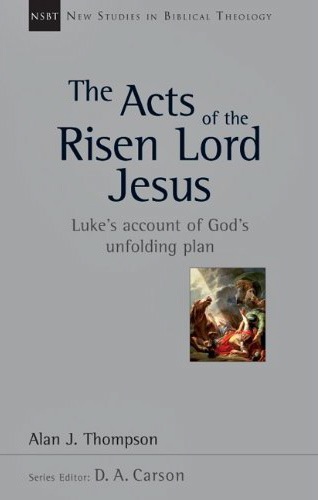
Alan J. Thompson, in his work The Acts of the Risen Lord Jesus, notes that there are a number of options put forward by scholars (pp. 184-187).

Some think that these restrictions are a sign of the Law’s continuing binding authority drawn from Leviticus 17-18 that govern the behavior of Gentile sojourners in Israel. But that wouldn’t cover the strangled animal issue and there are a bunch of laws elsewhere covering sojourners.

Others have suggested that requirements are kind of on the spot laws picked because they were particularly offensive to Jews. So, this isn’t a requirement of the Law, but more like pragmatic commands just to suit that time and those groups. So, salvation by grace, but don’t offend your Jewish neighbors. The problem with that, though, is that it “overlooks the general applicability of these requirements to all the Gentiles in 15:19 and 21:25” (185).  And the language used about them refers, not to preferences, but binding “decisions” made by the council.

The final view that Thompson notes and opts for is Ben Witherington’s which is that, essentially, these form a restriction on idol practice. Witherington observes that all four of the practices were all associated with pagan temple practices at the time. He notes that the language used of “Gentiles turning to God” in Acts 15:19 is similar to that of 1 Thessalonians 1, where Paul talks about turning from idols to God. Also, there’s a very strong link between food practice and idolatry in 1 Corinthians 8-10, especially where Paul says to “flee from idolatry” (10:4). Beyond that, this fits with the polemic against idolatry in Acts, Paul’s preaching, and early Christianity.

Thompson summarizes the twofold thrust of the council’s decision this way, then:

The Jerusalem Council therefore clarifies two issues involved in how Gentiles may be saved: (1) Gentiles do not have to become Jews; salvation for Jew and Gentile alike is by grace alone through faith in the Lord Jesus alone. (2) However, Gentiles cannot remain pagan idolaters either; they must turn from their pagan idolatrous past. (p. 187)

This option makes sense out of the general applicability of the commands, the fact that they’re not to be seen as just a pragmatic grouping of requests, and the fact that it shouldn’t be seen as a continuation of the OT covenant Law’s binding character on the Gentiles.

Moving Forward

What comes of this? Well, I’ve seen it argued that this text is a good example of the somewhat arbitrary approach to the OT law, or the moral commands of the New Testament. It’s then taken, in some cases, to be part of a case for seeing the New Testament’s commands about sexual immorality to be of the same category as the temporary and apparently pragmatic as the food laws. In which case, now that we’re in a different situation, we’re free to thoughtfully move past them as we have the food restrictions.

Of course, this is all too brief. Still, I think this way of viewing the Jerusalem council’s decision is quite helpful, though, in understanding the way that commands of both sorts—perennial moral commands grounded in the norms of creation and what seem to us to be temporary ceremonial ones—can be coherently grouped together under the broader, perennial concern about idolatry. And this is without falling into the view that we are still partially under the Old Covenant, or that there is no significant difference between the New Testament’s restrictions on sexual practice and food practice.

Insofar as eating food that’s been strangled or with blood in it is connected to idolatry, it is always wrong. On the flipside, given that there are a number of different lines of reasoning behind the prohibition against sexual immorality (porneia), just because it might not be connected to explicit idolatry as in Temple prostitution, that doesn’t mean it’s now okay. As we might expect, it’s a bit more complicated than that.

While there are a number of lessons we could draw here, once again are faced with the reality that we must be wary of constructing our moral and theological frameworks on the basis of single texts or narratives. We have the whole New Testament—narratives, epistles, and so forth—for a reason. While individual texts must be heard, studied, and paid attention to in their own right, this is a case where issues regarding the law, authority, sexuality, and so forth, must be judged in light of the broader canon given to us through the apostles and prophets. 

Soli Deo Gloria

3 Principles For Those Times When Theologians and Scientists Disagree

every square inchOne of my favorite clips from pretty much any movie ever comes from the cinematic masterpiece Nacho Libre. When Nacho encourages his luchador partner Eskeleto to pray to the Lord for strength, much to everyone’s surprise, he says, “I don’t believe in God—I believe in science.” It’s hilariously simplistic, but it’s reflective of one of the silly dichotomies too many of our students in the church as well as the broader culture still buy into on a regular basis.

Many of us intuitively feel there’s something wrong with that. Still, when it comes to wrestling with the many apparent conflicts between what we were taught in Sunday School and what we learned in our freshman biology class, we’re often at a loss for how to think of these conflicts. Is it really a matter of science versus faith? Blind faith or intellectual honesty? Obviously I don’t think that’s the case, or I wouldn’t still be a Christian.

Over the years of study, I’ve read enough good apologetics and works of philosophy to feel satisfied knowing that whatever new challenges are proposed, there’s eventually going to be some answer forthcoming. Indeed, I believe we’ve got a number of reasons for thinking that the practice of science is best supported on something like a Christian worldview, with its belief in a regular, orderly universe, created by God to be intelligible to the human intellect. Indeed, ultimately there can be no conflict between the truths of theology and the truths of the hard sciences, as God is the author of their shared reality.

That said, it’s always good to have some basic principles in mind when thinking about those moments when it seems that our best scientist and our best theologians do conflict.

Bruce Riley Ashford provides us with a few such principles in his excellent little introduction to a Reformed theology of culture Every Square Inch. (Check out Trevin Wax’s interview with him here.) Towards the end of his chapter on the Christian motivation to engage the sciences (pp. 84-86), he reminds us of three pertinent facts to keep in mind.

  1. “Either group (theologians or scientists) can err; for that reason, either group should be open to correction.” Theologians and biblical commentators have been wrong in their interpretations before. Mistaking metaphorical language for literalistic descriptions of reality and vice versa, there have certainly been cases of over-interpretation of biblical texts, taking them to teach something far more specific than they were intended to. On the flipside, all you have to do is read a short history of science to see how many different scientific paradigms we’ve gone through to explain gravitational force, the orbit of the planets, and so forth to know that we’ve gotten things wrong before.
  1. “The Bible is not a science book.” I know this is rather obvious to many, but the Bible was not written as a biology text book. There are areas where it makes claims about the physical universe and so forth, but by and large, we’re missing the point if we’re reading it as a guide to physics, chemistry, and so forth. It’s God’s covenant document revealing his character, doings, aims, and intentions towards his people in Christ. This is why we need to be rather careful about over-determining our interpretation of the text in the direction of any particular scientific theory. That’s not what the book is for, so using it for that end leaves it liable to abuse and an unfortunate discreditation in the eyes of those who know the shape of the science it allegedly contradicts.
  1. “Science is constantly changing.” As we already said, scientists have changed their minds about all sorts of things. Galileo, Copernicus, Kepler, Newton, Planck, Einstein. Just run down the list of astronomers and early scientists who modified, tweaked, or overturned each other’s pictures of the universe and you see this to be true. Thomas Kuhn’s famous work The Structure of Scientific Revolutions probably overstates his thesis about the new worlds that scientists inhabit when they change their models of understanding the world, but it’s instructive on this point. Even the most secure science—models that are fairly unquestioned in their respective fields for decades—are susceptible to revision. For that reason, Christians need to make sure they’re not too hasty revising their interpretations of Scripture or fundamental doctrines to fit some study that emerged only in the last 5 years and could be overturned next Tuesday.

Obviously, these principles aren’t some easy formula that we plug every problem into and get a clean, easy answer. But we shouldn’t really expect that, should we? Theology and the sciences both deal with reality and reality isn’t clean and easy. That said, these are the sort of broad, wise principles that allow us to proceed in our analysis with care, wisdom, and fidelity to God’s Word and without ignoring what we find in our study of God’s good world.

What Does the Church’s “Teaching Authority” Mean for Protestants?

Trinity Reading and RevelationProtestants are popularly known as being skittish about talking about the Church’s “teaching authority.” Certainly Evangelicals are. There is a sense that acknowledging the Scriptures as the Word of God and affirming the doctrine of sola Scriptura–that Scripture, not the Magisterium of the Church is the final authority in establishing matters of doctrine–should cause us to turn our noses up, or at least be suspicious of claims for churchly authority. And there’s something to that.

We want to be clear of a few misconceptions of the Church’s teaching authority. For one thing, we want to make sure and remember that the Church is subject to the Word, not the other way around. The Word authorizes the Church, the Church doesn’t authorize the Word. The Church responds to the Word, even recognizes it as the Word, but it does not establish it.  The Church is brought into being by the Word–it is the “creature of the Word” as Luther puts it. Just as God speaks a word at creation and the world comes into being, so God speaks the word of the Gospel and the Church comes into being.

All that I affirm as a Protestant. But that’s not all that we can say about the Church’s teaching authority. It’s not a matter of Magisterium or ‘What this means to me’ in your local small-group. No, many Reformed have recognized that God has given the Church in its broadest and narrower institutional expressions the task of representatively serving Holy Scripture.

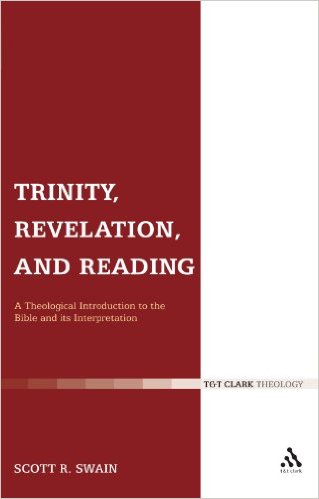
Scott Swain, in his smashing little book Trinity, Reading, and Revelation (pp. 102-103) summarizes William Whitaker’s answer to the question of the role of the Church with respect to the Scriptures given in his treatise A Disputation on Holy Scripture. Whitaker notes four roles for the Church:

  1. “First, the church is the witness and guardian of the sacred writings, and discharges, in this respect, as it were the function of a notary.” God has entrusted the Scriptures to the church for safekeeping, to guard and protect them from corruption or harm (cf. Deut 31:9; Rom. 3:2). Again, though, just because Israel was entrusted with the tablets of the covenant, that does not mean they established or authorized the covenant, but they themselves were governed and authorized as God’s people by them.
  2. “The second office of the church is, to distinguish and discern the true, sincere, and genuine scriptures from the spurious, false, and suppositious” (cf. 1 Cor. 14:37; 2 Thess. 2:1-2). The Church, again, doesn’t authorize or establish the canon, but it does recognize it. In other words, the Scriptural texts have their authority before the Church says so, but the Church is given the Spirit of God in order to recognize which texts possess that authority. As Swain says (possibly paraphrasing Whitaker), a goldsmith is trained to recognize gold, but his recognition doesn’t make the gold what it is.
  3. “The third office of the church is to publish, set forth, preach, and promulgate the scriptures; wherein it discharges the function of a herald, who ought to pronounce with a loud voice the decrees and edicts of the king, to omit nothing, and to add nothing of its own” (c. Isa. 40:9; Rom. 10:6; 2 Cor. 5:19). Whitaker’s quote is fairly clear, but the point is, the text of Scripture is supposed to be read, preached, and passed on. That does require a body of people committed to its dissemination and faithful transmission.
  4. “The fourth office of the church is to expound and interpret the scriptures; wherein its function is that of an interpreter. Here it should introduce not fictions of its own, but explain the scriptures by the scriptures” (cf. Mt. 13:52; Rom. 12:6; 1 Cor. 14:3, 29; Eph. 4:11; 2 Tim. 2:15). The Church is called to interpret the Scriptures and give their sense, not adding or subtracting, but attempting to humbly and simply explain the Word of God. This happens in all sorts of ways, but especially in the giving of preachers and teachers who take the apostolic message and explain it to the people of God, much as Ezra did the returned exiles.

So then, according to Protestants, what profit is there in the Church understanding the Scriptures? Much in every way!

As Swain says:

…the church is that community created and authorized by the Word of God in order that it might obediently guard, discern, proclaim, and interpret the Word of God. (103)

While Protestants are right to be careful of churchly overreach–claiming a magisterial authority over the Word, as if we ourselves were responsible for making the Word what it is–we rob ourselves if we fail to acknowledge the proper role God has granted his people in regard to the Word.

Soli Deo Gloria

P.S. Swain’s little book has to be one of the tightest, power-packed treatments of Scripture and hermeneutics I’ve read yet. It’s up there with John Webster’s little gem Holy Scripture. I cannot recommend it highly enough.

Are You a Curious or a Studious Theology Student?

Domain of the wordIn the Christian tradition, curiosity has always been considered a vice. That’s surprising to most of us used to the more modern sense of the term. For many of us it tends to mean something like inquisitiveness or a thirst for knowledge. To call curiosity a vice would seem like another line of argument for seeing the Christian tradition as fundamentally anti-intellectual and hostile to questions. That would be a fundamental misunderstanding, however.

In his essay ‘Curiosity’, John Webster–the theologian’s theologian–claims that, “Christian theological intelligence is exercised in the conflict between studiousness and the vice of curiosity” (The Domain of the Word, pg. 193).

Curiosity, then, has a positive counterpart in the form of the virtue of “studiousness.” Indeed, Webster says we can only know what curiosity is as a deviation or perversion of studiousness since vices have no positive reality of their own. To condemn curiosity, then, is not to condemn reason or thought wholesale, but its perversion by sin and idolatry.

But how should we understand these twinned realities? What is it that relates the two and what separates them? As I begin my Ph.D. courses, I’ve been giving some thought to the point of my studies. Just why exactly am I doing what I’m doing and how should I be doing it? And also, how should I not be approaching them? Webster’s reflections in this essay have been stimulating and helpful to me, so I figured I’d summarize and highlight some quickish thoughts for the benefit of other theological students, whether in school or not, pastoral or lay.

Studiousness

According to Webster, studiousness and curiosity are related in that they are both movements of our intelligence to “come to know” that which we don’t know. But the motive and the means of these relationships to unknown knowledge are what distinguishes them.

So what is studiousness? Well, it “is a strenuous application of the power of the creaturely intellect” to figure something out for the first time, or understand something better than you did before. Studiousness is a virtue particular to created beings who can come to know as opposed to God who just knows because he knows. Our way of knowing requires effort, energy, and time–as do all the activities of finite, embodied beings. “God, in short, knows as the uncreated one, creatures know as creatures” (194).

Furthermore, studiousness is the way the “well-ordered creaturely intellect” comes to know things. According to Webster, that involves at least two things. First, it means “earnest, arduous application of the mind.” It is an activity in the fullest sense of the word. Studiousness recognizes that knowledge doesn’t simply happen to you. Second, “it is a reflective” activity that can be judged according to standards of excellence that are intellectual and moral. Intellectually it is an activity that must treat the object of study with respect and integrity, coming to its conclusions, its representations, without undue haste or carelessness (195).

Morally, we come to the fact that studiousness is related to the very natural desire to come to know. And this is where Webster says “an element of ambivalence” can enter in.

Curiosity

Using the language of Aristotle and Aquinas, Webster states: “Curiosity results from the corruption of intellectual appetite”(195). Indeed, he quotes Aquinas who says, “curiosity does not lie in the knowing precisely but in the appetite and hankering to find out.”

From here, Webster gives us four of the “elements” of curiosity, which I can only briefly touch on.

First, curiosity is a corruption in that it aims at improper objects of new knowledge. It strains to know what it is not appropriate for it to know. It refuses to acknowledge the creaturely limit and wants to know “as God knows”, or to focus on those things which God has given it to know. Curiosity sits in the garden devising ways always to snag the one fruit that’s off-limits (195-196).

Second, it’s a way of learning about the world, to created realities, without referring them to their Creator. It’s a sort of “lust of the flesh” (1 Jn. 2:16) applied to knowledge; it is a desire to know things without pushing on to see their relation to God and his glory (196). It is a Romans 1 reality, in that sense.

Third, curiosity “is a deformation of the manner or mode of intelligence, when the movement of coming-to-know takes place inordinately, indiscriminately, and pridefully” (196). In other words, wanting to know can become an addiction to the rush of learning new things so that you end up neglecting other goods, crossing lines, and so forth. Intellectual greed also leads you to get caught up less in the truth or goodness than the “novelty of the object of new knowledge.” Or, again, curiosity leads to self-satisfied pride in our exceptional intelligence the more we come to find out.

Fourth, related to the last, curiosity chases knowledge for wrong ends. Either to puff yourself up, to use it for your own gain or power, or other unrighteous ends. Even good study can fall under “curiosity” if aimed at your own pride.

What Does Curiosity Look Like in Theology?

Next Webster examines the ways and reasons that curiosity can enter into the spiritual work of theological study.

First, curiosity creeps into theology when we forget the “location and situation” of our work. “Theology takes place in a sphere in which God the teacher is lovingly present to reconciled creatures, summoning the intellect to attentiveness and learning” (198). Curiosity forgets this and leads us to study, not in response to God’s prior direction, but as an independent exercise of intellectual acquisition (198).

Second, curiosity in theology leads to a certain restlessness that gives pride of place to the novel, the “creative”, and cannot follow the particular course theology should take. In a word, faddishness (198).

Third, curiosity “stops short at surfaces.” There are a lot of disciplines to master in theology (text-based, historical, etc). Webster says that all of these phenomena, though, serve to point beyond themselves as signs towards God. Curiosity can get caught up in the signs for their own sake instead of pushing onwards towards the theological end, which is to know God. In other words, it’s the kind of study of the Bible that gets caught up in historical minutiae of the text, trying on novel interpretations and grammatical innovations, all the while forgetting that the point of studying Scripture is to hear the voice of God (198).

Fourth, curiosity corrupts the character of theological work by leading us into pride, or the drive towards individualistic advancement, or a separation of theological study from the “common life of the church”(199).

Fifth, curiosity forgets the chief goals of theology which are “contemplative and apostolic.” Theology aims at delight in God. As such, it is apostolic because this truth is lovingly spoken to others that they might be built up and not fall into error. Curiosity aims only at itself and so curves inwards.

How to Avoid Curiosity in Theology?

Well, Webster is very clear that avoiding curiosity requires the work of the Holy Spirit who gives the gift of temperance, restraint, only with the new birth as a person is remade in Christ (2 Cor. 5:17). The Holy Spirit redeems, perfects, and redirects created minds, bringing them out of their prideful, lusting alienation from the life of God by the gift of a new, regenerated nature conformed to the image of the Son (Eph. 4:23; Col. 3:10; 199-200).

According to Webster:

Theological curiosity is checked and theological studiousness promoted when the intellects of saintly persons are directed to the proper object of theology and to the proper ends of contemplation and edification. (200)

Theology is the only discipline where the object study is your only, ultimate hope in doing it well. Webster notes three dimensions to this.

First, “immoderate desire” for novelty in coming to know can only be curbed if theological students come to recognize their place in the “pedagogy of divine grace.” In other words, “The grace of God has appeared…training us” (Tit. 2:11). We need to understand our study as a work taking place in the space of grace opened up by the grace of God in Christ and the work of the Spirit which sanctifies our reason. This is why:

The saints lack curiosity; but they are eagerly studious, devoted to acquiring the knowledge proffered by divine revelation. In theology, the affections, will and intellect are ‘fixed’ on the ‘ways’ of God (Ps. 119.15), ‘delighting in’ and ‘cleaving to’ the divine testimonies (Ps. 119.24), turned from ‘vanities’ (Ps. 119.37) in order to ‘meditate’ on the divine law (Ps. 119.48), eager to be taught knowledge (Ps. 119.66). Such is the studious theological intellect sanctified and schooled by divine grace. (201)

Second, curiosity fades when theologians devote themselves “to a singular matter with a definite interest.” It’s not so much that theology restricts itself to a few subjects, but that it learns to relate all subjects to the one subject it’s supposed to be directing everything towards: God and his works in the history of redemption. This maintains its focus as a “single science” instead of a disconnected study of whatever happens to interest us at the moment (201).

Third, directing theology towards its ultimate goal, the love of God, “mortifies” curiosity. Focusing on the self-communicating love of God cuts at the natural selfishness of curiosity, as it continually draws us out beyond ourselves into the love of God and our neighbor (202).

To cap it off, Webster closes with a prayer from Aquinas, “Ante Studium” (HT: David Bunce):

Ineffable Creator . . . You are proclaimed the true font of light and wisdom, and the primal origin raised high beyond all things. Pour forth a ray of your brightness into the darkened places of our minds; disperse from our souls the twofold darkness of sin and ignorance. You make eloquent the tongues of infants: refi ne our speech and pour forth upon our lips he goodness of your blessing. Grant to us keenness of mind, capacity to remember, skill in learning, subtlety to interpret, and eloquence in speech. May you guide the beginning of our work, direct its progress, and bring it to completion, for you are true God and true Man, who live and reign, world without end.

Soli Deo Gloria

Mere Fidelity: Intersex and Sexual Difference w/ Megan DeFranza

Mere FidelityThis week usual crew is joined by Megan K. DeFranza, author of Sex Difference in Christian Theology: Male, Female, and Intersex in the Image of God. Matthew Lee Anderson reviewed the book recently for Christianity Today, which you can read here. Also, after you listen to the show (or whenever, really), Alastair has already posted some follow-up thoughts on the conversation that I think are well worth considering. It was a good episode, but we barely scratched the surface on so many important issues. Alastair gets after them.

Soli Deo Gloria

Bavinck on the Christian Life by John Bolt

Bavinck on the Christian lifeCrossway’s “Theologians on the Christian Life” series has been excellent so far. And it’s about to get even better. John Bolt has just delivered the latest volume Bavinck on the Christian Life: Following Jesus in Faithful Service that’s the bees knees. I had the privilege of reading an early copy this spring and endorsing it.

Here’s what I wrote:

“Bolt’s portrait of Bavinck and his theology captures the man himself: clear, elegant, biblically saturated, theologically rich, philosophically nuanced, irenic, and aimed at the Christian life. Drawing on a diversity of sources, Bolt not only brings the riches of Bavinck’s mature theology into conversation with current theological concerns, but also applies it to the most practical elements of faith, marriage, family, work, and culture. He ably introduces readers to Bavinck’s vision of the Christian life as part of God’s movement of grace restoring nature and a cosmic redemption aimed at restoring and elevating creation to its intended goal. Most of all, it is a vision of following Jesus out into the world as the Father conforms his children into the image of the Son in the power of the Spirit for the sake of his glorious name.”

If that’s not enough, here’s what a bunch of other smarter people wrote about it:

“To use the word timely for a book about a nineteenth-century Dutch theologian may seem inappropriate. But in this case the adjective is exactly right. Many of us have wanted to spread the word that Herman Bavinck’s theological perspective can contribute much to a renewal of the church’s life and mission today. Now in this book John Bolt has made the case in a concise and convincing manner!”
Richard J. Mouw, President, Professor of Christian Philosophy, Fuller Theological Seminary

“This obvious labor of love explores an important but insufficiently highlighted aspect of Bavinck’s thought. Leaving virtually no pertinent stone unturned throughout his life and published works, Bolt provides both a full presentation of Bavinck’s views and his own understanding of their continuing relevance for Christian discipleship today. Here is valuable instruction in Bavinck’s thought presented in a way that will also stimulate the reader’s own thinking on the issues raised.”
Richard B. Gaffin Jr., Professor of Biblical and Systematic Theology, Emeritus, Westminster Theological Seminary

“Trinitarian, Christ-centered, and culturally engaged, Herman Bavinck immerses us into a vivid vision of the gospel of Jesus Christ. His rich theological imagination provides a compelling alternative to the many vapid, pragmatic approaches to faith today. John Bolt provides an accessible and illuminating guide to Bavinck’s theology of the Christian life in the most expansive sense: the Christian life of fellowship with God and others, in family, work, and politics. Bolt skillfully navigates these waters in order to open up the treasures of Bavinck for today’s church.”
J. Todd Billings, Gordon H. Girod Research Professor of Reformed Theology, Western Theological Seminary, Holland, Michigan

“Perhaps every generation in the church age could claim a need for Bavinck’s perspective on the Christian life. We can’t let our salt lose its saltiness and our light lose its brilliance—not now. Bavinck encourages us in this regard even as we are in the world, not of the world, and sent into the world. In one seamless volume, Bolt shows how Bavinck’s contributions help correct our nearsightedness as we become tethered to his conviction that the Word of God is ever living and ever active in every day.”
Gloria Furman, Pastor’s wife, Redeemer Church of Dubai; mother of four; author, Glimpses of Grace and Treasuring Christ When Your Hands Are Full  

“Not one square inch of nature, work, culture, or history escaped the reach of Herman Bavinck’s expansive Christ-centered worldview. Of the great Reformed theologians, Bavinck is the generous giant, with a heart as wide as his axiom ‘grace restores nature.’ Bavinck’s vision of a sovereign Savior at work in the world, carefully grounded in the gospel, suits him to speak authoritatively on the Christian’s place in this world. This book is a masterpiece from John Bolt, a man who knows Bavinck’s mind as well as anyone.”
Tony Reinke, Staff Writer and Researcher, desiringGod.org; author, Lit!: A Christian Guide to Reading Books

“Never before have I read such a fine and stimulating overview of Herman Bavinck’s life and theology. John Bolt shows clearly why the study of Bavinck is growing worldwide and why this theology is a great help for today’s Christians. Bavinck and Bolt are a great team!”
Herman Selderhuis, Professor of Church History, Theological University of Apeldoorn; Director, Refo500, The Netherlands

If you’ve been wanting to get into the Dutch giant, but you’ve been too intimidated by the size and scope of his Reformed Dogmatics to know where to start, this is an excellent introduction to his thought. Bolt gives pride of place to Bavinck’s own words and so you get a bunch of Bavinck himself, not only commentary on him. Though, if you have read him, it is excellent commentary that will help bring out dimensions you might have missed, especially since Bolt draws on works other works beyond the Dogmatics that have yet to be translated. Beyond that, it’s just an edifying work.

Soli Deo Gloria

Mourning the Gentle Locusts of Egypt with mewithoutYou on the Way to the Promised Land

pale horsesThis last month has been one of great upheaval. For those of you unaware, my wife and I just uprooted our lives in Orange County, California to move to Deerfield, Illinois in order to pursue a Ph.D. in theology there. While this is a fantastic opportunity that I’m still pinching myself over, we had to leave our jobs, families, friends, and basically every regular feature of our life behind to do so.

Needless to say, this has not been without its challenges of various sorts. Wrapping up a ministry, leaving an office in the hands of another, charting routes, selling cars, packing up an apartment, driving across country, saying goodbye to friends and family, and the half-dozen other major steps I could list are all–taken simply by themselves–large undertakings. We praise God we’ve had wonderful friends and family who have helped us throughout the process, or we would never have survived.

As I sit here on the “other side” of the biggest steps in the ordeal in Trinity’s library, though, it’s all a bit surreal to think about. To be honest, I think it’s going to be a long time to process the meaning of this move for us just in practical terms, but the existential ones will likely take even longer.

One thought that’s struck me in the process, however, was triggered by the release of mewithoutYou’s newest album Pale Horses a month or so ago. It’s kind of been the soundtrack of the move for me. It was the album stuck on repeat in my car as I drove around Orange that last month, running errands, making final purchases for college group events, or the last drive to the coffee shop up the street, or over to our friend’s house for the final time before the trip out.

On it is one particularly powerful song called “Red Cow.” It’s one of the most mewithoutYou songs to ever mewithoutYou, full of lyrical gravity, gut-wrenching vocalization, rocking distortion, and passion. It’s why I love this band. Weiss’ lyrics on the song fall into a characteristically, stream-of-consciousness meditation that slips back and forth between scenes from, possibly a trip through the Midwest and a telling of the Biblical story of the Exodus. And in the middle of it, of course, he tackles issues of meaning, symbol and reality, the captivity of idolatry, and so much more.

Here, give it a whirl:

As I said, I listened to this album and this song a lot while I was driving around that month. There’s so much going on in there that I’d love to unpack. But listen after listen, the line I kept coming back to was this gem, sung in the mournful, longing voice of the Israelites:

O for the land we knew before the frogs withdrew,
And the fragrant pomegranate blooms where the tender locust flew.

In that one line, Weiss invokes the narratives of the wilderness wanderings of Israel after Moses led them out of the land of their slavery, Egypt. After the initial thrill of liberation wore off, the Israelites were quite prone to grumbling. A couple of days of thirst and hunger, a couple of hours too many of walking, and the newly-freed sons and daughters of Jacob were ready to throw in the towel and return “home.”

Exodus 16 gives the account of one such instance:

They set out from Elim, and all the congregation of the people of Israel came to the wilderness of Sin, which is between Elim and Sinai, on the fifteenth day of the second month after they had departed from the land of Egypt. And the whole congregation of the people of Israel grumbled against Moses and Aaron in the wilderness, and the people of Israel said to them, “Would that we had died by the hand of the Lord in the land of Egypt, when we sat by the meat pots and ate bread to the full, for you have brought us out into this wilderness to kill this whole assembly with hunger.” (Exodus 16:1-3)

Here they are, just a couple of months after God stretched out his hand to work mighty wonders before them in order to make them his own. He brought frogs, flies, and locust, rained down hail and blackened the skies, bringing the mightiest Empire in the ancient world to its knees before their eyes. Not to mention bringing them out of grinding slavery of the worst sort.

And what’s their response? Grumbling and mourning ingratitude of the sort that actually caused them to misremember and distort their time in Egypt. It’s not just that things are tough out here, but back in Egypt they used to “sit by the meat pots” and eat until their guts were full. It was practically paradise in their telling.

Now, for years this story had frustrated me to no end. I just didn’t get it. I mean, I understood, theoretically, that all sin, all face God with that same gross ingratitude deeply lodged in their hearts. But there seemed to be something extraordinarily obtuse about the whole sorry affair.

And yet, here, as I drove along a number of those mornings, stressing out about all the things I had to get done–the hard conversations, phone calls, running around, managing stressful personal relations, my own rising sense of anxieties over the exposure of all my inadequacies that were sure to come–I found myself thinking a number of times, “This all would have been so much easier if I’d have just stayed home. I wouldn’t have to say goodbye, or worry about finding a car, or McKenna getting a job, or whether I’d measure up to the road ahead.”

Of course, nothing about my last gig was even remotely like slavery in Egypt. I loved my last job and church–that’s part of what’s been so hard about leaving. But here I was, preparing for a journey to the very good thing God was giving me–the “promised land” of challenging study and adventure–and I’m sitting there, longing for the lands that the “gentle locust flew.” A little difficulty, a few nights going to bed wired and waking up exhausted were managing to crowd God’s extraordinary mercy and provision out of my vision for the future.

Isn’t that the way of things? Our good, beautiful God promises a hope and a future just on the other end of hardship and yet, at the first taste of uncertainty and struggle, I clamor for the ease I used to know.

I’ve been slowly learning to thank God that his way of giving is not like ours, though. It is not tempered by our feeble and fickle gratitude. He doesn’t just sit there, waiting to see if you’re grateful enough, or trusting enough, or righteous enough before he continues to care and provide for you. He’s the good God who makes his sun shine on the righteous and the wicked and has patience with his children as the grow and make their way into the sun.

In the case of the Israelites, their complaint provides an opportunity for God to flex again, providing the manna, the bread of life that would feed them in their wilderness wanderings. For his children today, we have the promises of our Savior that he is the bread of life who sustains us day by day (John 6). Of his graces and mercy there are no end. He is the one who provides us our daily bread–both physical and spiritual.

And that is my hope in the middle of all the transitions and weirdness–wherever he takes us, Jesus will never stop giving us what we need most: himself. And if that’s true, it’s all gonna work out.

Soli Deo Gloria