5 Wrong Ways to Talk About Sin (TGC)

sinChristianity is inextricably bound up with the notion of sin. The Bible tells the story of the triune God’s rescue mission to redeem rebels out of their sin and guilt, which alienates them from his shared life of light and love. The gospel of Jesus Christ is the central message of how the Son came in the power of the Spirit to conquer sin and death through his own life, death, and resurrection. Without seriously considering the weight of sin, as Anselm so famously urged us to do, we can’t possibly understand the glory, goodness, and mercy of God’s liberation. Neither can we respond to it appropriately with repentance, faith, and worship. This is why Christians have historically spent so much time talking about sin.

If you’ve been around church long enough, though, you know there are plenty of ways to “talk about sin” that fall short of considering its full weight. I can think of at least five.

You can read the rest of the article at The Gospel Coalition.

Soli Deo Gloria

Mere Fidelity: John Barclay’s Paul and the Gift

TMere Fidelityhis last week, Alastair, Andrew, Matt, and I took up a discussion through John Barclay’s new book, Paul and the Gift. Three of us (Alastair, Andrew, and I) have already read and reviewed the book, but we wanted to delve deeper into what we found though-provoking, ground-breaking, unhelpful, and so forth. We touch on issues of Pauline theology, grace, Barclay’s thesis in particular, and theological method with a few sparks flying in the midst of it all. A very lively conversation, if I do say so myself. We hope you enjoy.

If you do, feel free to share:

Soli Deo Gloria

Top 5 Reformedish Books of 2015

We’ve hit that time of the year when bloggers run out of posts to write, so they come up with “top 10” lists of their favorite movies, albums, or what-have-you, of the year. Theology bloggers are no different. For the last few years, I’ve put up my Top 5 Reformedish Books of the year. This is a difficult category in some ways, not only because some years you happen to read a number of very good books, but also you often find that the best books you’ve read in a year, haven’t been published long before. In keeping with past years, though, I’ll simply keep to five books I have read from all years, with a bonus book. Oh, and, of course, these follow in no particular order.

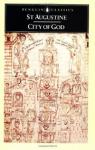
The City of Godcity of god by St. Augustine. Yes, I know I’m a bit late on the game with this one, but I finally made it to Augustine’s classic defense of Christianity and polemic against the pagans earlier this year and was astonished. I think I wrote about four or five different pieces, but suffice it to say that it proved for me, once again, that time spent with Augustine at any point in your theological career is never wasted.

sondereggerSystematic Theology: The Doctrine of God, Volume 1 by Katherine Sonderegger. I’ve already joined the choruses praising Sonderegger for her brilliant first volume on the doctrine of God in this promising project. I certainly don’t follow her in all of her conclusions, but the creativity, pastoral, literary, and theological mastery at work, make this a unique delight. More please!

MullerPost-Reformation Reformed Dogmatics, 4 Volumes by Richard A. Muller. I wrote about this before, but this year I made it through all four volumes of Muller’s treatment of the Post-Reformation dogmaticians on theological method, doctrine of God, Scripture, and Trinity. They were illuminating volumes, not only from a historical angle, but a theological one. I’ll be returning to these constantly in the future.

The Domain of the Word: Scripture and Theological ReasonDomain of the word by John Webster. This collection of essays by eminent theologian John Webster are a treasure trove of theological insight. While not necessarily a consistent, long-range argument, Webster’s treatments of everything from the nature of reason, Scriptural inspiration, principles of systematic theology, theology’s relation to the arts, and the intellectual virtues, are a must-have for students and practioners of the theological craft.

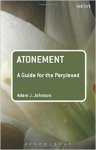
atonementAtonement: A Guide for the Perplexed by Adam Johnson. I’ve read a lot of atonement theology this year, but Johnson’s little volume stands out among them. It’s irenic, multi-faceted, and chocked full of theological insight and good sense. As I’ve said before, it’s not simply a book of atonement theology, but also an introduction to how to read and do atonement theology that both shows and tells. It’s a real gem that I can’t recommend highly enough.

Finally, a special category, I read a fantastic piece of nerdy, fantasy fiction this year: The Name of the Wind which is book one in Patrick Rothfuss’ Kingkiller Chronicles. Magic, mystery, humor, love, loss, and all that jazz. I can’t wait to jump into volume two once my studies abate over Christmas break.

So there you have it. My top five and a fiction bonus.

Soli Deo Gloria

Really Elisha? Bears Attacking Children? This is Why We Can’t Have Nice Things

bearsOne of the weirdest stories in the narratives of the Old Testament comes at the end of 2 Kings 2 with Elisha and the bears. The deal is that the prophet Elisha has just been anointed by God through his old master the prophet Elijah to succeed him after God took Elijah up to heaven in a vision of God’s holy chariot. Just prophet stuff. In any case, 2 Kings tells of a number of incidents where Elisha is confirming his role as God’s holy prophet by performing similar, miraculous works as Elijah did. As he’s going along, this weird thing happens:

He went up from there to Bethel, and while he was going up on the way, some small boys came out of the city and jeered at him, saying, “Go up, you baldhead! Go up, you baldhead!” And he turned around, and when he saw them, he cursed them in the name of the LORD. And two she-bears came out of the woods and tore forty-two of the boys. From there he went on to Mount Carmel, and from there he returned to Samaria. (2 Kings 2:23-25)

Now, there are several reactions you can have to this story about bears mauling youths for bald jokes. First, if you’re a teenager or something, you can think, “Sweet! Bears!” Or, as a balding man, you can think, “Well, there’s justice.” Finally, as just a normal person you can think, “Whoa. Seriously? Bears? Against children? For a bald joke? That’s fairly horrifying.” Of course, if you’re prone to trust the prophets of Scripture as being not terrible, various answers start to suggest themselves as to whether one should really take the text at face value.

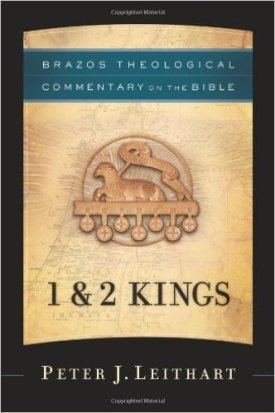
For instance, you might wonder, “Are those ‘little boys’ really ‘little boys’? What if that’s a translation issue and we’re talking about a street gang or something? And is this really about a bald joke, or is something else going on here? Maybe the 3,000 year cultural gap is playing with our perceptions?” Once again, I ran across a stimulating passage in Peter Leithart’s commentary on 1 & 2 Kings, shedding some contextual light on the bizarre passage.

One point I have to make before sharing, though, is that Leithart has earlier identified a key typology or resemblance in the story of Elijah and Elisha with that of Moses and Joshua. Elisha is to Elijah as Joshua is to Moses, the latter carrying on the conquest into the Holy Land after Moses leads the people out of slavery to idolatry and gives them the Law on the mountain. Alright, back to the bears:

In 2:3 and 2:5, the sons of prophets inform Elisha that “Yahweh will take your, master from over your head today”. Elijah is Elisha’s protector, guide, and “head,” and Elisha is about to lose that leadership. As Elisha’s head, Elijah enters heaven, while Elisha continues the work of his master in Israel, just as the church’s head is enthroned victorious in heaven as it suffers, serves, and overcomes on earth (Eph. 1:20-23).

This repeated statement from the sons of the prophets helps to explain the story at the end of 2 Kgs. 2, one of the most controversial passages in Scripture. The phrase “little boys” in 2:23 can mean “young men” or “subordinates.” Bethel is the site of Jeroboam I’s golden calf shrine, and the context suggests that these are not children, but “Levites” of the idolatrous shrine. Elisha’s curse is an act of warfare, a Joshua-like attack on a center of idolatry. This is reinforced by the chiastic structure of the chapter:

A removing the “head” (2:1-6)
B fifty men (2:7)
C cross Jordan: Elijah divides waters (2:8)
D Elisha requests spirit (2:9-10)
E chariot separates them (2:11a)
F Elijah by whirlwind into heaven (2: lib)
E’ Elisha sees, calls to chariot, tears clothes (2:12)
D’ mantle (2:13)
C’ divides water (2:14)
B’ fifty men (2:15-18)
A’ bald head (2:23-25)

The young men mock Elisha because his “hairy head,” his “baal of hair” (1:8), is taken from him. Perhaps he literally shaves his head in mourning over Elijah’s departure, but it is also possible that they are mocking Elisha because they assume he is unprotected without Elijah. Their taunt to Elisha to “ascend” also points back to Elijah: “You know where you can go, Elisha!” Elisha again demonstrates that he bears the spirit of Elijah, which is the Spirit of Yahweh, for he can call out bears from the forest as readily as Elijah can call out fire from heaven to consume the soldiers of Ahaziah…., as readily as Yahweh can unleash lions against disobedient prophets (1 Kgs. 13:20-25; cf. Lev. 26:22). –1 & 2 Kings, 175-176

Elisha’s opponents are not toddlers with bold mouths, then, but a large band of hostile, adult priests serving the idolatrous shrine of the Northern Temple in Israel. For myself, I believe the context of the earlier story of King Ahaziah sending out a troop of soldiers to attack and lay hands on the prophet of God, Elijah, makes it likely that this “taunt” was more than a simple act of name-calling, but an expression of hostility, spiritual warfare, and a present threat to Elisha’s person. This is not an exaggeration when considering the various, deadly fates the prophets of Israel had suffered throughout her history and even Elijah’s own generation in the time of Ahab and Jezebel.

Of course, this may not solve all the difficulty of the passage for you. I’m not sure it does for me, either. It is one more example, though, of what a willingness to sit and wrestle with the Scriptures instead of simply turning from them when they’re difficult or offensive. That’s not a recipe for accepting any and every interpretation that comes along. There are a lot of bad ones that, in an attempt to “preserve” the Scriptures, end up betraying the character of God. All the same, trusting in the character of God as revealed in Scripture will give us the interpretive resilience needed to struggle with the text long enough to win a blessing and gain new light for the path.

Soli Deo Gloria

Update: As it turns out, my friend Seth T. Hahne has written on the passage in a similar and complementary way, adding some broader canonical considerations that reinforce the reading offered above.

Mayors and Prophets: Both Servants of the Lord in Tricky Times

kingsAhab’s reign in the Kingdom of Israel was one of the most godless in her whole history. And that’s saying something. Queen Jezebel has instituted worship of the Baals and ordered all the prophets of Yahweh slaughtered. The godlessness is so rampant that Yahweh has the prophet Elijah proclaim a drought and a famine in the land of Israel, in response. If Jezebel and Ahab want the word of Yahweh to dry up in the land, they will suffer the consequences.

What does it look like to serve Yahweh faithfully in this context? In the first half of 1 Kings chapter 18, right before Elijah’s confrontation with the prophets of Baal on Mt. Carmel, we’re given a portrait of two quite distinct servants of Yahweh: Obadiah, the household manager in Ahab’s court, and Elijah, the iconoclastic prophet.

In his absurdly insightful theological commentary, Peter Leithart sheds some light on the distinct roles they play in the Yahweh’s retinue:

As “mayor of the palace” Obadiah holds a high position in Israel, with responsibility for Ahab’s palace, estates, and livestock. Both Elijah and Obadiah (whose name means “servant of Yah”) are faithful servants of Yahweh, the God of Israel, but radically differ in their position and mode of service. Elijah confronts Ahab from outside the court, while Obadiah works for the preservation of the prophets–and hence the preservation of the word of Yahweh–from within Ahab’s court, subverting the official policies of the court even while acting as chief steward. Not every faithful believer is called to be an Elijah. Many are called to the tricky work of remaining faithful in a faithless context, to the business of serving Elijah and Yahweh as “master” (18:7) and serving Ahab as “master” (18:8) Obadiah’s position is not merely tricky; it is dangerous. A false shepherd, Ahab tolerates Jezebel “cutting off”…prophets (18:4), but is reluctant to “cut off” any of his cattle…(18:5). Jezebel the Baal worshiper is willing to tolerate golden calves and other forms of idolatrous worship, but she cannot tolerate the intolerance of Yahweh worshipers.

1 & 2 Kings, 133-134

Elijah is obviously the hero of the whole narrative and one of the central figures in both 1 & Kings. Elijah has the word of Yahweh come to him personally. Elijah courageously calls out Ahab, the king of Israel in the name of the true God. Elijah faces off with the prophets on the mountain, calling down fire from Yahweh in the heavens. Elijah is a model of prophetic faithfulness, the willingness to stand outside the compromising systems of empire and power, depending solely on the Yahweh’s protection and preservation to carry out his task.

And yet, there stands Obadiah–the skittish, possibly compromised, bureaucrat. Because, think about it–wouldn’t many of us on the purist end (a rather exaggerated Neo-Anabaptist, possibly), be tempted to consider him compromised? Isn’t he working for a godless king in a regime that seems actively hostile the will of Yahweh? Aren’t followers of Yahweh to remain pure and set apart from evil-doers and the systems of power that they run? To avoid colluding with Empire? Doesn’t running Ahab’s household count?

Well, according to the political theology of 1 & 2 Kings, it’s only because of Obadiah’s willingness to stay within the regime that he was able to successfully resist it and save some of Yahweh’s prophets, ensuring that when Elijah’s showdown happens and the prophets of Baal are overthrown, there’s someone around to preach God’s Word. Obadiah is able to exercise wisdom and rebel from within, only because he stays within.

In times of trial like those facing God’s people in the times of Ahab, the danger is the Elijahs and Obadiahs God has called to serve him might not recognize each other’s distinct calls. Elijah might be tempted to scorn the cowardice and compromise of Obadiah’s wisdom in difficult places. Obadiah, meanwhile, might be tempted to bemoan and begrudge the “trouble” brought on by the rash words and confrontational stance of Elijah, who seems to paint everything in black and white with no shades of grey. And yet that would be a mistake, for God’s wisdom can employ both prophet and bureaucrat to preserve and proclaim his Word, each according to the gifts and privileges that God had given them. In a sense, we need Paul’s theology of the body and the gifts (Romans 12; 1 Corinthians 12). applied outward into the worldly vocations that the citizens of the Kingdom must engage in.

Texts like this are obviously relevant in the face of a culture that is increasingly intolerant of the “intolerance” or exclusivity of Christian values and truth claims. Don’t worry, I’m not breaking out the “p”-word and claiming that Christians will have to face firing squads soon, or something like that. All the same, let’s not be naive in the other direction. If there are Chicken Littles running around proclaiming the imminent descent of the heavens, there are also ostriches with their heads in the sand. Or worse, those who refuse to see any difficulties ahead because, well, you know, Jezebel “has a point.” Trouble will come and, indeed, has always come for the people of God.

For that reason, we need deep, biblical wisdom like that of the book of 1 & 2 Kings, read with an eye to the horizon. As Paul says, “Now these things happened to them as an example, but they were written down for our instruction, on whom the end of the ages has come” (1 Corinthians 10:11). These things happened back then and there, but since the patterns of the world’s sin repeat in history, these texts are still used by the Spirit of God “for teaching, for reproof, for correction, and for training in righteousness, that the man of God may be complete, equipped for every good work” (2 Timothy 3:16-17).

Soli Deo Gloria

Abraham Kuyper on the Sovereignty of God As Political Limit

Kuyper Our ProgramDutch Theologian and Statesmen Abraham Kuyper had a particular knack for taking high-level political theology and–instead of keeping it at an academic level–putting it into popular form for the benefit of the Dutch masses, the middle-class citizens he was burdened to shepherd and lead in both church and state. In many ways, that’s the burden of his work Our Program: A Christian Political Manifesto, the first volume of the beautiful collection of Kuyper’s works recently translated by the Kuyper Translation Society in collaboration with the Acton Institute and Lexham Press.

In this manifesto, he attempts to comprehensively lay out a political program rooted in the Calvinist worldview in contrast to the secular, liberal, Modernists inspired by the French Revolution. Through a commentary on the platform of his political party, Kuyper winsomely and popularly articulates a vision of the political life of the nation moving easily from depth-level political theology to the specific policy proposals needed for the good of the people.

Witness, for instance, this rather homely explanation of the concept of sovereignty:

Sovereignty in an absolute sense occurs only when there is an authority that has no other authority over it, that always commands and never obeys, that does not admit of restrictions or allow competition, and that is single and undivided for all that has breath.

I am sovereign in an absolute sense only over that with which I can do what I please. Since as a human being I never possess such unlimited power over anything, it is out of the question that I shall ever possess original sovereignty.
Just because I can draw or write anything at all on the piece of paper in front of me still does not mean that I am a sovereign over that piece of paper. For that paper is hard or soft, fibrous or smooth, of a certain thickness and length, and so on, and I am bound to all these properties. They restrict my power and force me to conform to them. To be sovereign in this case I would personally have to be the maker of that paper, this pen, and that ink, and I would have to make them each time again in order to have them serve my purpose and remove every impediment to my will.

But even if you think that this would be conceivable, I still would not have sovereign power over that piece of paper, since in making it I would find myself bound by the materials and the tools commonly used for the papermaking process, and I would often bump up against the limits of what is possible when I try to introduce still one more improvement or remove one last flaw. I would have to have complete control over those raw materials and those instruments. Assume for a moment that even if that were possible and that in the making of pen and ink I disposed over the same creative freedom, then just to be sovereign in the mechanics of writing I would have to be able to freely determine or alter the laws governing the adhesion of the ink to the nib and the flow of the liquid onto the paper.
-Abraham Kuyper, Our Program: A Christian Political Manifesto.  (pp. 16–17)

From this basis, Kuyper carefully and clearly moves on to establish the limits political power whether of the ruler over the state, the father over the family, or man over beast, and even between the nations. Any who tries to cross these natural boundaries, is transgressing on the only absolute sovereignty of God from whom all natural power is derived and who alone has this power over all and stands as a limit against all authoritarianism. From there, Kuyper contrasts what this understanding of God’s sovereignty means for political sovereignty and the varieties of political visions on offer, and even the specific challenges of Dutch national life.

Obviously, the work shows its time and place. Many of the specific policy proposals of Kuyper’s program are suited only to the Netherlands, with its unique governing structure, national character, and geo-political position at the turn of the century. For one thing, forming an explicitly Christian political party in the United States is simply unworkable. All the same, Kuyper’s program stands as a model for current political theologians in a number of ways.

First, as can be witnessed in the sketch above, much of the theology stands the text of time because it is rooted in the trans-historical truths of the gospel, such as its unique anthropology and eschatology. Kuyper shows time and again the way–without desiring or advocating a “theocracy”–specifically Christian theology ought to inform our political engagement.

Second, Kuyper has a strong sense of both what the program is for as much as what it is against. This is a welcome change from so much negatively-framed political discourse flowing from Evangelical theological camps today. Kuyper’s program was not a retreat, nor a merely conservative reaction, but a positive vision for the common good of the Dutch people.

Finally, as already mentioned, its specificity to the time and place in which Kuyper wrote is an obstacle towards its immediate application. All the same, it can serve as a model for those looking to make their political theology concrete. Upper-level theory is good and necessary, but so is actual policy implementation. Obviously, this is not the step that most of us will be looking to make, as that requires a certain level of technical proficiency in policy matters most do not possess. Still, for those who do, Kuyper’s work will be a stimulating and challenging historical voice to engage with.

From all that I’ve read so far, I’m quite looking forward to the rest of the Kuyper series. And you should be as well.

For more info, go ahead and go to AbrahamKuyper.com. Also, for electronic types, the whole set is available on Logos.

Soli Deo Gloria

My Three Study Bibles

study bible“Of making many books, there is no end.” (Ecclesiastes 12:12)

To read this, you’d think the Teacher was perusing a recent publishing catalogue, skimming through the “study Bible” section. Each year it seems that another one, or two, or ten are printed by the same publishing house, aimed at an ever narrower slice of the Evangelical consumer base. First, it’s the “Patriots” Bible. Then, it’s the Eco-study Bible. Or the Student’s Study Bible. Or the Red-headed, Left-handed, Immigrant’s Study Bible. And the standard-issue, ESV Study Bible for New Calvinists looking to up their game. The longer (and more cognizant) I’ve been around the Evangelical world, the easier it’s been to become cynical about the whole industry and the concept as a whole.

But then I remember my own study Bibles and I have to tap the breaks on my cynicism ever so slightly. You see, I’ve had three study Bibles in my time, each quite crucial in my spiritual and intellectual development.

First, when I was a sophomore in high school, I started a break-time Bible study with my friend. Initially, we just began to meet at one of the tables to read the Psalms together and pray. Then, more and more people began to join us, so we had to move inside to a classroom to read. Pretty soon, I got the idea to actually start reading a bit and saying something about what we read. Novel idea, I know. That’s when I asked my parents for a study Bible–because as many sermons as I heard, when I got to Romans and Paul started dropping “circumcision” all over the place, I knew I was out of my league.

So my parents got me the NIV Life Application Study Bible. Of course, being a life application Bible, it wasn’t very in-depth on doctrine or massive exegetical insights. All the same, for a high schooler looking to learn enough to share some insights with 10 other high schoolers at break, it was eye-opening. I knew the Bible was the Word of God, but who knew so much of it could speak to my daily issues? In any case, that was my Bible all through the rest of high school and served me well.

Then, came college. Without going into a lot of details, college started out as a dry time for me. Even though I was still in church, I was frustrated at God for some goods I thought he had failed to deliver even though he never promised them. Which is typical. In any case, around Christmas, I knew something had to change, so I started going to a new church and asked my parents for the straight NIV Study Bible that focused more on historical and intertextual notes. And they came through and bought it for me. And I started reading it every day. I’d pray, read the text, and the notes and even began looking up the cross-references. I’d make my own illegible, incorrect notes as well. And things started to come alive for me.

Of course, there were a variety of factors involved at the time including the new church, an iPod (no joke), and a Bible study with some caring dudes. All the same, when my life caught fire again, along with a call to ministry, one of the things it involved was a mass consumption of Scripture. I basically tore through that study Bible. Thankfully, at the time, I was hungry for the Bible as the Bible, so I wasn’t just skipping to the study note section (which is all too easy to do for some). All the same, I learned so much just by reading the text and all the helpful explanatory notes.

I’m older now, a bit more theologically-experienced, and I get the dangers of printing text alongside the text. But seriously, when I was younger, with no access to a theological library, or commentaries, or articles the way I was later in seminary, at church, and now back in seminary, those notes were an entry-way into a new exegetical world. And so, by the end of college, my second study Bible was tore up. I had to shelve it because of how jacked up it had gotten from overuse and carrying it around everywhere.

Finally, when I hit my MA, I got a third kind of study Bible. As it was more of an academic degree, I had to purchase an SBL approved NRSV one. So I snagged myself a HarperCollins Study Bible—which I preferred to the New Oxford Annotated one—and I got to work. This was a different experience, of course. There was almost no life application. Nor was an overly-“theological” approach to commentary the norm. All the same, it proved a trusty entry-way as well, into a more historical and academic approach to the text (with some of the common, boilerplate, historical-critical assumptions) that I would have to master if I was going to get through the degree. So I put some mileage on that one, as well.

Why go into all this? Well, for one thing it’s nostalgic for me to remember. Second, I suppose it’s to remind myself that a number of the things that it’s easy for me to get cynical about the more I press on in my faith (simple, Evangelicalish things that are easily distorted and vulgarized through marketing), had some positive purpose for people. And they probably still do. Taste-wise nor in theological temperament, I don’t connect to some of the worship anthems I used to, but there are a great many of them that are theologically sound and spiritually-salutary songs that I’d be wrong to scorn or write off.

For that reason, I can imagine another young man headed to the ministry deriving great insight from his first study Bible. Or the mom and dad without time to take a class in advanced hermeneutics, still looking to grow in their knowledge of Scripture in order to instruct their children in the Word of life. Or the small group, Bible study leader. Or the missionary without a book budget who needs a teaching aid through the Old Testament contextual issues. And so on.

So, I suppose, for all their possible flaws, I’m saying I loved my study Bibles and I’d caution against the sort of easy scorn those of us with a stack of commentaries on our shelves might be tempted towards. Though there are real dangers to be avoided and some egregious marketing practices to be condemned, there is real, spiritual value in a good study Bible.

Soli Deo Gloria

Can I Drag That Into Church?

snow bootsThis last Sunday was the first time I ever went to church in the snow. Chicagoland had its first snowfall of the season on Friday night continuing into Saturday, immediately transforming the landscape, covering the last vestiges of autumn red, gold, and hints of green, into a dense carpet of white powder. For a California boy, it was all a bit magical. I’d never seen snow fall before–certainly not outside my window.

Of course, that also means I’ve never dealt with snow as a reality of life. Because it is a reality of life out here. So much so that you have to get special gear for it. Not only jackets, gloves, and boots, but gear for your car like ice-scrapers for your windows and shovels to move the all the snow the snow-plow pushed up against your car in the morning. And there’s not just one kind of snow, the lovely white powder. There’s also slush. And Ice hiding under the powder and slush. And the salt, that gets poured out to get rid of the powder and the slush and the ice.

Needless to say, it can get a bit messy, especially when you’re trying to walk indoors. No matter how hard you try, or how good your boots or doormat are, it’s difficult not to track your mess inside, without taking off your shoes altogether. And even then, if the snow has been kicked up on the legs of your pants, it’s just inevitable.

Which brings me to church.

Every week at church one of our pastors leads us through a time of corporate confession of sins and an assurance of pardon. This week my pastor Jason noticed the tentative way people were walking into church. “Are we allowed to come in like this on the clean wood floors? Is all the salt, slush, dirt, and powder too much of a mess for church this morning?”

He pointed out that’s the way all too many of us walk into church every week: “Am I allowed to come in like this? Is this mess okay in here? Can I come sit in the pews with all the slush, grime, and filth from my life? Is this sin too dirty to clean up? Is my mess going to stain the carpet? Do I have to make sure I’m gotten every single speck off before I walk through the door?”

The good news of the gospel is that God’s church is a place of welcome because the God of the Gospel is a hospitable God. Our forgiving Father does not require you to clean up your mess to come through the door. In fact, in the gospel, he has sent his Son out into the highways and byways to collect you from the cold and the slush you’ve been wearily trodding in. In baptism, he himself gives you a new set of clothes–his own garment of righteousness to clothe you. And he sits you down to be warmed by the gift of the fire of the Holy Spirit. Finally, in the Lord’s Supper, he feasts you on the bread of life and the cup of the new covenant.

So to answer the question, “Can I drag this dirt into church?” Yes! Of course, you can. That’s the only way anybody ever makes it through the door.

Soli Deo Gloria