God is a Spiritual Being. But What Does that Even Mean?

sinai

Israel never saw God’s form at Sinai, only smoke, fire, and lightning.

Q-4: What is God?

A: God is a Spirit, infinite, eternal, and unchangeable, in his being, wisdom, power, holiness, justice, goodness, and truth.

-Westminster Shorter Catechism

I don’t think most of us give thought to the fact that God is a Spirit (John 4:24). I know I hadn’t much until I was forced to think through some of the metaphysics of spiritual beings in my class on medieval philosophy in college (Angels, Humans, and Evil, I think it was called). In any case, we discussed the differences between angels and humans (at least according to Aquinas) and one of the main ones was that angels are pure spirits, intelligences with no bodies. So what does it mean for God to be spiritual?

Thomas Watson, in his sermon commenting on this question in Body of Practical Divinity states:

By a spirit I mean, God is an immaterial substance, of a pure, subtile, unmixed essence, not compounded of body and soul, without all extension of parts.

God being spirit means that God is not material, not bodily, not made up of parts you can pull apart and put back together. Sounds simple enough.

Angels and Souls are Spiritual, though, too? Some Clarifications

Still, if this is what it means for God to be spiritual, then that raises the question that occurred to me in college. If God is an immaterial substance, and angels are immaterial substances, what distinguishes them? Is God just bigger? Do they run into each others? What’s the difference? Watson, again, anticipates the question:

The angels are spirits. We must distinguish spirits. The angels are created, God is a Spirit uncreated. The angels are finite, and capable of being annihilated; the same power which made them is able to reduce them to their first nothing; but God is an infinite Spirit. The angels are confined spirits, they cannot be duobus locis simul, but are confined to a place; but God is an immense Spirit, and in all places at once. The angels, though spirits, are but ministering spirits (Heb 1:14). Though they are spirits, they are servants. God is a super-excellent Spirit, the Father of spirits (Heb 12:2).

So, apparently, there are a few. First, and most important is that God is Creator and angels are created. For that reason, God infinite, without boundaries or limits to his power, location, or anything else. Angels are still created beings, finite in knowledge, power, and yes, even location. They are upheld in their existence by God at every moment and could wink out of existence should he decide to remove his hand. In Christian theology, you always have to reckon with the Creator/creature distinction. Mess with that, and just about everything else falls out of place.

Okay, well, what about human souls? Sure, humans are soul + body, but what if I’m feeling extra dualist today and I want to play up the spirituality of the soul? What distinguishes human spirits from God’s Spirit, especially since humans are God’s Image. Apparently heretics like Osiander and Servetus actually thought the soul was the essence of God communicated to human beings. Watson says that’s silly. We’re made in his “image and likeness.” God’s essence is incommunicable, but “When it is said the soul is a spirit, it means that God has made it intelligible, and stamped upon it his likeness, not his essence.”

But what about this whole “partakers of the divine nature” business in 2 Peter 1:4? Well, here Watson gives a standard Reformed response:

We are made partakers of the divine nature, not by identity or union with the divine essence, but by a transformation into the divine likeness.

Okay, that’s clear enough so far. But say I know my Old Testament pretty well. Do you know how often we read about people seeing God walking around, using his hands, sitting on a throne, and all kinds of corporeal, physical stuff? Well, yes, I do. And so does Watson. In response to that charge made by a party named the “Anthropomorphites” who believe that God has a physical body, he gives their exegesis and hermeneutics a little tune-up.

First, he lays out the clearer statements of Scripture about the nature of bodies and spirits according to Jesus and the rest of Scripture:

It is contrary to the nature of a spirit to have a corporeal substance. ‘Handle me, and see me: for a spirit has not flesh and bones, as ye see me have.’ (Luke 24:49)…Now that God is a Spirit, and is not capable of bodily shape or substance, is clear, for a body is visible, but God is invisible; therefore he is a Spirit. ‘Whom no man has seen, nor can see’ (I Tim 6:16.), not by an eye of sense. A body is terminated, can be but in one place at once, but God is everywhere, in all places at once; therefore he is a Spirit (Psa 139:9, 8.). God’s centre is everywhere, and his circumference is nowhere. A body being compounded of integral parts may be dissolved; quicquid divisibile est corruptibile: but the Godhead is not capable of dissolution, he can have no end from whom all things have their beginning. So that it clearly appears that God is a Spirit, which adds to the perfection of his nature.

If this is true, then what are we to do with the language of Scripture?

Bodily members are ascribed to God, not properly, but metaphorically, and in a borrowed sense. By the right hand of the Lord is meant his power; by the eyes of the Lord is meant his wisdom.

This is an example of allowing Scripture to clarify Scripture, using the direct statements on the nature of bodies and so forth, to then set the parameters for how we read other texts. On this reading, Scripture gives a clear directive to read these passages as communicating truth, but figuratively, not literally. Again, that seems simple enough.

But Why Does it Matter?

Okay, with all that said, who cares? Why is the “spirituality” of God an important point to understand? It doesn’t immediately seem to be emphasized in Scripture, even if it seems to be taught. Of what use is it for us to know and dwell on this reality?

Well, for starters, that’s one of those things that makes the Incarnation all that more amazing. The God who is immaterial, unbounded, and so forth, deigns, in Christ, to assume or add to himself a body, which is not natural to him. That’s just part of the glory of the Gospel–God becomes what is not God in order to reconcile us to himself.

But Watson presses beyond this to draw out a number of implications I can only briefly touch on.

First, Watson says that if God is spiritual, that means he’s impassible–not capable of being harmed, overcome, or anything human foes might think to do to him. What are you going to do? Chuck a spear at him? His essence is beyond all harm. That is grounds for worship and comfort.

Second, if God is Spirit, then Watson thinks that should put image-worship or veneration to bed. God is Spirit and no likeness of him can be made suitable to his perfection.

 ‘To whom then will ye liken God, or what likeness will ye compare unto him?’ (Isa 40:18)How can you paint the Deity? Can we make an image of that which we never saw? Ye saw no similitude. God is a Spirit.

How are we to worship and conceive of him, then? Here Watson gives a Christologically-focused answer:

We must conceive of him spiritually. In his attributes; his holiness, justice, and goodness, which are the beams by which his divine nature shines forth. We must conceive of him as he is in Christ. ‘Christ is the image of the invisible God’ (Col 1:15). Set the eyes of your faith on Christ as God-man. In Christ we see some sparklings of the divine glory; in him there is the exact resemblance of all his Father’s excellencies. The wisdom, love, and holiness of God the Father, shine forth in Christ.‘He that has seen me has seen the Father’ (John 14:4).

Third, “If God be a Spirit, it shows us, that the more spiritual we grow, the more we grow like to God.” To turn your eyes to God and your desires to the heavens away from mere earthly concerns is to grow in the likeness of God.

Fourth, God’s being a Spirit means that our worship ought to spiritual too. For Watson that means a number of things. (1) Worship is without ceremonies, as the OT ceremonies have been abrogated, so why return to the shadows with man-made replacements? (2) It is to worship him with faith in the blood of the Messiah, with zeal, with prayer, with true consecration, without the vain pretenses of outward shows.

Fifth, this should move us to ask for the Spirit that we may become more spiritual:

The essence of God is incommunicable; but not the motions, the presence and influences of his Spirit. When the sun shines in a room, not the body of the sun is there, but the light, heat, and influence of the sun.

Sixth, Watson reminds us that if God is Spiritual, shouldn’t we expect his blessings to be spiritual?

This may comfort a Christian in all his labours and sufferings; he lays out himself for God, and has little or no reward here; but remember, God, who is a Spirit, will give spiritual rewards, a sight of his face in heaven, white robes, a weight of glory. Be not then weary of God’s service; think of the spiritual reward, a crown of glory which fadeth not away

We neglect the spiritual nature of God to our own detriment. We miss out on part of the glory of Jesus in the gospel, the nature of true worship, and so much more.

Watson’s meditations remind us, once again, that everything about God is worthy of worship. Nothing we learn about Father, Son, and Spirit can fail to contribute to our love of God or his glory if we think it through with care and prayer.

Soli Deo Gloria
 

You Can’t Sideline the Trinity (Or, Realize that Every Sunday is Trinity Sunday)

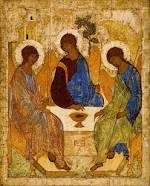
trinityIn closing his tremendous section in the Reformed Dogmatics Volume 2: God and Creation on the dogma of the Trinity–God’s being one being, yet three persons–Bavinck gives a number of arguments for importance of the Trinity. That God is Father, Son, and Spirit gives us the truth of the fact that God is a living God without pulling us into the various errors of pantheism, monism, and deism (p. 331). He is the one who is Three whose internal life is truly lively with the generation of the Son of the Father and the procession of the Spirit from them both. What’s more, out of this fullness  of eternal life consisting in mutual glorification, blessedness, is the ground for a doctrine of creation that, again, doesn’t fall into those various errors. Instead, because God is triune, out of the movement and perfection of his own inner life he can make a world that is not himself, upon which he is not dependent or in needy, yet can truly be an object of his love and self-communication (p. 332-333).

Beyond these meta-theological questions, though, Bavinck says that this doctrine is of “incalculable importance” for the Christian religion–the actual lived, practice of knowing and worshipping the True and Living God. Bavinck states:

The entire Christian belief system, all of special revelation, stands or falls with the confession of God’s Trinity. It is the core of the Christian faith, the root of all its dogmas, the basic content of the new covenant. It was this religious Christian interest, accordingly, that sparked the development of the church’s doctrine of the Trinity.

This isn’t just a matter of philosophic speculation, or having our doctrinal ducks in a row so that our early church bishops could have something to fight about and feel important. No, deep down, every Christian who properly owns the name knows that something more fundamental, more primary, valuable than a tidy metaphysical set-up is at stake; salvation, the history of redemption itself, hangs in the balance:

This is so strongly felt that all who value being called a Christian recognize and believe in a kind of Trinity. The profoundest question implicit in every Christian creed and system of theology is how God can be both one and yet three. Christian truth in all its parts comes into its own to a lesser or greater extent depending on how that question is answered. In the doctrine of the Trinity we feel the heartbeat of God’s entire revelation for the redemption of humanity. Though foreshadowed in the Old Testament, it only comes to light fully in Christ. Religion can be satisfied with nothing less than God himself. Now in Christ God himself comes out to us, and in the Holy Spirit he communicates himself to us. The work of re-creation is trinitarian through and through. From God, through God, and in God are all things. Re-creation is one divine work from beginning to end, yet it can be described in terms of three agents: it is fully accomplished by the love of the Father, the grace of the Son, and the communion of the Holy Spirit.

Not only does the question of the Trinity matter for the broader history of redemption, but God being Father, Son, and Holy Spirit matters at a personal level too. It is something that a Christian ought to feel in their own “flesh and bones”, so to speak. The Trinity is essential to the life of faith:

A Christian’s faith life, accordingly, points back to three generative principles. “We know all these things,” says article 9 of the Belgic Confession, “from the testimonies of holy Scripture, as well as from the operations of the persons, especially from those we feel within ourselves.” We know ourselves to be children of the Father, redeemed by the Son, and in communion with both through the Holy Spirit. Every blessing, both spiritual and material, comes to us from the triune God. In that name we are baptized; that name sums up our confession; that name is the source of all the blessings that come down to us; to that name we will forever bring thanksgiving and honor; in that name we find rest for our souls and peace for our conscience. Christians have a God above them, before them, and within them. Our salvation, both in this life and in the life to come, is bound up with the doctrine of the Trinity; yet we grant that we cannot determine the measure of knowledge—also of this mystery—needed for a true and sincere faith.

I’m writing this post today because, in the broader church calendar, this is “Trinity Sunday”, a Sunday traditionally set apart for preaching on, teaching about, and honoring God as Trinity. And there is wisdom setting aside a Sunday to explicitly do so. The one caution I would throw up is to say is this: take care that we don’t think the doctrine of the Trinity is one we can save for one Sunday a year, to reflect on. It’s not to be sidelined, or put in the corner again until next year, as we preach on the “main things” of the gospel or the Christian life.

Why? Because in all of Christianity, in the gospel, we have to do with God–restoring right relationship with him, living before him, being transformed into his Image. But what we must remember is that there is no other God than He who is Father, Son, and Holy Spirit. In other words, today might be Trinity Sunday, but every Sunday we have to do with the things of the gospel, we have to do with the things of the Trinity.

Soli Deo Gloria

Edwards: Heaven is a World of Triune Love (W/ Some Help From Strobel)

Cheesy

Cheesy “Heaven” Image, because nobody clicks on pages with Jonathan Edwards.

Recently, I’ve been on something a Jonathan Edwards kick. Though I’d been kind of interested in Edwards before–his The End for Which God Created the World and a collection of his sermons exercised a deep influence on me a few years ago–I hadn’t really dug deeply into his voluminous and wide-ranging works (sermons, treatises, miscellanies), partially because I felt I needed a guide into them. Some might think, “A guide for Edwards? Really?” Yup.

See, generations of U.S. History students have been spoiled for reading Jonathan Edwards simply because they’ve only been exposed to hostile expositions of his classic Great Awakening sermon “Sinner in the Hands of an Angry God” at the age of 15, or so. The unfortunate picture that emerges is of a hell-obsessed, brimstone preacher, with little to no theological imagination except in expositing the tortures of the damned. Push a little beyond that, though, and you come to find out the revival preacher was also a creative theologian, pastor, and philosophical innovator of the highest order. Indeed, according to many intellectual historians, it’s likely he’s the first and most original theologian the Americas ever produced, capable of being ranked among the greatest intellects of his age across the Atlantic.  Theologian Robert Jenson, himself no slouch, has called him “America’s Theologian.”

As it turns out, Edwards was rather metaphysically-sophisticated, and, in some places, kind of a quirky odd-ball in the Reformed tradition, which plays out in places you wouldn’t expect. For that reason, I decided to get my hands on Kyle Strobel’s Jonathan Edwards’ Theology: A Reinterpetation. It’s been an eye-opener. Thing is, this isn’t just a modest field-guide for the novice reader. Strobel’s work comes in the midst of a recent wave of Edwards scholarship in the blossoming field of “Edwards Studies”, with an aim to correct a lot of the discussion that’s gone before, and reset a lot of the conversation surrounding the basic shape of Edwards’ theology. Now, from where I stand as a total non-expert and unqualified observer, I can’t judge how much he does that. What I can say is that’s been a fascinating, helpful read so far.

At the heart of Strobel’s argument–insofar as I’m following it–is that Edwards’ Reformed theology (not philosophy, mind you), is a vision of the Triune God whose fundamental existence is one of “personal beatific delight.” The God from whom are all things and to whom all things are oriented, is the one whose inner life is that of the Father and Son’s mutual gaze in the delight of the Spirit. The Father’s own knowledge is the Son whom he loves and delights in through the love that is the Spirit. But it does not end with the Father’s love of the Son, in the Spirit. As he writes in Heaven is a World of Love:

And the Son of God is not only the infinite object of love, but he is also an infinite subject of it. He is not only the beloved of the Father, but he infinitely loves him. The infinite essential love of God, is, as it were, an infinite and eternal, mutual, holy, energy between the Father and the Son: a pure and holy act, whereby the Deity becomes, as it were, one infinite and unchangeable emotion of love proceeding from both the Father and the Son. This divine love has its seat in the Deity, as it is exercised within the Deity, or in God toward himself.

From this eternally happy and glorious self-knowledge and love, flows God’s purpose in creation and the history of redemption: God’s benevolent self-glorification in the communication of the overflow of that good to creatures. Everything else from Edwards’ quirky take on the attributes of God, his understanding of heaven, earth, and hell, the structure of redemptive history, the nature of union, justification, sanctification, and glorification, and so on, has its ground in Edwards’ irrefragably trinitarian theology.

And yes, thinking these things through with Edwards and Strobel really is as heady, intoxicating, difficult, and rewarding it sounds.

Heaven is a World of Triune Love

One particular section that caught my attention was the way this vision grounds Edwards’ vision of heaven as “a world of love”, which he gets into in a sermon by the same title I have already quoted above. Edwards’ vision of heaven is fascinating for a number of reasons, not least of which is his appreciation for its dynamic, historical character. Yes, according to Edwards, even heaven has a history, with different eras ushered in by the different stage of Christ’s historical work of redemption. Heaven and earth and more intimately bound up with each other, in that respect, than many of us typically appreciate.

But what makes heaven a world of love? Well, God, of course:

Here I remark that the God of love himself dwells in heaven. Heaven is the palace or presence-chamber of the high and holy One, whose name is love, and who is both the cause and source of all holy love…And this renders heaven a world of love; for God is the fountain of love, as the sun is the fountain of light. And therefore the glorious presence of God in heaven, fills heaven with love, as the sun, placed in the midst of the visible heavens in a clear day, fills the world with light. The apostle tells us that “God is love;” and therefore, seeing he is an infinite being, it follows that he is an infinite fountain of love.

Like Bavinck, Edwards knows that the best part of Heaven or the New Creation is that it is the dwelling of God himself. God is not secondary or tertiary to the good of heaven, but the central focus of it. God is what makes heaven heavenly.

It’s not enough, though, to talk about God as the fountain of love, as the source of love, or the presence of love. We must press forward and understand that it is because this God is Father, Son, and Holy Spirit that heaven is a world of love:

There, even in heaven, dwells the God from whom every stream of holy love, yea, every drop that is, or ever was, proceeds. There dwells God the Father, God the Son, and God the Spirit, united as one, in infinitely dear, and incomprehensible, and mutual, and eternal love.

There dwells God the Father, who is the father of mercies, and so the father of love, who so loved the world as to give his only-begotten Son to die for it.

There dwells Christ, the Lamb of God, the prince of peace and of love, who so loved the world that he shed his blood, and poured out his soul unto death for men. There dwells the great Mediator, through whom all the divine love is expressed toward men, and by whom the fruits of that love have been purchased, and through whom they are communicated, and through whom love is imparted to the hearts of all God’s people. There dwells Christ in both his natures, the human and the divine, sitting on the same throne with the Father.

And there dwells the Holy Spirit — the Spirit of divine love, in whom the very essence of God, as it were, flows out, and is breathed forth in love, and by whose immediate influence all holy love is shed abroad in the hearts of all the saints on earth and in heaven.

Strobel points out that this vision of heaven is one of “personal beatific delight” in God (106). The God of Heaven is the God given us in the Son, our Mediator in two natures, who reveals the Father who sent him and the Spirit who comes to us as another Advocate to apply the Son’s work in our lives. In other words, the delight is one that believers (and angels as well) receive through the mediating work of Jesus, which continues even in heaven and is effected in us by the Spirit. In this way, Christians participate in a secondary and derived sense, in “God’s own personal beatific delight.”

This delight doesn’t consist only in the believer’s union with God, but, if I’m getting it right, in the greater union believers have with each other. Strobel says, “seeing and knowing God in this manner results in unity among the members” as they jointly grow in their love, knowledge, and worship of the Redeemer to whom they are mutually united (106). The communion of the saints is part of the delight of heaven brought about by, founded on, and participating in the communion of the Triune God.

At the heart of Edwards’ vision of heaven, then, is this:

…infinite fountain of love — this eternal Three in One — is set open without any obstacle to hinder access to it, as it flows forever. There this glorious God is manifested, and shines forth, in full glory, in beams of love. And there this glorious fountain forever flows forth in streams, yea, in rivers of love and delight, and these rivers swell, as it were, to an ocean of love, in which the souls of the ransomed may bathe with the sweetest enjoyment, and their hearts, as it were, be deluged with love!

That is a vision to stir the affections, create a longing in our hearts, and a vision of hope that ought to press us to anticipate our future with God even now.

How?

Well, first by seeking after the glory of the Triune God through prayer. Remember, we have access even now through Jesus and the Spirit, to the throne room of the Father. What’s more, in Scripture, we are presented with a vision of Jesus, our Redeemer, working in the power of the Spirit, in whom we see the perfect Image of the Father.

Soli Deo Gloria

How Does God’s Wisdom in Salvation Display the Glory of All of God’s Attributes and Each of The Persons?

edwards2Good theology texts usually point you to other good theology texts. Recently, Adam Johnson’s little book Atonement: A Guide to the Perplexedtipped me off to Jonathan Edwards’ fascinating collection of sermons The Wisdom of God, Displayed in the Way Salvation. The title basically says it all. Taking his cue from Ephesian 3:10 (“To the intent that now unto the principalities and powers in heavenly places, might be known by the church the manifold wisdom of God“), Edwards sets himself investigate in just what way the multifaceted wisdom of God is displayed before the angels and heavenly authorities in the way of salvation.

This is a particularly creative work because, as Johnson notes, the emphasis on the display of wisdom presses Edwards to look at the work of God in salvation in a holistic way extending beyond the narrow focus on sin, guilt, wrath, satisfaction, and forgiveness (important as that is). In one section, for instance, Edwards expounds the wisdom of God in everything, including his choice of the person of Christ, and the way he is particularly suited as the Godman to be our Redeemer. Not only that, he examines the necessity and wisdom of the various dimensions of Christ including his birth, his life, his teaching, his death, his resurrection, and even his exaltation. Each of these facets is shown to be an important component for our reconciliation, growth in holiness, and restoration to God.

Commenting on the exaltation, he writes:

As it is wonderful, that a person who is truly divine should be humbled so as to become a servant, and to suffer as a malefactor, so it is in like manner wonderful that he who is God-man, not exclusive of the manhood, should be exalted to the power and honor of the great God of heaven and earth. But such wonders as these has infinite wisdom contrived, and accomplished in order to our salvation (emphasis added).

Attributes and Glory. The section that most caught my attention so far is the second in which he discusses the way God’s wise procurement of our of salvation in Christ points us to the glory of God’s being and attributes with particular force:

God has greatly glorified himself in the work of creation and providence. All his works praise him, and his glory shines brightly from them all. But as some stars differ from others in glory, so the glory of God shines brighter in some of his works than in others. And amongst all these, the work of redemption is like the sun in his strength. The glory of the author is abundantly the most resplendent in this work.

How does salvation highlight the being and nature of God so well? Far too often, we think of God’s salvation involving only one or two of his attributes. Well, it turns out that if we pay requisite attention to the shape of reconciliation, we would see that “Each attribute of God is glorified in the work or redemption.” Edwards backs his claim in this stunning section by examining the way the salvation wrought in Jesus displays or glorifies five of God’s attributes, with the understanding that he could just keep going down the line.

1. Power. First, it clearly displays God’s power (Edwards dwells on this more than any other attribute). I mean, how powerful do you have to be to unite both God and man in one person? “This is a greater and more marvelous work than creation.” Not only that, for God to save humanity in this way shows a greater power involved than in creation for two reasons. Creating a glorified creature is better than a mere creature. Also, creation involved bringing something into being out of nothing, but redemption means making something beautiful out of something already spoiled. Beyond that, God did all this in the face of the opposition of Satan and his minions, whom Christ the mighty triumphed over (Col. 2:14-15).

2. Justice. Second, it’s a beautiful work of justice. In salvation, we see God’s unfailing will that, “Justice should take place, though it cost his infinitely dear Son his precious blood, and his enduring such extraordinary reproach, and pain, and death in its most dreadful form.”

3. Holiness. Third, God’s holiness is displayed in the salvation of sinners. He is too pure to make peace with sin and so wills to save us in a way that makes clear “his hatred of sin” in the cross and suffering of his own Son.

4. Truth. Fourth, his truth is glorified and displayed, “both in his threatenings and his promisings.” The life, death, and resurrection of the Son prove God’s commitment to the curses and the blessings of his covenant in the Garden. “God showed hereby, that not only heaven and earth should pass away, but, which is more, that the blood of him who is the eternal Jehovah should be spilt, rather than one jot or tittle of his word should fail, till all be fulfilled.”

5. Mercy. Finally, his mercy is most gloriously manifested in the redemption. Here Edwards points out something interesting. Before the work of redemption, yes, we’d seen God’s goodness, his power, his truth, and yet no one had seen him exercise mercy until the coming of sin and our liability to judgment:

But now God has shown that he can find in his heart to love sinners, who deserve his infinite hatred. And not only has he shown that he can love them, but love them so as to give them more and do greater things for them than ever he did for the holy angels, that never sinned nor offended their Creator. He loved sinful men so as to give them a greater gift than ever he gave the angels; so as to give his own Son, and not only to give him to be their possession and enjoyment, but to give him to be their sacrifice. And herein he has done more for them than if he had given them all the visible world; yea, more than if he had given them all the angels, and all heaven besides. God has loved them so, that hereby he purchased for them deliverance from eternal misery, and the possession of immortal glory.

Persons and Glory. Obviously, Edwards could go on through attribute after attribute. Instead, he turns his attention to the glory that the work of salvations brings by displaying the particular work of the persons of the Trinity. In fact, it’s not just that he thinks the persons are shown to be glorious in redemption, but that they are specifically shown as glorious in a way that they are not in other works:

The attributes of God are glorious in his other works. But the three persons of the Trinity are distinctly glorified in no work as in this of redemption. In this work every distinct person has his distinct parts and offices assigned him.

In the work of salvation, Edwards thinks the works of the Trinity in the economy–the historical outward work of salvation–display in a fitting way the “distinct, personal properties, relations, and economical offices” in a way that just isn’t as clear in, say, creation. And this brings them particular glory and us a greater sense of worship each particular person.

So what does that look like? Well, it’s hard to communicate this any more elegantly or tightly than Edwards himself, so I’ll just quote him at length:

The Father appoints and provides the Redeemer, and accepts the price of redemption. The Son is the Redeemer and the price. He redeems by offering up himself. The Holy Ghost immediately communicates to us the thing purchased. Yea, and he is the good purchased. The sum of what Christ purchased for us is holiness and happiness. But the Holy Ghost is the great principle both of all holiness and happiness. The Holy Ghost is the sum of all that Christ purchased for men. Gal. 3:13, 14, “He was made a curse for us, that we might receive the promise of The Spirit, through faith.”

For Edwards, then, we have a distinct reason to depend on, praise and glorify each of the Persons: “the Father, as he provides the Redeemer, and the person of whom the purchase is made, — the Son as the purchaser, and the price, — the Holy Ghost, as the good purchased.”

Of course, we may want to be careful to run this through the recent posts by Fred Sanders and Scott Swain on the unity of divine actions of the Trinity. Nonetheless, Edwards’ careful attention to the shape of salvation and desire to explore its beauty in light of the nature and character of God in his triunity does two helpful things. First, he gives us very specific reasons to praise and worship our God. I don’t know how anybody could read that text and not simply marvel at the wisdom of our God. Second, Edwards serves as a role model for our own study of the Scriptures. In every work of God, we ought to be diligent to stop, meditate, and seek out the multi-faceted wisdom of God, and the multi-dimensional glory that pours forth from all of his mighty works.

Soli Deo Gloria

When the Trinity said, “Let there Be Light”

lightOne of the problems with reading Augustine as a blogger is the pain at not being able to write about every little choice tidbit or argument you run across. Unfortunately, it’s not possible without simply turning your blog into a commentary on City of God (a not unworthwhile proposition). For now I simply want to highlight one fascinating bit of trinitarian theology Augustine does in his discussion of creation in book 11.

In this section, he begins to treat the truth of the Christian faith against the pagans and so moves to discussing the reality of the world, God’s creation ex nihilo and the fact that creation had a beginning. At one point he sets himself to meditate on the statement, “God saw that it was good” after declaring “let there be light.” He argues that this doesn’t mean that God found out after creating that he’d managed to do a good job. Scripture indicates God’s delight in what he has made according to his own eternal wisdom and will. God’s thoughts are not successive or time-bound like ours. He knows all with a perfect knowledge we cannot imagine. After some elaboration in this vein, he concludes by reflecting on the way Scripture communicates the truth of God’s creation in Genesis 1:

For this reason, if we were merely being asked, ‘Who made the light?’ it would be enough to answer, ‘God.’ If further information regarding the means by which it was made had been intended, it would have sufficed to say, ‘And God said, Let there be light, and there was light,’ that we might know not only that God had made the world, but also that He had made it by the Word. But there are three things above all which we need to know about a created thing, three things we must be told: who made it, how he made it, and why he made it. That is why the Scripture says, ‘God said, “Let there be light, and there was light.  And God saw the light that it was good.”‘  If, then, we ask who made it, it was ‘God.’  If, by what means, He said ‘Let it be,’ and it was.  If we ask, why He made it, ‘it was good.’  Neither is there any author more excellent than God, nor any skill more efficacious than the word of God, nor any cause better than that good might be created by the good God. (Bk. XI.21)

Three questions give three answers. Who made the world? God. How did he make it? His Word. Why did he make it? Because a good God makes good things. Where is the Trinity is all this? Well, just a couple of chapters later he concludes a section critiquing Origen by asking:

As I suggested above, there are three questions to be asked in respect of any created being: Who made it? How? and Why? I put forward the answers: ‘God’, ‘Through His Word’, ‘Because it was good.’ Now whether this formula is to be regarded as a mystical revelation of the Trinity, the Father, the Son, and the Holy Spirit, or whether there is anything which prevents this interpretation of the passage in Scripture is a question meriting extended discussion; and we are not to be forced to unravel every question in a single volume. (Bk. XI.23)

So it seems he might be shutting the question down. But then he moves on to discuss the revelation of the divine Trinity in Creation in the very next chapter, suggesting an answer to the question. He begins that section by affirming the Father’s eternal generation of the Son and the Holy Spirit’s procession from both so that we have these three who are co-eternal and consubstantial with each other, one, undivided, distinctive according to the persons, but inseparable according to the divine nature and action. He then begins to connect some interesting dots by way of examining the Holy Spirit’s relationship to the Father and the Son. He says this:

As for the question whether the Holy Spirit of the good Father and the good Son can rightly be called the goodness of both, as being common to both, I should not dare to hazard a rash judgment about that. I should however be more ready to risk the statement that he is the holiness of them both, not as a mere quality, but being himself a subsistent being — a substance — and the third person in the Trinity. What lends probability to this suggestion is the fact that although the Father is spirit, and the Son is spirit, and the Father and the Son are both holy, it remains true that holiness is the distinguishing attribute of the Spirit, which suggests that he is the holiness of both, in substantial and consubstantial form. Now if the divine goodness is identical with the divine holiness, it is evidently not a rash presumption but a reasonable inference to find a hint of the Trinity in the description of God’s creative works, expressed somewhat enigmatically, so as to exercise our speculations. This hint we may find when we ask the questions. Who? How? and Why? (Bk. XI.24)

Now we come to the heart of Augustine’s speculative investigation of whether God’s act of creation points us to God’s Trinitarian being.

It was, of course, the Father of the Word who said, ‘Let it be made.’ And since creation was effected by his speaking, there can be no doubt that it was done by means of the Word. And the statement, ‘God saw that it was good’ makes it quite plain that God did not create under stress of any compulsion, or because he lackes something for his own needs; his only motive was goodness; he created because his creation was good. And the assertion of the goodness of the created work follows the act of creation in order to emphasize that the work corresponded with the goodness which was the reason for its creation.

Now if his goodness is rightly interpreted as the Holy Spirit, then the whole united Trinity is revealed to us in its works. Hence comes the origin, the enlightenment, and the felicity of the Holy City constituted by the angels on high. If we ask whence it arises, God founded it; if whence comes its wisdom, it receives light from God; if whence comes its bliss, it rejoices in God. It receives its mode of being by subsisting in God, its enlightenment by beholding him, its joy from cleaving to him. It exists; it sees; it loves. It is strong with God’s eternity; it shines with God’s truth; it rejoices in God’s goodness. (ibid.)

All of this may seem a bit far-fetched and strained to modern readers and exegetes. And that may be. Staring at the sun too long can strain the eyes, and Augustine as known to strain a bit in his ardent desire to see the glory of the Triune God in all things. Of course, we might stop and consider that it is our eyes are weak from lack of effort to penetrate beyond the shallows into the depths of Scriptural texts by reading it in light of the broader confession of the Canon and the Church.

In either case, Augustine has given us hints at a rich vision of activity and purposes of the Triune God in creation. God does not create in some impersonal, mechanistic fashion, but via his powerful, personal Word. Father and Son are good with the goodness that is the Holy Spirit. For that reason, God does not make in order to fulfill some existential gap in his own being, but because the good God makes good things. It is from the fullness of his own Triune life that God says, “Let there be light” and rejoices in the good work of his Word.

Soli Deo Gloria

Careful About Being Too Careful of What You Read

questOne of the things I’ve learned over the last few years of reading theology is that caution and discernment ought to be exercised in our caution and discernment in our sources for theology.

What do I mean by that?

Well, let me give you an example I ran across while reading Stephen Holmes’ excellent work The Quest for the Trinity. (I highly recommend this so far!) Tertullian was a church leader in Carthage in the North of Africa in the early part of 3rd Century and one of the greatest theologians in the West up until that point.  His writings are voluminous and he was a staunch apologist and defender of the faith against such heresies as those of Marcion, the Gnostics, and the anti-Trinitarians.

Ironically enough, later in life, embraced the teachings of Montanism–a “New Prophecy” that ended up being condemned by the Church as a heresy. It was during that time that Holmes says Tertullian penned an important text entitled Against Praxeas, which ended up becoming one of the most important texts for solidifying and shaping Latin Trinitarianism. While Holmes contends that Tertullian didn’t essentially add anything new to the doctrine of the Trinity, or work it out fully, he still refuted a number of dangerous heresies and he basically cleaned up the discussion and gave the Western church the language it needed to codify it and protect it (trinitas, person, substantia, etc).

This is all the while being technically a heretic in another area of doctrine.

What are we to make of this? Well, I think it serves as a caution that we ought to be careful about being too careful about who we read, or even who we think can teach us truth. There is a a healthy care that students of theology should take in who they select as their main sources of theological inspiration. For instance, if your major inspiration for theological development, or your only precedent for a particular position, are the rationalist Socinians in the 16th Century, that’s a good sign you’re probably on the wrong track.

Still, the Church Father Origen said some really weird things that were eventually rightly condemned by the Church. But his concept of eternal generation, in the right hands, was gold for theology, and his commentaries, defenses of the faith may still be read with intellectual and spiritual profit. God can and has used even those theologians and philosophers whose views have suffered serious deficiencies and flaws to strengthen the faith of the Church.

I’m a pastor, so I take care about the books I tend to recommend, especially with my students. If I suspect that it will lead unsuspecting students astray, I won’t recommend it. Or if it has a redeeming value beyond some issues, I will strongly caution about the aspects of a work that are could distract from its overall value. Yet pastors and other students of theology need to beware of cloistering ourselves in the comfortable halls of our own favored theological neighborhoods. I can admit in my own life, when I’ve found out that a certain author espouses a view on the atonement or God’s covenants I find defective, I’ve been tempted to simply steer clear altogether and not “waste my time.” But that would be a mistake.

We ought to be careful about dismissing the theological offerings of theologians who differ from our favored tradition in theology. As a Reformed Christian I can (and have!) read Wesleyans, or even Roman Catholics and Eastern Orthodox theologians with great profit, both in areas of overlap as well as areas of theology I strongly differ. Just because I disagree with them on justification or the nature of sanctification, that does not mean I can’t glean insights or have my own theological convictions sharpened and strengthened.

My brief point, then, is: be careful of what you’re careful of. Be a discerning reader. Know yourself well and have friends and mentors who can challenge you and keep you on the rails. But for the student of theology, hyper-active fear of reading the “wrong” material might be something to be something to guard against as well.

Soli Deo Gloria

Christ, the Eternal Wisdom of God

christ pantokratorRarely have I seen Turretin break forth in lyrical rapture in these first 300 pages of his Institutes of Elenctic Theology, but when he has, it’s been brilliant. Towards the back end of his section on “The One and the Triune God”, he devotes a lengthy question and marshals a bevy of nimble exegetical, philological, and theological arguments towards defending the eternal generation of the Son against the anti-Trinitarian Socinians of the day.

One of them is to appeal to the one of the classic disputed texts in Athanasius’ arguments against the “Arians”*, Proverbs declaration that:

“The LORD possessed me at the beginning of his work, the first of his acts of old. Ages ago I was set up, at the first, before the beginning of the earth. When there were no depths I was brought forth, when there were no springs abounding with water. Before the mountains had been shaped, before the hills, I was brought forth, before he had made the earth with its fields, or the first of the dust of the world. When he established the heavens, I was there; when he drew a circle on the face of the deep, when he made firm the skies above, when he established the fountains of the deep, when he assigned to the sea its limit, so that the waters might not transgress his command, when he marked out the foundations of the earth, then I was beside him, like a master workman, and I was daily his delight, rejoicing before him always, rejoicing in his inhabited world and delighting in the children of man. (Proverbs 8:22-31 ESV)

While Turretin himself gets into some of the lexical concerns and literary issues of whether this should be seen as a mere personification, or whether eternity, or creation should be ascribed to Wisdom, we won’t concern ourselves with that for the moment. God’s personal Wisdom, for Turretin, was brought forth by an eternal generation, before the beginning of all things. His argument that none but Jesus is the very embodiment of God’s eternal Wisdom as seen in the Proverbs stunning both for its logical force, as well as its simple beauty.

Now that this is none other than the Son of God, Christ our Lord, is collected not only from the name itself, Wisdom (by which he is also often distinguished in the New Testament, Lk. 7:35; 1 Cor. 1:24), but also from the attributes ascribed to this Wisdom (which most aptly square with him and can belong to no other).

For who else can deserve the name of Wisdom and indeed of Wisdoms?

Who else calls men to him, teaches them the way of true salvation, wished the law and his precepts to obtain in the church, convicts sinners of foolishness, promises life to those who regard him and denounces final destruction upon the unbelieving?

Who else was with God before the world was and was perpetually with him while creating the world?

If Jehovah is said to have possessed Wisdom form the beginning, is not the “Word” said “to have been in the beginning” and “to have been with God (Jn. 1:1)?

If it is said to have been a delight to the Father, is not Christ “the beloved Son” (Mt. 3:17)?

If ordained and anointed by the Father, was not Christ foreordained before the foundation of the world and anointed for the mediatorial office (1 Pet. 1:20)?

If Wisdom is said to have been brought forth before the hills, was not Christ before all things (Col. 1:17)?

If by her kings reign, is not Christ the King of Kings and the Lord of Lords (Rev. 19:16)?

If Wisdom teaches and cries out, calls and exhorts men to repentance in high and low places, both immediately by herself and immediately by her maidens, do we not read the same of Christ both immediately by himself preaching the gospel and mediately by his servants the apostles whom he sent through the whole world to call men to a participation of his grace?

-Third Topic, Q. XXIX, Sec. XI

Then, as now, the question is whether we will recognize Wisdom’s voice when we hear it? As Paul says, the Wisdom of God is a “secret and hidden wisdom of God, which God decreed before the ages for our glory” such that “none of the rulers of this age understood this, for if they had, they would not have crucified the Lord of glory” (1 Cor. 2:7-8). For that reason we must pray that the eyes of our heart may be enlightened, that the fog of our foolishness may be dispersed, that we may be among “those who are called, both Jews and Greeks,” who recognize “Christ…the wisdom of God” (1 Cor. 1:24).

 Soli Deo Gloria

*Yes, I know that term has been complicated by Lewis Ayres’ account and others. As shorthand, it’s still rather useful.

The Liberation of the Triune God

exodusOne of the helpful emphases of the Reformed tradition is its acknowledgment of the continuity as well as discontinuity of Old and New Testaments. This comes through very strongly in Turretin’s Institutes and even makes an appearance in his doctrine of the Trinity. After a couple of clarifying questions, as well as a lengthy question devoted to proving the doctrine of the Trinity from New Testament Scripture, he moves on to try and demonstrate the revelation of the Trinity in the Old Testament. For while it is admittedly true that God reveals himself as Father, Son, and Holy Spirit with greater clarity in New Testament, that does not at all mean that we cannot see him revealed as such in the Old as well.

He then proceeds to do some careful lexical and exegetical work in some of the usual places such as Genesis 1:26, and other references to the Divine plural in the manner of the Fathers, as well as some other surprises. The passage that caught my eye was his treatment of the salvation of Israel from Egypt. Here argues from the works of Father, Son, and Spirit in the Exodus to their unified of the Triune action in the Old Testament.

…the same may be proved from the deliverance of the people out of Egyptian bondage, the guidance of them through the wilderness, and introduction into Canaan. He is that true God whom the Israelite. He is that true God whom the Israelites acknowledged and worshipped, who brought them out of Egypt, lead them through wilderness and introduced them into the land of promise. For no other besides God could have performed so great a work, as he himself testifies in the preface to the Law. “I am the Lord thy God who brough thee out of the land of Egypt.” Also, he often claims this as his prerogative (Ex. 3:2; 23:20; 32:34), in which this work is ascribed to the three persons of the Trinity–the Father, the Son, and the Holy Spirit.

Concerning the Father, the adversaries do not doubt; concerning the Son, the following passages prove (Ex. 3:2; 23:20; 32:34), in which this work is ascribed to the “angel of Jehovah.” That this angel is not a created angel, but the uncreated Son of God himself, sent by God for this work and often manifesting himself under this form to the patriarchs, is evident from the description of him and the various attributes given to him (which are such as cannot apply to a creature, but belong to God alone). (1) He says he is the God of Abraham, of Isaac and of Jacob (Ex. 3:6); calls the Israelites his people (Ex. 3:7); sends Moses to Pharaoh (Ex. 3:10); promises himself divine worship after their deliverance from Egypt (Ex. 3:12). (2) He is said to have gone before the Israelites in a pillar of cloud and fire (Ex. 4:19), which is expressly attributed to Jehovah (Ex. 13:21; Num. 11:25; 14:14). (3) It is said that “the name of God” will be in himso that they will not escape unpunished who rebel against him (Exd. 23:20, 21). (4) He is called “the very presence of God” (“My presence shall go with thee,” Ex. 33:14) because he is the image of the invisible God, the express image of the person of the Father.

That the Holy Spirit also here concurred as a person with the others is evident from the noted passage: “I will mention the lovingkindesses of the Lord” (Is. 63:7-14). He said “surely they are my people, so he was their Savior.” “The angel of his presence saved them in his love, but they rebelled and vexed his Holy Spirit,” Here three distinct person are enumerated: “Jehovah,” “the angel of his presence,” and “the Holy Spirit.” Distinct operations are ascribed to each: to Jehovah, lovingkindness towards the people; to the angel of his presence, redemption; and to the Holy Spirit, vexation and contention with the people, which he was turned to be their enemy. Since, then, a truly divine work is ascribed to these three, it is necessary that they should be one true God essentially (although mutually distinguished in mode of subsisting and personall). –Third Topic, Q. XXV, sec. IX

There are a number of features worth noting in this treatment. The first is Turretin’s view of the Angel of the LORD, or the Angel of YHWH. As he makes clear in a number of places, Turretin views this as an appearance of the pre-incarnate Son. It is an appearance in angelic/human form that is, nonetheless, distinct from his incarnation in that there is no hypostatic union, but only concrete manifestation. Still, this is a thesis that Christian theologians have long appealed to in order to explain the way the Angel is both identified as a distinct agent who nonetheless is identified as the LORD somehow.

Connected with that is the issue of narrative identification of God by his works. The idea is that God is to be identified by his activities in history. God’s being is not constituted by his activity in history. Nonetheless, he is known and identified by his activity in history. YHWH is the God who rescued Israel from Egypt. That is YHWH’s activity and YHWH’s identity. Therefore, if an actor is identified as an actor in that same salvation, then they are identified with YHWH himself. In other words, if someone is doing what Scripture says only God does, then we must be dealing with God.

At the same time, there is clearly a distinction of the persons in their working of the one work of redeeming Israel from Egypt. The Fathers had a phrase that summed up this principle that while “the external works of the Trinity are undivided”–in other words, Father, Son, and Spirit are at work in the same work–nonetheless, the order and distinction among the persons should be observed. Father, Son, and Spirit are at work in the Incarnation of the Son, but only the Son becomes incarnate. The same is true here. While it is true that Father, Son, and Spirit are identified as agents of Israel liberation and are therefore identified as God, their particular activities are not lost to view. The God who is Father, Son, and Spirit acts Triunely to bring about Israel’s salvation.

Finally, the issue of “canonical” interpretation pops up in the passage. Turretin practices what might be called a form of canonical interpretation, taking the whole of the Old Testament to be the proper context for the interpretation of the Exodus event. Though the Exodus texts might not explicitly mention the activity of the Spirit, the LORD’s words in Isaiah about the same event illuminates it theologically. While we see Turretin employing this canonical reading within the Old Testament, the same principle holds true for the New Testament and the Old Testament. The New Testament’s clearer light is normative for how Christians are to read the Old Testament. Of course, that also takes some careful examination of the way that the New Testament is actually using an Old Testament text. Still, the principle holds. Jesus tells us what divorce law was about (Mark 10). Paul’s reading of the events of Exodus 34 in 1 Corinthians 10 actually helps us read Exodus 34. Hebrews tells us what the sacrificial system was really all about.

This is why I keep reading dead types. There’s gold in them thar hills. Turretin reminds us that our liberating God is our Triune God and our Triune God is a liberating God.

Soli Deo Gloria

The ‘Technical Stuff’ Matters in Preaching (Or, Theology is Unavoidable)

Matthew Levering makes a point I’ve seen confirmed time and again in my own preaching and teaching with college students and young adults:

Most Christians contemplate God liturgically and through personal prayer and study, rather than also by developing the intellectual habits proper to speculative theology. Nonetheless, attempts to speak about God (not merely to fellow theologians, but also and perhaps especially to persons in the pews) require some understanding of “technical” issues. Anyone who has ever heard a sermon on the Trinity – Catholics will attest to the painfully awkward experience that is “Trinity Sunday” – will admit that talk about the three Persons quickly becomes horribly thin unless the preacher has some metaphysical understanding (without denying the unfathomable mystery) of how the Persons are perfectly one and yet distinct. Simply put, no one in the pews wishes to hear about three gods. There is an expectation, rooted in Christian faith and the practices of faith, that the mystery must possess some intelligibility, that scriptural and metaphysical modes of reflection cannot ultimately be opposed. There must be some way of distinguishing the three Persons from the multiple gods of polytheism, beyond simply asserting that this is “not polytheism” and that the three are “one God,” whatever that might mean.

–Matthew Levering, Scripture and Metaphysics: Aquinas and the Renewal of Trinitarian Theology, pg. 6

Bold Theologian.

Bold Theologian.

Just the other night in Bible study with a group of young adults, working our way through Gospel of John, we had to stop and begin to parse doctrine of the Trinity in some detail. This wasn’t my own theological orientation jumping at the opportunity to explain eternal generation. We were forced by the logic of Jesus’ own words to attend to the trinitarian grammar of what Jesus was explaining to his disciples. Without a proper doctrine of the Trinity, or a working Christology, I don’t believe you can make it through half of Jesus’ encounters with the Pharisees, or dialogues with the disciples in that Gospel.

I mean, think about it. You can’t even make it past the most bottom-of-the-barrel proclamation represented by that guy holding up the poster of John 3:16 at the football game without encountering “the technical stuff”:

“For God so loved the world, that he gave his only Son, that whoever believes in him should not perish but have eternal life.”

Well, okay. But what does it mean that God “gave his only Son”? God has kids? How? Where is His Wife? Why does Mrs. God get no headlines?

You see where this goes?

All that to say, at some point, for everyone, the “technical details” matter. It doesn’t matter that all you want to do, young pastor, is “preach the gospel” or “just love people.” If any of that involves more than the most shallow truisms and generalities, you’re going to have to do some theological digging. What’s more, for those who think you had all that handled in seminary, aside from the fact that there’s no way you covered all that questions you’re going to face in ministry, or that arise when worshipping an infinite God, just realize that while our basic theology may stay the same, the popular landscape is always shifting. More study is always required.

So roll up your sleeves and get to reading. We’ve got some work to do.

Soli Deo Gloria

Brief Notes Towards a Reformed Theology of Religions (With a Bit of Bavinck on the Unevangelized)

theology of religionI’ve been reading Gerald McDermott and Harold Netland’s new theology of religion A Trinitarian Theology of Religion: An Evangelical Proposal and it’s been quite stimulating. While I used to give the problem of other religions and the Christian faith more thought, I haven’t as of late. Still, McDermott and Nestland’s stimulating work have gotten the juices flowing again. With that in mind, I thought I’d offer 7 brief, tentative notes towards my current “theology” of other religions. What, in light of the gospel of Jesus Christ, can we say is the truth about what we typically think of as other faith-systems?

1. Jesus Christ alone is the crucified and resurrected Lord over all creation. The confession of Christ’s preeminent, sole, unique, saving Lordship is baseline for any Christian theology of other religions.

2. Consistent with this, as the uniquely Incarnate Word, Jesus Christ alone is and reveals the ultimate fullness of truth about God, the world, and everything else. Jesus’ revelation is not one among many, or merely a slightly clearer revelation of a broader religious truth.

3. Jesus reveals the Triune God to to be ultimate spiritual reality. Father, Son, and Holy Spirit are not merely the names we’ve given to our Christian experience of some deeper Real that every other faith is describing by some other name. Hard Pluralism about religious reality is inconsistent–well, just in general–and with the gospel of Jesus Christ.

4. There is no other name under heaven by which men may be saved than that of the Lord Jesus. This means at the very least that salvation comes by, in, and through the work and person of Jesus Christ alone. It is only by union with his obedient life, atoning death, and life-giving sacrifice that any can be redeemed from their sin and brought into a saving relationship with God. For that reason, other religions cannot be the mechanism or method for the salvation of any person. Salvation is solely by the grace of Jesus Christ, not the result of human works or merit.

5. Other religions, just as all other philosophical thought systems that do not flow from the truth of gospel, participate in idolatry. While they testify to the basic human need to worship, they do so in a disordered fashion, according some part of creation with the honor, dignity, and function that only God may rightfully occupy. Note though, this is true as much with Hinduism as it is with Marxism or Aristotelian philosophy.

6. The complementary reality is that within other religions there can be elements of truth found within them through God’s work of common grace. Note, this is not saving truth, or special grace. That said, some religions’ teachings may be the result of the Holy Spirit’s restraining work of mercy, though not likely his illumining work of salvation. That a Muslim knows there is one God and does not fall into the obvious idolatry of animism or ancestor worship, I take to be the restraining work of common grace. Also, it seems possible to see those aspects in Buddhism that teach compassion, or at least militate against socially-destructive forms of obvious selfishness, to be truths of common grace as well. Many of us would have no trouble affirming something like this about the truth of systems of thought we call “philosophy” such as Aristotelianism and Platonism. I take this to be as true for the systems of thought we typically designate “religious” in the West.

7. Finally, as to the very sensitive question of the salvation of members of other religions who have never had the opportunity to explicitly respond to the gospel, unsurprisingly, I suppose I hold decently conservative views on the subject. When I was younger I used to straight-forwardly affirm a C.S. Lewis-style inclusivism–God saves some on the basis of their response to the truth they could respond to, yet only on the basis of Christ’s merits. Lately though, in light of the types of concerns summarized by this excellent little article by Kevin DeYoung clarifying the case for exclusivism, I have become me much more cautious about affirming something speculative on this issue and wary about going that route.

My thought in this area has been rather unreconstructed since my shift Reformed, though, so I decided to do a little digging in Bavinck and I find this interesting section on the fate of unevangelized pagans and children who die in infancy. After discussing some historical positions–for instance, Augustine and others believed some pagans like Socrates were in a position similar to OT saints–he goes on to write this fascinating passage:

In light of Scripture, both with regard to the salvation of pagans and that of children who die in infancy, we cannot get beyond abstaining from a firm judgment, in either a positive or a negative sense. Deserving of note, however, is that in the face of these serious questions Reformed theology is in a much more favorable position than any other. For in this connection, all other churches can entertain a more temperate judgment only if they reconsider their doctrine of the absolute necessity of the means of grace or infringe upon that of the accursedness of sin. But the Reformed refused to establish the measure of grace needed for a human being still to be united with God, though subject to many errors and sins, or to determine the extent of the knowledge indispensably necessary to salvation. Furthermore, they maintained that the means of grace are not absolutely necessary for salvation and that also apart from the Word and sacraments God can regenerate persons for eternal life.

Thus, in the Second Helvetic Confession, article 1, we read: “At the same time we recognize that God can illuminate whom and when he will, even without the external ministry, for that is in his power”…And the Westminster Confession states (in ch. X, §3) that “elect infants, dying in infancy, are regenerated and saved by Christ through the Spirit, who works when, and where, and how he pleases”, and that this applies also to “all other elect persons who are incapable of being outwardly called by the ministry of the Word.” Reuter, accordingly, after explaining Augustine’s teaching on this point, correctly states: “One could in fact defend the paradox that it is precisely the particularistic doctrine of predestination that makes possible those universalistic-sounding phrases.”

In fact, even the universalistic passages of Scripture cited above come most nearly and most beautifully into their own in Reformed theology. For these texts are certainly not intended universalistically in the sense that all humans or even all creatures are saved, nor are they so understood by any Christian church. All churches without exception confess that there is not only a heaven but also a hell. At most, therefore, there is a difference of opinion about the number of those who are saved and of those who are lost. But that is not something one can argue about inasmuch as that number is known only to God. When Jesus was asked: “Lord, will only a few be saved?” he only replied: “Strive to enter through the narrow door; for many … will try to enter but will not be able” (Luke 13:24). Directly important to us is only that we have no need to know the number of the elect.

In any case, it is a fact that in Reformed theology the number of the elect need not, for any reason or in any respect, be deemed smaller than in any other theology. In fact, at bottom the Reformed confessions are more magnanimous and broader in outlook than any other Christian confession. It locates the ultimate and most profound source of salvation solely in God’s good pleasure, in his eternal compassion, in his unfathomable mercy, in the unsearchable riches of his grace, grace that is both omnipotent and free. Aside from it, where could we find a firmer and broader foundation for the salvation of a sinful and lost human race? However troubling it may be that many fall away, still in Christ the believing community, the human race, the world, is saved. The organism of creation is restored. The wicked perish from the earth (Ps. 104:35); they are cast out (John 12:31; 15:6; Rev. 22:15). Still, all things in heaven and earth are gathered up in Christ (Eph. 1:10). All things are created through him and for him (Col. 1:16)

Reformed Dogmatics Volume 4: Holy Spirit, Church, and New Creation, pp. 726-727

Bavinck is about as orthodox Reformed as you get–rejecting pluralism, universalism, affirming predestination–and yet still he finds some space for the possibility of the regeneracy unevangelized. I find that interesting, even if I’d need to give it more thought. In any case, I’m quite sure whatever God does do is consistent with the astounding mercy, love, and justice demonstrated on the cross.

None of this is particularly astonishing, new, or controversial (I hope). Still, it seems profitable to be laid out for reflection and discussion.

Soli Deo Gloria