Of the Father’s Love Begotten: The Virgin Birth as Image of the Trinity

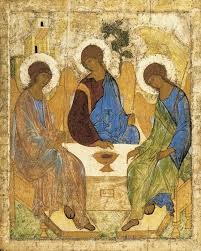
holy spiritThere’s no way around it–the miracle of Christmas is a trinitarian event through and through. Contemplating the baby born of the virgin Mary, sleeping in the manger in 1st Century Bethlehem, eventually will draw you into eternity to worship the Triune God, Father, Son, and Holy Spirit. As I was reading Christopher Holmes’ excellent new work on the Holy Spirit this week, I ran across a fantastic passage where he is draws out some of the implications of Augustine’s theology of the Trinity by illustrating them by way of the virgin birth:

Jesus is conceived in the power of the Holy Spirit. His earthly birth points to his heavenly birth; his mission reiterates his procession. He is born in the Spirit in time, conceived in the Spirit, who is the Father’s love for him, and throughout his life is filled with the Spirit, who enables him to be who he is even in death, the Son of God. Thus the Son’s mission of obedience reflects the Son’s generation from the Father, who in generating him gives him his Spirit, the same Spirit whom the Son pours out on all flesh and who is “proper” to the Son as one eternally born of the Father. This is the Father who eternally generates the Son in the Spirit. Accordingly, the Spirit is the love of the begetter for the begotten; and the begotten for the begetter.

– Christopher Holmes, The Holy Spirit (New Studies in Dogmatics), 77-78.*

Now, there are a number of fascinating threads to tease out in this dense passage.

First, we must remember that all of God’s acts are Triune acts, even the ones we typically associate with one of the persons. As the old principle has it, all of the Trinity’s works outside the Trinity (Creation, Redemption, and Consummation), are indivisibly those of the whole Trinity. How could it be otherwise if the three persons truly are the One God?  But it’s also important to note that there is a trinitarian unity displayed in the indivisible works in history such that we begin to see the outlines of God’s inward, eternal life as Father, Son, and Spirit. In fact, it’s God’s work in history as we have it in the New Testament that originally forced the Church to recognize that God is eternally triune.

Second comes the issue of the “processions.” Augustine (and I’d argue, the New Testament) teaches us that the persons of the Trinity, while being one God, are distinguished from one another by “relations of eternal origin.” In other words, in all eternity, God has been self-related as Father, Son, and Holy Spirit such that there are patterns of relations between the persons. The eternal “processions” of the Son and the Spirit (God does not become a Trinity) are the key realities distinguishing God’s internal life. Classically, it’s been said that the Son proceeds from or is “begotten” or “generated” by the Father (fathers beget sons), the Spirit is “breathed out” or proceeds from the Father and/through the Son, and the Father is the eternal source who proceeds from no one. This is who the persons are–their relations are their identities and so forth.

Third, as already noted, there is a close relationship between who God is in eternity and who he shows us he is in history. When God works in history, while we don’t see all that God is in his eternity, we do see truly who and what God is. To put it another way, when the Son and the Spirit are revealed to us in their “missions” in history (becoming incarnate, being sent by the Father and Son to the church, etc), these missions map onto or are indicative of the eternal processions. There is fit between them. There is something about who the Son is in relation to the Father in eternity that makes it suitable that he specifically is the person who becomes incarnate for our salvation.  The one who is eternally begotten by the Father above is now begotten below without a human father. So while God is not reducible to what he does in history, what he does in history reflects the glory of God’s eternally resplendent being.

Fourth, in the Western tradition, especially after Augustine, the Church has recognized that the Holy Spirit’s proceeding from the Father is not apart from the Son. In fact, the Nicene Creed teaches that he proceeds “from the Father and from the Son.” This is because in Scripture he is shown to be sent by both Father and Son (cf. John 14:16, 15:26; 16:7), and is often referred to as both the Spirit of the Father and the Spirit of the Son (Acts 16:7; Phil. 1:19). So if the Son also sends the Spirit in history and the Spirit is that of the Son, that points to the Spirit’s procession coming from the Son as well as from the Father, though in a unique, differentiated way.

Now, Augustine adds another dimension to this. He says that the Spirit is not only the Spirit of Son and Father, coequal with both, eternally one with them, God proceeding from God, but on the basis of some key texts, that the Spirit’s unique processions ought to be thought of as the love of Father and Son. All of this transcends human speech, of course, but the Spirit is the Love of God for God–he is the Love that God is, precisely as the love of the Father and the Son. 

In which case, there are multiple dimensions of depth to that classic hymn, “Of the Father’s Love Begotten.” The Son is eternally begotten in the love of the Father “ere the worlds began to be.” The Son is begotten in time, born of a virgin (“that birth forever blessed”) by the Father’s love for his wayward creation. But this happened, “by the Holy Ghost conceiving”, God’s own Love is the agent of Christ’s mysterious, miraculous appearing. Of the Father’s Love begotten, indeed.

In the virgin birth, we don’t simply have a neat trick, then, a cool miracle proving that Jesus is God, but rather a sign, a mirror refulgent with glory of the Holy Trinity.

Soli Deo Gloria

*For those curious about Holmes’ work, I commend this post to you whereby he introduces his project.
The Reformed Catholicity of Herman Bavinck

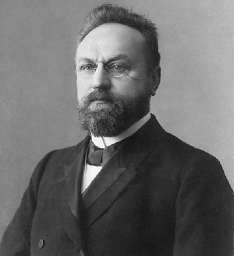
Truly dominant-looking theological man. It's a win for Reformed beardliness everywhere.

Truly dominant-looking theological man. It’s a win for Reformed beardliness everywhere.

Herman Bavinck is one of the, if not the, finest, confessionally-Reformed dogmaticians of the last two hundred years. Anyone who has encountered his work and knows the depth of his learning, his sound orthodoxy, and creatively faithful articulation of the Reformed faith in the face of his modern context.

Those same readers, though, could also testify to Bavinck’s credentials as a theologian of the Church catholic, despite his location at the small confessional school at Kampen. Indeed, George Puchinger notes, “History has its ironies but it cannot be denied: the most ecumenical protestant dogmatic theology in fact appeared in Kampen, the place where theology was practiced in the most isolationist manner” (cited in James Eglinton, Trinity and Organism, pg. 93)

Bavinck’s method of developing doctrines historically and organically certainly played a role in this. In pretty much every locus in the Reformed Dogmatics, Bavinck takes the time to review each doctrine according to broader cultural material, as well as the Old and New Testament witness. A large bulk of his chapters, though, consist of an extensive historical survey that give an irenic account of each topic from the Fathers (East and West), to the Medievals, through the Reformation, Counter-Reformation, Post-Reformation, and modern period across Roman, Lutheran, Reformed, and Radical traditions.

But even Bavinck’s skill as a historian doesn’t cut to the heart of his Reformed Catholicity. References to Augustine, the Cappodocians, Hilary, and Pseudo-Dionysius, as well as Thomas, Scotus, and the medievals all play a role in his formation of doctrine now. That’s because Bavinck had a depth theology of the witness of the Holy Spirit in the tradition of the Church that speaks to his approach to dogmatics.

First, he notes that human knowledge, especially our theology and religion, is only and always grounded in our existence as humans in community. Long before Alasdair MacIntyre came on the scene, Bavinck knew that knowledge was traditioned:

Abstractions—universals—do not exist in reality. The tree, the human being, the science, the language, the religion, the theology are nowhere to be found. Only particular trees, human beings, sciences, languages, and religions exist. Just as a language is associated with a particular people, and science and philosophy are always pursued in a certain school and ideological context, so religion and theology can be found and nurtured only in a related community of faith.

Of course, that means that we come to knowledge of our faith on in the churches we inhabit–they are the “natural soil” of religion. There are limitations to this, of course. There isn’t one pure theology, or pure church, but many churches and many theologies. And it will be this way until the church reaches the maturity and the unity of the Son of God at the end of all things (Eph. 4). That said, the churches, for all their division, are not disqualified from the purposes of God with respect to our knowledge of the truth.

It is not apart from the existing churches but through them that Christ prepares for himself a holy, catholic church. Nor is it apart from the different ecclesiastical dogmas but through them that the unity of the knowledge of God is prepared and realized.

How can Bavinck affirm this in the face of all the division and doctrinal strife? Because he had a solid grasp of the now/not yet quality to the Church’s possession of doctrinal truth. What’s more, he knew that it is to the Church that God has promised the Holy Spirit:

This significance of the church for theology and dogmatics is grounded in the link that Christ himself forged between the two. He promised his church the Holy Spirit, who would guide it into all truth. This promise sheds a glorious light upon the history of dogma. It is the explication of Scripture, the exposition that the Holy Spirit has given, in the church, of the treasures of the Word.

It is this understanding that reveals the root of Bavinck’s own approach to the broader church tradition in which he stood as a confessional theologian of the Church catholic. Here’s how he conceived of the dogmatician’s job in this light:

Accordingly, the task of the dogmatician is not to draw the material for his dogmatics exclusively from the written confession of his own church but to view it in the total context of the unique faith and life of his church, and then again in the context of the history of the whole church of Christ. He therefore stands on the shoulders of previous generations. He knows he is surrounded by a cloud of witnesses and lets his witness merge with the voice of these many waters. Every dogmatics ought to be in full accord with and a part of the doxology sung to God by the church of all ages. – Reformed Dogmatics, Volume 1: Prolegomena, pg. 86

Bavinck sought to craft a dogmatics that blended its voices into the that of the broader choir of the church throughout the ages, even as he sung it in his own deep, Reformed baritone.

None of this, of course, threatens the Scripture principle. Though the dogmatician is a student of the tradition, learning from what has come before, grateful for that deep cloud of witnesses, Scripture not the Church, is still the self-authenticating norm of all theology. All the same, it is his commitment to Scripture, or rather, the Triune author of Scripture, that authorizes Bavinck’s aim to speak beyond the confines of his own Reformed tradition to speak to the broader Church over which Christ is Lord.

Soli Deo Gloria

7 Things Hebrews Says About Jesus (Or, Condensed Christology)

christ pantokratorThe New Testament is chock-full of stunning passages on the nature of Christ. Capable of standing alongside such texts as John 1:1-17 or Colossians 1:15-20, we face the opening lines of the epistle to the Hebrews 1:1-4. While we don’t know who the author of Hebrews was, nor the exact time and setting of the letter, it’s very clear that he had one key purpose in writing to the churches: strengthen, secure, and refocus their faith in the supremacy and sufficiency of Jesus Christ.

In order to do so, he’ll engage in lengthy arguments about his supremacy to angels, Moses, the Priesthood, his better covenant, and more, at length. Unlike other authors, though, he doesn’t slowly work his way around to the conclusion. No, he hits them with both barrels in his opening shot:

Long ago, at many times and in many ways, God spoke to our fathers by the prophets, but in these last days he has spoken to us by his Son, whom he appointed the heir of all things, through whom also he created the world. He is the radiance of the glory of God and the exact imprint of his nature, and he upholds the universe by the word of his power. After making purification for sins, he sat down at the right hand of the Majesty on high, having become as much superior to angels as the name he has inherited is more excellent than theirs. (Hebrews 1:1-4)

Engaging in a full-blown exegesis of this text is far beyond me–at least in a short post–but I did want to highlight some of the key points of astonishingly comprehensive-yet-condensed Christology. Here are, then, seven things the author of Hebrews says about Christ.

  1. Son. The first thing that the author notes is Jesus is “his Son.” Now, in what exact sense Christ is the “Son” here will be filled out in a couple of the other qualities which he ascribes to him. But whatever else he says, the title under which he possesses all these other categories and accomplishes all of his works is as the Son.
  2. Revealer. Secondly, the Son is the ultimate capstone of God’s self-revelation. In former times, God spoke in various ways, through prophets, through poets, historians, and the other authors of Scripture, inspired by God. But now God speaks–God communicates God’s will, God’s works, and God’s wisdom–in the person of the Son. He is the culmination–though, not the denial!–of all that God has spoken before.
  3. Heir of All Things. It is this Son who has been appointed the “heir of all things.” What could this mean? Well, the Son is Son, in one sense, according to the flesh. As the Psalms testify (2, 110), he is the Royal Son of David, heir to the throne of Israel, the blessings of the covenant, and even more, the true Son of Adam, heir to the kingdom of the whole world.
  4. Creator. Next, this Son who has been appointed heir of all things according to his humanity seems to have a deeper claim on the world: he is the agent through whom God “created the world.” Note the echoes here of God’s Wisdom (Proverbs 8). With that reference in mind, we see the author of Hebrews says something fascinating. Just like the John (1:1-3) and Paul (Col. 1), he operates with the clear, Jewish delineation between the Creator and the creation, but also just like them, he has the Son on the Creator side of the line. The logic is clear: if the world was made through him, what is he not? Any other thing in the world. No, he is their Creator.
  5. Radiance of Glory and Imprint. The Son, we are told, is the radiance, the shining, the “refulgence”, of the glory of God. This is part of his role as Revealer. Of course, in Scripture, God’s glory and God’s person are irrefragably bound up together as a the sun is with the rays of light pouring forth from it. The Son reveals God’s glory precisely because he is the “exact imprint”, the one who has the very “form” and shares the “nature” of God (Phil. 2).
  6. Sustainer. In case you’re still a bit skeptical, we also learn that the Son is the one who “upholds the universe.” How? By “the word of his power.” The Son, then, is not only the one who brings the world into existence, he sustains it in existence at every moment. He is the source of its coherence, integrity, and continued being (again, cf. Col. 1:15-16). Hebrews has a Christologically-focused doctrine of providence.
  7. Purifier. Beyond the work of creation, providence, though, stands that of salvation. This condensed Christology turns out to be short-hand account of the entire economy of redemption. The Son is, in a way that will be filled out at length in the rest of the letter, the one who “makes purification for sins” for his brothers and sisters. He does this both through what he is (the true Priest and Mediator), but also in his work, presenting a better sacrifice to remove the stain of sins, as well as sealing a better covenant in his blood. All of this is confirmed in his being “seated at the right hand of Majesty on high” having completed his work once and for all.

All of these titles and works could be expounded for pages, filled out with multiple Scripture references, and derive multiple spiritual applications from each. For now, though, I simply want to note just how high a view of Christ we are given in these verses.

Jesus, the Son, is the agent of revelation, creation, providence, and salvation–all divine works. Alongside key passages in John, Paul, and Revelation, it’s quite easy to see how the Fathers at Nicaea and Chalcedon came to the conclusions about the person of Christ that they did. It wasn’t a matter of Greek, philosophic, metaphysicalisation (if that’s even a word) of the Gospel. Rather, it was simply an effort to expound and explain the already-dense, theologically-thick testimony to the glory of Christ given in the pages of the New Testament centuries earlier. 

Soli Deo Gloria

The Adamantine, Invincible, Invulnerable Love of God

sondereggerLove is patient and kind; love does not envy or boast; it is not arrogant or rude. It does not insist on its own way; it is not irritable or resentful; it does not rejoice at wrongdoing, but rejoices with the truth. Love bears all things, believes all things, hopes all things, endures all things. (1 Corinthians 13:4-7)

At the current moment, the dominant attribute in our common talk of God is typically love. Love is also at the center of a number of recent academic treatments of the doctrine of God and especially a number of the revisions of that doctrine in the 20th Century. What’s more, that God is centrally and fundamentally love is taken by many to mean that God is relational.

And for Trinitarians, that shouldn’t be too much of a problem. God is relational all the way down. But one of the great burdens of Kevin Vanhoozer’s work Remythologizing Theology is to show that the current model of a relational God meant to replace “classical theism” does what all onto-theologies do–take a metaphysical concept from without Scripture and read Scripture’s witness to God in that light. In this case, we take modern definitions of relationality as necessarily including mutuality, vulnerability, and so forth, and in that light, deliver us into the hands of a suffering and empathetic God. Here is much of the thrust behind various process, panentheist, and Open theist models on offer. 

The question we’re to ask, though, is whether or not this is the understanding of relationality and love we are given to understand as we read the broad sweep of the Scriptures as well as its individual pages. Here, of course, is not the place to understand such an examination. Still, I was reminded of this issue when I ran across this stunning exposition by Katherine Sonderegger of Paul’s “Love” hymn in 1 Corinthians 13. I’ll quote it at length:

This is Love. Now it seems to me that this passage lies so close to hand, remains so familiar from every wedding and so many burials, that we overlook one of its most striking features. The love praised here, the more excellent way, does not envision an object at all–how odd that we read it at weddings!–nor does it speak of mutuality, indeed of passibility, in any fashion. St. Paul’s love is supremely invulnerable, impervious to another we might dare say. Perfect love is invincibly objectless, immutual, perdurant. It never ends–it alone is eternal against all the gifts of the Spirit, prophecy, and tongues and knowledge. It is adamantine.

Paul picks out with two quick strokes the positive traits of love, patience and kindness. Surely a quiet evocation of hesed. God’s loving-kindness! Then the apostle turns to what we might think of as love’s negative predicates: it is not envious or proud or coarse; not ill-tempered, variable, stubborn; not immoral, sadistic, cruel, and petty; not weak. Love is recognized in its ready delight for the truth, the good; they are twins. In all its ways, love remains unflinching, undeterred. It is supremely confident, twinned with hope and trust. Love has been prised loose from all self-seeking, from the burdens, sometimes frightful, so often small and miserable, that infect our loving, from the anger and resentment that course through our most ardent loves, from the submission to what we call facts in this proudly “realistic” life of ours–ingratitude, unsuitability, meanness. Love, Paul tells us, simply withstands, endures, triumphs. It abides as the greatest, the uncontested, the supreme. Love is self-same, thoroughly itself, constant, unswerving, true.

Who cannot see, in all these things, that love, this perfect Love of the apostle Paul, is simply another Name for God? God alone is this Love, this more excellent way–we could hardly expect anything else. God’s passionate Love, Paul tells us, is invulnerable in just this particular way to us and to our loveless ways; supremely independent of us and our indifference; utterly triumphant over our blindness, instability, and infidelity; zealous for the right; eternal. This is Divine Nature, personal Passion, victorious Love. Wrath for the good. It is the One Love triumphant over every defilement, injustice, and cunning: it defends the orphan and the little one with fiery Mercy, raging Justice. This Divine Love waits on no one, needs nothing, bends to no condition or limit. Love that is God scorches through the infinite spheres, boundless, eternal Holiness. Love crowns the Divine Perfections; it abounds.

Systematic Theology, Volume 1, The Doctrine of Godpp. 495-497

Before commenting, for those interested, yes, this sort of tremendous, cavernous, doxological prose is lavishly scattered throughout the whole of her work. It’s a beautifully executed work, in that sense. Rigorous though it is, nothing could be further from the stereotype of a “dry” academic work than Sonderegger’s elegant volume.

Now, the context of this passage is Sonderegger’s challenge to the common claim that love requires an object. In the hands of most theologians looking to avoid a needy, co-dependent God, or the idea that God only becomes loving upon creating something other than himself, this leads us to the conclusion that in order to properly expound the love of God we must turn to the doctrine of the Trinity. Only the God who is perfectly, Father, Son, and Spirit can be Love in the fullest sense, with a life that is perfect, complete in itself and for itself before all of creation.

Sonderegger wants to claim that we can think of love monotheistically according to God’s oneness (though not contrary to His threeness). To this–as Sonderegger herself might put it–we must gently but firmly say, “No.” Ultimately, I do think the Love that God is, can only be properly thought through on trinitarian grounds. While Sonderegger speaks of the lack “mutuality” in the passage, that may be, but there is a certainly a directional “communicativity” that seems to imply an object. 

What’s more, Sonderegger also wants to affirm emotions or affections as something we can speak of God. Still, that shouldn’t be taken in the modern, passibilist sense. I think she’d want to sign off on something along these lines, in order to affirm much of what the tradition has held, while not running roughshod over the language of Scripture.  

All the same, Sonderegger has put her finger on something in this passage. Paul gives us this striking picture of love that is good news precisely because of its imperviousness. Love, here, is not trumpeted as the exposed, hyper-sensitive, vulnerability that our culture puts a premium on. It is fullness; an overflowing invulnerability that is unflappable in its will to communicate the good to those who have spurned it. In this passage we are presented with an analogue to the Love found in God’s sovereign determination to give his life, life, and very Self to his creatures, despite any obstacles to contrary. It is precisely this kind of adamantine love that can sustain the movement of the God in the flesh, in order to assume all that is changeable, passible, and vulnerable, in order to redeem it on our behalf. 

Soli Deo Gloria

Is God Bound By the Chains of His Own Justice? (Crisp on Retribution)

retrieving doctrineOliver Crisp has an illuminating article in his work Retrieving Doctrine examining the innovative, Scottish theologian John McLeod Campbell’s atonement theology, quite accurately titled “John McLeod Campbell and Non-penal Substitution” (92-115). It’s illuminating, not only as it shines light on Campbell’s own theology–as helpful as that is–but as Crisp examines a number of broader issues related to retributive justice, freedom, and atonement theology.

In it, he takes up thinking about the relation of forgiveness and retributive justice. Crisp–as he is prone to do–is trying to see whether there is a way of advocating for a non-penal understanding of atonement all the while retaining a traditional, Reformed doctrine of God that understands God’s justice as containing a significant retributive elemement. (Note well: Crisp is not arguing for the position normatively. He doesn’t hold it. As I see it, he’s just trying to explore the concept to see if there’s a way of making it work.)

In any case, assuming retribution for the sake of the argument, in the sub-section I’m concerned with, Crisp makes two arguments I think worth highlighting.

A Better World?

First, he notes that we might think of two versions of retributive justice: a weak and a strong version. The strong version “does not permit forgiveness (without satisfaction)”, while the weak version “does not require forgiveness (without satisfaction)”(97). On one view, God’s justice demands reparation or satisfaction, either by the sinner or a substitute, while the other does not. (Also, “strong” and “weak” are not normative judgments, but indications of the strength of the form).

At this point, he stops to ask why most theologians who hold to retribution have defended the stronger view. Many would ask the same. Why not admit that God’s justice has a retributive element, but think that doesn’t necessarily entail reparations? Here Crisp comes to the first argument I was concerned with and points out that this position has some problematic consequences.

Crisp’s concerns are roughly this: if the weak view holds, then it seems like God could forgive any sin and any sinner without any reparations, by the sheer grace of a fiat. Well, if that’s the case, then why not just do that for all sins and sinners? On this view, God could be just as just to forgive, redeem, and save all, with none suffering judgment, or pain for sinners, or the pain of the cross for Christ. Now, if that’s the case, then it seems plausible to think that such a world in which that were true, would be an objectively better world, with less evil, pain, and suffering than the current world. But that is an “intolerable” conclusion (98), so he returns to the strong view of divine justice.

On this view of justice, “crime must be punished and the punishment must fit the crime.”  What’s more, God cannot act unjustly. It is not within him to be inconsistent on this point. God will repay all according to their deeds, as sin (and righteousness) deserve a proper, divine response. And here we come to the second argument.

Is God Bound in the Chains of His Own Justice?

Oftentimes, in these discussions of atonement theology, it is charged that to think God “cannot” forgive without reparation or satisfaction is a threat to God’s freedom. God, it is said, should not be thought of as bound in chains by his own law. If God has to punish sin in order to forgive, then this legalistic theology gives us a God who is not truly free to forgive and so his sovereignty is compromised.

Here Crisp replies that this sort of charge makes two mistakes (99). First, with respect to the nature of divine justice. The “freedom” charge assumes the weak view of divine justice at the outset. But if you already have reasons for setting it aside, then the charge misses the point.

Here I’ll quote him at length:

…it is no restriction on God that he has to act according to his nature (if he has a nature), anymore than it is a restriction upon a monkey that he has to act according to his nature as a monkey, and not according to the nature of some othe kind of creature. It would hardly make sense to say te monkey was not free if he has to act in a simian fashion, rather than in a human fashion. And in a similar way, it is hardly an objection agaisnt the strong version of divine retribution to say that if God has to act according to his nature, that is, in a way that is justice…then he is somehow un-free in so acting. One could object that divine justice is not essentially retributive. But the the objection would not be about divine freedom, but about the nature of divine justice, which is quite another matter. (99)

I think Crisp has it just right here. The “freedom” charge is not ultimately an objection that holds up when you’ve got a solid grasp of what it means to act in accordance with your nature and your character.

Think of Scripture. It is not a deficiency or lack of freedom that Paul is charging God with when he says “God cannot deny himself” (2 Timothy 3:13). God’s inability to lie is the free expression of his essential nature as truthful in all of his ways. God is absolutely free to act in accordance with his fundamental nature as faithful and true. If the strong version of retributive justice is true, then God’s demand of reparation or satisfaction is not a lack of freedom, but an expression of his freedom to be fully himself, just in all his ways.

Of course, if you don’t think God’s justice includes (along with a number of other elements) retribution, which returns me to the earlier argument.

Reinforcing Retribution

While I’m on board with both of Crisp’s arguments outlined above, I do wonder about the first a bit more. In response to Crisp’s argument that the world in which God simply forgives all according to weak justice is a morally better world than that in which he doesn’t, it seems you could try to argue that there are other, outweighing goods present in the one which he doesn’t. To do that, you might try to outline which ones those were (though, I’d have a hard time seeing them), or you might more modestly appeal to epistemological limits and claim that there might be outweighing goods which are beyond our limits to know. Sort of like a skeptical theist argument.

In any case, it seems we might want to push harder here, or add further reinforcing arguments on this point. (And, knowing Dr. Crisp, I wouldn’t be surprised if he has already done that elsewhere.)

In addition to theological arguments, this is why I believe we are safer to add Scripture to the argument above as a firmer warrant and foundation for the claims of the strong view of divine retributive justice. Of course, this requires more argumentation than can be mounted here, since a number of serious critiques have been leveled against the idea that divine justice contains the element of retribution according to Scripture, or, at least, according to Jesus’ revelation of God’s justice in the New Testament.

For now, I’ll simply quote Bavinck on the matter as this selection gives us something of the prima facie warrant for suspecting retribution, and even the strong version, is the biblical view:

…retribution is the principle and standard of punishment throughout Scripture. There is no legislation in antiquity that so rigorously and repeatedly maintains the demand of justice as that of Israel. This comes out especially in the following three things: (1) the guilty person may by no means be considered innocent (Deut. 25:1; Prov. 17:15; 24:24; Isa. 5:23); (2) the righteous may not be condemned (Exod. 23:7; Deut. 25:1; Pss. 31:18; 34:21; 37:12; 94:21; Prov. 17:15; Isa. 5:23); and (3) the rights of the poor, the oppressed, the day laborer, the widow, and the orphan especially may not be perverted but, on the contrary, must be upheld for their protection and support (Exod. 22:21f.; Deut. 23:6; 24:14, 17; Prov. 22:22; Jer. 5:28; 22:3, 16; Ezek. 22:29; Zech. 7:10). In general, justice must be pursued both in and outside the courts (Deut. 16:20). All this is grounded in the fact that God is the God of justice and righteousness, who by no means clears the guilty, yet is merciful, gracious, and slow to anger, and upholds the rights of the poor and the afflicted, the widow and the orphan (Exod. 20:5–6; 34:6–7; Num. 14:18; Ps. 68:5; etc.). He, accordingly, threatens punishment for sin (Gen. 2:17; Deut. 27:15f.; Pss. 5:5; 11:5; 50:21; 94:10; Isa. 10:13–23; Rom. 1:18; 2:3; 6:21, 23; etc.) and determines the measure of the punishment by the nature of the offense. He repays everyone according to his or her deeds (Exod. 20:5–7; Deut. 7:9–10; 32:35; Ps. 62:12; Prov. 24:12; Isa. 35:4; Jer. 51:56; Matt. 16:27; Rom. 2:1–13; Heb. 10:30; Rev. 22:12).

Reformed Dogmatics Volume 3: Sin and Salvation, pp. 162-163

Each of those references could be fruitfully tracked down, but for those with a hermeneutic oriented towards the New Testament, I would note those last few texts, especially the Gospel reference. As Henri Blocher comments: “Retribution belongs to the teaching of Jesus (Matt 16:27) and remains the principle of judgment (Heb 2:2; 10:30; Rev 18:6; 22:12)” (“The Justification of the Ungodly”, Justification and Variegated Nomism Vol. 2, p. 474-475).

Well, as always, there’s far more to say. Still, Crisp has given us some helpful distinctions and arguments for thinking more clearly about the notion of divine, retributive justice and the view of God’s freedom to forgive that it entails.

Soli Deo Gloria

3 Principles For Those Times When Theologians and Scientists Disagree

every square inchOne of my favorite clips from pretty much any movie ever comes from the cinematic masterpiece Nacho Libre. When Nacho encourages his luchador partner Eskeleto to pray to the Lord for strength, much to everyone’s surprise, he says, “I don’t believe in God—I believe in science.” It’s hilariously simplistic, but it’s reflective of one of the silly dichotomies too many of our students in the church as well as the broader culture still buy into on a regular basis.

Many of us intuitively feel there’s something wrong with that. Still, when it comes to wrestling with the many apparent conflicts between what we were taught in Sunday School and what we learned in our freshman biology class, we’re often at a loss for how to think of these conflicts. Is it really a matter of science versus faith? Blind faith or intellectual honesty? Obviously I don’t think that’s the case, or I wouldn’t still be a Christian.

Over the years of study, I’ve read enough good apologetics and works of philosophy to feel satisfied knowing that whatever new challenges are proposed, there’s eventually going to be some answer forthcoming. Indeed, I believe we’ve got a number of reasons for thinking that the practice of science is best supported on something like a Christian worldview, with its belief in a regular, orderly universe, created by God to be intelligible to the human intellect. Indeed, ultimately there can be no conflict between the truths of theology and the truths of the hard sciences, as God is the author of their shared reality.

That said, it’s always good to have some basic principles in mind when thinking about those moments when it seems that our best scientist and our best theologians do conflict.

Bruce Riley Ashford provides us with a few such principles in his excellent little introduction to a Reformed theology of culture Every Square Inch. (Check out Trevin Wax’s interview with him here.) Towards the end of his chapter on the Christian motivation to engage the sciences (pp. 84-86), he reminds us of three pertinent facts to keep in mind.

  1. “Either group (theologians or scientists) can err; for that reason, either group should be open to correction.” Theologians and biblical commentators have been wrong in their interpretations before. Mistaking metaphorical language for literalistic descriptions of reality and vice versa, there have certainly been cases of over-interpretation of biblical texts, taking them to teach something far more specific than they were intended to. On the flipside, all you have to do is read a short history of science to see how many different scientific paradigms we’ve gone through to explain gravitational force, the orbit of the planets, and so forth to know that we’ve gotten things wrong before.
  1. “The Bible is not a science book.” I know this is rather obvious to many, but the Bible was not written as a biology text book. There are areas where it makes claims about the physical universe and so forth, but by and large, we’re missing the point if we’re reading it as a guide to physics, chemistry, and so forth. It’s God’s covenant document revealing his character, doings, aims, and intentions towards his people in Christ. This is why we need to be rather careful about over-determining our interpretation of the text in the direction of any particular scientific theory. That’s not what the book is for, so using it for that end leaves it liable to abuse and an unfortunate discreditation in the eyes of those who know the shape of the science it allegedly contradicts.
  1. “Science is constantly changing.” As we already said, scientists have changed their minds about all sorts of things. Galileo, Copernicus, Kepler, Newton, Planck, Einstein. Just run down the list of astronomers and early scientists who modified, tweaked, or overturned each other’s pictures of the universe and you see this to be true. Thomas Kuhn’s famous work The Structure of Scientific Revolutions probably overstates his thesis about the new worlds that scientists inhabit when they change their models of understanding the world, but it’s instructive on this point. Even the most secure science—models that are fairly unquestioned in their respective fields for decades—are susceptible to revision. For that reason, Christians need to make sure they’re not too hasty revising their interpretations of Scripture or fundamental doctrines to fit some study that emerged only in the last 5 years and could be overturned next Tuesday.

Obviously, these principles aren’t some easy formula that we plug every problem into and get a clean, easy answer. But we shouldn’t really expect that, should we? Theology and the sciences both deal with reality and reality isn’t clean and easy. That said, these are the sort of broad, wise principles that allow us to proceed in our analysis with care, wisdom, and fidelity to God’s Word and without ignoring what we find in our study of God’s good world.

Are You a Curious or a Studious Theology Student?

Domain of the wordIn the Christian tradition, curiosity has always been considered a vice. That’s surprising to most of us used to the more modern sense of the term. For many of us it tends to mean something like inquisitiveness or a thirst for knowledge. To call curiosity a vice would seem like another line of argument for seeing the Christian tradition as fundamentally anti-intellectual and hostile to questions. That would be a fundamental misunderstanding, however.

In his essay ‘Curiosity’, John Webster–the theologian’s theologian–claims that, “Christian theological intelligence is exercised in the conflict between studiousness and the vice of curiosity” (The Domain of the Word, pg. 193).

Curiosity, then, has a positive counterpart in the form of the virtue of “studiousness.” Indeed, Webster says we can only know what curiosity is as a deviation or perversion of studiousness since vices have no positive reality of their own. To condemn curiosity, then, is not to condemn reason or thought wholesale, but its perversion by sin and idolatry.

But how should we understand these twinned realities? What is it that relates the two and what separates them? As I begin my Ph.D. courses, I’ve been giving some thought to the point of my studies. Just why exactly am I doing what I’m doing and how should I be doing it? And also, how should I not be approaching them? Webster’s reflections in this essay have been stimulating and helpful to me, so I figured I’d summarize and highlight some quickish thoughts for the benefit of other theological students, whether in school or not, pastoral or lay.

Studiousness

According to Webster, studiousness and curiosity are related in that they are both movements of our intelligence to “come to know” that which we don’t know. But the motive and the means of these relationships to unknown knowledge are what distinguishes them.

So what is studiousness? Well, it “is a strenuous application of the power of the creaturely intellect” to figure something out for the first time, or understand something better than you did before. Studiousness is a virtue particular to created beings who can come to know as opposed to God who just knows because he knows. Our way of knowing requires effort, energy, and time–as do all the activities of finite, embodied beings. “God, in short, knows as the uncreated one, creatures know as creatures” (194).

Furthermore, studiousness is the way the “well-ordered creaturely intellect” comes to know things. According to Webster, that involves at least two things. First, it means “earnest, arduous application of the mind.” It is an activity in the fullest sense of the word. Studiousness recognizes that knowledge doesn’t simply happen to you. Second, “it is a reflective” activity that can be judged according to standards of excellence that are intellectual and moral. Intellectually it is an activity that must treat the object of study with respect and integrity, coming to its conclusions, its representations, without undue haste or carelessness (195).

Morally, we come to the fact that studiousness is related to the very natural desire to come to know. And this is where Webster says “an element of ambivalence” can enter in.

Curiosity

Using the language of Aristotle and Aquinas, Webster states: “Curiosity results from the corruption of intellectual appetite”(195). Indeed, he quotes Aquinas who says, “curiosity does not lie in the knowing precisely but in the appetite and hankering to find out.”

From here, Webster gives us four of the “elements” of curiosity, which I can only briefly touch on.

First, curiosity is a corruption in that it aims at improper objects of new knowledge. It strains to know what it is not appropriate for it to know. It refuses to acknowledge the creaturely limit and wants to know “as God knows”, or to focus on those things which God has given it to know. Curiosity sits in the garden devising ways always to snag the one fruit that’s off-limits (195-196).

Second, it’s a way of learning about the world, to created realities, without referring them to their Creator. It’s a sort of “lust of the flesh” (1 Jn. 2:16) applied to knowledge; it is a desire to know things without pushing on to see their relation to God and his glory (196). It is a Romans 1 reality, in that sense.

Third, curiosity “is a deformation of the manner or mode of intelligence, when the movement of coming-to-know takes place inordinately, indiscriminately, and pridefully” (196). In other words, wanting to know can become an addiction to the rush of learning new things so that you end up neglecting other goods, crossing lines, and so forth. Intellectual greed also leads you to get caught up less in the truth or goodness than the “novelty of the object of new knowledge.” Or, again, curiosity leads to self-satisfied pride in our exceptional intelligence the more we come to find out.

Fourth, related to the last, curiosity chases knowledge for wrong ends. Either to puff yourself up, to use it for your own gain or power, or other unrighteous ends. Even good study can fall under “curiosity” if aimed at your own pride.

What Does Curiosity Look Like in Theology?

Next Webster examines the ways and reasons that curiosity can enter into the spiritual work of theological study.

First, curiosity creeps into theology when we forget the “location and situation” of our work. “Theology takes place in a sphere in which God the teacher is lovingly present to reconciled creatures, summoning the intellect to attentiveness and learning” (198). Curiosity forgets this and leads us to study, not in response to God’s prior direction, but as an independent exercise of intellectual acquisition (198).

Second, curiosity in theology leads to a certain restlessness that gives pride of place to the novel, the “creative”, and cannot follow the particular course theology should take. In a word, faddishness (198).

Third, curiosity “stops short at surfaces.” There are a lot of disciplines to master in theology (text-based, historical, etc). Webster says that all of these phenomena, though, serve to point beyond themselves as signs towards God. Curiosity can get caught up in the signs for their own sake instead of pushing onwards towards the theological end, which is to know God. In other words, it’s the kind of study of the Bible that gets caught up in historical minutiae of the text, trying on novel interpretations and grammatical innovations, all the while forgetting that the point of studying Scripture is to hear the voice of God (198).

Fourth, curiosity corrupts the character of theological work by leading us into pride, or the drive towards individualistic advancement, or a separation of theological study from the “common life of the church”(199).

Fifth, curiosity forgets the chief goals of theology which are “contemplative and apostolic.” Theology aims at delight in God. As such, it is apostolic because this truth is lovingly spoken to others that they might be built up and not fall into error. Curiosity aims only at itself and so curves inwards.

How to Avoid Curiosity in Theology?

Well, Webster is very clear that avoiding curiosity requires the work of the Holy Spirit who gives the gift of temperance, restraint, only with the new birth as a person is remade in Christ (2 Cor. 5:17). The Holy Spirit redeems, perfects, and redirects created minds, bringing them out of their prideful, lusting alienation from the life of God by the gift of a new, regenerated nature conformed to the image of the Son (Eph. 4:23; Col. 3:10; 199-200).

According to Webster:

Theological curiosity is checked and theological studiousness promoted when the intellects of saintly persons are directed to the proper object of theology and to the proper ends of contemplation and edification. (200)

Theology is the only discipline where the object study is your only, ultimate hope in doing it well. Webster notes three dimensions to this.

First, “immoderate desire” for novelty in coming to know can only be curbed if theological students come to recognize their place in the “pedagogy of divine grace.” In other words, “The grace of God has appeared…training us” (Tit. 2:11). We need to understand our study as a work taking place in the space of grace opened up by the grace of God in Christ and the work of the Spirit which sanctifies our reason. This is why:

The saints lack curiosity; but they are eagerly studious, devoted to acquiring the knowledge proffered by divine revelation. In theology, the affections, will and intellect are ‘fixed’ on the ‘ways’ of God (Ps. 119.15), ‘delighting in’ and ‘cleaving to’ the divine testimonies (Ps. 119.24), turned from ‘vanities’ (Ps. 119.37) in order to ‘meditate’ on the divine law (Ps. 119.48), eager to be taught knowledge (Ps. 119.66). Such is the studious theological intellect sanctified and schooled by divine grace. (201)

Second, curiosity fades when theologians devote themselves “to a singular matter with a definite interest.” It’s not so much that theology restricts itself to a few subjects, but that it learns to relate all subjects to the one subject it’s supposed to be directing everything towards: God and his works in the history of redemption. This maintains its focus as a “single science” instead of a disconnected study of whatever happens to interest us at the moment (201).

Third, directing theology towards its ultimate goal, the love of God, “mortifies” curiosity. Focusing on the self-communicating love of God cuts at the natural selfishness of curiosity, as it continually draws us out beyond ourselves into the love of God and our neighbor (202).

To cap it off, Webster closes with a prayer from Aquinas, “Ante Studium” (HT: David Bunce):

Ineffable Creator . . . You are proclaimed the true font of light and wisdom, and the primal origin raised high beyond all things. Pour forth a ray of your brightness into the darkened places of our minds; disperse from our souls the twofold darkness of sin and ignorance. You make eloquent the tongues of infants: refi ne our speech and pour forth upon our lips he goodness of your blessing. Grant to us keenness of mind, capacity to remember, skill in learning, subtlety to interpret, and eloquence in speech. May you guide the beginning of our work, direct its progress, and bring it to completion, for you are true God and true Man, who live and reign, world without end.

Soli Deo Gloria

The Peace of the Triune God

peaceI’ve written about this before, or rather I’ve quoted others writing about it, but time and again we must be reminded that all of God’s good gifts, especially those we receive in redemption, have a trinitarian shape to them. They come to us from the Father, through the Son, in the Spirit. Whether it be justification, adoption, or sanctification, the whole Trinity is displayed to be at work in the New Testament witness. Thomas Watson makes this point again with respect to the believer’s gift of peace, by asking,”Whence comes this Peace?”

His answer?:

It has the whole Trinity for its author. God the Father is ‘the God of peace.’ (I Thess 5:53.) God the Son is the ‘Prince of peace.’ (Isa 9:9.) Peace is said to be the ‘fruit of the Spirit.’ (Gal 5:52.)

(1.) God the Father is the God of peace. As he is the God of order, so he is the God of peace. (I Cor 14:43), and (Phil 4:4.) This was the form of the priest’s blessing upon the people. ‘The Lord give thee peace.’ (Numb 6:66.)

(2.) God the Son is the purchaser of peace. He made peace by his blood. ‘Having made peace by the blood of his cross.’ (Col 1:10.) The atonement Aaron made for the people, when he entered into the holy of holies, with blood, was a type of Christ our high priest, who by his sacrifice pacified his angry Father, and made atonement for us. Christ purchased our peace upon hard terms; for his soul was in an agony, while he was travailing to bring forth peace to the world.

(3.) Peace is a fruit of the Spirit. He seals up peace to the conscience. The Spirit clears up the work of grace in the heart, from whence arises peace. There was a well of water near Hagar, but she did not see it, therefore she wept. A Christian has grace, but does not see it, therefore he weeps. Now the Spirit discovers this well of water, it enables conscience to witness to a man that has the real work of grace, and so peace flows into the soul. Thus you see whence this peace comes – the Father decrees it, the Son purchases it, the Holy Ghost applies it.

I don’t care how many times I see that same basic structure, it still thrills me to see the workings of our Triune God traced out in the revelation of Scripture. It is Father, Son, and Holy Spirit who is the source, sum, and goal of our peace.

To understand how God can be ou peace, though, we must push further and recognize that God himself is peace. I’ve shared this Webster quote before, but I can’t pass up sharing it again:

The peace of God — the peace which God himself is— passes all understanding; ‘neither we nor the angels can understand as God, the peace which God himself enjoys’ (Augustine, City of God, XXII.29). This peace of God’s own self may be considered under the aspects of harmony and repose. First, with respect to harmony; the outer acts of the Holy Trinity are indivisible, the work of the undivided divine essence in its threefold personal modification. By appropriation, specific works may be particularly or eminently assigned to one divine person (as redemption to the Son or sanctification to the Spirit). But each person participates in all, for each shares in the undivided dvine essence, and each work is to be attributed absolutely to that one divine essence. The outer works of the Trinity are, then, harmonious — not mere conjoint or cooperative or composite action, but action which is inseparable and coinherent, and so, in a deep sense, peaceful. This harmony in the missions of the three-in-one is grounded in and gives expression to to the infinite peace which God is. There is no disorder, disruption or contradiction in the works of the Father, Son, and Spirit in the making and perfecting of the world. And so, there is in God’s inner life nothing of divergence or discord, but infinite unity and therefore peace beyond measure.

Second, to this harmony is to be added the element of repose. The outer works of God are effortlessly accomplished, without strain or agitation, without interval between willing and effecting. God rests in his work. This rest corresponds to the inner repose of God in filiation and spiriation, there is no malign diversity, no coming together out of a condition of separation, no overcoming of division or conflict, but always an already-achieved perfection of peaceful life. God’s inner peace is the peace of his triune simplicity.

This inner divine peace is the principle of creaturely peace, that upon which all other peace is founded and by which it is preserved. This is so, however, only because divine peace is in itself complete and fully satisfied. In the repleteness of his life as Father, Son, and Spirit, God is beyond need or desire. His peace is neither enhanced by created peace nor diminished by its absence…it is the harmony and repose which, because it needs nothing, is capable of pure charity, giving life and righteous order in the works of creation and providence.

The Domain of the Word: Scripture and Theological Reason, pp. 133-135

Well, that’s enough to praise him for today. May God’s peace be with you.

Soli Deo Gloria

Summarizing, Simplifying, and Expanding on the Atonement by Adam Johnson (Guest Post)

atonementAdam Johnson is a professor of theology in the Torrey Honors program at Biola University and excellent chap. He’s just put out a very helpful book–one of my new favorites on the subject–Atonement: A Guide for the Perplexed, which I’ve already written about here. What follows is an excerpted  section of one of my favorite passages in the work, reprinted with his permission. I hope it encourages you to follow up and pick the book. 

A thorough appreciation of the complexity of the atonement funds our delight and worship, while equipping the church to relate Christ’s work meaningfully to a host of other areas. An equally strong grasp of the simplicity of the doctrine yields a sense of the overall shape and structure of the doctrine, offering meaning and direction to our inquiries within its many elements. Just as in the doctrines of the Trinity and divine attributes (in fact, precisely because of them), the interplay between unity and diversity, simplicity and complexity, plays a vital role here as well. For that reason we must constantly live in the tension between seeking an expansive understanding, and concise definition of the work of Christ.

Summary I: An Exercise in Simplicity

The best summary statements about Christ’s atoning work in Scripture are the following two (closely related) verses:

“In Christ God was reconciling the world to himself.” (2 Cor. 5:19)

“In [Christ] all the fullness of God was pleased to dwell, and through him to reconcile to himself all things.” (Col. 1:19-20)

In short:

God was in Christ, reconciling all things to himself.

The beauty of this short statement is four-fold. First, the emphasis is first and foremost upon God, which is absolutely vital for the doctrine. The atonement is the work of God bringing God’s creation back to God. God is the origin, means and end of this act, and the role of theology proper is singularly and absolutely determinative for the shape of the doctrine and the coherence of our account of the atonement. Second, this is the work of God as man, as Jesus. That is to say, it is a fully human work, the work of God as one of us, one of our kind living out his life under the same realities and circumstances as we do. It is a work from within our life and experience, in which God makes our situation his own, rather than a work from the outside. Third, this is a work of reconciliation. One could say that God was in Christ, atoning (at-one-ing) all things to himself in Christ, though this does not communicate as readily in contemporary English. In principle, one could substitute “reconciling” for any of a number of soteriological synonyms, including “saving,” “redeeming,” “ransoming” or “sanctifying.” “Reconciliation” is preferable, however, for its positive (indicating salvation for just as much or more than it does salvation from) and comprehensive nature. In other words, it isn’t as readily reducible to merely marshal, judicial or commercial concerns as some of its peers.

The final reason which makes this summary the best single statement in Scripture concerning the work of Christ is its comprehensive scope: all things! Of course this must be unpacked, but such a comprehensive and indeed cosmic affirmation runs no risk whatsoever of leaving anything out. All things are involved and bound up in the death and resurrection of Christ. This is no mere matter of meeting some particular need or void in our lives—the death and resurrection of Christ are of much bigger scope than that. They gather up the identity, condition and fate of all of God’s creation, for in Christ all things are taken up and reconciled to the Father. Regardless of whether we recognize this to be the case, there is nothing in life that is not reconciled to God through the work of Christ (Col. 1:20).

In short, for a single statement that grasps the foundation of the doctrine of the atonement in the being and act of God, the means of the atonement in the man Jesus Christ, the positive and life-giving nature of atonement as a work of reconciliation, a restoring of relationships, and the scope of the atonement, which brings all things into their proper relationship and fellowship with God, there is no better statement than Paul’s claim that God was in Christ reconciling all things to himself.

Summary II – A Fuller Account

But the purpose of a summary statement is to bring clarity by highlighting the basic elements or structure of that which it summarizes. Accordingly, summary always plays its role as one part of the task of understanding its object, which is to say, summaries play a role within the dynamic movement necessary for understanding a complex reality, moving between a vision of the overall structure and interacting with the smaller parts of which the whole is composed. To honor this dynamic movement, we will briefly unpack the above summary, offering a slightly more complex rendition of the same basic statement:

The triune God, Father, Son and Holy Spirit, in the fullness of the divine perfections, was in Jesus Christ, the Messiah of Israel, bringing all created things in heaven and earth to the fulfillment of their God-given purposes through reconciliation with God.

To affirm that God was in Christ, that this was the work of God and his presence in this act is what makes it what it is, what gives it its defining features, characteristics and significance, is to affirm first and foremost that this is the work of Father, Son and Holy Spirit—the triune God. The life, death and resurrection of Jesus are what they are because they are events in the life of God, willed by the Father, executed by the Son, in the fellowship and power of the Holy Spirit. It is only because the atonement is the work of the triune God, bringing our humanity and sin into the relational dynamics of Father, incarnate Son and Holy Spirit, that this work is what it is. And it is because God does this work through his own life, that it simultaneously involves the fullness of the divine character. In this event, God enacts his love, wisdom, mercy, righteousness, holiness and presence, the fullness of the divine attributes, in his overcoming of sin and evil, and restoration of all things according to his purposes for them.

To affirm that Jesus was a man is to embrace the fact that he was not any man, but an Israelite: born of the line of David, realizing in himself the covenants, prophecies and laws of the Old Testament as the Messiah, the prophet, priest and king, the one who in himself was the faithful Israelite. As such, he is, of course, a human being just as we are, but one with a specific history, and with that history a specific identity and role. Salvation is from the Jews (John 4:22), and more concretely, from the Jew, Jesus, the son of Mary. And his work was a work of reconciliation, of atonement—of making one through restored relation to God and through him to all things. Relationally, he made things one by bringing about reconciliation or the restoration of fellowship. Cosmically, he made creation one by removing evil, conflict and decay. Judicially, he made us one by doing away with the crime, guilt and punishment. His work was a work of creating and sharing one-ness according to the many forms it takes in different contexts and relationships, bearing in himself and thereby doing away with all sin, evil and discord.

And his work touches on all things: angels and demons, Jews and Gentiles, dogs and cats, mountains and graveyards. And because the center of God’s election in Christ was for a people, for a relationship with humankind, his work relates to middle management and racial relations, body and soul, emotions and habits, families and friendships. Extending far beyond the guilty conscience, God became man in Jesus Christ to bring every aspect of creation, and every aspect of our human existence, under the Lordship of Jesus Christ, with all the flourishing and mutual-exaltation that this entails for every aspect of our being (physical, spiritual, social, sexual, economic and otherwise) and that of the creation of which we are a part.

Definition as Springboard to Exploration

But we must be clear about the fact that this more expansive summary is but a springboard to fuller reflection on each these areas. But as we engage in this pursuit, for the sake of clarity and definition, it is helpful that we be able to pull back from detailed exploration of the sub-points of the doctrine, and also be able to affirm with brevity and understanding that:

The triune God, Father, Son and Holy Spirit, in the fullness of the divine perfections, was in Jesus Christ, the Messiah of Israel, bringing all created things in heaven and earth to the fulfillment of their God-given purposes through reconciliation with God.

Or even more briefly, that:

God was in Christ, reconciling all things to himself.

Soli Deo Gloria

Triune Justification, Again (Or, is a Reformed view of Salvation Sub-Trinitarian?)

trinityI’ve noted before the way that Protestant theologies of salvation, especially of the Reformed variety, are occasionally criticized as being sub-trinitarian due to their narrow focus on forensic or legal categories. Whether because of an allegedly blinkered view of the cross, or an “overly-individualistic” transaction model of justification by faith, Reformed theology apparently can’t compare to more Catholic, Orthodox, or some more metaphysically-inclined Anglican proposals flirting with Radical Orthodoxy. (To be honest, the critiques all sort of blur together.)

Triune Justification, Again

Again, while that may be true of some popular Reformed or general ‘Evangelical’ preaching, that’s certainly not the case with classical Reformed theology such as that of Bavinck who lays out a beautifully trinitarian conception of justification. But some may wonder if that’s simply because with Bavinck we are dealing with an exceptional Reformed theologian, a jewel in the tradition who is unrepresentative of the broader whole?

Well, actually no. Once again, I ran across this little gem in Thomas Watson’s commentary on the Westminster Catechism’s treatment of justification. Watson is dealing with the various “causes” of salvation, such as faith which receives it, Christ’s righteous life and death as its ground, and so on. He moves to ask about the “efficient cause” or author of our justification:

What is the efficient cause of our justification?

The whole Trinity. All the persons in the blessed Trinity have a hand in the justification of a sinner: opera Trinitatis ad extra sunt indivisa. God the Father is said to justify. ‘It is God that justifieth.’ (Rom 8:83). God the Son is said to justify. ‘By him all that believe are justified.’ (Acts 13:39). God the Holy Ghost is said to justify. ‘But ye are justified by the Spirit of our God.’ (I Cor 6:61). God the Father justifies, as he pronounces us righteous; God the Son justifies, as he imputes his righteousness to us; and God the Holy Ghost justifies, as he clears up our justification, and seals us up to the day of redemption.

There you have it. Drawing on the classical trinitarian logic that all of the Trinity’s ad extra or “outward” works are undivided, Watson traces the triune shape of God’s one justifying action in Christ. There’s absolutely nothing “sub-trinitarian” about even the very clearly forensic or legal dimension to a Reformed account of God’s saving work.

But Even Beyond Justification

It also bears pointing out that much of the confusion comes when we miss the fact that a Reformed view of salvation is not limited to justification by faith. It gladly encompasses it, but free justification and the forgiveness of sins is not the sum total of the gospel, nor of the benefits that make up our salvation. No, arguably, the larger category to keep in view is the doctrine of union with Christ, whereby in faith we are united legally, spiritually, morally, mystically, and vitally with Jesus and all of his benefits, which ends up giving us far more than justification alone. It’s also the broader picture that completely destroys the sub-trinitarian charge.

Instead, union with Christ expands to include things like the effectual calling out of darkness into light which precedes justification. Then also come the gifts of adoption into Father’s family, with all of the spiritual privileges that come with being a child of God such as access in prayer, peace, and the assurance of the Spirit. We are also given the sanctification and growth in holiness which inevitably follows as we received the gift of the Holy Spirit in our union. Finally, we are promised glorification, or the perfection of our salvation when we are resurrected anew by the Spirit and the process of sanctification is complete as we are fully and finally conformed to the Image of the Son, the Resurrected Jesus, in order that we might look upon the face of God in glory.

Theologian Todd Billings had an excellent little article on this recently, articulating all this as an expression of what we might (carefully) call a Reformed doctrine of deification. I’ll quote Billings at length:

Nevertheless, classical Reformed theologians do not hesitate in speaking about the uniting communion that we experience now – and will experience in fullness – in Christ. As Calvin asserts, in our present life of union with Christ by the Spirit – which is nourished through the preached and sacramental Word in community – believers are “participants not only in all his benefits but also in himself.” Indeed, “day by day, he grows more and more into one body with us, until he becomes completely one with us” (Institutes 3.2.24). Moreover, believers are “fully and firmly joined with God only when Christ joins us with him” (Institutes 2.16.3). Yet this union with Christ is impossible without a participation in the Spirit, who unites the believer to Christ (Institutes 3.1.2). Indeed, through the Spirit “we come to a participation in God (in Dei participationem venimus)” (Institutes 1.13.14). As the “perfection of human happiness is to be united to God,” this union takes place in redemption (Institutes 1.15.6). Yet this union does not make us “consubstantial with God” like a fourth member of the Godhead, but it is in Christ, through “the grace and power of the Spirit” (Institutes 1.15.5).

Calvin also speaks of a coming beatific vision, a “direct vision” of the Godhead, “when as partakers in heavenly glory we shall see God as he is” (Institutes 2.14.3). This final, temporal end is in fact “the end of the gospel,” that is, “to render us eventually conformable to God, and, if we may so speak, to deify us” (commentary on 2 Peter 1:4). For Calvin, the present and future scope of God’s work in salvation requires us to go beyond looking at how we receive salvation and what salvation saves us from. All of this takes place for the sake of union and communion with God. Salvation not only restores what is lost by the fall; it incorporates creatures into the glorious life of the Triune God.

I’d recommend going and reading the whole of the article and maybe picking up his book Union with Christor this free article on Calvin’s view of salvation focused on the way union with Christ organizes things along trinitarian, Christocentric, and non-reductive lines, if you’re curious about more along these lines.

At the end of all this, though, it should be enough to dispel the very misguided charge that a Reformed view of salvation is sub-trinitarian due to its legal flavor. Not only does that misconstrue what the Reformed actually say about justification, it misses the much broader trinitarian context of salvation in union with Christ that justification is set within. Honestly, if I wanted to, I could have gone through and shown the trinitarian shape of each of those gifts (calling, sanctification, etc) in detail from the Reformed sources. But this enough to reflect on for now.

Soli Deo Gloria