“Out with Philosophy! Just Preach the Gospel!” Or Something Like That

thinker

Looks like he’s philosophizing. STOP THAT!

For a long time now Paul’s discourse at the Areopageus in Acts 17:16-31 has been a favorite text of mine. As a philosophy student in college I loved the picture of Paul debating with the philosophers of his day, quoting their poets and philosophers, and engaging the best of their thought in order to clear the way for the proclamation of the Gospel. I’ve long seen it as a model for understanding how to properly contextualize and challenge the thought of the culture while at the same time maintaining a faithful witness to Christ.

It wasn’t until a couple of years ago that I found out about a certain line of interpretation, particularly in some hyper-Reformed circles, that sees this whole engagement as a failure. The idea is that Paul here, instead of engaging in some straightforward Gospel-preaching like he does in other places, makes the mistake of trying to make the Gospel presentable to the philosophers, ends up getting laughed out of court, and from there on resolves to “know nothing but Christ and him crucified.” (1 Cor 2:1-5) Silly Paul, philosophy is for pagans!

Now I’ve always thought this was a forced interpretation. Then again, what do I know? D.A. Carson on the other hand, well, he’s got an actual case for it:

There are good reasons for rejecting this false reading:

  1.  This is not a natural reading of Acts. As you work your way through that book, you do not stumble upon some flag or other that warns you that at this Paul goofs. This false interpretation is achieved by putting together an unnatural reading of Acts with a false reading of 1 Corinthians 2.
  2. The theology of the Areopagus address is in fact very much in line with the theology of Paul expressed in Romans.
  3. The Greek text at the end of Acts 17 does not say that “a few men” believed, as if this were a dismissive or condemning assessment, but that “certain people” believed. This expression is in line with other summaries in Acts.
  4. In Athens Paul had already been preaching not only in the synagogue to biblically literate folk, but to people in the marketplace who were biblically illiterate (Acts 17:17). What he had been preaching was “the good news” (Acts 17:18), the Gospel.
  5. Transparently Paul was cut off in Acts 17 before he was finished. He had set up the framework in which alone the Gospel is coherent: one transcendent God, sovereign, providential, personal; creation; fall into idolatry; the flow of redemptive history; final judgment. He was moving into Jesus’ resurrection, and more, when he was interrupted.
  6. Paul was not a rookie. He had been through twenty years of tough ministry (read 2 Cor. 11), much of it before pagan biblical illiterates. To suppose that on this occasion he panicked and trimmed the Gospel is ridiculous.
  7. Acts 17 shows that Paul thinks “worldviewishly.” Even after 1 Corinthians 2 Paul still thinks worldviewishly: 2 Corinthians 10:5 finds him still striving to bring “every thought” into submission to Christ–and the context shows this refers not to simply isolated thoughts but to entire worldviews.
  8. 1 Corinthians 2:1-5 does not cast Paul’s resolution to preach nothing but the cross against the background of Athens (as if he were confessing he had failed there, but against the background of Corinth, which loved eloquence and rhetoric above substance. The apostle does not succumb to mere oratory: he resolves to stick with “Jesus Christ and him crucified.”

-D.A. Carson,  For the Love of God Vol. 2, February 15

Kids, the moral of the story is that Paul isn’t confessing a ministry flub in 1 Corinthians 2, and repenting of his foolish decision to engage with the philosophers in a contextually-specific way. So if you’ve ever thought that it helps to know and be able to discuss the actual thought-processes of your neighbors and peers in order to present the Gospel to them effectively, don’t worry, so did Paul.

Soli Deo Gloria

Ireneaus Summarizes the Faith

saint_Irenaeus_Early_Church_FatherHistorical myopia is a perennial danger to Church, especially in the area of theology. Every generation has its own particular, culturally-conditioned ways of talking about the Gospel, even when it works from the same biblical texts and recites the same creeds. In our own sin and shortsightedness, we have themes we love to highlight and those topics we’d rather not bring up in polite company. This is why every once in a while it’s good to stop, expand our vision, and listen to Christians of other generations expound or summarize the faith, especially the giants, those respected teachers known for speaking well for the Church as a whole.

On that note, here’s St. Irenaeus, the first great church theologian of the post-Apostolic period, laying out the Church’s faith in contrast to the convoluted Valentinian Gnostic system:

The Church, though dispersed through our the whole world, even to the ends of the earth, has received from the apostles and their disciples this faith: [She believes] in one God, the Father Almighty, Maker of heaven, and earth, and the sea, and all things that are in them; and in one Christ Jesus, the Son of God, who became incarnate for our salvation; and in the Holy Spirit, who proclaimed through the prophets the dispensations of God, and the advents, and the birth from a virgin, and the passion, and the resurrection from the dead, and the ascension into heaven in the flesh of the beloved Christ Jesus, our Lord, and His [future] manifestation from heaven in the glory of the Father “to gather all things in one,” and to raise up anew all flesh of the whole human race, in order that to Christ Jesus, our Lord, and God, and Saviour, and King, according to the will of the invisible Father, “every knee should bow, of things in heaven, and things in earth, and things under the earth, and that every tongue should confess” to Him, and that He should execute just judgment towards all; that He may send “spiritual wickednesses,” and the angels who transgressed and became apostates, together with the ungodly, and unrighteous, and wicked, and profane among men, into everlasting fire; but may, in the exercise of His grace, confer immortality on the righteous, and holy, and those who have kept His commandments, and have persevered in His love, some from the beginning [of their Christian course], and others from [the date of] their repentance, and may surround them with everlasting glory. -St. Irenaeus of Lyons, Against Heresies, 1.10.1

Soli Deo Gloria

Kierkegaard, Keller, La Dispute, and the Promise of Covenant Love – Part 1

Regine Olsen

Sadly, everybody remembers her as Kierkegaard’s fiance and not the wife of her husband…that guy.

February is here and love is in the air–or maybe that’s packaged chocolates and commercial opportunity. In either case, the subject of love and romance will be coming up again, which is why I must once more bring up my favorite philosopher: Soren Kierkegaard.

For those of you who know a little of his biography, he seems an odd choice to turn to on the subject of love–he was one of my philosophers who failed at it. Tragically he broke off his engagement with the lovely Regine Olsen because he felt his depressive melancholy made him unsuitable as a husband. What could we possibly learn from him about love?

Well, for one thing, he’s experienced at failure, so that gives you some insight. Still, Kierkegaard, for all of his Danish weirdness, has this going for him: he’s easily one of the most biblical, prophetic thinkers of the modern period. Under both his own name, and through pseudonyms, he made it his aim to present Christianity anew, true Christianity, with force to a culture that thought it already understood it.

Works of Love and La Dispute
In his Works of Love he turns his meditations to the biblical concept of love. The first half is an extended exploration of the command to “love your neighbor as yourself” (Matt. 22:39). The piece that captured my attention was the focus he gives to the “you shall” in Jesus’ command–the fact that Jesus commands love at all. Kierkegaard emphasizes, “You shall love–this, then, is the word of the royal law.” Again, “the mark of Christian love and its distinguishing characteristic is this, that it contains the apparent contradiction: to love is a duty.” (pg. 40) Later he writes, “Only when it is a duty to love, only then is love eternally secured against every change, eternally made free in blessed independence, eternally and happily secured against despair.” (pg. 44)

Against the popular, romantic “poetic” conception of love that dominated the intellectual scene of his day, Kierkegaard pressed the idea that the highest form of love was not the “spontaneous”, sudden, seizing form of love that sweeps over a couple of lovers, but rather love as duty–love as something secured by the eternal, the command of God. The love of the lovers is beautiful, yes, but it is fleeting–it can change. Even if it lasts, it’s not to be trusted entirely. It can leave. La Dispute gives us one of the best, contemporary expressions of this kind of love on their album, “Somewhere At The Bottom Of The River Between Vega And Altair“, exploring the dynamics of a failed marriage, rent asunder by the wife’s affair.

Speaking in the aftermath, the wife sings, “I know I tore two worlds apart but I can’t change the way I felt./Love swept in like a storm and ripped the hinges from the doors./Love poured in like a flood, I couldn’t stop it anymore. I will not be drowned” (Sad Prayers for Guilty Bodies), or, even more poignantly:

Oh husband, I could not control it
Husband, I could not abstain
One cannot stop the wind from blowing
Nor refuse the falling rain
Love stirred up a storm inside me
Wrapped its arms around my waist
I failed you dear, I’m sorry, oh I’m sorry
There was nothing I could do
No, there was nothing I could
Sure as the rain will fall
Some love just fails without reason

(Last Blues for Bloody Knuckles)

Poetic love is that inherently unstable, emotional chaos that sweeps over us with great passion, and apparently can leave us as quickly. Matt Chandler calls this the “naked angel in a diaper” theory where basically, at any point, cupid can show up and strike you. It has no rhyme or reason, like the blowing of the wind or the falling rain.

Kierkegaard points out that the poets instinctively know this; note how often their lovers swear, make promises, and bind themselves to each other in their love. Still, if they only swear by themselves, it is an insecure promise because humans are changeable, unstable. Only when you swear by something higher, something eternal, duty, God himself, can love be something secure. “The love which simply exists, however fortunate, however blissful, however satisfying, however poetic it is, still must survive the test of the years. But the love which has undergone the transformation of the eternal by becoming duty has won continuity.” (pg. 47)

Kierkegaard, Keller, and Covenant Love
Kierkegaard was pointing his culture to a love “transformed by the eternal”: covenantal love. When we hear the word “covenant” today, we mostly don’t know what we’re dealing with. Contracts are closest thing we can imagine, but that’s far too impersonal for the biblical notion of covenant. The concept and language of covenant in the Bible is that of a legal bond, a union based on promises before God and humans of fidelity, friendship, love, exclusivity, and trust.

Now to us this “legalizing” of the relationship seems to drain all of the emotion, the passion–the love!–out of things. For moderns, it’s either love or law, not both. Tim Keller has recently pointed out that, in fact, the law, the promise, especially the marriage promise, doesn’t kill emotion and intimacy, but actually is a testimony to it and increases it. (The Meaning of Marriage, pp 84-85) Marriage–the public, binding promise–is the ultimate expression of romantic love because its the giving of the whole self. Someone who doesn’t want to eventually get married to the person they’re dating is basically saying, “I don’t love you enough to curtail my freedom for you.” How intimate. Ultimately, only when romantic love is set within the framework of a binding obligation do the lovers truly have space to reveal their true selves, without fear of abandonment or rejection. Until then, you’re still on the performance platform, constantly under pressure to put your best foot forward to make sure the other person doesn’t bolt. Ironically, only when you give up your “freedom”, your romantic autonomy, are you able to be truly free to be with the other.

Love, it turns out, hangs on a promise.

So what does love have to be if it’s something I can promise? How is it different than the poetic love that Kierkegaard is speaking of? In my next post, I’ll lay out more clearly the difference between this covenant love and the poetic love.

Soli Deo Gloria

John Calvin’s Motherly God (Or, Maybe He’s Worth Actually Reading)

mother“John Calvin’s God is nothing but an autocratic tyrant, an arbitrary despot, who may be concerned with legal justice, but who was the worst sort of example of ‘forensic theism.’ Yes, he might be ‘gracious’, but it is an almost unfeeling graciousness, concerned only to preserve his own rights, rather than bestow good on his creatures.”

At least, that’s the picture I had before I’d read any Calvin.

I know I’m not alone in this. For most people who’ve read a little theology, or maybe a lot, but not done too much hands-on work with the man himself, it’s quite easy to see a cold systematician, with his precise, logic-chopping predestinarianism, and his absolute God who is the apotheosis of power, but not love; the king, but not the father.

It came somewhat as a surprise when I found out that “scholars who have devoted a lifetime to Calvin research have arrived at exactly the opposite reading of his doctrine of God”, (B.A. Gerrish, Grace and Gratitude, pg. 23). Upon actually reading Calvin–a substantial amount, not just cherry-picked ‘gotcha’ texts–I came to understand why: Calvin is all about God’s good fatherhood. Indeed, it’s not too much of an exaggeration to say that Divine Fatherhood is one of the main roots and wellsprings of Calvin’s understanding of God.

For instance, in creation:

…we ought in the very order of things diligently to contemplate God’s fatherly love toward mankind in that he did not create Adam until he had lavished upon the universe all manner of good things…thus assuming the responsibility of a foreseeing and diligent father of the family he shows his wonderful goodness toward us.

-Institutes, 1.5.3

Quotes such as this could be multiplied ad nauseum with respect to just about every doctrine; from providence to prayer, atonement and adoption, election and ecclesiology, the fatherhood of God is everywhere seen. For those of us who’ve spent any amount of time in the Institutes, not to mention the commentaries, it’s obvious that Calvin has a deeply paternal picture of God.

What comes as a surprise even to Calvin readers though, is God’s motherly instincts in Calvin’s theology. Gerrish calls attention to a number of fascinating passages in which Calvin compares God’s care to that of a mother (Grace and Gratitude, pg. 40). Commenting on Isaiah 42:14:

Like a woman in labor. By this metaphor he expresses astonishing warmth of love and tenderness of affection; for he compares himself to a mother who singularly loves her child, though she brought him forth with extreme pain. It may be thought that these things are not applicable to God; but in no other way than by such figures of speech can his ardent love towards us be expressed. He must therefore borrow comparisons from known objects, in order to enable us to understand those which are unknown to us; for God loves very differently from men, that is, more fully and perfectly, and, although he surpasses all human affections, yet nothing that is disorderly belongs to him.

Besides, he intended also to intimate that the redemption of his people would be a kind of birth, that the Jews might know that the grave would serve them for a womb, and that thus, in the midst of corruption, they might entertain the hope of salvation. Although he produced a new Church for himself without pain or effort, yet, in order to exhibit more fully the excellence of his grace in this new birth, he not inappropriately attributes to himself the cry of “a woman in labor.” –Comm. Is. 42:14

And again, in a sermon on Job he speaks of the humanizing effects God’s motherly love effects in us:

True, our Lord for his part becomes more familiar with us than anything else. He is like a nurse, like a mother. He does not just compare himself with fathers, who are kind and good-natured to their children. He says he is more than a mother, or a nurse. He uses such familiarity so that we shall not be like savage beasts anymore. –Serm. Job 22:1-22

And further he writes about Is 49:15:

By an apt comparison he shows how strong is the concern he bears for his own. He compares himself to a mother, whose love for her baby is so engrossed and anxious as to leave a father’s love a long way behind. Thus he was not content with using the example of a father, which he employs frequently elsewhere. To express his burning affection, he preferred to compare himself to a mother, and he does not call them just “children” but his”baby”, since affection for a baby is normally stronger. The affection a mother feels for her baby is amazing. She fondles it in her lap, feeds it at her breast, and watches so anxiously over it that she passes sleepless nights, continually wearing herself out and forgetting herself. –Comm Is. 49:15

Of course, for Calvin, as for the text, even a mother’s love may fail because it is human–God’s passionate, motherly love never will. God is motherly towards us so as to be a type for all mothers, even as he is revealed as the Father from whom all fathers gain their name. (Eph. 3:15)

If you’re looking for a loving God, one who is, yes, a strong sovereign, but also a tender Father–even more, gentle as a mother–I would direct you to Calvin’s God. I will be the first to admit that Calvin was not a perfect man, nor a perfect theologian. And yet, I can think of few surer guides into a rich, biblical, and pastoral portrait of the God of Jesus Christ.

Soli Deo Gloria

“Good Luck! I’m Praying For You!”–Wait, What?

Fortuna“Good luck! I’m praying for you!” You ever heard that one? I noticed the peculiarity of that phrase a few years ago for the first time, and the incongruity has struck me every since.  To wish someone “good luck” is to invoke the notion of chance or fortune, the blind determination of fate. The view is an old one that’s been with us at least as far back as the Romans’ worship of the capricious goddess Fortuna. On luck, there is no dependable rhyme, rhythm, or order to the universe. It just works out for you, or it doesn’t. You have “good” luck or “bad” luck.

Prayer, on the other hand, presupposes the providence of God. For the Christian, to pray is to believe in a fatherly God like the one Jesus talks about, who hears and orders the world according to his own good plan, for the blessing and benefit of his children. Prayer and luck are incompatible ideas. Again, Calvin shines a light on things:

That this difference may better appear, we must know that God’s providence, as it is taught in Scripture, is opposed to fortune and fortuitous happenings. Now it has been commonly accepted in all ages, and almost all mortals hold the same opinion today, that all things come about through chance. What we ought to believe concerning providence is by this depraved opinion most certainly not only beclouded, but almost buried. Suppose a man falls among thieves, or wild beasts; is shipwrecked at sea by a sudden gale; is killed by a falling house or tree. Suppose another man wandering through the desert finds help in his straits; having been tossed by the waves, reaches harbor; miraculously escapes death by a finger’s breadth. Carnal reason ascribes all such happenings, whether prosperous or adverse, to fortune. But anyone who has been taught by Christ’s lips that all the hairs of his head are numbered [Matthew 10:30] will look farther afield for a cause, and will consider that all events are governed by God’s secret plan. And concerning inanimate objects we ought to hold that, although each one has by nature been endowed with its own property, yet it does not exercise its own power except in so far as it is directed by God’s ever-present hand. These are, thus, nothing but instruments to which God continually imparts as much effectiveness as he wills, and according to his own purpose bends and turns them to either one action or another.

–Calvin, Institutes 1.16.2

Or, to put it another way, the practice of Christian prayer assumes with answer 27 of the Heidelberg Catechism that:

The almighty and ever present power of God by which God upholds, as with his hand, heaven and earth and all creatures, and so rules them that leaf and blade, rain and drought, fruitful and lean years, food and drink, health and sickness, prosperity and poverty—all things, in fact, come to us not by chance but by his fatherly hand.

The point is you have to choose: either unpredictable Fortuna or the good hand of your Heavenly Father; either “good” luck, or a prayer to the God of Jesus Christ who upholds all things.

Soli Deo Gloria

The Deepest Reason We Obey

Calvin had a way of cutting to the heart of things when he wanted to. In chapter 6 of Book 3 of the Institutes he discusses the Christian life, the object of God’s regenerating (life-giving) work in our hearts by the Spirit, a life lived in obedient harmony with God’s righteousness. He points out that, over the years, various moral philosophers have given capable enough accounts of what we ought to do and why we ought to do it. (3.6.1) Now, they’re good as far as they go, but, of course, scripture gives far better reasons, rooting our motive for righteousness more securely, among other reasons, in God’s own holiness, our desire to be in communion him, and a desire to be numbered among those inhabitants of the holy city. (3.6.2) But Calvin goes further and says that, as great as these are, scripture gives us a deeper reason still:

And to wake us more effectively, Scripture shows that God the Father, as he has reconciled us to himself in his Christ [cf. 2 Corinthians 5:18], has in him stamped for us the likeness [Hebrews 1:3] to which he would have us conform. Now, let these persons who think that moral philosophy is duly and systematically set forth solely among philosophers find me among the philosophers a more excellent dispensation. They, while they wish particularly to exhort us to virtue, announce merely that we should live in accordance with nature. But Scripture draws its exhortation from the true fountain. It not only enjoins us to refer our life to God, its author, to whom it is bound; but after it has taught that we have degenerated from the true origin and condition of our creation, it also adds that Christ, through whom we return into favor with God, has been set before us as an example, whose pattern we ought to express in our life. What more effective thing can you require than this one thing? Nay, what can you require beyond this one thing? For we have been adopted as sons by the Lord with this one condition: that our life express Christ, the bond of our adoption. Accordingly, unless we give and devote ourselves to righteousness, we not only revolt from our Creator with wicked perfidy but we also abjure our Savior himself.

Then the Scripture finds occasion for exhortation in all the benefits of God that it lists for us, and in the individual parts of our salvation. Ever since God revealed himself Father to us, we must prove our ungratefulness to him if we did not in turn show ourselves his sons [Malachi 1:6; Ephesians 5:1; 1 John 3:1]. Ever since Christ cleansed us with the washing of his blood, and imparted this cleansing through baptism, it would be unfitting to befoul ourselves with new pollutions [Ephesians 5:26; Hebrews 10:10; 1 Corinthians 6:11; 1 Peter 1:15,19]. Ever since he engrafted us into his body, we must take especial care not to disfigure ourselves, who are his members, with any spot or blemish [Ephesians 5:23-33; 1 Corinthians 6:15; John 15:3-6]. Ever since Christ himself, who is our Head, ascended into heaven, it behooves us, having laid aside love of earthly things, wholeheartedly to aspire heavenward [Colossians 3:1 ff.]. Ever since the Holy Spirit dedicated us as temples to God, we must take care that God’s glory shine through us, and must not commit anything to defile ourselves with the filthiness of sin [1 Corinthians 3:16; 6:19; 2 Corinthians 6:16]. Ever since both our souls and bodies were destined for heavenly incorruption and an unfading crown [1 Peter 5:4], we ought to strive manfully to keep them pure and uncorrupted until the Day of the Lord [1 Thessalonians 5:23; cf. Philippians 1:10]. These, I say, are the most auspicious foundations upon which to establish one’s life. One would look in vain for the like of these among the philosophers, who, in their commendation of virtue, never rise above the natural dignity of man.

-John Calvin, Institutes 3.6.3

To sum up: Why does Calvin say we obey? Because God has saved us in Christ.

Why We Need Christmas

Jesus 3Christmas is about revelation, God coming down and making himself savingly known to us. In one of my all-time favorite articles entitled “Why We Need Jesus” Michael Horton reminds us why this is exactly what we need if we’re ever going to encounter a gracious God:

The Incarnation presents to us the odd truth that the particular is not a shadow of the universal, on a lower rung of creaturely things. Rather, the gospel says the most particular thing—a Jewish rabbi in first-century Palestine—is the universal. And we can’t reason, intuit, or experience our way to this reality; we can only meet it first as history.

We hold to this claim for important reasons. First, our “search for the sacred” is warped by idolatry. God is incomprehensible in his essence: immortal, invisible, eternal, unapproachable Light (1 Tim. 6:15-16), the sight of whose face we cannot survive (Ex. 33:20). God doesn’t contradict reason, but transcends it infinitely (Isa. 55:8-9; Rom. 11:33).

If this were all we knew, then we might throw up our hands and conclude with the radical mystics and skeptics that we cannot really know God, at least in a rational way that we can put into words.

However, Scripture tells us more: God stoops to our capacity, accommodating our understanding. We know him according to his works, not his essence. We know that God is merciful, for example, because he has acted mercifully in history and revealed these actions as well as their interpretation through prophets and apostles. We cannot discover God in his hidden essence. And yet, we find him where he has descended to us, in the humility of a feeding trough, a cross, and frail human language.

You can, and should, read the rest of the article here. Not only is it a great article about the mystery of Christmas, but it functions as an introduction to a Reformed doctrine of revelation, as well as Michael Horton’s theology in particular.

Soli Deo Gloria

The Crib Leads to the Cross (Or, the Fathers on the Incarnation and Passion)

At Christmas we celebrate the advent of our Lord, the mystery of Incarnation of the Son of God.  For those of us with a theological bent, it raises a question that theologians have asked for centuries: if not for sin, would the Son have become incarnate anyways? Or, is the Incarnation the central act of salvation or the Passion? Christ’s birth or Christ’s death? Which is logically prior? Obviously they’re both important, but the way you answer this question has implications for other doctrines down the line and there are good arguments on both sides.

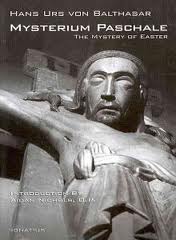
Mysterium paschaleCatholic giant Hans Urs Von Balthasar addressed this question in one of the most fascinating atonement theologies of the 20th century, his Mysterium Paschale: The Mystery of Easter, a meditation on the Triduum Mortis, the three days of Christ’s atonement: Good Friday, Holy Saturday, and Resurrection Sunday. Honestly, even though I’m not sure I can go for his controversial theology of Holy Saturday, brilliant though it is, most Evangelicals could stand to read his section on Good Friday–it’s worth the price of the book alone.

Before getting to the treatment of the three days, Balthasar argues that the Incarnation is clearly ordered to the Passion and that most attempts to reconcile the two trains of thought are misguided. Yet, the same time, if we look deeply into the Scriptures, the tradition, and the deeper theological logic, we will see that:

…to focus the Incarnation on the Passion enables both theories to reach a point where the mind is flooded by the same perfect thought: in serving, in washing the feet of his creatures, God reveals himself even in that which is most intimately divine in him, and manifests his supreme glory. (pg. 11)

East and West
Balthasar’s biblical arguments and later theological elucidation are both fascinating and convincing. The section that was most eye-opening for me in reading it a few years ago, was his section on the testimony of the tradition, both East and West on this subject matter.

Typically we are told that in the Orthodox East, a greater emphasis was laid on the Incarnation and that the Passion is accidental within the scheme, while the Latin West has placed a greater emphasis on the death on the Cross and so subordinates the Incarnation. Balthasar argues that this is a mischaracterization for “There can surely be no theological assertion in which East and West are so united as the statement that the Incarnation happened for the sake of man’s redemption on the Cross.” (pg. 20) Since this is somewhat uncontroversial of the West, specifically of the East he highlights that in their main theory, “the assuming of an individual taken from humanity as a whole…affects and sanctifies the latter in its totality, except in relation with the entire economy of the divine redemptive work. To ‘take on manhood’ means in fact to assume its concrete destiny with all that entails—suffering, death, hell—in solidarity with every human being.” (ibid.)

The Consensus
He then goes on to substantiate his claim with more citations from the Fathers than I have space to quote here; a number of them in Latin and Greek. I will reproduce only a few:

Athanasius

The Logos, who in himself could not die, accepted a body capable of death, so as to sacrifice it as his own for all.

The passionless Logos bore a body in himself…so as to take upon himself what is ours and offer it in sacrifice…so that the whole man might obtain salvation.

Gregory of Nyssa

If one examines this mystery, one will prefer to say, not that his death was a consequence of his birth, but that the birth was undertaken so that he could die.

Hippolytus

To be considered as like ourselves, he took upon him pain; he wanted to hunger, thirst, sleep; not to refuse suffering; to be obedient unto death; to rise again in a visible manner. In all this, he offered his humanity as the first-fruits.

Hilary

In (all) the rest, the set of the Father’s will already shows itself the virgin, the birth, a body; and after that, a Cross, death, the underworld—our salvation.

Maximus Confessor

The mystery of the Incarnation of the Word contains, as in a synthesis, the interpretation of all the enigmas and figures of Scripture, as well as the meaning of all material and spiritual creatures. But whoever knows the mystery of the Cross and the burial, that person knows the real reasons, logoi, for all these realities. Whoever lastly, penetrates the hidden power of the Resurrection, discovers the final end for which God created everything from the beginning.

Again, I have left out various citations by figures such as Irenaeus, Tertullian, Ambrose, Gregory Nazianzen, Cyril of Alexandria, Leo the Great, Augustine, and others (pp. 20-22). Still, as Balthasar notes, “These texts show…that the Incarnation is ordered to the Cross as its goal. They make a clean sweep of that widely disseminated myth” that the Greek Fathers, against the Latins, are focused on the Incarnation to the exclusion of the Cross. (pg. 22)

MangerThe Crib leads to the Cross
As interesting of a conclusion as this is for the history of theology, “more profoundly” says Balthasar, “the texts offered here also demonstrate that he who says Incarnation, also says Cross.” (pg. 22) Of course this should come as no surprise. In all these texts the Fathers were only repeating the apostles, “But when the fullness of time had come, God sent forth his Son, born of woman, born under the law, to redeem those who were under the law, so that we might receive adoption as sons” (Gal. 4:4-5),  and our Lord himself who said, “And what shall I say? ‘Father, save me from this hour’? But for this purpose I have come to this hour.” (John 12:27)

As we look to the Crib, we must see the Cross in the background—both holding our Savior in his weakness and humility—the peaceful beginning pointing the agonizing end suffered for our sakes; the cries from the cradle foreshadowing the cries from the Cross. This Christmas, as we gather around to celebrate the mystery of Incarnation, we cannot forget the Passion.

Soli Deo Gloria

Top 5 Reformedish Books of 2012

Everybody else is doing one so I figure I will too. I must note that my “Top 5” of 2012 were not all published in 2012—I may just have happened to read them this last year. Also, they appear in no particular order:

  1. A Shot of Faith to the Head: Be a Confident Believer in an Age of Cranky Atheists by Mitch Stokes – I’ve already reviewed this book here. Read it if you want the run-down.
  2. union with christUnion with Christ: Reframing Theology and Ministry for the Church by J. Todd Billings – Union with Christ is an essential theme and doctrine in Christianity, particularly within the Reformed tradition. In conversation with Augustine, Calvin, Bavinck, Barth, and others, Billings does some serious, but readable theological work, expounding the deep implications for theology and ministry of our union with Christ. For under 200 pages Billings’ scope is wide, covering everything from salvation to theological epistemology, the doctrine of God, Christology, the Lord’s Supper, social justice, and paradigms for mission. It also functions as an excellent, irenic introduction Calvin and the Reformed tradition as a whole. I cannot recommend this book highly enough.
  3. Meaning of MarriageThe Meaning of Marriage by Timothy and Kathy Keller – What can I say? It’s a Tim Keller book on marriage. That means it’s going to be well-researched, relevant, biblical, practical, theological, very readable, and, of course, gospel-centered. I’ve recommended this book to just about everybody: college students, engaged couples, newly-weds, oldly-weds, pastors, and marital experts. The great thing is that what you learn in this book won’t just teach you about marriage, it will teach you about all of your relationships, and most of all, the way the good news of Jesus Christ really does change everything.
  4. Lord and servantLord and Servant: A Covenant Christology by Michael Scott Horton – While this book was probably one of the most fun for me to read this year, it was also one of the nerdiest. Lord and Servant is the second in Horton’s quadrilogy of dogmatics and maybe the most important. In this series, he sets out to explore various classic theological topics letting the biblical notion of covenant–with its all-important Creator/creature distinction—and the eschatological story-line of the Bible shape the discussion. Much like the others, he’s working with some very high level theological and exegetical tools, interspersing and engaging with contemporary philosophical theology (Radical Orthodoxy), biblical studies (N.T. Wright), and patristics (Irenaeus) with insights from Calvin and the post-Reformation dogmatic tradition. As the subtitle indicates the end-goal of the work is Christology, but Horton does so much more in this volume with significant sections on: the doctrine of God, anthropology, Christology proper, and the contemporary atonement discussion. Horton has some of the finest discussions I’ve seen on the contemporary doctrine of God debates, as well as a thoroughly Reformed proposal for understanding the atonement in its fullness that beautifully incorporates insights from other traditions, as well as from its critics. In fact, the atonement discussion is worth the price of the book alone. Although this is admittedly not easy reading, for anybody with a taste for serious theology, it is a must.
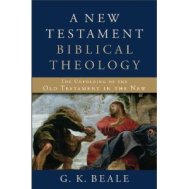
  5. New Testament Biblical TheologyNew Testament Biblical Theology: The Unfolding the Old Testament in the New by G.K. Beale – It was almost a tie for me between this volume and Beale’s earlier one The Temple and the Church’s Mission: A Biblical Theology of the Dwelling Place of God. At a whopping 967 pages of text, excluding indexes, it is hard to convey the truly colossal accomplishment of Beale’s magnum opus. Beale doesn’t set out to write your typical New Testament Theology with summaries of the Pauline corpus, or the Gospels, with a minor constructive chapter at the end. Instead, Beale gives us a truly Biblical theology focusing on the major redemptive-historical storyline of scripture, showing the way the promises in the OT of a New Creation Kingdom are inaugurated and fulfilled through the life, death, and resurrection of Jesus Christ. Not only does he trace the fulfillment of the OT storyline in the NT, but he does so in light of Second Temple Jewish background material, and with an eye towards contemporary theological discussions. On top of it all, this stuff preaches!! Pastors, seminarians, biblical scholars, and students would do well to purchase this and work their way slowly through it, page by page. There is a wealth of biblical riches here.
  • Honorable Mention: Christianity and Liberalism by J. Gresham Machen – Written at the height of the Fundamentalist/Modernist controversy, Machen aims to set out a clear choice between classic Christianity, the faith essentially shared for 2,000 years across Protestant, Catholic, and Orthodox lines, and that of the Modern theological liberalism that was prevailing in his day. I finally hunkered down to read it these last couple of weeks and have been stunned at the relevance this work still has nearly 90 years after it was written. Get this book, if only for the fact that you can download it for free.

So if you’re looking for something to read in the 2013 year, you may want to start with one of these. All of them will faithfully point you to Christ and help you love God with all of your heart, soul, strength, and mind.

Soli Deo Gloria

P.S. There are a couple that probably should be on here, but this thing was taking too long so they’ll make next year’s: Tim Keller’s Center Church and Ross Douthat’s Bad Religion.

The Jesus Who Quotes Himself

Jesus SpeakingBack in the day, liberal theologians liked to say Jesus never claimed any particularly extraordinary authority for himself; not to be the Messiah, the Son of God, or any of it, and that all of the church’s later teaching on it was an unjustified addition and corruption of Jesus’ originally pure, moral message about God’s Fatherhood, and the universal brotherhood of man. Usually this claim was advanced in order to forward a less doctrinally-“rigid” Christianity, more in keeping with the modern spirit, picturing Jesus as a teacher of universal moral truths and general wisdom suited to their post-Victorian sensibilities.

Actually, this kind of move still gets made today only we don’t use the “sexist” and gendered language of the “Fatherhood of God”, or the “brotherhood of man.” Typically we replace that with some talk about justice, equality, the end of oppression and such things. Don’t get me wrong, justice and ending oppression are good, biblical things. Still, it’s not uncommon to hear sentiments like, “If only we could forget all this business about Christ being ‘Lord’, or those abstruse Trinitarian controversies, or his atoning death with all of the silly theological disputes that go along with it, we could get down to the real business Jesus was about–you know, all that stuff in the Sermon on the Mount. The Sermon on the Mount! That’s the real Jesus. That’s the Jesus we should be listening to, considering, and putting what he preaches into practice. The Sermon on the Mount is where you find what Jesus was really all about–not all of this silly dogma about him that mainstream Christianity has gotten hi-jacked with.”

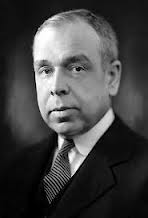
MachenBasically, if we could get Jesus’ ethics, his moral teachings, without all the doctrine, then we’d be good.  When J. Gresham Machen encountered this line of thinking back in his own day he pointed out the flaw, at least from the New Testament standpoint, with it:

Even those parts of the Gospels which have been regarded as most purely ethical are found to be based altogether upon Jesus’ lofty claims….But even in the Sermon on the Mount there is far more than some men suppose. Men say that it contains no theology) in reality it contains theology of the most stupendous kind. In particular, it contains the loftiest possible presentation of Jesus’ own Person. That presentation appears in the strange note of authority which pervades the whole discourse; it appears in the recurrent words, “But I say unto you.” Jesus plainly puts His own words on an equality with what He certainly regarded as the divine words of Scripture; He claimed the right to legislate for the Kingdom of God. Let it not be objected that this note of authority involves merely a prophetic consciousness in  Jesus, a mere right to speak in God’s name as God’s Spirit might lead. For what prophet ever spoke in this way? The prophets said, “Thus saith the Lord,” but Jesus said, “I say.” We have no mere prophet here, no mere humble exponent of the will of God; but a stupendous Person speaking in a manner which for any other person would be abominable and absurd. –Christianity and Liberalism, pg. 31-32

In essence he said, “Fine, let’s look at the Sermon on the Mount. Let’s see what kind of Jesus we find there: the Jesus who quotes himself.” What’s significant about that? Well, I mean, even in our modern context if you find a guy walking around quoting himself, you know he’s got a high opinion of himself. In the Bible this was a slightly bigger deal. See, a prophet of God would say, “Thus says the Lord”, but Jesus goes ahead and basically says, “Here’s what I say”–essentially elevating his word alongside the word of Lord. Actually, Machen goes on to point out that Jesus explicitly does that:

The same thing appears in the passage Matt. vii. 21-23: “Not everyone who says to me Lord, Lord, shall enter into the Kingdom of Heaven, but he who does the will of my Father who is in heaven. Many shall say to me in that day: Lord, Lord, have we not prophesied in thy name, and in thy name cast out demons, and in thy name done many mighty works? And then I shall confess to them, ‘I never knew you; depart from me, ye that work lawlessness.”’ This passage is in some respects a favorite with modern liberal teachers; for it is interpreted − falsely, it is true, yet plausibly − as meaning that all that a man needs to attain standing with God is an approximately right performance of his duties to his fellow-men, and not any assent to a creed or even any direct relation to Jesus. But have those who quote the passage triumphantly in this way ever stopped to reflect upon the other side of the picture − upon the stupendous fact that in this same passage the eternal destinies of men are made dependent upon the word of Jesus?

Jesus here represents Himself as seated on the judgment-seat of all the earth, separating whom He will forever from the bliss that is involved in being present with Him. Could anything be further removed than such a Jesus from the humble teacher of righteousness appealed to by modern liberalism? Clearly it is impossible to escape from theology, even in the chosen precincts of the Sermon on the Mount. A stupendous theology, with Jesus’ own Person at the center of it, is the presupposition of the whole teaching. -ibid., pg 32

Basically, if you want the Jesus of the Sermon on the Mount, you can’t get away from that Jesus of “doctrine”. Inevitably Jesus himself points you to the Jesus of the creeds–the Messiah, dead, buried, risen, ascended, the ruling and reigning Lord, equal with the Father, and coming to judge the quick and the dead. There is no ethical Jesus without the doctrinal Jesus; eventually you have to deal with the Jesus who quotes himself.

Soli Deo Gloria