Reading This Book Will Not Change Your Life: Review of “You Are What You Love”

you are what you loveMy title’s kind of tongue-in-cheek, but it cuts to the heart of James K.A. Smith’s thesis in his new book You Are What You Love: The Spiritual Power of Habit. Over a number of works, especially his Cultural Liturgies series (Desiring the Kingdom, Imagining the Kingdom), Smith has argued that modern, Western Christians (especially Evangelicals) have been held captive by a false picture of the human person as “thinking thing.”

On this view, you are what you think and there’s something of a simple correlation between what you believe and the way you live. Discipleship, then, is mostly a matter of proper spiritual data input.

But we’re not just thinking things. No, following Augustine (and the Scriptures), Smith argues that we’re worshipers. We’re desirers. We’re lovers who are shaped by those things we love most.

The hitch is that our deepest loves aren’t necessarily those things we consciously think we want most, but those drives that reside within us at an almost unconscious level. And they show up in our habits, our basic patterns of life.

If that’s the case, then, discipleship is not mostly a matter of data input, or simply reading the right book, but about the long, arduous path of having your desires transformed through the power of habit. Yes, our loves show up in our habits, but it’s also the case that our habits and practices give testimony to and shape our loves.

And so, we are constantly being shaped in one way or another by the various practices (liturgies) we’re engaged in, whether it’s checking our smart phones, visiting the local mall, eating fast food, or consuming varieties of ideologically-loaded pop cultural artifacts.

For this reason, the transformation of desire isn’t simply going to happen by rearranging some of our beliefs, but by adopting the sorts of practices that shape our loves to conform to the Kingdom of God. These liturgies train our hearts, sort of like batting practice trains our arms or training wheels our stabilizer muscles, in the way they should go.

Now, for those who have read Smith’s other works, much of this will be familiar. It’s an Augustinian call to virtue ethics. Indeed, it might seem so familiar that you’re wondering why Smith wrote the book. I’ll say that this work is different from the Cultural Liturgy series in a number of ways.

First, you’re not really wading through any of the French, continental philosophy of Merleau-Ponty, or the social theory of Pierre Bordeau. It’s full of all the wit, the basic insights, made in a more direct, concise fashion. For that reason alone, the work is far more accessible and user-friendly than the earlier iterations.

Second, Smith’s fleshing things out more practically on the ground than he does in the earlier works. I think this is what I loved most about the work. Smith’s vision of the habits that form us is worked out in some fairly pedestrian realities like church, marriage, educating your children, and your everyday vocation. This aspect makes it more immediately useful for both pastors and laity who might be intimidated to wade into the earlier works.

Third, because of that fleshing out, Smith does make plenty of new points. Some on the theoretical end, but the applied practice gets far more attention in this work in a number of helpful ways. Plus, there’s a load of new examples and fascinating little bits of cultural analysis (which are usually the most fun parts of Smith’s works, to be honest). I laughed multiple times throughout the work, tweeted out several segments, and flagged a number of pages as helpful preaching illustrations.

I think the most personally impacting section for me at this phase in my life was the bit on the liturgies of the home and the way a marriage is a formed through the various, liturgical practices we craft our life through. I’m in a Ph.D. program. I spend the vast majority of my day as a “thinking thing.” And as much as I think I’ve grown in theoretical knowledge and insight, the reality is that my choice to eat at the table with McKenna instead of in front of the TV shape is probably more important for shaping my understanding of the little kingdom God has given us in the world. How are the countless, daily rhythms we have adopted preparing us for life in the kingdom to come? Or for a life of discipleship and fidelity now?

Now, on a critical note, I must admit that as sympathetic as I am towards Smith’s advocating for more traditional, liturgical (in a modest, Reformed sense) worship, I did wonder if the critiques of contemporary worship services and styles was applied a bit too thickly. Or again, whether the critique of current youth groups obsessed with relevance at the expense of substance was representative of the healthy youth groups I’ve seen and the earnest youth pastors running them.

Also, Smith does open himself up to critique in that he’s over-exaggerated the power of habit and downplayed the properly cognitive dimension to the Spirit’s work of transformation through the preached Word and so forth. Now, while I can see it, I’m not sure Smith’s actually guilty of it. Especially if we take the work less as a total program or theology of sanctification (which I’m not sure Smith intends), than as a corrective of the lopsided one with which we’ve been operating. Taken in that sense, Smith’s work is a vital and timely work, full of much-need wisdom for the church, both gathered and scattered abroad in our homes and workplaces.

I suppose I’ll wrap up this brief review with a simple commendation: if you’ve already engaged Smith’s work as I have, I think you’ll find plenty that’s worth your time. If you’ve never read Smith’s work, this is probably the best place to start.

As I said in the title, reading this book won’t change your life. But it will point you to the practices that, graced by the Spirit, just might do the trick.

Soli Deo Gloria
Triune Justification, Again (Or, is a Reformed view of Salvation Sub-Trinitarian?)

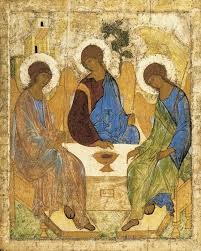
trinityI’ve noted before the way that Protestant theologies of salvation, especially of the Reformed variety, are occasionally criticized as being sub-trinitarian due to their narrow focus on forensic or legal categories. Whether because of an allegedly blinkered view of the cross, or an “overly-individualistic” transaction model of justification by faith, Reformed theology apparently can’t compare to more Catholic, Orthodox, or some more metaphysically-inclined Anglican proposals flirting with Radical Orthodoxy. (To be honest, the critiques all sort of blur together.)

Triune Justification, Again

Again, while that may be true of some popular Reformed or general ‘Evangelical’ preaching, that’s certainly not the case with classical Reformed theology such as that of Bavinck who lays out a beautifully trinitarian conception of justification. But some may wonder if that’s simply because with Bavinck we are dealing with an exceptional Reformed theologian, a jewel in the tradition who is unrepresentative of the broader whole?

Well, actually no. Once again, I ran across this little gem in Thomas Watson’s commentary on the Westminster Catechism’s treatment of justification. Watson is dealing with the various “causes” of salvation, such as faith which receives it, Christ’s righteous life and death as its ground, and so on. He moves to ask about the “efficient cause” or author of our justification:

What is the efficient cause of our justification?

The whole Trinity. All the persons in the blessed Trinity have a hand in the justification of a sinner: opera Trinitatis ad extra sunt indivisa. God the Father is said to justify. ‘It is God that justifieth.’ (Rom 8:83). God the Son is said to justify. ‘By him all that believe are justified.’ (Acts 13:39). God the Holy Ghost is said to justify. ‘But ye are justified by the Spirit of our God.’ (I Cor 6:61). God the Father justifies, as he pronounces us righteous; God the Son justifies, as he imputes his righteousness to us; and God the Holy Ghost justifies, as he clears up our justification, and seals us up to the day of redemption.

There you have it. Drawing on the classical trinitarian logic that all of the Trinity’s ad extra or “outward” works are undivided, Watson traces the triune shape of God’s one justifying action in Christ. There’s absolutely nothing “sub-trinitarian” about even the very clearly forensic or legal dimension to a Reformed account of God’s saving work.

But Even Beyond Justification

It also bears pointing out that much of the confusion comes when we miss the fact that a Reformed view of salvation is not limited to justification by faith. It gladly encompasses it, but free justification and the forgiveness of sins is not the sum total of the gospel, nor of the benefits that make up our salvation. No, arguably, the larger category to keep in view is the doctrine of union with Christ, whereby in faith we are united legally, spiritually, morally, mystically, and vitally with Jesus and all of his benefits, which ends up giving us far more than justification alone. It’s also the broader picture that completely destroys the sub-trinitarian charge.

Instead, union with Christ expands to include things like the effectual calling out of darkness into light which precedes justification. Then also come the gifts of adoption into Father’s family, with all of the spiritual privileges that come with being a child of God such as access in prayer, peace, and the assurance of the Spirit. We are also given the sanctification and growth in holiness which inevitably follows as we received the gift of the Holy Spirit in our union. Finally, we are promised glorification, or the perfection of our salvation when we are resurrected anew by the Spirit and the process of sanctification is complete as we are fully and finally conformed to the Image of the Son, the Resurrected Jesus, in order that we might look upon the face of God in glory.

Theologian Todd Billings had an excellent little article on this recently, articulating all this as an expression of what we might (carefully) call a Reformed doctrine of deification. I’ll quote Billings at length:

Nevertheless, classical Reformed theologians do not hesitate in speaking about the uniting communion that we experience now – and will experience in fullness – in Christ. As Calvin asserts, in our present life of union with Christ by the Spirit – which is nourished through the preached and sacramental Word in community – believers are “participants not only in all his benefits but also in himself.” Indeed, “day by day, he grows more and more into one body with us, until he becomes completely one with us” (Institutes 3.2.24). Moreover, believers are “fully and firmly joined with God only when Christ joins us with him” (Institutes 2.16.3). Yet this union with Christ is impossible without a participation in the Spirit, who unites the believer to Christ (Institutes 3.1.2). Indeed, through the Spirit “we come to a participation in God (in Dei participationem venimus)” (Institutes 1.13.14). As the “perfection of human happiness is to be united to God,” this union takes place in redemption (Institutes 1.15.6). Yet this union does not make us “consubstantial with God” like a fourth member of the Godhead, but it is in Christ, through “the grace and power of the Spirit” (Institutes 1.15.5).

Calvin also speaks of a coming beatific vision, a “direct vision” of the Godhead, “when as partakers in heavenly glory we shall see God as he is” (Institutes 2.14.3). This final, temporal end is in fact “the end of the gospel,” that is, “to render us eventually conformable to God, and, if we may so speak, to deify us” (commentary on 2 Peter 1:4). For Calvin, the present and future scope of God’s work in salvation requires us to go beyond looking at how we receive salvation and what salvation saves us from. All of this takes place for the sake of union and communion with God. Salvation not only restores what is lost by the fall; it incorporates creatures into the glorious life of the Triune God.

I’d recommend going and reading the whole of the article and maybe picking up his book Union with Christor this free article on Calvin’s view of salvation focused on the way union with Christ organizes things along trinitarian, Christocentric, and non-reductive lines, if you’re curious about more along these lines.

At the end of all this, though, it should be enough to dispel the very misguided charge that a Reformed view of salvation is sub-trinitarian due to its legal flavor. Not only does that misconstrue what the Reformed actually say about justification, it misses the much broader trinitarian context of salvation in union with Christ that justification is set within. Honestly, if I wanted to, I could have gone through and shown the trinitarian shape of each of those gifts (calling, sanctification, etc) in detail from the Reformed sources. But this enough to reflect on for now.

Soli Deo Gloria

15 Doctrines That Ought to Bring Comfort In Suffering

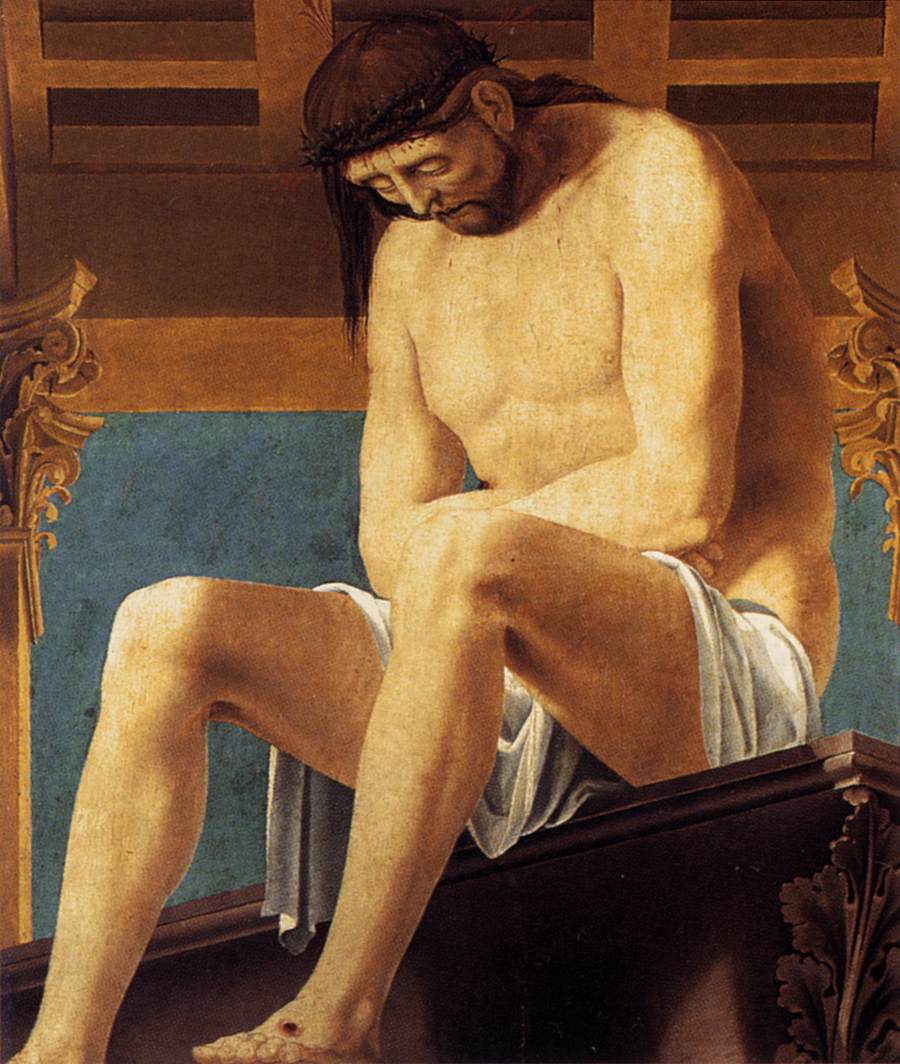
Pedro_Fernández_-_Christ_Suffering_-_WGA07807One of my fundamental convictions is that theology, while possessing theoretical aspects, is eminently practical. It’s the “doctrine of living unto God” as some of the older theologians used to put it. One of the greatest tests of that “practicality” is understanding the various ways that the doctrines of the Christian faith can serve as a comfort to us in the manifold sufferings and tragedies we encounter in this life this side of Eden and before the Second Coming.

In what follows, I’d like to simply (and briefly) point out some of the many ways the main doctrines of the Christian faith provide a comfort to the believer in times of struggle, suffering, and pain.

  1. Trinity.  Before moving to realities more directly oriented towards God’s actions on our behalf, it’s important to stop and remember the comfort of the fact that before all things, God has eternally been perfectly existent as Father, Son, and Holy Spirit. This God is holy, perfect, beautiful, righteous, loving, faithful, eternal, unchanging, impassible, all-powerful, all-present, blessed, and supremely good. In the midst of our suffering, it’s often crucial that we remember that there is a reality deeper and truer that grounds, funds, and surpasses the finite and fallen world we encounter. In that sense, God being God without me holds its own comfort for me.
  2. Creation. God created the world and blessed it by declaring it to be “very good.” In a very important sense, the world is something to be taken, received with gratitude, and enjoyed. Each and every breath in our lungs is a gift of the Creator who has provided us with every good thing, every tree in the Garden, so to speak, for our benefit. We are not souls trapped in prisons, alienated from and anxiously awaiting our natural home in the stars, but humans placed in the midst of beautiful habitat with deep purpose by a good God. Every blade of grass, tulip in the field, bright ray of sunshine, speaks of his power and goodness.
  3. Sin. Connected to this is the doctrine of sin. It’s a bit counterintuitive to think of the doctrine of sin as a comfort, but there is deep reassurance in knowing that the unease, the pain, the opposition we encounter in the world is not natural to it. The world is not meant to be this way and it is sin, not divine malevolence or weakness, that has resulted in the brokenness we experience in our bones and our souls. God hates the fractures in his handiwork and stands opposed to them as we do–indeed, even more than we do.
  4. Providence. God is not a hands-off deity who fell asleep at the wheel. Contrary to what we’re tempted to believe in our darkest moments, the world is not governed by a cold and cruel fate.  The doctrine of providence teaches us that the Triune God sovereignly causes, permits, and guides all things for the ultimate good of his creation and his children. Even the dark schemes of the Evil One will be turned on their head and used for the glorious blessing of creation.
  5. Christ. There are multiple comforts to be derived from meditating on the doctrine of Christ. John Owen gave us a few here. Still, at base, in whatever situation we find ourselves in, looking at Jesus we are given deep consolation in remembering that out of his unfathomable love, God has assumed my nature, experienced what I’ve experienced, suffered all that I have suffered, in order to redeem me, bring into proper relationship, and make me like himself.
  6. Cross. Meditating on the Cross yields comforts to carry us through a lifetime. Here are a few: First, God has damned all that opposes him. Evil cannot stand against him. Looking at the Cross reminds me of God’s utter righteous, holiness. Second, that damnation included my sin which has been punished, buried it, sent to hell. Beyond that, Christ has secured the ultimate victory against the Destructor who is ultimately behind all evil. Satan may still prowl about, but he is mortally-wounded and on the run. Because of this, I can look to the Cross and see my Crucified Savior, take up my own cross and follow him in this life.
  7. Resurrection. Christ’s resurrection teaches me many things. First, the truth is eventually vindicated. One of the great torments of life in this world is the falsification of reality, the lies we tell about each others, and God’s truth. The Resurrection is the great demonstration and unveiling of the Truth of the Son, teaching me that everything, every injustice will one day come to light. Second, death is not the end of the story because the Creator who declared the world to be very good decided to be its Redeemer who will not leave it to decay forever. Whatever threat comes against me, the worst it can do is kill me, and God can take care of that. Finally, nothing can separate me from the love of Christ. He’s already been killed once. What else could come against him?
  8. Ascension. The doctrine of the Ascension means that even now Christ on the throne of heaven, interceding for us. We have the king of the World as our advocate and High Priest. The ruler of the Universe knows what it is like to have walked through the dark vale of the world. He rules with compassion and mediates with sympathy, understanding our weakness.
  9. Holy Spirit. In the person of the Holy Spirit, God himself has come to indwell the believer. This is great comfort to us because we can know that wherever we are we are not alone in the world; not in the darkest dungeon of some authoritarian tyrant, nor the darkest recesses of our own despair. God is with us in all that we suffer and will give us whatever strength we need to face the trouble we encounter in the world.
  10. Union. By faith him, through the mysterious activity of the Holy Spirit, we are united to Christ. This means all of his benefits, all of his accomplishments are mine and secure. Every heavenly gift, all of his rights and privileges, are mine because I am his.
  11. Justification by Faith. Because of this union, I am justified entirely by faith. Christ’s death for sin on the Cross was my death, and his vindication through the resurrection as “righteous” is now mine. Because of that, I can know that none of the pain, or suffering I encounter in this life is God’s judgment or wrath against me, because that has been fully satisfied on the Cross and I’m righteous in Christ. I don’t have to fall into a pit of guilt or self-condemnation when pain or misfortune befalls me.
  12. Adoption. Also, we have been adopted in Christ. This means that God is our Father despite our sins, failures, and outward appearances. We have been fully and irrevocably been brought into the kind of relationship with God which allows me the privilege of bursting into the courtroom of the King, calling him “Abba” and making known my deepest needs, hurts, and pains with utter security and freedom.
  13. Sanctification.  Sanctification is comforting in a number of ways. I was listening to John Piper the other day talking about the joy of heaven and the end of earthly frustrations. He pointed out that the thing he’s most sick of in this life is his own sin. Sanctification is comforting in reminding us that we are not forever trapped in the sin that easily the greatest source of the daily suffering most of us face. Beyond that, the doctrine of sanctification teaches me that I have been set apart in such a way that I know that in all that befalls me, God is at work to make me holy, pure, and more like his Son.
  14. Church. The doctrine of the Church is a comfort, in that I don’t have to suffer alone in this life. The reality is that I am now part of a family, a body upon whom I can depend full of brothers and sisters, aunts and uncles, mothers and fathers. Many of these have gone before me down this path and stand ready to counsel, support, uphold, encourage, and rescue in times of need.
  15. Last Things.  Finally, of course, there is an ultimate day when God will make himself all in all. He will do this through the Return of Christ who comes to judge the quick and the dead, punishing oppression, ending it, redeeming the world, rewarding the righteous, and ushering in a day of everlasting glory. Upon that day, we will behold our God and he will wipe away every tear from our eyes. This is the blessed hope and a vision to sustain us in the darkest of hours. The light shines just over the ridge, promising a weight of glory that overwhelms these light and momentary afflictions.

I could continue at length with each of these doctrines. Indeed, in the section on the doctrine of God, each of his attributes provides a particular comfort of its own, for those of us willing to stop and meditate on them. For now, there is enough to see that what we need in times of torment, is not bland platitudes handed to us from spiritual gurus, or pinterest memes, but a soul that has marinated the deep truths of God’s Word. I’ll end by simply quoting one of the most comforting paragraphs in the history of theology, Heidelberg Q & A 1:

Q. What is your only comfort in life and in death?
A. That I am not my own, but belong—body and soul, in life and in death—to my faithful Savior, Jesus Christ.

He has fully paid for all my sins with his precious blood, and has set me free from the tyranny of the devil. He also watches over me in such a way that not a hair can fall from my head without the will of my Father in heaven; in fact, all things must work together for my salvation.

Because I belong to him, Christ, by his Holy Spirit, assures me of eternal life and makes me wholeheartedly willing and ready from now on to live for him.

Soli Deo Gloria

Pursuing Power, Pursuing Education

students_in_classroomIn Christianity power is not a zero-sum game. Not fundamentally at least.

I was recently in a conversation with some friends about this reality recently. We were mulling over the issue of whether or not Christians ought to pursue positions of power or cultural influence in order to change things from above, or work for the common good in positions of authority.

Of course, while the concept will seem intuitive to some, even mentioning the idea immediately (legitimately) raises the suspicion of others. Nowadays in certain Christian circles there is a lot of talk about “embracing powerlessness” and giving power away as a more fundamentally Christ approach to power and authority. And there’s something to the notion when we look at Jesus. Jesus seemed to intentionally operate on the margins, using poor fishermen, (with a Zealot and a tax collector thrown in), staying in cultural backwaters, and eschewing the crowds seeking to crown him. Finally, there is a form of powerlessness in embracing the Cross, handing yourself over to be crucified, to have the will of others exercised upon you.

Moving to Christian history, it’s always important to remember that the Christian movement began at the margins of society and, even without embracing a full-throated “Constantinian” fall narrative, it’s easy to see some of the negative consequences of the Church gaining political and social authority.

With considerations like these (and a great many more) it is easy to become suspicious of the call to pursue positions of influence. The City of Man’s siren song of the lust to dominate calls powerfully and finds hearts in the Church all-too-willing to listen and be seduced by it. It seems safer (in some ways), wiser, and more Christlike to walk away from positions of power, to distrust political and social authority, and work in a more ground-up, power-relinquishing fashion. When possible, hand over as much as you can, to the powerless, the disenfranchised, and the marginalized.

Again, there’s something to that. But I also want to say there’s something else too. I suppose what I’m saying is that we can’t begin our reflections on the use of power only after Genesis 3. Genesis 1 and 2 have a role to play. The doctrines of God and doctrine of creation are fundamental to our conception of the way the redemption of Jesus Christ changes our ideas and attitudes towards power.

Beginning with the Triune God, we must remember that from all eternity Father, Son, and Spirit has infinite power and glory. What’s more, in his creation, he gifts a measure of power and authority to his image-bearers at no detriment to his own. His gift of authority to humans is no threat to his own. In fact, their power and authority ontologically funds and morally authorizes theirs. In other words, he loses no power, no strength, no sovereignty, even as he exercises authority through his Image-bearers–with, or even (in light of sin) contrary to their own will.

Ideally, human power would function like this in an analogical fashion (our power being finite and dependent). In Genesis 1 and 2, God gives humanity power so that they would then exercise the kind of dominion and ordering of creation that would cultivate and empower it to produce and even greater yield than it could apart from humanity’s guidance. Of course, sin twists that as is obvious and apparent. Power and authority are distorted and perverted–dominion becomes domination.

But when God redeems, he does not move us to a space or a stage that is totally contrary to, or radically different from his original created intention. The redemption of humanity and the cosmos means the redemption of the use of power. By the power of the Spirit of God, whether in common or special grace, humans can use power in order to bless and benefit others. This is one of the majors themes in the OT literature about the righteousness and holiness of the kings and princes of Israel–their godly use of authority and power for the sake of the powerless and the oppressed. Their exercise of power enables the poor to achieve a stable social position in which they are empowered to live without fear and pursue a whole life. Though there is an asymmetry, it is not a vicious, or idolatrous one, but one ordained for human flourishing.

Indeed, if I had time, I think I could even show this theme at work in the New Testament, both in the life of Jesus, the acts of the Apostles, and even the epistles. Not to mention Church history. It’s quite common to remember Christendom’s woes, even while we continue live in the historical wake of its social benefits.

What does this look like in practice, though? Well, this is a brief blog post, but the best example that comes to mind, the paradigmatic example, of a Christian approach towards acquiring and using power in order to empower others in a non-zero-sum fashion is that of education.

Think about the educational process. It is entirely dependent on an asymmetry in knowledge/power between educator and student. It’s precisely because the educator knows more than and has a certain measure of authority over the student that she can teach the student. What’s more, in the process of educating and exercising power, the educator is actually empowering the student, elevating them through the communication of knowledge. This is an example of giving away power that leads to no loss on the part of the educator. The student’s gain in knowledge does not diminish the educator’s in the slightest, but only raises the student.

Of course, in order for this kind of empowerment to happen, what does the educator have to do? They have to pursue knowledge and become an authority on a given subject matter. In order to give power away in a non-zero-sum fashion, they have to pursue that power through years of study, training, and so forth. Of course, there is a selfish way of pursuing education, knowledge, and authority–one that keeps the educator in possession of knowledge to the exclusion of others. Absolutely, they can use it to control, to elevate themselves at the cost of others. But we have to see that this is not inherently the case. And for any of the good of education to happen, we must run the risk of pursuing intellectual power.

Obviously, not all exercises of authority and power are exactly like this. Certain resources are more limited and there are certain “zero-sum” limitations to its exercise. But the fundamental principle of using power in order to empower others is still a creational and, I would say, redemptive reality that cannot be ignored or downplayed without detriment to our witness and our basic love of neighbor.

Soli Deo Gloria

Why Pray? Because God is a Forgiving God

Praying manReading through Keller’s book Prayer, I was reminded of one of the most fascinating and comforting passages in all of Calvin’s Institutes. Many don’t know that one of Calvin’s longest chapters in the Institutes is his section on prayer (Book III, Chapter 20.) in which he discusses all sorts of disputed questions, comments on the Lord’s Prayer, and gives out a bunch of practical advice. Keller notices the heart of it are his five “rules” for how to properly approach prayer in the presence of God and so he devotes an entire chapter of his book to exploring them (chapter 7, pp. 97-107).

The first is that we are to approach God with reverence, or holy fear. By fear, yes, there is the element of being afraid, but it’s not the sort of fear that comes with a terror of punishment. As Keller points out, we have no fear of that for Christ is our mediator. Rather, it’s the joyful fear that comes with not wanting to offend someone you greatly admire and love. We should approach God, the Holy King, with no less a sense of awe and careful delight. (III.20.4)

Second, we need to get rid of any sense that prayer is unnecessary or that we are sufficient for our own lives. We need to come to him with a sense of spiritual humility, dropping the false face that wants to perform for God, or present our own spotless record. We need to come utterly dependent, alive to the reality that we need God and are here because of our great lack. In other words, God isn’t interested in fake prayers, but truth. (III.20.6)

Then, there are two more rules that Keller lumps together. The first is to come to God with submissive trust. God is God and so we pray to him as Jesus did in the garden, submitting our will to his. We are to honestly ask for what we want and need, and yet still acknowledge that God is wise beyond our wants and needs. He may do something different and that’s not just okay, it is good. (III.20.8)

But, fourth, we must also not let this submissiveness turn into apathy or a lack of faith. We need to trust that God will actually answer us. Much like Kierkegaard’s knight of faith who will accept whatever God gives him, he nonetheless goes to God hopefully and confidently, knowing that God is a good Father who wants to answer prayers. We mustn’t think him grudging, bitter, or unwilling, but generous and powerful to answer. (III.20.11)

With these rules in mind, we come to Calvin’s the fifth rule, the rule that Keller calls the “Rule against the Rules”, and we are to remember in all of this that God is a gracious God. In other words, there are proper ways to pray, but Calvin doesn’t want you to stop praying just because you’re inevitably going to get it wrong. God is a forgiving God. So pray anyways. I’ll quote him so you see what I mean:

This also is worth noting: what I have set forth on the four rules of right praying is not so rigorously required that God will reject those prayers in which he finds neither perfect faith nor repentance, together with a warmth of zeal and petitions rightly conceived.

I have said that, although prayer is an intimate conversation of the pious with God, yet reverence and moderation must be kept, lest we give loose rein to miscellaneous requests, and lest we crave more than God allows; further, that we should lift up our minds to a pure and chaste veneration of him, lest God’s majesty become worthless for us.

No one has ever carried this out with the uprightness that was due; for, not to mention the rank and file, how many complaints of David savor of intemperance! Not that he would either deliberately expostulate with God or clamor against his judgments, but that, fainting with weakness, he finds no other solace better than to cast his own sorrows into the bosom of God. But God tolerates even our stammering and pardons our ignorance whenever something inadvertently escapes us; as indeed without this mercy there would be no freedom to pray. But although David intended to submit completely to God’s will, and prayed with no less patience than zeal to obtain his request, yet there come forth—sometimes, rather, boil up—turbulent emotions, quite out of harmony with the first rule that we
laid down… (III.20.16)

Calvin goes on to list a number of ways that we fail in our prayers and the need for God’s forgiveness at every step of the way, otherwise we would have no hope of being heard at all. He says that he recounts all this, not so that people give themselves a pass, but :

…that by severely chastising themselves they may strive to overcome these obstacles; and although Satan tries to block all paths to prevent them from praying, they should nonetheless break through, surely persuaded that, although not freed of all hindrances, their efforts still please God and their petitions are approved, provided they endeavor and strive toward a goal not immediately attainable.

What we have here is the difference between leniency and grace. Many of us look at Calvin’s rules, and then Calvin’s assurance of forgiveness and might be tempted to think that Calvin is making too big a deal here. The reason we can pray is that God doesn’t mind us coming to him without holy fear, submission, and so forth. God just likes that we come as we are and pray as well like.

But while that initially sounds better, Calvin knows that we need a deeper assurance than that. Most of us, deep in our guts, know that the way we pray matters. It has to matter. So this picture of a lenient God who doesn’t care isn’t comforting. We’ll still, in the back of our minds, be terrified to pray incompletely, or inappropriately, and so we’ll shy away. Calvin wants us to build our prayer life on a deeper foundation than leniency. He wants us to build it on the foundation of God’s grace in the Gospel.

Yes, you’re going to get this wrong. Yes, you’re going to pray like a proud idiot sometimes, but that’s no reason to stop praying. It’s only as you go to God with confidence that he hears your prayers even as he forgives them, that you will grow in your walk with God. As you grow in prayer, and you grow in your knowledge of God’s forgiveness, and eventually lose your pride and begin to pray to him the way you ought to. It’s a virtuous cycle.

So, why should you be confident in prayer? Because God forgives them.

Soli Deo Gloria

A Matter of Life or Death: Prayer

prayerThis year, my wife and I have committed to sharpening up our prayer life. Our church just went through a series on power and necessity of prayer, and the current season in our lives has been impressing upon us our greater need to be personally and jointly devoted to prayer. We’ve been praying together in the mornings, but we both had been sensing a desire and weight to pray. Plus, Tim Keller just came out with a new book on prayer, aptly entitled Prayer: Experiencing Awe and Intimacy with God,, so I figured this could be a good reading project to help us out.

Well, right off the bat, Keller opens with a story that convicted us we needed to step out on this path with boldness and resolution. Here’s what I mean:

“In the second half of my adult life, I discovered prayer. I had to. In the fall of 1999, I taught a Bible study course on the Psalms. It became clear to me that I was barely scratching the surface of what the Bible commanded and promised regarding prayer. Then came the dark weeks after 9/11, when our whole city sank into a kind of corporate clinical depression, even as it rallied. For my family the shadow was intensified as my wife Kathy struggled with the effects of Crohn’s disease. Finally, I was diagnosed with thyroid cancer.

At one point during all this, my wife urged me to do something with her we had never had been able to muster the self-discipline to do regularly. She asked me to pray with her every night. Every night. She used and illustration that crystallized her feelings very well. As we remember it, she said something like this:

Imagine you were diagnosed with such a lethal condition that the doctor told you that you would die within hours unless you took a particular medicine–a pill every night before going to sleep. Imagine that you were told that you could never miss it or you would die. Would you forget? Would you not get around to it some nights? No–it would be so crucial that you wouldn’t forget, you would never miss. Well, if we don’t pray together to God, we’re not going to make it because of all we are facing. I’m certainly not. We have to pray, we can’t just let it slip our minds.

Maybe it was the power of the illustration, maybe it was just the right moment, maybe it was the Spirit of God. Or, mostly likely of all, it was the Spirit of God using the moment and the clarity of the metaphor. For both of us, the penny dropped; we realized the seriousness of the issue, and we admitted that anything that was a truly no-nnegotiable necessity was something we could do.

Prayer: Experiencing Awe and Intimacy with God, pp. 9-10

Reading that passage, the penny has ‘dropped’ for my wife and I as well, and we know that 2015 is going to be a year where we take prayer more seriously than we ever have before. Prayer is a matter of life or death; it is communication and communion with the Triune God who is the source of every breath in our lungs. What could be more important than that?

I would invite you to consider placing it at the center of your priorities this year as well. There are any number of prayer programs or approaches that can help you. Here’s one simple way to pray you can take up easily.

Also, I would encourage you to maybe take up Tim Keller’s book on prayer as well. Many of us don’t pray for various reasons. Some of us have theological reasons. We don’t understand what’s going on, or we have questions about God’s willingness to answer or how it all works. I’ve talked with enough students and friends to know that theology can actually be a significant roadblock for many.

Others have practical questions. We simply don’t know how to begin, or what even the most basic prayer life would look like. We start to pray, but we just end up fumbling about, wondering if we’re doing it right, or if we’ve simply been talking to ourselves.

Finally, some of us have been praying for a while, but we have hit stagnant stages in our walks. In that case, many of us need to be led down more complex paths because we’ve fallen into spiritual ruts.  Or, we need to simply be reminded of the beauty and glory of what’s actually happening in prayer.

Keller’s book is helpful in that he aims to tackle the various dimensions of the issue to prayer, whether theological, practical, or what-have-you. There’s something for everyone there, whether young or old in their walk with Christ.

Either way, whether with Keller’s book or through some other prayer plan, I’d encourage you to take up prayer with a renewed vigor this year. It could be a matter of life and death.

Soli Deo Gloria


The Theologian and the “Section Man” (Or, Franny and Zooey Go to Seminary)

franny and zooeyContinuing my foray into literature, I’ve begun reading Franny and Zooey by J.D. Salinger (mostly because it’s on the shelf, Alan Noble is a Salinger fan, and I don’t feel like picking up Cormac McCarthy yet). Of course, this is a huge change of pace from Austen. It’s a different air we’re breathing–much smokier and angst-ridden. As a college pastor only a few years out of school myself, in some ways it’s all a bit too familiar. All the same, I’ve found it illuminating and enjoyable. But not in phony way.

One particular interchange early on between the young couple, Franny and Kane, got me thinking about the nature of theology; or rather, the character of the theology student. Kane is telling Franny about some critical literature paper he’s thinking of getting published. He’s obviously very proud of it, while at the same time trying to act cool, detached, and dismissive about the whole thing, and it provokes Franny’s ire. Later on in the chapter we learn that Franny’s become sick of all the “ego”, all the self-aggrandizing attached to the pursuit of a name through petty accomplishments in the world she knows. Upon seeing Kane caught up in the same sort of preening, ecocentric concerns, she responds by saying that he’s acting just like a “section man.”

When pressed on it, she explains further:

“Well, I don’t know what they are around here, but where I come from, a section man’s a person that takes over a class when the professor isn’t there or is busy having a nervous breakdown or is at the dentist or something. He’s usually a graduate student or something. Anyway, if it’s a course in Russian Literature, say, he comes in, in his little button-down-collar shirt and striped tie, and starts knocking Tur-genev for about a half hour. Then, when he’s finished, when he’s completely ruined Turgenev for you, he starts talking about Stendhal or somebody he wrote his thesis for his M.A. on. Where I go, the English Department has about ten little section men running around ruining things for people, and they’re all so brilliant they can hardly open their mouths—pardon the contradiction. I mean if you get into an argument with them, all they do is get this terribly benign expression on their—” –Franny and Zooey, pg. 14

Most of us who’ve spent time in a couple of discussion sections run by a fresh grad student can probably recognize the picture. Or even if you’ve been to seminary for that matter. Don’t get me wrong, I loved my philosophy TAs and my time in seminary, but this sort of thing can happen. It’s a particularly good picture of the way that “knowledge puffs up.”

Which brings me to the point. As I was reading this, I couldn’t help but reflect on the practice of theology and think to myself, “Theologians, we are not to be ‘section men.'”

You see, while everyone is a theologian of sorts, there are others–pastors, and theology students, usually–who become “theologians” in the technical sense. They set aside time in their lives, to study, grow, and become experts, knowledgable in their fields. They become familiar with the names, the history of theological discussion, the important categories, and so forth, that go along with that. As you might expect, in the course of things they develop opinions, convictions, passions, likes, and dislikes just as other men and women do. Expertise in any field will produce that and that’s fine.

We should be sure, though, that we do not turn in a “section men”, or “section women.” Theology students pursue these activities and specialized knowledge in order to know, love, serve and worship God, as well as to equip and prepare the church to know, love, serve, and worship God.

But this is not for our own name or prestige as an expert.

For various reasons, it’s all too tempting to enjoy being consulted as the expert in a given area. Some of us derive our justification by approval as an “expert” or a theologian rather than simply as a child of God. Others find it tempting to take pleasure in being “in the know” about these things, the inner circle of the wise, and quashing the opinions of the theologically unwashed. There is a sort of individual who loves crushing pop theology, not because of a love of truth, or because its destructive of souls, but because they love crushing things and this is the way they know how. This is not being a theologian, but rather a “section man.”

It’s not for nothing the old theologians used to say theology was impossible without prayer. Attempting to study theology without prayer is a contradictory endeavor. It’s attempting to learn and say something about the God upon whom all existence depends, all the while acting like you’ve arrived on your own steam. This can only lead to pride, self-justification, and other such folly.

Pastors, theology students, and others of the general species homo theologicus, heed that counsel. Theology is only to be studied with prayer, otherwise, you may just look up from your textbooks one of these days and see a section man staring back at you in the mirror.

Soli Deo Gloria

The ‘Technical Stuff’ Matters in Preaching (Or, Theology is Unavoidable)

Matthew Levering makes a point I’ve seen confirmed time and again in my own preaching and teaching with college students and young adults:

Most Christians contemplate God liturgically and through personal prayer and study, rather than also by developing the intellectual habits proper to speculative theology. Nonetheless, attempts to speak about God (not merely to fellow theologians, but also and perhaps especially to persons in the pews) require some understanding of “technical” issues. Anyone who has ever heard a sermon on the Trinity – Catholics will attest to the painfully awkward experience that is “Trinity Sunday” – will admit that talk about the three Persons quickly becomes horribly thin unless the preacher has some metaphysical understanding (without denying the unfathomable mystery) of how the Persons are perfectly one and yet distinct. Simply put, no one in the pews wishes to hear about three gods. There is an expectation, rooted in Christian faith and the practices of faith, that the mystery must possess some intelligibility, that scriptural and metaphysical modes of reflection cannot ultimately be opposed. There must be some way of distinguishing the three Persons from the multiple gods of polytheism, beyond simply asserting that this is “not polytheism” and that the three are “one God,” whatever that might mean.

–Matthew Levering, Scripture and Metaphysics: Aquinas and the Renewal of Trinitarian Theology, pg. 6

Bold Theologian.

Bold Theologian.

Just the other night in Bible study with a group of young adults, working our way through Gospel of John, we had to stop and begin to parse doctrine of the Trinity in some detail. This wasn’t my own theological orientation jumping at the opportunity to explain eternal generation. We were forced by the logic of Jesus’ own words to attend to the trinitarian grammar of what Jesus was explaining to his disciples. Without a proper doctrine of the Trinity, or a working Christology, I don’t believe you can make it through half of Jesus’ encounters with the Pharisees, or dialogues with the disciples in that Gospel.

I mean, think about it. You can’t even make it past the most bottom-of-the-barrel proclamation represented by that guy holding up the poster of John 3:16 at the football game without encountering “the technical stuff”:

“For God so loved the world, that he gave his only Son, that whoever believes in him should not perish but have eternal life.”

Well, okay. But what does it mean that God “gave his only Son”? God has kids? How? Where is His Wife? Why does Mrs. God get no headlines?

You see where this goes?

All that to say, at some point, for everyone, the “technical details” matter. It doesn’t matter that all you want to do, young pastor, is “preach the gospel” or “just love people.” If any of that involves more than the most shallow truisms and generalities, you’re going to have to do some theological digging. What’s more, for those who think you had all that handled in seminary, aside from the fact that there’s no way you covered all that questions you’re going to face in ministry, or that arise when worshipping an infinite God, just realize that while our basic theology may stay the same, the popular landscape is always shifting. More study is always required.

So roll up your sleeves and get to reading. We’ve got some work to do.

Soli Deo Gloria

Is Evangelical Morality Really Solipsistic? A Friendly Defense of Psalm 51

King David, apparently being a solipsist.

King David, apparently being a solipsist.

I love my buddy Morgan. He’s progressive, a Methodist, given to flights of rhetorical overkill, and has a passion for people coming to know Jesus that I deeply admire. But, as you already can guess, we disagree a lot. Take for instance, his recent post on the “solipsism” of a lot of Evangelical Morality (side-note, anytime ‘Evangelical’ appears on his blog, something very, very bad is going to be corrected):

“Against you alone have I sinned.” These words from Psalm 51:4 are attributed to the Israelite king David speaking to God after he knocked up another man’s wife and had that man betrayed and murdered on the battlefield. Many evangelical pastors have praised this verse for how it names sin, but I consider it to be one of the most morally problematic verses in the Bible. It does do a very good job of encapsulating the solipsistic morality that I grew up with as an evangelical, in which sin had nothing to do with hurting other people and everything to do with whether or not I was displeasing God…

Jesus actually has a response to King David’s solipsistic sin confession. King David says to God, “Against you alone have I sinned,” as though he hadn’t done anything wrong to Bathsheba, the woman he raped and impregnated, or Urriah, her husband whom he had killed, or all the other soldiers whose lives were compromised because of the disastrous battle tactic by which Urriah needed to be killed. Centuries later, in Matthew 25, Jesus says back to David and every evangelical who thinks sin is strictly between me and God: “Whatever you did to the least of my brothers, you did to me.”

In other words, yes, you sinned against me as God because I stand with those you sinned against, not because of some stupid abstract “honor God” thing that you use to make other people’s humanity irrelevant to your morality. Matthew 25 is an utter repudiation of a solipsistic “theocentric” morality. God hates sin not because God’s holiness demands purity and rule-following for the sake of his “honor,” but because God’s holiness is his radical hospitality toward and solidarity with the least among us who are the greatest victims of our society’s sin. God demands our honor for the sake of the people who get hurt as the byproduct of our dishonor…

It’s not that God can’t handle our imperfection. He’s not allergic to our sin. He just wants to build a human community where the most vulnerable members will be perfectly safe. This can only happen among people who have put ourselves completely under the mercy of God by accepting Jesus’ sacrifice for our sins, which makes us humble, teachable, and malleable in God’s hands. Yes, we need to honor God, but our honor for God is never abstracted from its impact on how we treat other people.

Alright, so there’s the gist of it. You can go read the rest here.

Now, I’ll say what I always say with Morgan: the problem’s usually not in what he affirms but what he denies. This situation is no different. I guess some people fall into the solipsism thing. If Morgan fell into it an Evangelical church, I suppose it happens. I don’t see it as a major trend, with many of the conversations about sin that I have with students having to do with the impact of their actions on others (and I’m still in an evangelical church). Still, if it is happening, it needs to stop. Morgan is absolutely right to say that our love and obedience to God simply cannot be separated from our love of our neighbors. Any morality that has us screening out the horizontal dimension entirely simply isn’t biblical.

As Jesus put it (Matt 22:36-40), the two great commands are to:

  1. Love the Lord your God with all your heart, mind, soul, and strength. AND…
  2. Love your neighbor as yourself.

Jesus lists them both together with the implication that neither can be separated from the other. That said–and this is key–neither can they be reduced to the other. God doesn’t just hate sin because it hurts people, though that is one reason. God also hates sin because he himself is one of the offended parties, if not the chief offended party in any sin. This is the case because as Creator, Lord, Judge, and Lover of creation there is no moral situation in which he isn’t a directly interested party.

This is what David’s confession acknowledges in a hyperbolic and poetic fashion on Psalm 51:4. (Incidentally, that’s another relevant point to remember, the Psalms are songs.) The force of the lyric comes from the fact that everybody knows this is a horizontally grievous sin, which is why it’s unnecessary to pit David against Jesus here. What David’s confession acknowledges is that underneath that, the deep reality is that all sin has a directly Godward orientation even when it has a horizontal one. This is in keeping with a broader biblical understanding that every sin against another is a sin against God (2 Sam 12:9, 10, 13; Gen 39:9; Prov 14:31; 17:5). As Bavinck notes, though not all sins are equal, every sin violates God’s laws and constitutes a rejection of God’s law–which is an expression of his good, loving will–in toto. What’s more, as such, every sin is a personal rejection of God. Every sin, then, is a declaration that at some level we have judged God is not good enough, righteous, beautiful, and everything else that he is. This is no “abstract” standard of honor we are offending against, but the personal justice and goodness of the Triune God.

Part of the problem with definition is that sin seems to be equated to its results construed primarily or solely in terms of harm. Sin is wrong because it harms someone. But because God isn’t “harmed” by our sin, that means he isn’t the offended party, or he can only be so in relation to us. But that’s manifestly false.

Consider a silly example: Say I have superpowers. Say I’m secretly Superman and I’m invulnerable to physical harm. Now say nobody knows that I’m Superman and a neighbor who hates me for no good reason takes out his gun and shoots me. Now, am I harmed? No. Am I still an offended party? Is there still not a situation that needs to be redressed? Has this person who shot me still committed a very grievous act against me even if the only harm he’s caused is put a hole a t-shirt? Yes. Relationally, even though I’m impervious to his assaults, he still stands in the wrong in a very serious way.

In the same way, simply because God is not “harmed”, or can “handle’ our various sins and so forth, that doesn’t mean that every act of hostility committed against his law isn’t a serious violation towards him that he has every right (indeed, as Rector of the universe, a possible duty) to deal with. Yes, God’s life is one of overflowing perfection that cannot be unseated or overwhelmed, and yet that doesn’t mean he can’t have claims related to his own person with respect to sin that extend beyond us. As I’ve argued elsewhere, the Triune God has a proper, divine self-regard that we need to acknowledge if we are to have a fully biblical understanding of sin. The danger of forgetting this is actually its own form solipsism. It’s good for us to be reminded in our spiritual walk that not everything is secretly about us.

Again, I’m all for Christians not being solipsists, but false dichotomies are tired, unhelpful for our walk with God, and need to be dispensed with quickly.

Soli Deo Gloria

The Journey of the Magi

journey of the magiAs anybody who has been on a long trip to a foreign land can tell you, these treks change you. You experience things on the journey, and encounter realities that reshape your understanding of the world. Eliot, as only Eliot could, peels the schmaltz off story the wise men from the East, to reveal the way their Journey to see the Christ-child must have changed them. Indeed, he points us to the way our own journeys ought to change us.

A cold coming we had of it,
Just the worst time of the year
For a journey, and such a long journey:
The was deep and the weather sharp,
The very dead of winter.
And the camels galled, sore-footed, refractory,
Lying down in the melting snow.
There were times we regretted
The summer palaces on slopes, the terraces,
And the silken girls bringing sherbet.
Then the camel men cursing and grumbling
And running away, and wanting their liquor and women,
And the night-fires gong out, and the lack of shelters,
And the cities hostile and the towns unfriendly
And the villages dirty, and charging high prices.:
A hard time we had of it.
At the end we preferred to travel all night,
Sleeping in snatches,
With the voices singing in our ears, saying
That this was all folly.

Then at dawn we came down to a temperate valley,
Wet, below the snow line, smelling of vegetation;
With a running stream and a water-mill beating the darkness,
And three trees on the low sky,
And an old white horse galloped away in the meadow.
Then we came to a tavern with vine-leaves over the lintel,
Six hands at an open door dicing for pieces of silver,
And feet kicking the empty wine-skins.
But there was no information, and so we continued
And arrived at evening, not a moment too soon
Finding the place; it was (you may say) satisfactory.

All this was a long time ago, I remember,
And I would do it again, but set down
This set down
This: were we lead all that way for
Birth or Death? There was a Birth, certainly,
We had evidence and no doubt. I have seen birth and death,
But had thought they were different; this Birth was
Hard and bitter agony for us, like Death, our death.
We returned to our places, these Kingdoms,
But no longer at ease here, in the old dispensation,
With an alien people clutching their gods.
I should be glad of another death.

–T.S. Eliot, The Journey of the Magi

Soli Deo Gloria