Ideological Moralism and Gospel Grace (TGC)

My life has meaning because of the Cause. You oppose the Cause. You must submit or be destroyed.”

— Modern/postmodern ideological moralism

Charles Taylor

I posted that status after reading a little section toward the end of Charles Taylor’s Sources of the Self on Friedrich Nietzsche’s analysis about the modern demand of benevolence. Nietzsche offers one of the most insightful examinations of how the modern idea that humanity must maintain goodwill toward all—”a secularized agape,” especially apart from the context of grace—can provoke feelings either of unworthiness or self-satisfaction in the human soul. Basically, the options are despair or smug self-satisfaction depending on how well you think you measure up to the standard.

Taylor goes on to analyze one further implication Nietzsche left unexplored:

The threatened sense of unworthiness can also lead to the projection of evil outward; the bad, the failure, is now identified with other people or groups. My conscience is clear because I oppose them, but what can I do? They stand in the way of universal beneficence; they must be liquidated. This becomes particularly virulent on the extremes of the political spectrum, in a way which Dostoevsky explored to unparalleled depths.

In our day as in his, many young people are driven to political extremism, sometimes by truly terrible conditions, but also by a need to give meaning to their lives. And since meaninglessness is frequently accompanied by a sense of guilt, they sometimes respond to a strong ideology of polarization, in which one recovers a sense of direction as well as a sense of purity by lining up in implacable opposition to the forces of darkness. The more implacable and even violent the opposition, the more the polarity is represented as absolute, and the greater the sense of separation from evil and hence purity. Dostoevsky’s Devils is one of the great documents of modern times, because it lays bare the way in which an ideology of universal love and freedom can mask a burning hatred, directed outward onto an unregenerate world and generating destruction and despotism. (516-517)

Taylor penned these words almost 25 years ago, but I read them and couldn’t help but think of my own generation and the one coming after us. It’s pretty common to either idolize or demonize our moral sense; we’re supposedly either relativists or morally superior activists. I’d say there’s quite a bit of both. And one “ist” I’d certainly add to the list is “moralists.”

You can go on to read the way this plays out over at The Gospel Coalition.

My Evangelical Story Isn’t So Bad (Or, a Ramble on Experience, Biography, & Theology)

evangelicalsCultural narratives come and go. For instance, looking back at the movies of 50 or 60 years ago, narratives of patriotism and love of country were pretty popular. Nowadays, stories of suspicion and conflicted loyalties are far more common. I mean, in The Avengers even Captain America has to have his doubts-about-my-country moment before he dons the flag again, in order to be believable or appealing to us.

Over the last few years, we’ve seen one narrative, in particular, rise to ascendancy: the story of broken religious faith–either to be recovered, transformed, or possibly forfeited forever. While they can be found in most traditions, given my own context, I’m thinking of the “I had a terrible Evangelical experience” story in particular. An expanding number of blogs, long-form articles, and memoirs dedicated to telling these stories have emerged, and sold quite well. Indeed, it seems to be a wave with no end currently in sight.

Of course, even those specific to Evangelicalism come in different forms. For some, there’s a story of flight from churchly abuse and control. Others share their experiences in “purity culture” with its repressive and distorted teaching on sexuality and personhood. Still others give us insight into communities of scared, intellectual obscurantists set to repress all questions and intellectual honesty. A lot of it is really sad, heartbreaking stuff, for a number of reasons.

In the first place, like I said, the stories themselves are just sad. I think it would be difficult to read more than a few of them and remain unmoved by the pain of some of our brothers and sisters. Beyond that, at times, they seem to have the unfortunate effect of playing into the larger cultural perceptions/misconceptions people have about Christianity in general, and theologically conservative Evangelicalism in particular. To outsiders there’s a little bit of the “see, I knew it” effect at work. Of course, if it’s the truth, well, there’s no sense hiding it and it’s just something we have to deal with.

I think the thing that weighs on me, though, is that most of this doesn’t reflect the majority of my own very positive experience being raised in Evangelicalism. In other words, I’m saddened because I know it doesn’t have to be that way–I’ve seen it myself.

It Doesn’t Have to Be That Way – Now, I won’t lie, I’ve seen my fair share of church wreckage. I’ve been at church at least twice a week for most of my life. My mom has led women’s Bible studies since before I can remember, and my dad’s been an usher and an elder of sorts, which means I’ve been there for the pettiness and hypocrisy. I’ve watched churches split because of pride and an overweening sense of power. I’ve sat in worship services that look like concerts and heard sermons that made me long for a Tony Robbins pep talk. I’ve mourned pointless, commercialized building projects put ahead of local service. I’ve even told my own story about the awkwardness of growing up Palestinian in a Pro-Israel tribe. In other words, I have plenty of criticisms of what we might think of as generalized Evangelicalism.

Overall, though, growing up Evangelical has been a mostly positive thing for me.

I’ve been taught my whole life that Jesus loves me like the Bible says he does and that cared about me enough to die and rise again for me. I’ve had a number of good, humble, and faithful leaders and pastors who have lived out that kind of Jesus-love towards me. I’ve had elders praying for me during sicknesses. I’ve had church families deliver meals to my house when my mom was recovering from surgery. I’ve had small group leaders guiding me and my friends through awkward transition years, faithfully pointing me to Jesus when I was tempted to look elsewhere.

I don’t think I was taught anything super weird or repressive about sex. I mean, I was in the kind of junior high youth group that made goofy videos with Barbie and Ken dolls to lighten the mood, while they encouraged hormonal 13-year-olds to pursue Jesus’ vision for sexuality without shame or fear. There was definitely A LOT of grace. And while I recently have gravitated towards the Reformed tradition, partially for it’s unabashed enthusiasm for cultivating the intellectual life, I’m not sure I ever felt mentally stifled in the churches I grew up in.

I’ve seen and been a part of really great, faithful, welcoming Evangelical churches. They’ve provided resources and teaching for cultivating healthy, biblical sexuality. They’ve cared about the outsider. They’ve ministered to the poor. They’ve funded overseas missions, built orphanages, and schools. They’ve created spaces for people with questions. They’ve pointed us towards God and our neighbor with humility and passion. In other words, I’ve grown up in a sort of gentle Evangelicalism that I don’t recognize as the background to these stories of broken faith, or betrayed trust.

So, once again, I know it doesn’t have to be that way.

Biography and Theology – Where am I going with all of this? Well, there are a few places I could go, I suppose, but the reality I’ve been working through, again, is recognizing how much biography influences theology, and working through the implications for our conversations with each other. A number of these stories of pain or frustration are told as the background to shifts in theological perspective. Some of these shifts are ones that, honestly, I think are wrong and ultimately harmful. From my perspective, they represent understandable over-reactions to the association of good doctrine with bad practice. I’ve said this before, but in theology, “abuse doesn’t take away proper use.”

Still, these are real experiences and we have to deal with that as we talk about the church, theology, and Evangelicalism. Often-times I’m so locked into seeing people as positions to be corrected, I forget that they are storied-people to be heard. People respond viscerally to words and concepts that have functioned fairly positively in my own life, many times because of our differing stories. My fairly positive Evangelical experience isn’t the only one out there, which is probably part of what accounts for the relative slowness with which I’ve embraced the theological changes I have made. I haven’t been in as much of an existential rush. If I don’t recognize that, I probably won’t be of much use to them as anything more than a sparring partner.

Of course, the opposite is also true. I suppose it’s very hard when you’ve had these difficult experiences to stand back and think, “Well, maybe that’s not the only way of believing X doctrine. Maybe there are sounder, more healthy ways to approach X.” Instead, I’d imagine it’s probably pretty easy to fall into, “You’re an Evangelical, and therefore you and your churches are probably just like the people who hurt me. Whenever you say X, you mean Y hurtful thing” and so forth. But, honestly, that’s not always the case. Just as those of us with positive Evangelical experiences need to realize our stories aren’t the only ones out there, it might help if those with more negative stories try to recognize that same reality in reverse. The positive stories are real too. It’s not all that bad.

Bringing it Back – Reformedish Evangelical that I am, I can’t help but see this as another invitation back to the Scriptures. If we’re going to have conversations that amount to something more than a back and forth exchange of invincible moral experiences, we need to, as I’ve said before, understand what we have in the Scriptures as a divinely-authorized set of interpretations of moral experience.

We need to see that in the Bible we have the normative, sacred story (made up of hundreds of little stories) of Creation, Fall, and Redemption that shines a light on all of our stories and experiences. Because we are sinful (fallen) and small (finite) we can’t even be sure of our interpretations of our experiences, but God gives us a new grid through which we learn to re-read our experiences properly. In a sense, when we submit to the Scriptures, what we’re saying is that God’s experiences and God’s story gets the final word over ours. It is the one story that we can trust because God’s perspective is not limited, weighed down with baggage, or ignorantly blind like ours tend to be. It’s the story big enough to encompass all of our stories without denying, or ignoring them.

As we re-engage the text then, there’s hope that the same Spirit who inspired these words might illuminate them, opening us up to his unchanging truth together. Those of us with comfortable Evangelical experiences might be awakened from our slumber to deal with the very uncomfortable struggles of others. And those of us with hurts and scars might be willing to receive healing medicines we’ve formerly rejected as poisons.

This was all a sort of incomplete ramble, of course, but for some of us it might be a start.

Soli Deo Gloria

History, Christian Scholarship, and Learning to Re-embrace Our Missionary Past

Many young Christians probably have some mixed feelings about our missionary past. For those of us growing up in the Church, the big heroes are the brave families who head out to spread the Gospel, risking comfort and danger for the sake of the call. In some settings, the 19th-century mission movement is still held up as a halcyon high-mark of the Gospel’s progress in the world, shrouded in mythic glory. Of course, then you go to school, read modern critical accounts, and find accusations (some substantiated and quite damning) of the colonialism, cultural imperialism, and destruction associated with the movement, and the glow fades, leaving a hazy, uncomfortable shadow in its place. Awash in the realization that the history of Christian missions has included atrocities and wide-spread practices deeply at odds with the Gospel, it’s easy for younger, sensitive Christians to become ashamed at any mention of our missionary heritage.

Recently though, there’s been a bright ray of light slowly piercing its way through the gloom. According the latest research, 19th-century Protestant missionaries were not the source of everything wrong with the modern third world. Witness the story of John Mackenzie:

For some reason, no one has written a best-selling book about the real-life 19th-century missionary John Mackenzie. When white settlers in South Africa threatened to take over the natives’ land, Mackenzie helped his friend and political ally Khama III travel to Britain. There, Mackenzie and his colleagues held petition drives, translated for Khama and two other chiefs at political rallies, and even arranged a meeting with Queen Victoria. Ultimately their efforts convinced Britain to enact a land protection agreement. Without it, the nation of Botswana would likely not exist today.

Over at Christ and Pop Culture, I analyze some of the implications of MacKenzie’s research, both for what it tells about how to do Christian scholarship, and what it can teach us about approaching our own Christian past. You can read it HERE.

Soli Deo Gloria

A Few Follow-up Thoughts on Sneering Calvinists

john-calvin

I’m better than you.

So this last week I wrote a post about Sneering Calvinists over at the Gospel Coalition. I basically said that the Reformed have gotten a somewhat justified reputation for being prickly and arrogant, you don’t have to be a crazy, wicked person to reject Reformed distinctives, and since we believe in humbling grace, we should not be terrible to these people. Honestly, not really hard stuff.

Essentially, I was talking about what some other Reformed commentators/theologians, like R. Scott Clark have talked about before. While challenging the notion that Reformed types are of necessity prickly he goes on to talk about the reality of the ‘cage phase‘: 

Let’s admit, however, that sometimes, upon first becoming Reformed, some folk become jerks. Sometimes this phase is temporary. Mike Horton calls this the “cage phase,” when a new convert to Reformed Christianity needs to be put in a cage until he matures. Some, when they first discover “the doctrines of grace” (code for unconditional predestination and justification by grace alone, through faith alone) can actually become angry that they’ve been denied these truths for so long.

For some, this is a temporary phase. For others, they never seem to grow out of it–but they should. If you haven’t before, go read the whole article–it’s worth it.

Well, the reactions were interesting. For the most part, they were positive–from both Reformed and non-Reformed. I had a lot of Reformed people agreeing, a few confessing a need for repentance, and in general, people seemed thankful that somebody within the camp had said it. I even had a few wonderful emails from people looking for book recommendations in order to learn their theology better so they wouldn’t misrepresent it! Also, from the non-Reformed, there were a number of people who similarly grateful that someone from within the camp had said it.

Still, there were a number of hurt, angry, and just plain confused responses that I thought were worth commenting on.

No, This is Not All Reformed People – Just to be clear, for those who couldn’t catch it earlier: I don’t think all Calvinists sneer or are terrible. Actually, I generally like them. I read them. I agree with them. When they’re not teetotalers, I drink beer with them. In fact, the bottom half of my article was dedicated to talking about a couple of them who were instrumental in my own journey into the Reformed fold. As I’ve come in, I’ve found that there are plenty more like them. Finally, the post was featured on The Gospel Coalition–visible Calvinist central. I wouldn’t write for them if that wasn’t the case.

Yes, Arminians Can Be Terrible Too – The other common reaction was the “Arminians have been terrible too” defense. Some wanted to know why I singled out Calvinists in my article, since theological pride is a common Christian inheritance, not unique to the Calvinist. Which is true. I’ve witnessed plenty of Arminian sneering, and sometimes the worst of it comes from those who love complaining about Calvinist sneers. Todd Pruitt had a good balancing word the other day:

For example I could write posts about the fact that the meanest and most self-righteous people I have ever encountered are Arminians. But what would that accomplish? Honestly, some of these posts sound a bit like, “I thank you Lord that I am not like this mean Calvinist.” What is more, until prominent Arminian theologians stop publicly comparing “the god of Calvinism” with Satan, then the reports of mean Calvinists are going to ring a bit hollow.

I couldn’t agree more.

So why focus on Calvinists? A number of reasons. First, and most simply, I was telling my story. It involved moving into the Reformed camp, from outside the camp, and my experience with sneering Calvinists.

Next, the Gospel Coalition is read primarily by those of a Reformed theological persuasion, so it makes sense to focus my argument for my audience. If I’d have aimed it too broad, it’s all to easy for those of us with a bad case of plank-in-eye, to miss the personal application and think “Yes, this is perfect for my arrogant Catholic friend!” In fact, I suspect that some (not all, but some) of those raising a complaint on this score, were simply irritated that they couldn’t dodge my attempted plank-removal service.

After that, I wanted to avoid the danger Pruitt talks about. Again, I can rip off plenty of examples of sneering Catholics, sneering Orthodox, sneering Post-Evangelicals, sneering anti-Calvinists who seem to have no other theological distinctive beyond their central tenet: “Calvinism is the devil.” I could do that, because they exist and they’re a pain as well–God bless ’em.  Still, while it’s possible, and necessary at times, to point the foibles of those outside the fold–as I’ve done myself before–it’s all to easy for it to be written off as “well, he would say that, he’s Reformed”, or, “Oh look, the Gospel Coalition–Calvinists–are telling people to play nice. Isn’t that cute?”

Following on that point, as I’ve said before, criticisms of those in the Reformed fold are best delivered by those within the fold:

When someone within your fold goes off the rails, they need to get criticized and corrected by those within first. If not, it will probably be done by those with no sympathies for your tradition as a whole, likely imputing their failures to the broader structure of thought. It’s no harm to gently (or less-gently) call out failures or unhelpful distortions within the tradition. In fact, that’s what traditions are: ongoing conversations centered around various shared convictions as well as disagreements.

While I was writing primarily of theological distortions, this can apply just as well to distortions of piety and character. Honestly, I focused on Reformed folks because I’m Reformed and I want us to shed that reputation. I want the whole, “Calvinists are jerks” meme to be manifestly a distortion, so that’s no longer an excuse–crappy or not–for writing off Reformed doctrine. Maybe I’m just being selfish for my Reformed brothers and sisters–I want all the jerks to be their jerks.

Not Good Enough – Finally, there were the non-Reformed who thought I didn’t go far enough. They accused me of still treating other traditions and theological persuasions as lesser and encouraging condescension towards non-Reformed believers–though of a more benevolent sort. To that, I can only reply: I’m sorry. That’s not my intent. I’ve reread it and I’m not sure what I should have rewritten, but I’ve said it before, and I’ll say it again: I’ve learned plenty from my non-Reformed friends, teachers, and theologians. At points I don’t agree with them, and so I’m going to continue to talk as if Reformed  theology is, in the main, correct. I can’t help that–that’s how belief works. Still, if I demonstrated any arrogance or dismissive tendencies towards other traditions and believers in my attempt to discourage that sort of thing, please do forgive me.

Well, as always, there’s more to say, but I’ll have to wrap it up here today.

Soli Deo Gloria

Atheist’s Letter From Birmingham Jail (TGC)

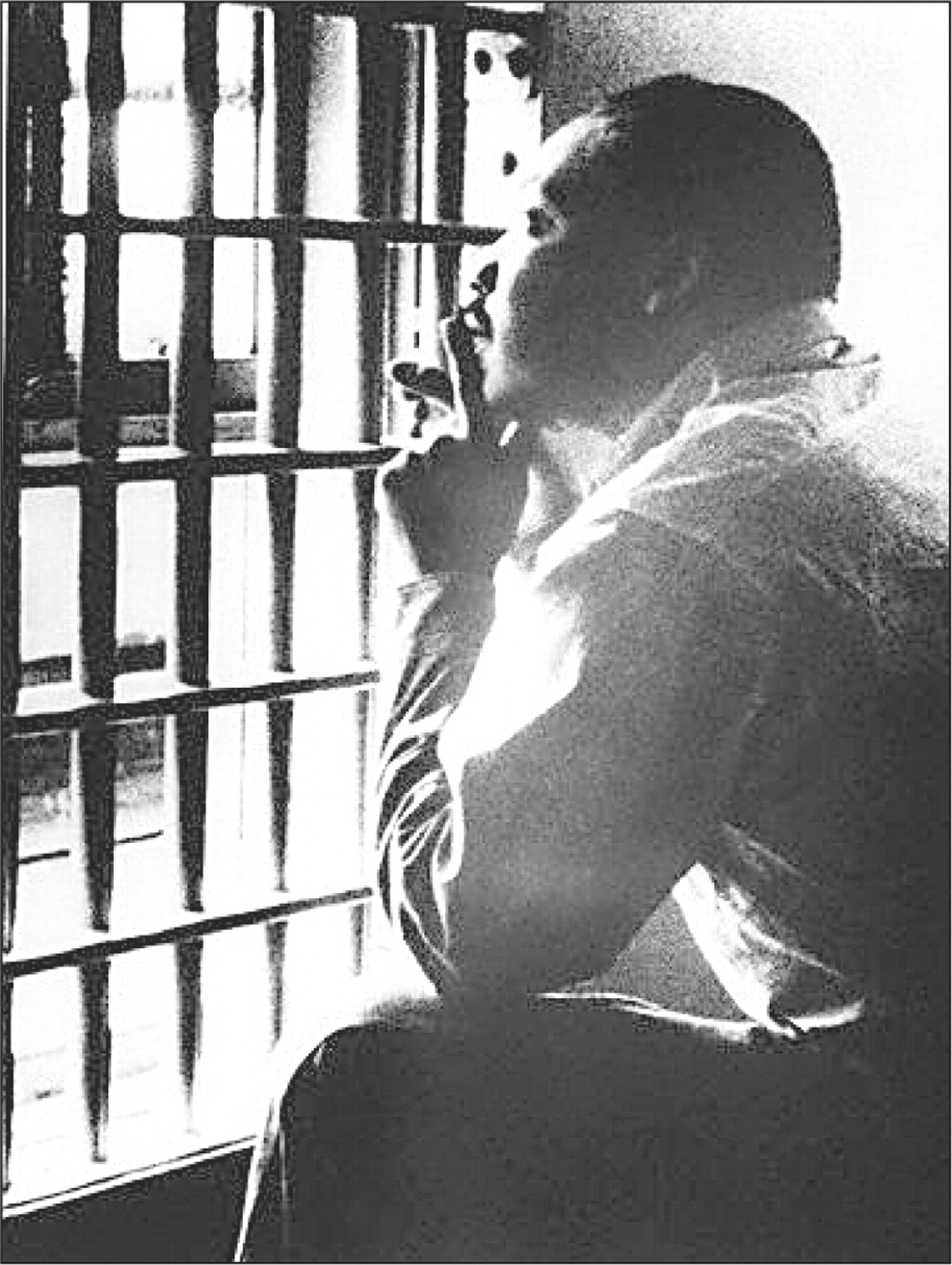
MLK-in-jailIn April 1963, Martin Luther King Jr. was arrested for his participation in the organized, non-violent marches and sit-ins against racial segregation in Birmingham. On the same day, eight white Alabama clergymen, some Christian, some not, published an open letter on unity that decried the demonstrations and urged patience, asking people to restrict their efforts to the courts and not the streets.

King received a copy of the letter while in prison and in response wrote what is now recognized as one of the most important moral treatises of the 20th century, his famed “Letter from Birmingham Jail.” In it, King damningly exposed the weakness, moral turpitude, and short-sightedness of the “white moderates” encouraging the protesters to cease their activist efforts until a “more convenient season.” It is passionate testimony to King’s deep moral logic, striking in its clarity.

But many engaged in school readings and college composition discussions fail to see that if there is no God, this letter is meaningless.

You can go read the rest of the article over at The Gospel Coalition.

Finding God in the Gallery (Or, Some Notes on a Visit to LACMA)

godingallery1This last weekend I took my wife to the Los Angeles County Museum of Art (LACMA) as part of a date. We went in part because my wife is a fan of modern art, the main focus of LACMA, and because I myself have finally taken an interest in it. Up until a month or so ago, while I understood that there was something going on in modern works, having a modest background in sketching, I’ve been likely to favor Medieval, Reformational (especially the Dutch Masters), or Neo-Classical periods. I’ll be honest, Campbell’s soup just wasn’t doing it for me.

After reading Daniel Siedell’s theological exploration of contemporary art, God in the Gallery, a couple weeks ago I’ve been motivated to try to engage it once more—or really, for the first time. Given that I could not help but experience LACMA as anybody other than myself, I wanted to write down a few notes, a couple of them, unsurprisingly theological in nature.

meidner1. Hey, Some of this Stuff is Good – To begin with the most basic point: it turns out modern and contemporary art is fascinating. Once you get over the fact that some of it does not look like anything you can recognize, or that the artist is not trying and failing to color inside the lines, you can begin to appreciate it for it is actually doing. Of course, not all of modern art is abstract expressionism.

For instance, there was a fabulous exhibit on productions connected to The Golem that McKenna and I loved. Also, I found myself drawn into the section on German Expressionism and the Bauhaus movement. Ludwig Meidner’s “Apocalyptic Landscape” could have easily held my attention for hours. The atrocity of anybody calling this “degenerate” art finally began to sink in.

Beyond that, easily the most “fun” piece in the whole exhibit, along with the dozens of other viewers, especially children, McKenna and I were drawn into Chris Burden’s Metropolis II:

All in all, I’m excited to continue exploring modern and contemporary art.

2. How Did He Create So Many Unique Pieces? – LACMA houses what seems to be to be a good number of Picasso’s. Probably ten or twelve. While Picasso has never been my favorite, even of the moderns, I found myself marveling at the variety and number of them, knowing that these were probably only a fraction of his total work. While distinctively Picasso’s, bearing his unique mark and style, all of them were unique, keenly differentiated by color, subject matter, and even materials used.

picassoOf course, in the middle of all of this, I realized that while I was looking at the art, I was disturbingly distracted by all the museum visitors. In room after room, I found myself unable to fully devote my attention to the pieces on display because of all the other people walking around.  There they were: the defiant tourist with the camera, determined to snap shots no matter what the security said; mothers hustling little ones about wanting them to gain culture without getting their fingerprints on it; older art connoisseurs, ex-hippies who’d since become wealthy in the market, but still cherished their avante-garde youth; young couples like McKenna and I, out for a nice day at the museum. Hair, clothes, eyes, words uttered, and accompanying gestures that spoke other, sometimes contradictory words.

It’s at that moment I realized I was distracted from the Picassos by the work of another artist: the one who made Picasso himself. And I was struck then at the thought, what is greater? A Picasso, or the Picasso? This isn’t meant as a sort of anti-Picasso Jesus-juke. I just couldn’t help but wonder at the stunning vision and power of a God who could fashion such creative creatures. God is the artist behind the artists.

3. We Are Bits of Performance Art – A final thought struck me in the same vein later on. Given the dazzling assortment of people at the gallery, inevitably I was drawn to a few in particular. There was one couple that looked the quintessential LA art couple. I don’t remember exactly what the girl was wearing bit it was hip. She had multi-colored hair, thrown up seemingly carelessly in a pony-tail. The guy had greasy, disheveled student hair and was rockin’ an older black sports-coat over a jean button-up shirt, darker pants, and to top it off, some boots. These weren’t just regular boots, though. Actually, they weren’t even boots—they were work-shoes—and you could tell. They were dirty and hacked up, with paint stains, and God only knows what else. The whole effect said, “I don’t care what you think. I’m here for the art. Not to preen or impress the rest of you.”

Of course, that took effort to say.

performance artIt’s at this point that I was reminded of one of the more illuminating sections in Siedell’s account: the care taken by contemporary artists to cultivate the proper environment for viewing their works. In a manner that can only be described as ‘religious’, installations are arranged so that the aesthetic effect is all-encompassing down to the last detail of the way the light fails on the viewer when they encounter the work. Even in those pieces that seem most inaccessible, the encounter with the piece and the viewer is carefully cultivated.

Much in the same way, this couple had carefully cultivated the experience of viewing them. Despite the initial impression of haphazardness, upon inspection, it begin to seem all-too-carefully selected for use. And this is where I began to realize that in many ways we’re walking pieces of performance art. We think and we craft ourselves, our movements, and words in relation to our respective audiences and the spaces and times we inhabit; there are layers and resonances to our movements. Some elements are carefully scripted, while others are more akin to spontaneous improvisations.

All of this raises the question: what are we performing? What image are we cultivating? Or, rather, whose image? Are we set on mirroring the idols (money, sex, power, freedom, & so forth) on offer in the culture around us? Or we take into account that we are God’s workmanship (poema; cf. Eph. 2:10), intended to be eikons of the Son in our mortal flesh (2 Cor 4:11)?

Soli Deo Gloria

The Absurdity of Christian “Obsession” with Abortion and Single-Issue Voting

Jan. 22 marks the 41st anniversary of the U.S. Supreme Court’s Roe v. Wade decision. It has been popular in recent years for younger Evangelicals, or post-Evangelicals, to criticize Christians for having been so “obsessed” with the whole abortion issue for the past 40 years or so. While most don’t dispute its importance, or even its ethics, they can’t quite bring themselves to care about it with the same passion, or understand how their parents could have fixated on it to the exclusion of all other relevant political issues. With poverty, the ecological crisis, and rising violence in the world, how is it that for so many Christians abortion still is the issue?

I’ve refrained from commenting on issues of this sort over the last few years, largely for pastoral reasons, but when a buddy of mine asked a question along the same lines the other night, I was forced to re-examine why the issue has been such a sticking point for me in my own political wanderings. Among the various arguments that ran through my head, one thought in particular stuck out to me: if abortion really is the termination of an innocent human life, then I can’t think of another issue for which we have as much to answer for in America.

At the outset, I must say that none of this is meant as a comment on the pastoral issue involved with the decisions of individual women in horrifying situations faced with such terrible choices. Given the usual struggle with guilt, shame, and depression, compassionate care leads me to believe that the grace of God and the restoring word of the Gospel must be the first one on our lips. But in the world of governance and the provisional judgments of political authority, the dark moral reality must be painted in their starkest light.

According to the Alan Guttmacher Institute, the research arm of Planned Parenthood, since abortion was legalized in the 1970s roughly 50 million + abortions have been performed in the US alone. Let’s see that with zeroes: 50,000,000. Again, assuming abortion really is the ending of an innocent human life, we’re talking about a death-toll over eight times the carnage of the Holocaust. Each year the death-toll dwarfs that of any armed conflict currently taking place around the globe. In New York City, it’s reported that 41%, or 2 in 5 of all pregnancies end in abortion. When we put it in that light, you can begin to see why for so many this isn’t simply one issue among the others.

Let me put it this way: nobody today would say that MLK Jr. was wrong for fixating on race and equality issues. Nor would anybody today complain about abolitionists’ single-minded obsession with slavery. I shudder to think what future generations will think when they look at Christians today and their lack of horror at the tragedy of abortion in America. At this point I’m reminded of one of the best, albeit snarky, rants against self-righteous complaints about ignorant, Christian “single-issue voting” I’ve ever seen. This was back before my blogging days, but I ran across this online, saved it for a rainy day, and unfortunately I don’t remember where or when or who this was. (Also, just to clarify, a. this is sarcastic, b. the grammar is not mine.):

Ok, bear with me as I rant. I’ve just about had it already with you people!

I am not a single issue voter. I never have been and WON’T become one now! There are dozens of other equally-important issues out there for which we can find common ground and then just leave the whole abortion thing alone. Why hit THAT red button every election cycle?

It’s always the same old mantra every four years. A bunch of crazy right-wingers, who I resent being associated with, keep blathering on about the “scourge” of abortion and the “injustice” of killing “innocent” human lives. I don’t like it any more than anyone else, but we have more important things to talk about like health care and taking care of the LIVING (and aging) population, a war in Iraq, an energy crisis looming, financial scandal, and all the rest. What is UP with you single-issue voters anyway?

It was just this way in the sixties. A bunch of do-gooder activists wandered the streets and took up valuable air time in the nightly news holding up signs, blathering on about human rights and demanding equal rights for black people. I mean c’mon, BLACK people of all things! When we SHOULD have been talking about the environment and not wasting our time with such frivolities, there they were, the single issue voters, rearing their ugly heads and ignoring a dozen other more important issues, at least!

Then I remember back in the 40’s, we spent trillions of US dollars funding a ridiculous war to help liberate “The Oppressed” Jews and others held in so called death camps across Europe. What did we gain from that, I’d like to know? Jews. Right here on OUR soil! And what a shame, because we had an energy crisis looming that we could have worked our way out of, not to mention at least a handful of other issues.

Less than twenty years before that, there they were again, those single-issue voters. This time, they were sending our boys off to get arms and legs blown to fight against who? I don’t even know! Probably to “liberate” somebody again. I’m sure that their time could have been better spent dealing with inner city crime and controlling the beginnings of the drug trade, or maybe a Mexico fence or something….

At the turn of the 20th century, we witnessed throngs of people about protesting against injustices directed at WOMEN and demanding basic human rights for them. I mean, come on! WOMEN!! What’s up with that, America?!? It’s almost inconceivable that we didn’t put our time and efforts into something at least as important like the job market and the economy. Maybe we could have avoided those world wars altogether!

So now you can see why I’ve had it with you people! When are you going to get it through your heads that you CAN’T vote just a single issue? Our borders are vulnerable, our education system is a joke, and we’re in the middle of a great big mess of a war. We have work to do in the economy, environment, and energy. We have to shore up our investments and home mortgages and get ready for retirement. We have children to cart around and music lessons and dogs to feed and new music to buy and (Oh My gosh, I almost forgot) I have to tape the latest episode of…something or other.

There’s just waaaay too much important stuff out there to worry about one issue like abortion. Besides that, abortion’s kind of… like… eew, you know, and all that stuff?

Again, none of this is a comment on the particular cases of individual women in desperate situations. Nor is it necessarily to say this makes voting a clear issue. Some continue to make the case that voting for an explicitly pro-life candidate isn’t always the most pro-life thing to do. They argue that a prudential decision can be made to vote for a candidate who will, through other means, reduce the total number of abortions given the low chance of actually over-turning Roe V. Wade, or passing pro-life legislation. I’m not entirely convinced by that logic, but I can see someone making it in good conscience.

My only point here is to illuminate why, given the reality of what Christians believe abortion is, it is perfectly sensible for Christians to be passionate about the issue, to the point of “obsession.” Of course, I hope it motivates them to do more, say, spare a few volunteer hours with local women in difficult situations. Again, this is not only a national political issue, but ultimately one for the local church to be involving itself in, giving women better choices at the personal level, beyond just closing certain horrible doors at the legal level.

In closing, I’m reminded of the comments of the great missiologist Lesslie Newbigin in an address entitled “Gospel and Culture” delivered in 1996 in Brazil at a Conference on Mission and Evangelism:

“I am going to raise on particular issue which I have never raised in public before and which I did not intend to raise when I came to Salvador. It is connected with this ribbon on my wrist. When we stood in the old slave market on Saturday morning on those rough stones which had felt the weight of the bare and bruised and shackled feet of countless of our fellow human beings, when we stood in that place so heavy with human sin and human suffering and we were asked to spend two minutes in silence waiting for what the Spirit might say to us, I thought first how unbelievable that Christians could have connived in that inhuman trade; and then there came to my mind a question: Will it not be the case that perhaps our great-grandchildren will be equally astonished at the way in which we in our generation, in our so-called modern, Western, rich, developed culture, connive at the whole-sale slaughter of unborn children in the name of that central idol of our culture—freedom of choice? I know—and as I say, I have never raised that issue in public before, but do so because I was told to do so—I know that to raise it is exceedingly painful, as painful as was the struggle against the slave trade, as painful as was the World Council’s program to combat racism. But I have discharged that commission. In the context of this conference it is simply one example of the costliness of that attempt to ensure that the gospel is not domesticated within our cultures, but continually challenges our culture.”

–Reprinted in Signs Amid the Rubble, pg. 118

Indeed.

Soli Deo Gloria

New Year’s Resolutions as an “Expectation of Faith” (CaPC)

new-year-resolutionsIf I had to take a guess, New Year’s would not have been the Teacher’s favorite holiday:

All streams run to the sea, but the sea is not full;
to the place where the streams flow, there they flow again.
All things are full of weariness; a man cannot utter it;
the eye is not satisfied with seeing, nor the ear filled with hearing.
What has been is what will be, and what has been done is what will be done,
and there is nothing new under the sun.
Is there a thing of which it is said, “See, this is new”?
It has been already in the ages before us.
There is no remembrance of former things, nor will there be any remembrance
of later things yet to be among those who come after.
–Ecclesiastes 1:7-11

Everything comes around just as it has before. Nothing is new and nothing really changes. Rivers continue in their Sisyphean attempt to fill up the sea; similarly, we work and toil but nothing ever gets done. There is “nothing new under the sun,” and if you are ever surprised, it is because you are young, blind, or a fool.

I’ll be honest, I get the same feeling whenever I reflect on New Year’s resolutions. People concoct them every year but it seems that “there is no remembrance of former things.” We fail to recall last year’s resolutions, largely the same ones, that have been left by the wayside, usually long before the red shadow of Valentine’s Day ever hits. Ironically enough, even pessimism about New Year’s resolutions is not new.

Yet for some reason we still make them every year. We get up, dust the cookie crumbs off our sweaters, and resolve to eat healthier. We dust off our Bibles and promise ourselves we’ll make it past Leviticus. We start looking at our schedule and determine that this year our time will not be wasted in front of the screen again.

Why? When we’ve fallen off the wagon so many times there’s a familiar bump in the road with our name on it, why is it that we continue to clamber back on again? Whence comes this deep compulsion to imagine that the future is a future, and not merely a repetition of the past?

You can read the rest of my meditation on God, the Lord of history, and  the expectation of faith at Christ and Pop Culture.

“23 Things To Do Instead of Getting Engaged Before You’re 23”, And Other Myths

So, I’ve seen this article on “23 Things To Do Instead of Getting Engaged Before You’re 23” get posted a bit lately. I read it. I get the appeal. I did want to offer a few quick thoughts from a dude who got engaged at well, 24, but was apparently so dumb he knew whom he was going to marry at 20.

Before I do that, though, a couple of quick caveats: I just watched two of my best friends get married last year right at about 30. Many of my other friends will. This is not a judgment on them, and there is certainly nothing inherently immoral or wrong about it. I am not saying that if you’re 23 and single, there’s something wrong with you. In fact, as a Christian, I think you can live a whole, healthy life without ever getting married. Singleness (and celibacy) were first elevated to an honorable lifestyle in Western culture through the spread of Christianity.

What I want to do is just push back on a few mistakes I’m seeing here that are easy to make:

1. Not everybody that gets engaged or married at a young age is doing it because they’re vulnerable, desperate, scared, or pathetically lonely. It’s condescending and arrogant of this young woman to suggest that. It’s turning the contingencies of her own situation into the virtue that we should all aspire to. In other words, “I’m young, single, lonely but not ready for a marriage so I’m going to tell myself that you must not be either, and you’re pretty much dumb for getting married young, which makes me super wise and self-knowing.” Honestly, I get that a lot of people our age feel the unfair pressure of people imposing the values of another age and time, the example of our parents, and so forth, on their shoulders. The problem is, this article is essentially making the same mistake in reverse.

2. “The divorce rate among young couples is high.” Yes, that’s true. But if you look at the sociology on it, this is not mostly talking about a couple of kids out of college who’ve decided to start a life together. A lot of that rate is affected by low-income, low-education couples, with unplanned pregnancies, marrying out of pressure. Actually, according to some of the latest sociological research, 22-27 is actually about the perfect age for getting engaged and married in terms of happiness and marital longevity. I would just say, beware of misleading sociology, or quickly assigning explanations to complex phenomena.

3. “I need to find out who I am before I can build a life with someone.” Yes, and no. One of the reasons that young couples divorce is due to the misleading, romantic, idealistic expectations they have about marriage. I would also point out there are similarly misleading myths about singleness and identity held by these very same people. See, there is this romantic myth that at some point in the future we reach this stable self, this pinnacle of self-knowledge and self-awareness that might be expanded on, but will essentially stay the same for the foreseeable future. The reality is that you will change, grow, and develop over the whole of your life. While the person you are at 23 is not the person you will be at 27, what’s also true is that the person you will be at 27 is not the person you will be at 35, and so forth. You will always be changing and growing. As theologian Lewis Smedes has said, “My wife has been married to 4 different men in her life–and they’ve all been me.”

Yes, many 23-year olds are immature and in transition. Yes, a number of them need to develop a bit before covenanting themselves in the bond of marriage. I shudder at the thought of some 23-year olds I know getting married in a rush. At the same time, I just performed a marriage for a couple of 22-year olds this summer that I am absolutely ecstatic for. They are sane, solid, stable, and have embarked on a wonderful adventure: they get to find out who they are together. They can still do the vast majority of the 23 things on that list, and, honestly, the rest of them aren’t worth engaging.

Let me put it this way: I didn’t marry my wife because I knew exactly who I was, or entirely knew who she was. I married my wife because I knew enough about her that I wanted to see the woman she is going to become, and want to be there for it. What’s more, I want her to be there as I grow and develop. I know that I’m a better man because I have been “finding myself” alongside of her for the last few years instead of apart from her. Now, the catch is, in our case one of the reasons I wanted to be with McKenna is because I knew she wouldn’t want me to find myself in her, but would always point me to Jesus. Still, my marriage hasn’t gotten in the way, but it has helped me keep on the way.

Actually, to follow up, one of the big issues that can plague later marriages between two people who have been single during this crucial developmental period is that you get so settled in your ways, so calcified in “being yourself” apart from the person you’re looking to marry that you don’t have the emotional elasticity it takes to make a marriage work. When I married my wife, I didn’t have 30 years of single guy habits build up around the way I did things, or thought of myself that I had to kill in order for a marriage to a sane woman to put up with me (although, McKenna is still a saint for putting up with me.)

Thing is you never marry someone who is a “perfect fit.” You’re always going to have to make compromises, sacrifices, and grow in order to make this thing work. I am not saying that you can’t develop the character traits you need to make this work if you’re single in your twenties. What I am saying is that it’s not at all obvious that you ought to stay single longer in order to be ready for marriage. For some people it might be a good idea. For some of us, getting married is what has to happen.

Soli Deo Gloria

Addendum: I wrote this in a bit of a rush, but here are two resources to check out:

1. The Meaning of Marriage by Timothy Keller – This is my go-to book for understanding the purpose and practice of marriage. It’s simply beautiful.

2. Premarital Sex In America by Mark Regnerus and Jeremy Uecker – This study published by Oxford University press is where I’m getting my sociology. It’s exhaustive and well-sourced.

Sane Stuff on Duck Dynasty–Because We Need It

robertsonI don’t watch Duck Dynasty. I don’t have the channel, nor the time. Looks funny enough, but honestly, I mostly hate ‘reality’ TV. There’s too much theology to read and I have plenty of Batman cartoons to watch. Given that reality, I never imagined I’d pay any sort of real attention to the Robertson clan. Still, everybody’s quacking (yes, yes, I know, horrible, obligatory pun) about Phil Robertson’s comments on homosexuality. The world exploded with commentary. SO MUCH COMMENTARY!!!

In the middle of it all the silliness, some sane stuff was said. I’d like to link some so you can read the sane stuff and ignore the silly stuff. In no particular order:

1. Brad Williams – “Apparently, that’s all the internet is allowed to be about today.”

2. Jared Wilson (<—link) – “This doesn’t mean we should bury our heads in the sand about genuine free speech and free exercise violations in our theoretically free nation; it just means we ought to be more circumspect than reactionary, more wise than whiny, more joyful than outraged. As “reality” just got the ironic quote-marks taken off of it, maybe this cultural shifting will serve towards a sifting of the “real” Christians from the real ones, the cultural from the Spiritual. Evangelicals need to get real.”

3. Russell Moore – “Let’s have genuine diversity, meaning let’s talk honestly with one another about what we believe and why. Muting one another isn’t what debate is for in a free society. It’s what remote controls are for.”

4. Wesley Hill – “But just because someone quotes 1 Corinthians 6:9-11 and is opposed to same-sex marriage doesn’t mean that they’re speaking up for a theologically informed, humane, pastorally sensitive view of what it means to be gay. Not by a long shot. And social conservatives should think twice before linking the concern for religious liberty to a vindication of Robertson.”

5. Brandon Ambrosino – “For the record, I’m undecided on whether or not I think Phil actually is homophobic, although I certainly think his statement was offensive, and not only to the LGBT community. But I also think that if I were to spend a day calling ducks with Phil, I’d probably end up liking him—even in spite of his position on gay men. It’s quite possible to throw one’s political support behind traditional, heterosexual marriage, and yet not be bigoted.

I’m reminded of something Bill Maher said during the height of the Paula Deen controversy: “Do we always have to make people go away?” I think the question applies in this situation, too.”

6. Tyler Glodjo -“Arguing against homosexuality based on the “yuck factor” is just plain gross. While Phil Robertson is free to express his beliefs and convictions in whatever manner he desires, I would argue that for someone with the platform he has been “given,” his comments were unwise.”

Alright, that’s all I’ve got to say on the issue.

Soli Deo Gloria