
The Quote-Tweet is possibly the best, and easily the worst part about Twitter. On the positive side, the humor possibilities are endless. You get to set yourself up for all sorts of ironic one-liners, dumb jokes with friends, and so forth. Also, there is the ease of RTing a story you want to share and offering a quick comment. Or adding your voice of support to amplify the wisdom of others. So, that’s pretty nifty. I really enjoy those things.
But it’s also fairly awful in its ability to accelerate and metastasize any minor spat, news event, or social faux pas into a full-blown meltdown. Alan Jacobs noticed the awful, outrage-stoking potential of the basic retweet the other day. Sonny Bunch followed that up by pointing out the even more damaging potential of the quote-tweet:
The quote tweet is less effective as a tool for virality than the retweet but in some ways more vicious, as it turns Twitter into a constant battle for one-liner supremacy. Making the snarkiest, smarmiest joke in the quickest time ensures that your own tweet is retweeted. The dings, the pings, the bells, the buzzers: it all sets us to salivating, Pavlov vindicated. It’s why Twitter is so damn addictive—and nothing addictive is good for you.
I have complained about the quote-tweet for a while, so I was glad to see this.
But I think the thing I distrust and despise most is the potential quote-tweets have for stoking and recruiting angry mobs; for erecting digital pillories for our neighbors. There are various forms of this.
Sometimes you see it when people start quote-tweeting a major figure who says something you decide to comment on. Now, that’s mostly fair game, I suppose. And especially when the person is such a big figure you might as well be quoting a news source since it’s likely they won’t see it.
But then there’s the sort of person who is always looking find big fish on the other side, catch ’em, grill ’em, and serve ’em up to their public for the sake of notoriety-through-conflict and applause. This doesn’t necessarily harm the quote-tweeted figure, but it seems like the kind of practice that isn’t good for your soul, nor that of your neighbor.
At other times, you’ll see quote-tweet debates emerge. These are interesting to watch in a slow-motion car crash sort of way. First you have people just @-ing each other directly, like a conversation, or even a Facebook thread. People can still follow it if they follow both of you, but they’re looking in at a conversation of sorts.
But then someone turns. They are provoked, get mad enough, and they decide to quote-tweet their sparring partner in order to “argue” with them in front of all their followers. I saw this the other day. It was remarkable. Two people were going back and forth, one finally decides he’s annoyed enough, so he switch from conversation to quote-and-burn, putting the other person on the spot in front of thousands of his followers.
I get this picture of two people discussing on the street. Then, upon noticing a group walking by, suddenly one guy turns, grabs the other, points him towards the group, and stands behind him to yell answers in his ear in their direction. As a conversational dynamic, it’s bizarre. As a mob-stoking tactic, it makes some sense.
I’m reminded of the scene in Beauty and the Beast where Belle is trying to convince everyone that the Beast isn’t dangerous. Gaston just sort of keeps turning to the mob after every phrase she utters in order to use it to stir them up.
Of course, in that moment, it’s very clear the conversation is over. The other person is no longer a dialogue partner. It’s no longer even a simple, public debate. They are now an opportunity to display your prowess, prove your point, and vindicate yourself.
Quote-tweeting in the middle of a discussion immediately turns it into a performative battle, a spectacle in the agon. It’s your way of recruiting a sympathetic audience who will hopefully join forces with you against the hordes of fools opposing you.
I don’t have a real prescriptive point, here except to call more attention to its potential for awfulness. I’m not issuing a total ban on the quote-tweet. Again, it has its place and its uses. I kind of endorse shutting anonymous trolls that way because I think anonymous troll accounts are cowardly and their own sort of evil. I’m just saying, guard your hearts on this. If you’re at all worried about the way internet discourse is contributing to the fracture and polarization of the culture, and especially within the Church, have a care.
Especially if you’re tempted by and feed off of the “positive” response that this sort of public take-down artistry garners us. Remember, your most RTed self ends up becoming your real self.
I also suppose it’s good to point this out for people with high profiles and follower counts on Twitter. Be aware of the relative, potentially-major power advantage you have against that random tweeter who happens to annoy you that day. Quote-tweeting someone, putting them on blast (even if they “deserve” it), can lead to unforeseen and unintended consequences once your potential mob of sympathetic followers gets a hold of a fresh target to scapegoat. And if they can do it in defense of a righteous cause? Even better.
A friend of mine ended up getting quote-tweeted (and misread) by a couple dozen people “on the other team” with high follower accounts. She ended up handing it over to a friend for a couple of days to avoid the volume and kind of scummy responses in her mentions. None of the major accounts said anything vile, but they have enough followers who will when they’re set up for it.
I guess I’ll end with two points. We probably need to spend more time the book of Proverbs. There is a lot of wisdom in their for the cultivation of godly, online, speech habits, which is not something Christians can ignore in a social media age.
Second, to paraphrase our Lord, “Tweet your neighbor as you yourself would like to be tweeted. For with the same measure that you use, it will be measured to you” (Matt. 7:1-2).
Soli Deo Gloria
 This last week I had the privilege of attending TGC’s National Conference for the 500th anniversary of the Reformation. There was a focus on Galatians and remembering the legacy of the Reformers for the sake of the Church of today. I have to say, overall it was a very encouraging time. I would commend the audio to all the breakout sessions to you when it becomes available at TGC’s website. For now, the
  I had a few thoughts on the notion of virtue-signalling after watching this first week of the Trump Presidency, the Women’s March, and the March for Life unfold online.
 Advocating for justice is a difficult business at the best of times. This is not only because we are fallen sinners, but because we are finite and the world is a complex place. Moral discernment takes hard-won wisdom, passion, and a great deal of humility. Acting on it takes even greater courage and care. Few places seem require this more than the painful struggles around racial reconciliation and justice, both in the broader culture as well as within the walls of the Church.
 We decided it was a good idea to talk about the Election and what it means. We had the full cast and crew for this one to talk about our reactions,the implications for the church in North American, Evangelical witness, as well as our responsibilities as Christians, disciples, neighbors, and so forth. We hope this will be a challenge and an encouragement. We know it was for us.
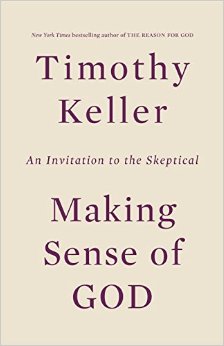 When I was in college ministry, I had a small budget for books and resources to use with my students.So for almost the entirety of those four and half years, I had a small stack of Tim Keller’s The Reason for God sitting on a shelf in my office, as well as one or two tucked in the backseat of my car to hand out to students. Ever since reading it right after college, I have found it to be the single-most helpful one-book, contemporary apologetic introductions to Christianity out there. I’ve led small-groups through it, handed it to doubters, skeptics, fervent Christians, and everyone in-between.
 Reformedish