9 Reasons The Garden of Eden Was a Temple

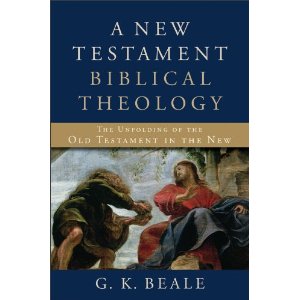
the gardenG.K. Beale is a bit of an expert on the subject of the Temple in biblical theology. He did happen to write a whole book on it. Given that, it’s unsurprising that he devotes some space to exploring the significance of the Temple in NT theology in his recent New Testament Biblical Theology: The Unfolding of the Old Testament in the New by sketching it’s structure and function in the OT. One of the more eye-opening claims he makes in this section is that the Bible pictures the Garden of Eden as the first Temple in the first creation. He gives 9 arguments/lines of reasoning for that point (pp. 617-621):

  1. In the later OT the Temple was the place of God’s special presence where he made himself known and felt to Israel. That is exactly how his walking with Adam and Eve in the Garden is depicted. (Gen. 3:8)
  2. Adam is placed in the garden to “cultivate (abad)” and “keep (samar)” it (Gen 2:15). The same two words are translated elsewhere “serve” and “guard”, and when they appear together, they are either referring to Israelites serving or obeying God’s word, or more usually, to the job of the priest in guarding and keeping the Temple. (Num. 3:7-8; 8:25-26; 1 Chron. 23:32) Elsewhere Adam is portrayed dressed in the clothes of the high priest, functioning as a high priest. (Ezek 28:11-19; see Beale, pg. 618 on this for more argumentation.)
  3. The tree of life served as a model for the lampstand, which was clearly shaped as a tree, in the Temple.
  4. Israel’s later Temple was made with wood carvings of flowers, palm trees, etc. meant to recall Eden’s garden brilliance  (1 Kings 6:18, 29, 32, 35); pomegranates were also placed at the bottom of the two stone pillars in the Temple. (7:18-20)
  5. The entrance to the Temple was to the east, on a mountain facing Zion (Ex. 15:17), just as the end-time temple prophesied in Ezekiel is (40:2, 6; 43:12). Well, turns out the entrance to Eden was from the East (Gen. 3:24) and in some places pictured as being on a mountain. (Ezek. 28:14, 16)
  6. The tree of the knowledge of good and evil and the ark of the covenant both were accessed or touched only on pain of death. Also, both were sources of wisdom.
  7. Just as a river flowed out of Eden (Gen 2:10), so a river is supposed to flow out of the End-time Temple (Ezek 47:1-12; Rev. 21:1-2)
  8. This one requires some serious argument so I suggest you consult Beale directly here (pg. 620-621), but just as there was a tripartite sacred structure to the Temple, Beale discerns a tripartite structure to creation with Eden standing at the center as a Holy of Holies.
  9. Ezekiel 28:13-14 refers the Eden as “the holy mountain of God” which everywhere else in the OT is Temple and Tabernacle language.

I have not come even close to doing justice to the exegetical work Beale does in this section, nor in the aforementioned book on the subject. Still, this rough sketch should be enough to show that there is a substantial case to be made for understanding the Garden of Eden as the first Temple in biblical theology.

What does this matter you might ask? The theological implications are actually so massive that I can’t go into all of them. I’ll just bullet-point a few that could be teased out into blogs in their own right (probably books too):

  • Creation — Why did God create the world? To inhabit it and dwell with people.
  • Anthropology — If the Garden is the Temple, then Adam is a priest. That has implications for our idea of human purpose and our relation to the rest of creation.
  • Israel/Covenant — God sets apart a people of Tabernacle and Temple-makers, who take up Adam’s original commission.
  • Christology — When we start to realize that Christ is the greater Temple, fulfilling all that the Temple was supposed to be, as well as the true Adam, it starts to fill in the picture on the aim of Christ’s work.
  • Ecclesiology — It follows from our thinking about human purpose, and our idea of Christ’s work that our theology of the church will be impacted by this idea as well.
  • Eschatology — If our theology of creation is impacted, then so is our eschatology, because God will fulfill his purposes at the end of all things.

The list could go on and on and on, but you get my point.  The Garden was a Temple and that’s big.

Also, if nothing else, it’s just interesting for Bible nerds and that’s good enough, right?

Soli Deo Gloria

Were the Westminster Theologians “Proof-texting”?

Eventually in any discussion of good exegesis and theological method, the issue of proof-texting will come up. Proof-texting is that time-honored method of biblical interpretation that consists in citing a verse to justify some theological conclusion without any respect for its context or intended use. If you’re nerdy to care enough about this sort of thing, please keep reading. If not, here’s a video of a cute cat.

Now, as I was saying, proof-texting is often brought up in discussions as a prime example of decontextualized readings–readings that irresponsibly ignore the literary and historical setting of the text. As the popular saying goes, “a text without a context is a pretext for a proof text.” Daniel Treier notes in his article on the “Proof Text” (pp. 622-624) in the Dictionary for Theological Interpretation of the Bible that the charge of “proof-texting” is almost universally negative, and usually aimed at pop-preaching, or increasingly by exegetes at theologians’ handling of texts. Indeed, it’s fairly common to read biblical scholars prattling on in their commentaries about theologians abstractly “theologizing” and “propositionalizing” texts. (Of course, this happens and it shouldn’t and it ought to be called out. Literary and historical contexts must be respected. I’ll just confess I’m annoyed with biblical studies types acting as if attending a Methodist church instead of a Presbyterian one has no effect on their readings, as opposed to those theologians.)

The crew doing some “theologizing” at Westminster Abbey.

In any case, chief among the alleged offenders are the post-Reformation scholastics such as the Westminster Divines (pastors and theologian-types) who wrote the Westminster Confession. Indeed, at first glance the classic confession seems to be a prime example of it. In traditional printings, a quick review of the various chapters will show you very short statements with footnotes listing various single verses allegedly supporting the proposed doctrines. On their own, a number of the verses seem only tenuously connected to the doctrine at hand.

Carl Trueman has an excellent article on the way recent historical work has led to critical re-appraisal of the development of Reformed Orthodoxy and the Post-Reformation scholastics, which, in part, sheds light on their alleged proof-texting:

…the new approach has demonstrated that Reformed Orthodoxy was grounded in exegesis but engaged in constant dialogue with the history of theology. This is in part evident in its eclectic nature but also has direct application to some contemporary issues. For example, one common complaint about the Westminster standards is that they are based upon proof texts. The concern seems to be that Reformed theology has thus been built on simplistic, decontextualized reading of isolated texts. Many, of course, will be aware that the divines themselves did not want the proof texts included and that they were overruled in this by Parliament. That in itself should give pause for thought about how such texts function. Yet [Richard] Muller has explored this issue further and demonstrated that the divines were not only competent exegetes themselves and that Reformed Orthodoxy is exegetically grounded but also that proof texts in the seventeenth century were not intended as simple, blunt answers to complex questions. Proof texts operated rather as exegetical markers, directing the reader to the key verse but doing so in the expectation that the reader would check the classical expositions of that verse.

So, first off, the Westminster Divines didn’t even want the proof-texts included precisely because they were aware of the dangers of poor exegesis and context-less readings. Second, the texts were supposed to be used as pointers to further research, both of the text, and of the deeper history of interpretation. Basically, they wanted readers to do their homework.

Trueman then uses the example of the “covenant of works” to highlight the way this re-appraisal might shape our judgment about historical, Reformed orthodoxy.

One criticism is that the only reference to the pre-Fall arrangement with Adam in the garden as a covenant is Hosea 6:7. The Hebrew is ambiguous and could indeed be read as “like a man.” As such, it seems remarkably slender textual ground upon which to build such a crucial doctrine as the covenant of works. In fact, as Muller has shown through his study of the Westminster Annotations, the divines were well aware of this ambiguity. Their use of the language of covenant to refer to Adam in Eden was not built on this text, but upon Romans 5, which they saw as pointing to the conceptual presence of covenant in Eden, even as it was linguistically absent. Such a point would seem significant in assessing John Murray’s criticism of the covenant of works.*

Were the Westminster divines proof-texting then? In the sense that they are usually accused of, apparently not. Now, does that mean every reading of every text they cited was absolutely perfect? No, but the giants of Westminster probably deserve more credit than they’re typically given on this point.

If I might suggest two take-aways for contemporary biblical types:

1. When criticizing the hermeneutical approaches of different periods, we need to be careful of rushing to judgment. Anyone who’s spent any amount of time in biblical studies knows that the methods are constantly up for debate (form-criticism, redaction-criticism, literary, etc.). Who knows what readings we’ll find silly, mistakenly or not, in 20 years, let alone 200?

2. This also means we probably could take a cue from the Reformed scholastics at this point. They knew that one way of guarding against our interpretations being over-determined by the cultural and literary prejudices of the day, was by being in dialogue, both with the text, and with the history of interpretation. May we humble ourselves enough to do the same. Who knows? We might even want to throw some scholastics into the mix.

Soli Deo Gloria

*For more on the exegetical grounding of the covenant of works, G.K. Beale has some good stuff on the covenant in Gen. 1-3.

Are You a Dualist? Is that Bad? Just ask N.T. Wright

I was a sophomore in college when I found out that there was more than one kind of dualism. I was sitting in my class on St. Augustine (it was my medieval philosophy class) when a fellow classmate brought up the issue of dualism and how interesting it was given that nobody believed it. I piped up and said, “Oh, yeah, I’m a dualist.”

Looking at me with surprise, “Oh really? I’ve never met one. That’s odd.”

I didn’t think it odd at all: “Well, I am a Christian so it’s not that weird.”

“Really? I thought the two were kinda not compatible.”

At this point I was truly confused. Turns out we both were.  See, I had been talking about mind-body dualism and he was referring to theological dualism a la Zoroastrianism where you have a good god and a bad god facing off. At that point I started to realize that the subject of dualism was far more complicated than I thought. In fact, I didn’t realize how complicated it was until I read N.T. Wright’s The New Testament and the People of God (NTPG)In that work he lists 9-10 different kinds of dualism that you could speak of when discussing the views of 1st Century Pagans and Jews.

I was reminded of this little discussion when reading this article by Wright on anthropology, or the theology of humanity, in the Apostle Paul’s thought. In it, he offers this helpful summary of his own discussion in NTPG.

So let’s run through these types of dualism or duality, beginning with four types that would be comfortably at home within ancient Jewish thought:

  1. a heavenly duality: not only God exists, but also angels and perhaps other heavenly beings;
  2. a theological or cosmological duality between God and the world, the creator and the creature;
  3. a moral duality between good and evil;
  4. an eschatological duality between the present age and the age to come.

All of these dualities a first-century Jew would take for granted. But none of them constitutes a dualism in any of the following three senses:

  1. a theological or moral dualism in which a good god or gods are ranged, equal and opposite, against a bad god or gods;
  2. a cosmological dualism, a la Plato, in which the world of space, time and matter is radically inferior to the noumenal world; this would include, perhaps, dualisms of form and matter, essence and appearance, spiritual and material, and (in a Platonic sense) heavenly/earthly (something like this would be characteristic of Philo);
  3. an anthropological dualism which postulates a radical twofoldness of soul and body or spirit and body (this, too, would be familiar in Philo).

Then there are three more which might be possible within ancient Judaism:

  1. epistemological duality as between reason and revelation – though this may be problematic, since it’s really the epistemological face of the cosmological dualism which I suggest ancient Jews would mostly reject;
  2. sectarian duality in which the sons of light are ranged against the sons of darkness, as in Qumran;
  3. psychological duality in which the good inclination and the evil inclination seem to be locked in perpetual struggle, as in Rabbinic thought.

It’s important to know about these different sorts dualisms in order to keep a clear theological head on your shoulders wading into these discussions–which I know you do everyday. But seriously, for Christians wanting to understand reality out of a properly Christian worldview, or theological framework, we have to keep in mind what Wright underlines here:

The radical rejection by most ancient Jews, in particular, of what we find in Plato and in much oriental religion, and the radical embrace of space, time and matter as the good gifts of a good creator God, the place where this God is known and the means by which he is to be worshipped – all this remains foundational, and is firmly restated and underlined in the New Testament. Creational, providential and covenantal monotheism simply leave no room for those four dualisms in the middle. In particular, I argued that such dualisms tend to ontologize evil itself, whereas in first-century Judaism evil is not an essential part of the creation, but is the result of a radical distortion within a basically good created order.

While we might not all agree with his judgments on Plato’s dualisms or body and soul, it’s important to keep distinct the things that ought to be distinct (God/creation, good/evil, present age/age to come, etc.) while avoiding tearing apart those things that should be kept together. That basic creational framework of a good God who creates a good world that gets distorted by sin is the backdrop of God’s redemption of all things in Christ. This is what the ancient gnostics missed when they created a Jesus who was simply a redeemer who saved people’s souls from their bodies–in which case, who cares what you do with your body? This is what is absent in pantheistic theologies that drag God into the world, who end up giving us a “compassionate” God that, in the end, is just as trapped in the world’s agony as we are, instead of being the distinct, but sovereign redeemer who can fix it. This is what modern Evangelicals sometimes miss with their tendency for evacuating from the world, despising creation, and simply waiting for Jesus to come back and rapture them out of their nicely air-conditioned churches they hide in most of the week.

God freely created the world distinct from himself, he loves it–he’s going to save it. He wants his people out in the world, in it, but not of it, proclaiming that good news, and working for it out in the world.

The bottom-line is: if you don’t keep your dualisms straight, you might lose the Gospel.

Soli Deo Gloria

G.K. Beale on the Presence of a Covenant in Gen. 1-3

Alright, I finally cracked open G.K. Beale’s 962 page beast, A New Testament Biblical Theology: The Unfolding of the Old Testament in the New.  It’s been staring at me, tempting me with it’s theological awesomeness, so I finally gave in. At about 60 pages in I can safely say this is going to be a watershed work in New Testament studies. Describing the project in a short blog-post while doing it any sort of justice is next to impossible, especially when you consider the fact that Beale’s own description takes him about 25 pages. Still, the title alone points us to fact that one of the main thrusts of Beale’s work is to show how the New Testament can only be understood as the unfolding of the grand story-line of the Old Testament.

In order to do so, he opens with a summary and theological analysis of that story-line, beginning with a focus on the first 3 chapters of Genesis. He pays special attention to Adam, the concept of the Image of God,  and the eschatological thrust of the creational command to “conquer and subdue” the earth and “be fruitful and multiply” (Gen. 1:28), themes of crucial importance for understanding the rest of the tension and story-line of the OT.

It’s at this point that I ran across a very helpful passage discussing the presence of a “covenant” in Gen 1-3. After some careful examination of the texts Beale notes that there are a number of considerations that point us to the idea that it is possible, indeed necessary, to speak of a “covenant” relationship between God and Adam in the Garden, despite the objection that the word “covenant” is not used in the passage. The passage is worth quoting at length here:

In light of these observations, we can speak of the prefall conditions as a “beginning first creation” and the yet-to-come escalated creation conditions to be a consummate “eschatologically” enhanced stage of final blessedness. The period leading up to the reception of these escalated conditions is the time when it would be decided whether Adam would obey or disobey. These escalated conditions indicate that Adam was in a covenant relationship with God. Although the word “covenant” is not used to describe the relationship between God and Adam, the concept of covenant is there. God chooses to initiate a relationship with Adam by imposing an obligation on him (Gen. 2:16-17). This obligation was part of the larger task with which Adam had been commissioned in Gen 1.:28: to “rule” and “subdue” creation and in the process to “be fruitful and multiply and fill the earth.” Adam’s “ruling and subduing” commission included guarding the garden from any threat to its peaceful maintenance. In light of Gen. 2:16-17 and 3:22, Adam would receive irreversible blessings of eternal life on the condition of perfect faith and obedience, and he would receive the decisive curse of death if he was unfaithful and disobedient. Thus, the discernment of irreversible escalated creation conditions discussed above is the best argument for such a covenant notion.

Consequently, the argument that the word “covenant” is not used in Gen. 2-3 does not provide proof that there is not covenant relationship, just as Adam and Eve’s marriage relationship is not termed a “covenant” in Gen. 2:21-24 but expresses covenantal concepts and, in fact, is identified as a covenant elsewhere. Likewise, it is profitable that God’s covenant with Adam is referred to as a covenant elsewhere in the OT. The essential elements of a covenant are found in the Gen. 1-3 narrative: (1) two parties are named; (2) a condition of obedience is set forth; (3) a curse for transgression is threatened; (4) a clear implication of a blessing is promised for obedience. It could be objected that there is no reference to either party reaching a clear agreement or, especially, to Adam accepting the terms set forth in this so-called covenant. However, neither is this the case with Noah and Abraham, with whom God made explicit covenants. –A New Testament Biblical Theology: The Unfolding of the Old Testament in the New, pp 442-43

Again, these conclusions come after a solid examination of the texts (pp. 30-41), and is followed by reinforcing argumentation (pp. 43-46). Still, I found this passage to be helpful in showing that to speak of God’s creational covenant with Adam, or a “covenant of works”, is not an obvious imposition of foreign concepts onto the text in order to fit it into a theological grid, as is so often charged.  Rather, something like this is positively required by a close, narratively-oriented reading of the text.

As I continue to dive into this ambitious, and already thoroughly rewarding work, I’m sure more excerpts and summaries will follow this.

Soli Deo Gloria

N.T. Wright on Penal Substitution

I’ll come clean and say that I’m a huge N.T. Wright fan. I have been for years.

Wright and I are BFFs.

For those of you wondering, Wright is a British New Testament scholar who ranks among the top 2 or 3 most prolific, somewhat controversial, and influential churchmen on either side of the pond in a wide variety of theological circles.  I attribute my love for Biblical studies, and the New Testament in particular, to my early encounters with his lectures, essays, and books. I generally pre-order his books, both popular and scholarly, and have read all of his big pieces with the exception of a couple of difficult-to-acquire texts.  (I knew my wife McKenna was a keeper when she bought me his tome The Resurrection of the Son of God for my first birthday when we were dating. Later she took me to go see him speak on our anniversary.) Which is to say, I think I’ve got a decent idea of what Wright teaches on various subjects in New Testament studies and theology. Which brings me to the subject at hand.

As I mentioned, Wright is a bit controversial in some circles due to some of his, admittedly unclear/difficult to understand, teaching on Paul’s doctrine of justification.  Wright’s an adherent of the New Perspective on Paul and a unique one at that. What’s more, his sentences can get really long. (For those of you interested, here’s his most recent, clearest piece on the subject delivered at the Evangelical Theological Society a couple years ago. Note: I am not endorsing it. Just sharing for clarity’s sake.) One of the things that’s consistently surprised me, however, is the way that both friends and foes have misunderstood his teaching on the atonement, particularly penal substitutionary atonement (the idea that Christ’s death is in some way a representative one in which he suffers the judgment/wrath of God on behalf of deserving sinners thereby releasing them from guilt and obtaining forgiveness for them). Interestingly enough, you can find both conservative Reformed types being joined by emergenty Anabaptist types saying he denies it, the former accusatorially, the latter joyfully.

I just want to take a moment to clarify, with Wright’s own words, that Wright does affirm penal substitutionary atonement. He has been clear on this over the years, but somehow that’s been lost on many due in some cases to their willingness to read all sorts of faults into him because of his position on justification, or because to some people, affirming Christus Victor components to Christ’s atonement, the idea that in his life, death, and resurrection Jesus defeated the principalities and powers of satan, sin, and death,  means a necessary denial of PSA. It doesn’t. The Reformers all affirmed both themes because both are in Scripture. Wright isn’t any different. So, without further ado here is Wright himself.

Wright Speaks

First, a short little video where Wright says it clear-out, 1:19 onward:

Next, here’s a big long quote from an easily-accessed online article in which he is critiquing a lecture by Dr. Jeffrey Johns as well as a recent book on the subject. He is dealing with what he calls “caricatures of the cross”, correcting so many bad arguments against penal substitutionary atonement by pointing out that they are based on misunderstandings of the doctrine as well as misreadings of certain biblical texts which point to it. Don’t be scared by the length. It is absolutely worth your time, specialist or not:

Quoting 2 Corinthians 5.21 and Galatians 3.13 (‘God made him to be sin for us who knew no sin,’ and ‘Christ became a curse for us’), he [Dr. Johns] tells us the explanation of these verses he was given as a child and declares that, because that explanation is repulsive and nonsensical, we must reject it. His summary starts quite mildly: God was very angry with us, and had to punish us, but instead he sent his Son as a substitute to die for us, so that God stopped being angry with us . . . But then, inserting into this account the things Dr John realised he disliked at the age of ten, and which he wants to attack to bring down the whole edifice, he goes on: ‘What sort of God was this, getting so angry with the world and the people he created, and then, to calm himself down, demanding the blood of this own Son? And anyway, why should God forgive us through punishing somebody else? It was worse than illogical, it was insane. It made God sound like a psychopath. If any human being behaved like this we’d say they were a monster . . . It just doesn’t make sense to talk about a nice Jesus down here, placating the wrath of a nasty, angry Father God in heaven. . . sending a substitute to vent his punishment on.’

Well, yes. We must of course grant that many Christians have spoken, in effect, of the angry God upstairs and the suffering Jesus placating him. Spoken? They’ve painted it: many a mediaeval altarpiece, many a devotional artwork, have sketched exactly that. And of course for some late mediaeval theologians this was the point of the Mass: God was angry, but by performing this propitiatory sacrifice once more, the priest could make it all right. And it was at least in part in reaction against this understanding of the Eucharist that the Reformers rightly insisted that what happened on the cross happened once for all. They did not invent, they merely adapted and relocated, the idea of the propitiation of God’s wrath through the death of Jesus. We must of course acknowledge that many, alas, have since then offered more caricatures of the biblical doctrine. It is all too possible to take elements from the biblical witness and present them within a controlling narrative gleaned from somewhere else, like a child doing a follow-the-dots puzzle without paying attention to the numbers and producing a dog instead of a rabbit.

This is what happens when people present over-simple stories with an angry God and a loving Jesus, with a God who demands blood and doesn’t much mind whose it is as long as it’s innocent. You’d have thought people would notice that this flies in the face of John’s and Paul’s deep-rooted theology of the love of the triune God: not ‘God was so angry with the world that he gave us his son’ but ‘God so loved the world that he gave us his son’. That’s why, when I sing that interesting recent song ‘In Christ alone my hope is found’, and we come to the line, ‘And on the cross, as Jesus died, the wrath of God was satisfied’, I believe it’s more deeply true to sing ‘the love of God was satisfied’. I commend that alteration to those who sing that song, which is in other respects one of the very few really solid recent additions to our repertoire. So we must readily acknowledge that of course there are caricatures of the biblical doctrine all around, within easy reach – just as there are of other doctrines, of course, such as that of God’s grace.

But how does the caricature relate to what we find in the New Testament? Actually, how does it relate to Dr John’s initial summary? There he states, as we saw, that God sent Jesus to do this: yes, and that’s what the New Testament says too, at all the key points; and if we ask why, the answer is always, in Paul, John and everywhere else, the wonderful greatness of God’s merciful love. You can’t play off the juridical account of atonement, so called, against an account which stresses God’s love. As those Doctrine Reports rightly saw, they belong together. If God is love, he must utterly reject, and ultimately deal with, all that pollutes, distorts and destroys his world and his image-bearing creatures.

So what should we make of Paul at this point? Dr John never says. Is he content simply to say that the key Pauline statements must be left out of consideration as we construct an atonement theology we can believe today? If so, how can he later quote 2 Corinthians 5.19 (‘God was in Christ reconciling the world to himself’), which, a mere two verses before the one he seems to reject, might be thought to be part of the same argument? What does he make of the explicit statement – this, I think, is as clear as it gets in Paul – in Romans 8.3, where Paul says explicitly that God condemned sin in the flesh of Jesus Christ? Paul does not say that God condemned Jesus; rather, that he condemned sin; but the place where sin was condemned was precisely in the flesh of Jesus, and of Jesus precisely as the Son sent from the Father. And this, we remind ourselves, is the heart of the reason why there is now ‘no condemnation’ for those who are in Christ Jesus (Romans 8.1).

Or what account does Dr John give of Romans 3.24-26? Here, whatever we may think about the notorious hilasterion (‘propitiation’? ‘expiation’? ‘mercy-seat’?), in the preceding section of the letter (1.18-3.20) God’s wrath is revealed against all ungodliness and wickedness, and by the end of the passage, in accordance with the ‘justice’ of God, those who were formerly sinners and under God’s wrath are now justified freely by grace through faith. To put it somewhat crudely, the logic of the whole passage makes it look as though something has happened in the death of Jesus through which the wrath of God has been turned away. It is on this passage that Charles E. B. Cranfield, one of the greatest English commentators of the last generation, wrote a memorable sentence which shows already that the caricature Dr John has offered was exactly that:

We take it that what Paul’s statement that God purposed Christ as a propitiatory victim means is that God, because in His mercy He willed to forgive sinful men and, being truly merciful, willed to forgive them righteously, that is, without in any way condoning their sin, purposed to direct against His own very Self in the person of His Son the full weight of that righteous wrath which they deserved. (A Critical and Exegetical Commentary on the Epistle to the Romans. 2 vols. Edinburgh: T & T Clark; vol. 1, 1975, p. 217.)

Now I do not ask that Dr John, or anyone else, necessarily accept this as the correct interpretation of Romans 3:24-26; nor that, whether or not they accept this exegesis, they believe that this is a true statement of God’s intention in the death of Jesus. All I ask is that Dr John admit that this very careful statement, in which the propitiatory effect of Jesus’ death is seen as the result of God’s overarching and overwhelming mercy and love, and in which the persons of the Trinity are held in extremely close union, is not subject to the critique he has levelled against what increasingly looks like a bizarre (if sadly still well known) caricature.

Not everyone likes Paul, of course – especially some Anglicans. But what about Jesus? Unless we are to go the route of the ‘Jesus Seminar’, and say that Jesus’ death was simply an accident which he never intended and for which, therefore, he offered no theological grid of interpretation, we must give some account of the self-understanding of Jesus in relation to the death which, as at least one substantial stream of scholarship has agreed, he must have known was just round the corner. There were ancient Jewish grids of interpretation available to him, and all the signs are that he made his own creative construal of them, understanding his vocation as the point of convergence of several rich strands of scriptural narrative, heavily freighted with the sense of Israel’s long destiny coming to a dark and decisive climax. In particular, the early Christians were clear that Jesus’ death was to be understood in terms of Isaiah 53, and they were equally clear that this was not a new idea they were wishing back on Jesus. ‘The Son of Man,’ he said, ‘came not to be served but to serve, and to give his life as a ransom for many’ (Mark 10:45). These words – which many have of course been unwilling to credit to Jesus precisely because of the frantic attempt to prevent him alluding to Isaiah 53 – capture the very heart of that great chapter, and as I and others have argued elsewhere it is extremely likely, historically, that he made that entire section of the book of Isaiah thematic for his self-understanding.

Ironically, Dr John himself alludes to Isaiah 53 at the end of his talk, suggesting that Jesus ‘bears our griefs and shares our sorrows’, without realising that if you get one part of Isaiah 53 you probably get the whole thing, and with it not only a substitutionary death but a penal substitutionary death, yet without any of the problems that the caricature would carry:

He was wounded for our transgressions
and bruised for our iniquities;
upon him was the punishment that brought us peace
and with his stripes we are healed.
All we like sheep have gone astray;
We have turned every one to his own way;
And YHWH has laid on him the iniquity of us all.
(Isaiah 53:5-6.)

It is with the Servant, and the theology of the whole of Isaiah 40-55, that we find the explanation for the otherwise bizarre idea of one person standing in for the many (which, as Dr John says, we might otherwise find incomprehensible and deeply offensive). The sense which penal substitution makes it does not make, in the last analysis, within the narrative of feudal systems of honour and shame. It certainly does not make the sense it makes within the world of some arbitrary lawcourt. It makes the sense it makes within the biblical world, the Old Testament world, within which the creator God, faced with a world in rebellion, chose Israel – Abraham and his family – as the means of putting everything right, and, when Israel itself had rebelled, promised to set that right as well and so to complete the purpose of putting humans right and thus setting the whole created order back the right way up. And the long-promised way by which this purpose would be achieved was, as hints and guesses in the Psalms and prophets indicate, that Israel’s representative, the anointed king, would be the one through whom this would be accomplished. Like David facing Goliath, he would stand alone to do for his people what they could not do for themselves. It is because Jesus, as Israel’s representative Messiah, was therefore the representative of the whole human race, that he could appropriately become its substitute. That is how Paul’s logic works. ‘One died for all, therefore all died,’ he wrote in 2 Corinthians 5.14; and thus, seven verses later, ‘God made him to be sin for us, who knew no sin,’ he concluded seven verses later, ‘so that in him we might become the righteousness of God’ (5.21). And it is within that argument that we find the still deeper truth, which is again rooted in the dark hints and guesses of the Old Testament: that the Messiah through whom all this would be accomplished would be the very embodiment of YHWH himself. ‘God was in Christ, reconciling the world to himself’ (2 Corinthians 5.19).

Underneath all this discussion is a deep concern which has emerged again in our own day, notably in the writings of the Yale theologian Miroslav Volf. In his magisterial Exclusion and Embrace (Nashville: Abingdon, 1994), he demonstrates, with sharp examples from his native Balkans, that it simply won’t do, when faced with radical evil, to say, ‘Oh well, don’t worry, I will love you and forgive you anyway.’ That (as the 1938 Doctrine Report already saw) is not forgiveness; it is belittling the evil that has been done. Genuine forgiveness must first ‘exclude’, argues Volf, before it can ’embrace’; it must name and shame the evil, and find an appropriate way of dealing with it, before reconciliation can happen. Otherwise we are just papering over the cracks. As I said early on, if God does not hate the wickedness that happens in his beautiful world, he is neither a good nor a just God, and chaos is come again. Somehow I sense that Dr John knows this, since he writes movingly of Jesus Christ as God coming down into the midst of the mess and the muddle to be with us and . . . to rescue us – though he never says how this rescue is effected. But again and again I sense in Dr John’s writing the problem which Anselm already identified: you have not yet considered how serious sin is. It isn’t that God happens to have a petulant thing about petty rules. He is the wise and loving creator who cannot abide his creation being despoiled. On the cross he drew the full force not only of that despoiling, but of his own proper, judicial, punitive rejection of it, on to himself. That is what the New Testament says. That is what Jesus himself, I have argued elsewhere, believed what was going on. That is what the classic Anglican formularies and liturgy say.

Recently, looking for something else, I came upon this:

God is love, say [some], and therefore he does not require a propitiation. God is love, say the Apostles, and therefore he provides a propitiation. Which of these doctrines appeals best to the conscience? Which of them gives reality, and contents, and substance, to the love of God? Is it not the apostolic doctrine? Does not the other cut out and cast away that very thing which made the soul of God’s love to Paul and John? . . . Nobody has any right to borrow the words ‘God is love’ from an apostle, and then to put them in circulation after carefully emptying them of their apostolic import. . . . But this is what they do who appeal to love against propitiation. To take the condemnation out of the Cross is to take the nerve out of the Gospel . . . Its whole virtue, its consistency with God’s character, its aptness to man’s need, its real dimensions as a revelation of love, depend ultimately on this, that mercy comes to us in it through judgment. (James Denney, The Second Epistle to the Corinthians, Expositor’s Bible, Hodder, 1894, p. 221f.)

When I read that, it sounded as though Denney were addressing Dr John directly. And I was put in mind of a characteristically gentle remark of Henry Chadwick, in his introductory lectures on doctrine which I attended my first year in Oxford. After carefully discussing all the various theories of atonement, Dr Chadwick allowed that there were of course some problems with the idea of penal substitution. But he said, ‘until something like this has been said, it is hard to escape the conclusion that the full story has not yet been told.’ For myself, I prefer to go with Henry Chadwick, and James Denney – and Wesley and Watts, and Cranmer and Hooker, and Athanasius and Augustine and Aquinas – and Paul, Peter, Mark, Luke, John – and, I believe Jesus himself. To throw away the reality because you don’t like the caricature is like cutting out the patient’s heart to stop a nosebleed. Christ died for our sins according to the scriptures, and all because of the unstoppable love of the one creator God. There is ‘no condemnation’ for those who are in Christ, because on the cross God condemned sin in the flesh of the Son who, as the expression of his own self-giving love, had been sent for that very purpose. ‘He did not spare his very own Son, but gave him up for us all.’ That’s what Good Friday was, and is, all about.

Finally, from the same article, Wright explains his confusion that someone could describe a work that had based its understanding of Jesus on Wright’s own scholarship as denying penal substitutionary atonement:

After all, the climax of my book Jesus and the Victory of God…is the longest ever demonstration, in modern times at least, that Jesus’ self-understanding as he went to the cross was rooted in, among other Old Testament passages, Isaiah 53, the clearest and most uncompromising statement of penal substitution you could find.

You can also find various statements elsewhere, including his big commentary on Romans.

The moral of the story is that N.T. Wright affirms penal substitutionary atonement. Sorry uber-conservative Reformed guys, he actually does get the Cross. Sorry, lefty, anti-PSA types, your Kingdom-minded hero says some really old-school Evangelical stuff about the atonement.

For everybody else, you’re welcome.

Soli Deo Gloria

Small Update: For more vindication of this point, John Piper has a statement in his critical book The Future of Justification (pp. 46-53) affirming the Wright, indeed, does affirm PSA.

Kierkegaard on Interpreting the Text to Death

It is a truism today to say that the Bible needs to be interpreted. In fact, it was a truism back when the Bible was being written that it’s not simply a matter of just “reading” the thing all the time. Even the Bible says that it’s hard to understand. (2 Pet. 3:16) Or, as the Westminster Confession comments:

All things in Scripture are not alike plain in themselves, nor alike clear unto all: yet those things which are necessary to be known, believed, and observed for salvation are so clearly propounded, and opened in some place of Scripture or other, that not only the learned, but the unlearned, in a due use of the ordinary means, may attain unto a sufficient understanding of them. (2.7)

We’ve known for a long time then that even though the basics are clearly laid out, there are at least some parts that are not obvious or plain. For thousands of years now, Christians have wrestled with, commented on, and interpreted the text of the Bible. Today we have seminaries with classes in hermeneutics, study of the original languages and ancient cultures that form the setting and background of the text, dictionaries, commentaries that are thousands of pages long, and journals where scholars devote dozens of pages to analyzing the nuances of a single word in the context of a single verse. (No joke, I wrote 30 pages on 2 verses in Colossians in my MA program and just barely scratched the surface of the literature on the subject.) Without a doubt, our knowledge of the text has expanded and been deepened by the faithful work of scholars and interpreters over the last few generations and this is a good thing.

The people of God need preachers and pastors who will roll up their sleeves and get to work on the task of discerning what the Lord has spoken and is even now speaking in the text. Poor interpretation is at the root of so much bad preaching and teaching in the church, which leads to bad living by the church. Preachers, teachers, and even lay-people who have come to rely on them, still need to work at the task of interpretation.

Now, to some this might seem troublesome and daunting. As someone who has devoted my life to wrestling with the text in order to teach and preach it faithfully, I absolutely love this stuff. Digging into the interpretive issues and the complexity of the Scriptures is what I live for. “What’s that you say about an ingenious new understanding of that obscure verse in Leviticus? Brilliant! Let me read it.”  “Is that a new commentary on a book I finished studying last month? I must have it!” Anybody who’s seen my desk at home or at work knows that I live knee-deep in this stuff. I wouldn’t have it any other way.

Now why do I bring this up? To alert us to a deadly risk we run when engaging in the interpretive task.

Kierkegaard tells a cautionary parable about the danger that can come with an unbridled focus on interpretation:

Imagine a country. A royal command is issued to all the office-bearers and subjects, in short, to the whole population. A remarkable change comes over them all: they all become interpreters, the office-bearers become authors, every blessed day there comes out an interpretation more learned than the last, more acute, more elegant, more profound, more ingenious, more wonderful, more charming, and more wonderfully charming. Criticism which out to survey the whole can hardly attain survey of this prodigious literature, indeed criticism itself has become a literature so prolix that it is impossible to attain a survey of the criticism. Everything became interpretation—but no one read the royal command with a view to acting in accordance with it. And it was not only that everything became interpretation, but at the same time the point of view for determining what seriousness is was altered, and to be busy about interpretation became real seriousness. Suppose that this king was not a human king—for thought a human king would understand well enough that they were making a fool of him by giving the affair this turn, yet as a human king he is dependent, especially when he encounters the united front of office-bearers and subjects and so would be compelled to put the best face on a bad game, to let it seem as if all this were a matter of course, so that they most elegant interpreter would be rewarded by elevation to the peerage, the most acute would be knighted, etc.—Suppose that this kind was almighty, one therefore who is not put to embarrassment though all the office-bearers and all the subjects play him false. What do you supposed this almighty king would think about such a thing? Surely he would say, “ The fact that they do not comply with my commandment, even that I might forgive; moreover, if they united in a petition that I might have patience with them, or perhaps relieve them entirely of this commandment which seemed to them too hard—that I could forgive them. But this I cannot forgive, that they entirely alter the point of view for determining what seriousness is.” -For Self-Examination, pp. 58-59

With this little parable Kierkegaard throws up a large, flashing, red warning sign for those of us enamored with the endless study of the text. The danger comes when interpretation becomes an excuse for disobedience. Kevin Vanhoozer has pointed out that the proper interpretation of the text of Scripture requires performance. Ingenious readings are not the point–hearing and rendering a fitting response to the voice of God is. When the task of interpretation eclipses our actual response to God speaking to us out of the silence, calling us to repentance, commanding us in righteousness, convicting us of sin, consoling us in pain, and drawing us to communion with Himself, things have gone awry. At that point you have sentenced the text to a slow and agonizing death by commentary.

Do not mistake this for an anti-intellectual call to “just read the Bible” without trying to engage with it at that deeper level. Study the Bible. Wrestle with it. Don’t be satisfied with simplistic readings of difficult passages. Go read big books on the subject. At the end of the day though, we must never forget that when the “Word of the Lord” came to the prophets it didn’t come as a word to be inspected, dissected, and thereby domesticated, but as the mighty command of the King who intends for his subjects to hear and obey his voice. We study in order to hear–we interpret in order to obey.

Soli Deo Gloria

G.K. Beale on the difference between a “Literal” and a “Biblical” Hermeneutic of Old Testament Prophecies

G.K. Beale is quickly becoming one of my favorite New Testament interpreters. He has a long list of impressive works including authoring what is likely the new standard commentary on the book of Revelation, editing the New Testament Commentary on the New Testament use of the Old Testament, and delivering the recent tome that is A New Testament Biblical Theology: The Unfolding of the Old Testament in the New. Needless to say based on the titles of these last two works, one of his specialties is the problem of the interpretation of the use of the Old Testament, especially prophecies, in the New Testament.

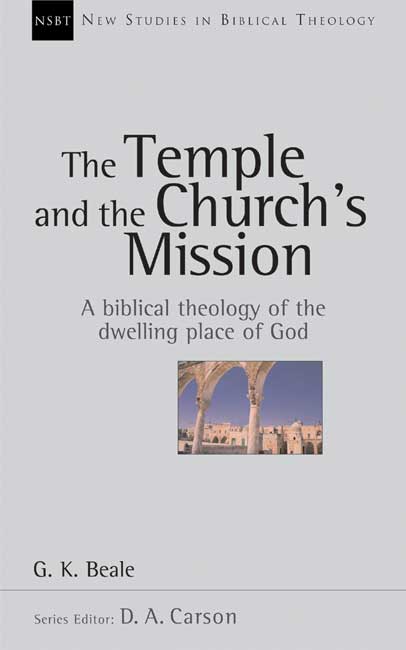
One of the main issues in this area of study is whether or not certain interpretations, both by the NT authors and their later commentators, seem to illegitimately “spiritualize” the fulfilment of a “literal” prophecy. Beale has a helpful passage on this very problem with respect to his interpretation of the Antichrist (“the man of lawlessness”) and the Temple in 2 Thessalonians in his work The Temple and the Church’s Mission: A Biblical Theology of the Dwelling Place of God.  One of the central contentions of his book is that in the NT, the Temple is replaced by Christ and in Christ by the people of God.  Therefore, the reference to the Temple in 2 Thessalonians is a reference to the church. On this basis and many other exegetical insights he claims that the prophecies of Daniel being alluded to in the text about the man of lawlessness setting up his rule in the Temple are ultimately taking place in the Church, not in some reconstructed Temple in Jerusalem as is commonly thought in popular Dispensationalism.

Obviously, for those advocating a strictly “literal hermeneutic” this will be a hopelessly spiritualizing interpretation that violates the principle by which all Scripture is to be interpreted. His responses to this charge are instructive both for general biblical hermeneutics as well as the specific problem of prophecy:

First, a ‘literal hermeneutic’ is not the best way to describe a biblical hermeneutic. Perhaps a ‘literate hermeneutic’ that aspires to the broad literary meaning in the canonical context is the better way to put it. We should want to follow an interpretive method that aims to unravel the original intention of biblical authors, realizing that that intention may be multi-layered, without any layers contradicting the others. Such original intentions may have meaning more correspondent to physical reality (hence so-called ‘literal interpretation’) while others may refer to ‘literal’ spiritual realities…”

So, there is a difference between reading something “literally” and “literately”. Kevin Vanhoozer has elsewhere said that if we want to talk about what the Reformers meant, and we ought to mean, by the term “literal interpretation”, we should speak of a “literary interpretation.” Basically, if the author intended a statement to be taken as a straightforward description, “the tree is outside”, we should understand it that way. But, if the author says, “the tree was a skyscraper”, we shouldn’t understand him to be saying that the tree is actually “scraping” the sky.  So, if a text is meant to be taken spiritually, then to read it appropriately is to read it spiritually.

“Second, the progress of revelation certainly reveals expanded meanings of earlier biblical texts. Later biblical writers further interpret earlier biblical writings in ways that amplify earlier texts. These subsequent interpretations may formulate meanings that earlier authors may not have had in mind but which do not contravene their original, essential, organic meaning. This is to say that original meanings have ‘thick’ content and that original authors likely were not exhaustively aware of the full extent of that content. In this regard, fulfilment often ‘fleshes out’ prophecy with details of which even the prophet may not have been fully cognizant.” (pg. 289)

So, a prophecy about the Temple, the dwelling place of God on earth amongst his people, can ultimately fulfilled in the church, who are now the dwelling place of God on earth amongst his people. For a prophecy to be fulfilled this way is not disruptive or illegitimate because the essential, organic content of the prophecy is preserved and grows naturally out of the original. Beale uses the example of a father in the year 1900 promising to buy his son a horse and buggy when he gets married, but by the time the son has grown up 30 years later, he ends up buying him a Ford. (pg. 291) The essential content of the promise is fulfilled even if the form is somewhat altered in a way the original utterer of the promise was unaware of.

I found these insights helpful. I pass them on to you with the hope that they will aid in your understanding of the scriptures and the surprising way that all of God’s promises “find their Yes in him.” (2 Cor 1:20)