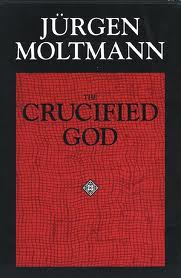
For some reason I’ve become interested in the much-maligned doctrine of the impassibility of God over the last couple of years.  What is the doctrine you ask? Simply put, it is the idea that God cannot be made to suffer change from without or be overcome with passions. Ever since the early Fathers this has been the standard teaching of the Church: God is not subject to passions. I first found out about this idea in college when reading Jurgen Moltmann’s classic, The Crucified God in which he argues, among other things, that for God to be impassible in light of the world’s suffering and evil would make God wicked. In fact, in light of the cross of Christ where the Godman suffers death and alienation, it’s absolutely blasphemous. Instead, the Bible presents us with a passionate God who suffers alongside of us, who bleeds, who dies, and who understands our pains–because isn’t that what love does? In this account, impassibility is a hold-over from Greek philosophy that crept in and corrupted the pure, Hebrew view of the dynamic, living God of Scripture and turned it into the conceptual idol of the frozen absolute valued by Plato, Aristotle, and the Stoics.
This view, that of the passible God, has become the “New Orthodoxy” that has been growing apace in academic and popular theology since the earliest part of the 20th Century, especially with the rise of process theism, open theism, and panentheism. Impassibility is also generally rejected in various quarters of Evangelical theology that cling to largely traditional doctrines of God, with John Stott citing Moltmann on this point with approval in his great work, The Cross of Christ. Now, given that I first came across the doctrine of impassibility at the tender age of 20, without any real knowledge of historical theology, or most of the reasoning behind the thinking of the Fathers in articulating this doctrine, it’s not hard to imagine that I whole-heartedly rejected it as nonsensical and the silly invention of “Greek” theologians and their systematizing ways.
Luther said that for the Christian all of life is repentance. I’ve come to find out that holds true not only in moral terms, but also intellectual ones. Suffice it to say that after reading some significant criticisms of passibilist criticisms from biblical, theological, philosophical, and historical-theological angles, I’ve come back around to affirming a form of the doctrine of impassibility. Key thinkers who helped me along this path have been Kevin Vanhoozer, David Bentley Hart, and Paul Gavrilyuk. Kevin DeYoung also has a helpful article summarizing key points.
I’m not going to attempt to cover all the relevant points or even come up with as helpful of a summary case as DeYoung has. I simply wanted to offer up some quick, semi-connected, but inevitably unsystematic correctives of popular perceptions about the doctrine as well as offer some reason to find this doctrine beautiful along the way. In doing so, I will be depending heavily on the account offered in Vanhoozer’s Remythologizing Theology, pp. 387-468. Needless to say, this will be hopelessly incomplete. Any insight that is helpful or intelligent is probably his. Anything silly or reductionistic is probably mine.
Clarifying Thoughts on Impassibility
Not a Rock – It is often charged that the doctrine of impassibility leaves us with an emotionless rock of a God. From the outset it ought to be made clear that to teach that God is impassible is not to deny that God has an emotional life with cares, joys, loves, and so forth. Impassibility does not mean impassivity any more than immutability means immobility. Both are caricatures and misunderstandings of the classical doctrine. Just as the doctrine of God’s immutability or changelessness is not a teaching about a static, stone God, but a God so perfectly overflowing with life that any “change” could only tend towards a lesser state, so the doctrine of impassibility is statement about the perfection of God’s emotional life, his sovereignty over it, not its absence. Anybody who teaches otherwise, both critic and advocate, has been misled on the subject. In the early Fathers, to teach that God was impassible was to teach that God did not have “passions”, or unrestrained feelings ungoverned by reason or will that could simply sweep over him. A passion was thought of as a sort of violent, semi-physical force that could move a person without the consent of their reason or will, or a sinful inclination. To deny that this can happen is to say that God’s emotional life is under his own control and will not erupt violently in irrational or sinful ways. God is not an emotional teenager.
The Bible? – What about those passages in the Bible that talk about God’s very strong feelings about things? What do they point to if God is not a passionate God? Are they “merely” anthropomorphisms that don’t “really” mean what they say? The Fathers and the medieval tradition made a distinction between ‘passions’ and ‘affections.’ An affection is a sort of controlled emotion that is subject to the will and mind of the one having it. It is a rational emotion that does not overcome the person, but is in line with the will. God has affections such as kindness, anger, etc. which he can display. The passages in the Bible talking about God’s anger, kindness, grief, and so forth are pointing to something real in God–his affections, the emotional life of the God of Israel. They are not “mere” anthropomorphisms, even though they are anthropomorphic. They are real descriptions, though not to be taken in a literalistic fashion, of God’s emotional life.
What’s An Emotion Anyway? – One point that clouds this discussion and makes it hard to conceive of God having emotions that are not passions, is that often-times we don’t have a clear understanding of what an emotion is. Kevin Vanhoozer draws attention to the fact that there are various theories on offer as to what an emotion is, but the split is between two basic types: non-cognitivist and cognitivist understandings. Non-cognitivist theories of emotion stress the pre-rational nature of an emotion such as the physical rush associated with fear or anger, which we then attach to cognitive content. Vanhoozer points out a few problems with that. First, God is spiritual, not physical. He cannot have an adrenaline rush with a flush of the face, a flaring of the nostrils, or moistening of the tear-ducts. For us to ascribe emotions to him on this view is to ascribe a body. The second problem with this is that with fear or anger, I feel the rush precisely because of what I believe about a certain situation or action. Third, a lot of emotions “feel” the same physically, like anger and fear, but the only thing distinguishing them is the cognitive content. Fourth, it’s hard to ascribe praise or blame to the way people feel if it’s just a physical reaction. But we seem to think that some feelings are praiseworthy and others are blameworthy. For these reasons, (and a few others), its best to opt for a cognitivist understanding of emotion.
On a cognitivist view, an emotion is a judgment or an attitude that one takes about something. It is a concern-based, value-laden judgment about a state of affairs. My fear and happiness are flavored understandings about situations or persons that I am concerned with. Given my humanity my loves, jealousy, or fear can be both passions that I suffer as well as affections. We are both patients and agents with respect to them. God has perfect emotions, affections not passions, because his value-laden judgments are true and accurate ones. God’s love, jealousy, wrath, compassion, and kindness are involved judgments, ways of “seeing” with the heart that inclines him towards action of some sort but do not overwhelm him. They do not incline him towards evil and they cannot sweep over him because they are fully-consonant with his perfect knowledge and will.
At this point some people might be thinking that this makes a sort of sense, but not something you’re willing to buy into too quickly. These highly cognitive emotions seem too distant from our everyday human experience. In response, Vanhoozer would remind us that “the similarities between God’s emotional life and ours exist in the midst of an even greater dissimilarity, one that marks the infinite qualitative distinction between Creator and creation, Author and hero.” God is God. We might be made in his image, but God’s reality is a whole ontological step up from ours. We should expect things to be a little different up there. Just as God’s sense of personhood will be different than yours given that he exists as Father, Son, and Holy Spirit, while you exist as you, it’s unsurprising that his emotional life is a little beyond us.
Sovereign Relationality – A further consideration connected to impassibility is that there is nothing outside of God that is beyond his control. Those agents or situations about which he feels things are not outside of his will or agency. Given creatio ex nihilo, even with a strong view of libertarian human agency, God is not subject to his human creations. His feelings in relation to them are not things which he must passively suffer but ones which he actively chooses to endure. They are not imposed on him from without, but sovereignly accepted. Passibilists might point to passages like Hosea 11:8, where God speaks to Israel, saying that he cannot bear to be parted from him, that his heart recoils within him at the thought of extinguishing him in judgment. The thought is that here human subjects exert a force and cause a change, or suffering in the emotional life of God from without. It must be remembered that these statements are uttered within the context of a covenant relationship which God freely and sovereignly entered into without force or compulsion. God did not have to save Israel. God did not have to covenant with a people. God was not forced to create. He is under no threat to save. Therefore, the situations that he involves himself in, about which he has these value-laden judgments like anger, sadness, etc, are situations over which he is sovereign and in control.
The Incarnation–Chalcedonian Solutions – “All this theological logic-chopping and conceptional analysis is fine, but what about the cross?  Doesn’t that show that God suffers? What sense does it make to say that God is impassible if Jesus is God and Jesus truly suffers on the cross?” This is where a little Chalcedonian christology comes to the rescue.
The classic answer developed by theologians like Cyril of Alexandria is that while it is appropriate to say that the Son suffered on the cross, we make it clear that God the Son suffered in his humanity, which is capable of suffering. Because we confess the unity of the Godman, that this man, Jesus Christ, truly is the Eternal Son, it is true then, to say that God suffered, but only in the soul and flesh of the Godman. If we begin to take suffering up into the divine nature, then we begin to render the incarnation a pointless gesture. If God can suffer in his own nature, then why assume human nature at all? In a sense, it is true to say that the lover wills to suffer alongside the beloved. But without impassibility we lose the wonder of what God has done in Christ–he who knew no suffering in himself, willed to become as we were so the he could experience it alongside of us. We too often forget that nobody takes Jesus’ life from him–even in his humanity, the Son lays down his life of his own accord. (John 10:18) He is sovereign even over his death and “suffering” at the human hands he empowered to crucify him. (John 19:11) What’s more, he did so, not just to “feel our pain”, but in order to end it. There is some comfort when we read that Christ is a sympathetic high priest who knows of our temptations (Heb 4:15), but as Vanhoozer reminds us, the true comfort of the verse comes when we read that he did not give in to the temptation, but overcame it for our sake in order to cleanse us from our sins giving us free access to the throne of grace. (4:16; Heb 2:17-18)
The Beauty of the Impassible God
In the end, the doctrine of impassibility affirms that God did not incarnate himself of necessity to relieve his own unbearable suffering. His existence as Father, Son, and Holy Spirit is one of perfect, unconquerable, and impassible “light, life, and love.” (Vanhoozer) Instead, in Christ, he freely, willingly, and sovereignly endured suffering, actively making it his own, so that ours would be put to an end. To affirm God’s impassibility is to confess that God’s action in Christ is nothing other than the beautifully gratuitous outpouring of his invincible, unsurpassable, enduring love for his wayward creatures–it’s the foundation of grace itself.
Soli Deo Gloria



 Reformedish